Tight Hip Flexors or a Strained One? Why Stretching Sometimes Makes It Worse
A hip flexor that feels tight and a hip flexor that is injured can feel identical to the person standing in it. The treatment for one makes the other worse.
BY MEDSTAR SPORT PHYSIO TEAM
A hip that feels tight at the front is one of the most common complaints people bring in, and one of the most commonly self-treated with the wrong tool.
At Medstar Sport Physio in North Vancouver, a hip flexor that feels tight is often not short at all, and stretching it can keep it sore. A muscle produces that tight sensation when it is genuinely shortened, when it is irritated or strained, or when it is working near the limit of its strength for the demands being placed on it. Only the first responds well to stretching. A strain usually has a clear moment it happened and hurts when you lift the knee against resistance, while a gradually-building tight feeling with no injury moment more often points toward a strength and load problem. Research measuring hip flexor activation finds leg-raising and leg-lowering work loads the iliopsoas most effectively, which is why the plan for most of these is loading rather than lengthening.
Here is what the hip flexors actually do, why the tight feeling is misleading, and how the two situations get told apart.
The iliopsoas does more than flex your hip
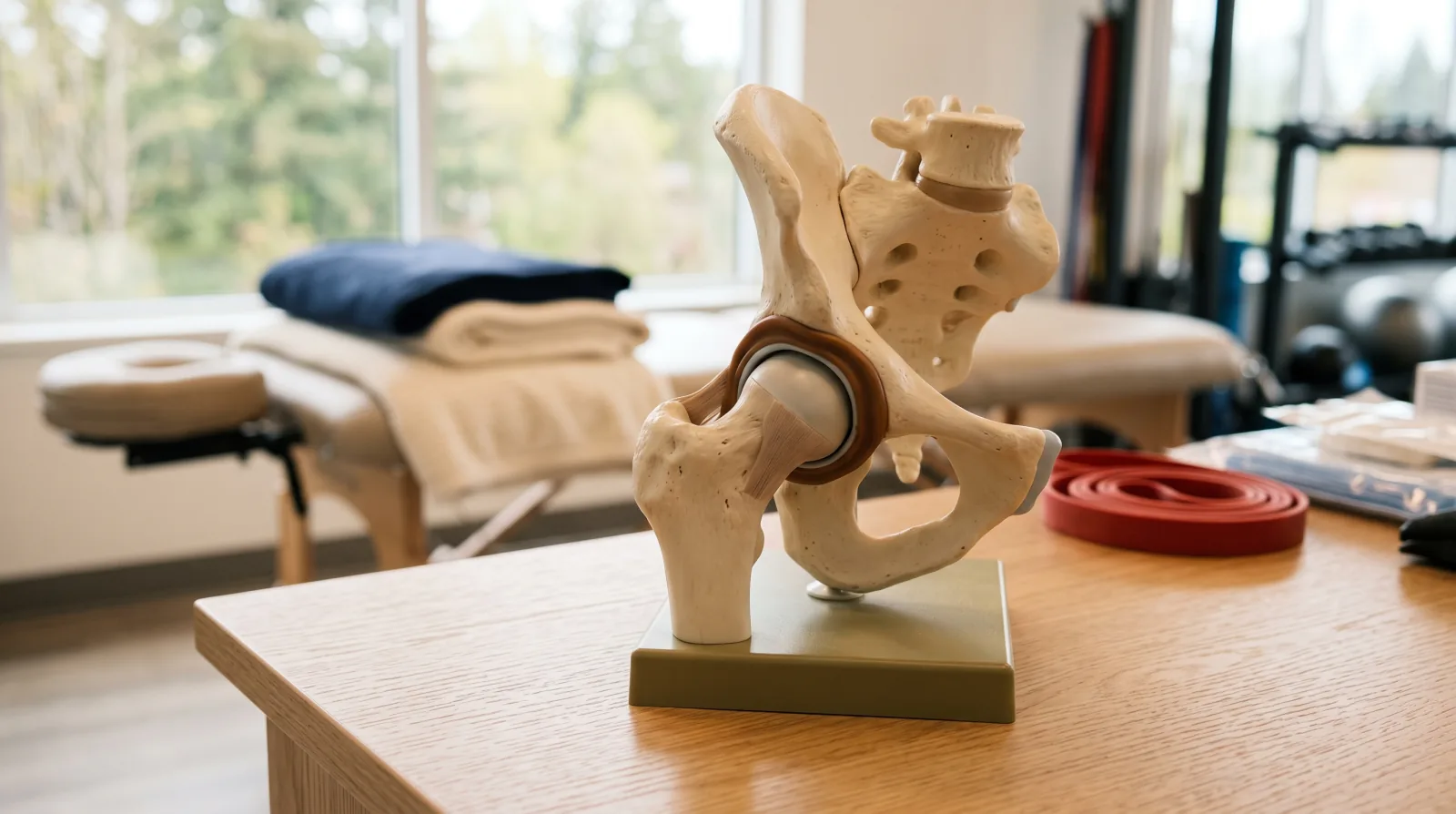
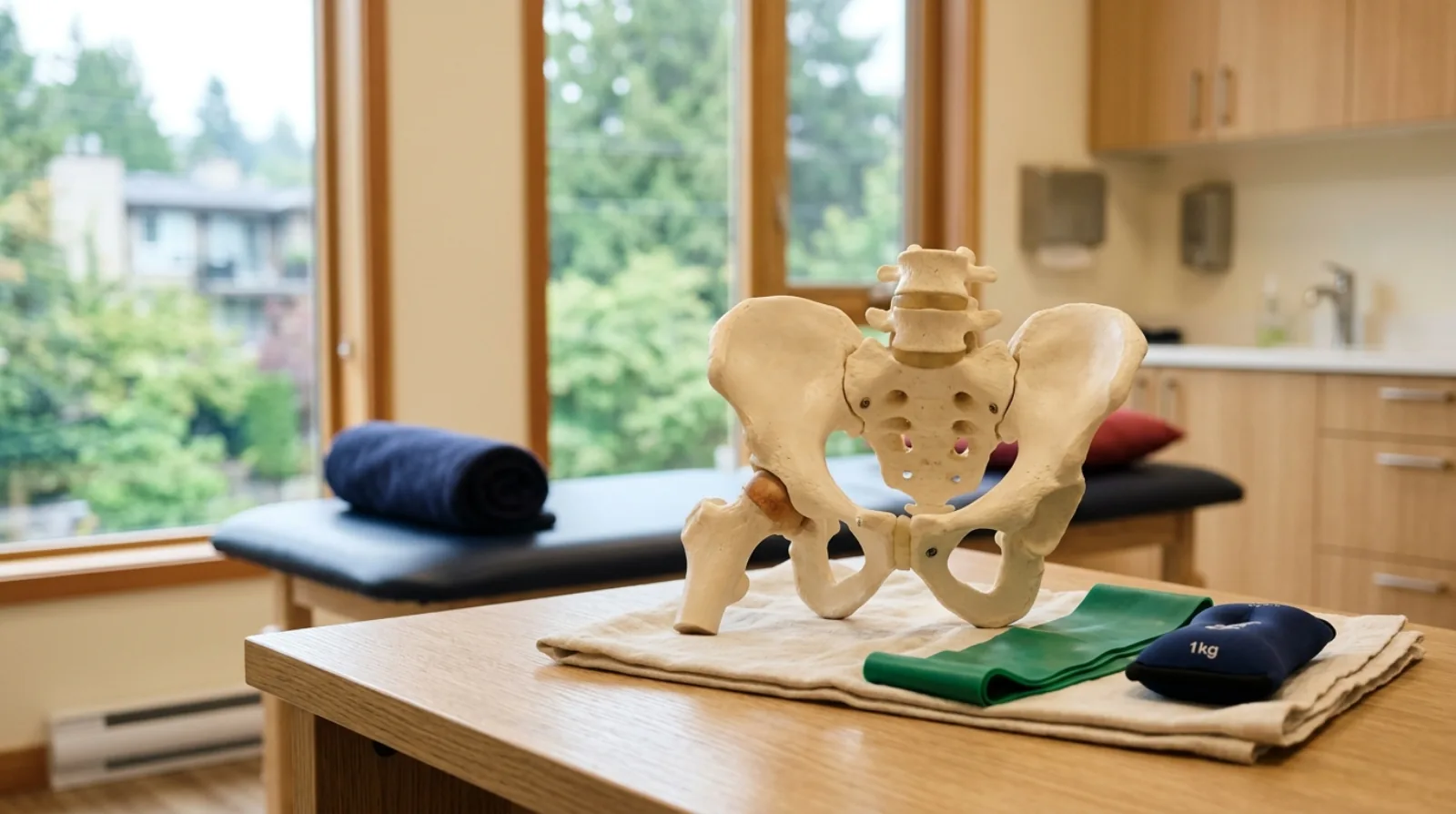
The main deep hip flexor is the iliopsoas, formed by the psoas major and the iliacus joining into a shared tendon that attaches at the top of the thigh bone.
A scoping review of the iliopsoas in athletes describes it as primarily responsible for hip flexion strength while also contributing to femoral movement, trunk rotation, core stabilisation, and dynamic stability at the front of the hip joint. That last function matters more than it sounds: the review notes the iliopsoas applies compressive force to the head of the femur, which reduces shear force at the joint.
So this is not simply the muscle that lifts your knee. It is part of how the front of the hip stays controlled, which is why problems here often turn up alongside other hip complaints rather than in isolation.
Three different things that all feel like tightness
The word tight covers at least three distinct situations, and they need different responses.
A genuinely shortened muscle has lost length, usually through long periods held in a shortened position. This is the one stretching addresses directly.
An irritated or strained muscle feels tight because it is sensitive. Pulling on sensitive tissue produces exactly the sensation people interpret as tightness, which is why stretching feels like the obvious answer and why it so often fails to change anything. The stretch reproduces the symptom rather than treating it.
A muscle working near its capacity feels tight because it is fatigued and busy. Stretching gives brief relief without changing the demand, so the feeling returns within hours. This is the most common version in people who describe stretching daily for months without progress.
The practical test is simple. If the hip feels better an hour after stretching, the stretch is doing something. If it only feels better during the stretch, something else is going on.
What a real hip flexor strain looks like
A strain usually announces itself. Sprinting, kicking, an abrupt change of direction, or a hard acceleration, followed by pain at the front of the hip or deep in the groin.
Afterwards, the characteristic finding is pain when you lift the knee against resistance, and often pain when the hip is stretched into extension. Walking may be fine while running is not, because the demand is completely different.
Hip flexor injuries are well recognised in sport. A review of hip flexor injuries in athletes reports estimates of hip flexor pathology ranging from 5 to 28 percent of injuries among high-risk sport-specific groups, with most treated successfully through conservative management and high rates of return to play, though the rehabilitation time involved can be significant.
The overlap with groin problems is real and worth naming, since pain at the front of the hip and pain in the adductor region can travel together. Our guide to groin strains and the Copenhagen exercise covers the adductor side of that picture.
Loading is what the evidence supports
If the plan is strengthening, the useful question is which exercises actually load the muscle.
A 2024 study in the Journal of Clinical Medicine measured hip flexor activation across common rehabilitation and strength exercises using electromyography. The bilateral leg lift produced the greatest iliopsoas response, followed by hip flexion with bent supported legs. The active straight leg raise produced substantial activation, and greater hip flexion angles in that movement, in the range of 30 to 60 degrees, produced higher activation than smaller ranges.
The broader finding is the useful one: movements emphasising the leg moving on the trunk, such as leg raising, generated greater activation than movements where the trunk moves on the leg, such as sit-ups. Adding external resistance increased recruitment further across exercises.
That gives a clear direction for anyone whose hip flexors feel weak rather than short. The work happens in hip flexion range, with the leg moving, and progresses by adding load.
Why the rest of the hip matters
A hip flexor rarely misbehaves in isolation. What the glutes are doing, how much extension range the hip has, and how the trunk controls position during running or lifting all shape the demand landing on the front of the hip.
This is the same reasoning behind treating lateral hip pain as a tendon problem rather than simple bursitis, and behind assessing the whole hip when impingement symptoms show up. The painful structure tells you where the load concentrated, not always why it concentrated there.
For desk workers, the sitting posture question genuinely does belong in the conversation, though usually as a contributor rather than the whole story. Our guide to desk ergonomics covers the setup side of that.
What to expect from rehabilitation
An irritable hip flexor usually needs a short period where the provoking activity is reduced, not eliminated. Complete rest tends to produce the same problem tendons have: less pain in the short term and no more capacity than before.
Strengthening progresses through range and load, guided by symptom response rather than a fixed schedule. Sport-specific demands, particularly sprinting and kicking, come back in stages at the end rather than the beginning.
Timelines vary widely with the severity of the injury and how long it has been going on. Rather than quoting a number that may not apply to you, the honest answer is that your physiotherapist will set expectations after assessing how irritable the tissue is and what you are returning to. Returning to full sprinting before strength has been objectively rechecked is a well-recognised route back to the same injury, which is why criteria-based return to sport matters here as much as anywhere.
When to have it assessed
Front-of-hip pain that has lasted more than a couple of weeks, pain that limits running or kicking, or a tight feeling that has not responded to months of stretching are all reasonable reasons to have it looked at properly.
Some presentations need medical assessment rather than rehabilitation: pain following a significant fall, an inability to bear weight, night pain that wakes you consistently, fever, or unexplained weight loss alongside hip pain. Those belong with your physician.
Book a 30-minute assessment and we will test the hip under load, work out which of the three tight situations you are actually in, and build the plan from there. You can see what we treat or reach the clinic here.
This article is general information, not personal medical advice. A regulated practitioner can confirm whether the patterns described apply to you.
Sources
- Hip Flexor Muscle Activation During Common Rehabilitation and Strength Exercises, Journal of Clinical Medicine (2024)
- The Iliopsoas: Anatomy, Clinical Evaluation, and Its Role in Hip Pain in the Athlete: A Scoping Review (2024)
- Hip Flexor Injuries in the Athlete (2021)
- College of Health and Care Professionals of BC public registry
Common questions
Frequently asked questions.
Why does stretching my hip flexor not help?
If the tissue is irritated or strained rather than genuinely short, stretching pulls on something already sensitive and can keep it sore. A muscle can also feel tight because it is working too hard for its current strength, and in that case stretching relieves the sensation briefly without changing the cause.
How do I tell a strain from ordinary tightness?+
A strain usually has a moment. Sprinting, kicking, or a sudden change of direction, followed by pain at the front of the hip that hurts when you lift the knee against resistance. Tightness without an injury moment builds gradually and does not usually hurt on resisted testing. A physiotherapist can separate them in one assessment.
What is the iliopsoas?+
It is the main deep hip flexor, made up of the psoas major and iliacus muscles joining into a shared tendon. Beyond flexing the hip, a scoping review describes it as contributing to trunk rotation, core stability, and dynamic stability at the front of the hip joint.
Which exercises actually load the hip flexors?+
A 2024 electromyography study in the Journal of Clinical Medicine found leg-lowering and leg-raising exercises produced the highest iliopsoas activation, and that greater hip flexion angles in a straight-leg raise, in the range of 30 to 60 degrees, produced higher activation than smaller ranges. Movements where the leg moves on the trunk beat movements where the trunk moves on the leg.
Does sitting all day cause this?+
Prolonged sitting keeps the hip flexors in a shortened position and gives them little to do, which is a plausible contributor to the tight feeling many desk workers describe. That does not mean stretching is the answer, since a muscle that is under-used usually needs loading more than lengthening.
What happens at a first physiotherapy visit for hip flexor pain?+
A physiotherapist asks whether the pain has a clear starting moment or built up gradually, then tests resisted hip flexion, hip extension range, and functional movements like a single-leg raise to work out whether the tissue is shortened, strained, or simply overworked. You leave with a working explanation and a starting plan, usually load-based, matched to which of the three situations fits.
When does hip flexor pain need more than physiotherapy?+
Most front-of-hip tightness and strain settles with assessment and a loading program. See a physician promptly if the pain follows a significant fall or direct blow, if you cannot bear weight, if there is night pain that consistently wakes you, or if fever or unexplained weight loss accompanies the hip pain, since those patterns point away from a simple muscular strain.
Is a hip flexor strain the same as a groin strain?+
They are related but not identical. A hip flexor strain centres on the iliopsoas at the front of the hip and hurts most with resisted hip flexion, while a groin strain usually involves the adductor muscles on the inner thigh and hurts most with resisted leg squeeze or adduction. The two can occur together and share some sprinting and kicking mechanisms, which is why an assessment checks both areas rather than assuming one.
Share this post
Copies a ready-to-publish LinkedIn post to your clipboard and opens the LinkedIn share dialog. Paste the text into the composer and publish.
Written by
Medstar Sport Physio Team
Registered clinician at Medstar Sport Physio & Health, North Vancouver.
This article is for general information only and does not constitute medical advice, diagnosis, or treatment. Individual presentations vary, and assessment findings and treatment plans differ from person to person. If you are experiencing severe symptoms, neurological changes (numbness, weakness, bowel or bladder changes), or a significant trauma, contact your physician or emergency services. Care at Medstar Sport Physio & Health is provided by practitioners registered with their respective British Columbia regulatory colleges.
Filed under
- hip-flexor
- iliopsoas
- hip-pain
- return-to-sport
- north-vancouver