Pain on the Side of Your Hip? It's Probably Not Just Bursitis
Pain on the outer hip is often labelled bursitis and treated with rest or an injection. The bigger driver is usually a gluteal tendon problem, and that changes the fix.
BY SANAZ DAVARIAN, PHD
Pain on the outside of the hip is extremely common, especially in middle age and beyond, and it usually gets a quick label: bursitis. The standard response is rest and perhaps a cortisone injection. Then, often enough, the pain comes back. The reason is that the label is usually only part of the story, and the real driver changes what actually helps.
Pain on the outer hip is most often gluteal tendinopathy rather than simple bursitis. The gluteal tendons, where they attach to the bony point on the side of the hip, are usually the primary driver. Rest and cortisone injections often disappoint because they do not build the tendon's tolerance to load. Effective treatment involves two things: avoiding the positions that compress and irritate the tendon, such as crossing your legs or lying on the painful side, and progressively loading the gluteal muscles to rebuild capacity. At Medstar Sport Physio in North Vancouver, this loading approach is the foundation of care for lateral hip pain. Improvement is often slow and may take a few months. How quickly the tendon settles depends on its irritability and how consistently the compressive positions are avoided.
What is really going on
For years, lateral hip pain was attributed to inflammation of the bursa, a small fluid-filled cushion on the side of the hip, hence the term bursitis. But research over the past couple of decades has reshaped that understanding. The primary problem in most cases is gluteal tendinopathy, an irritation of the gluteal tendons where they attach to the bony point on the side of the hip, called the greater trochanter. Any bursa irritation that is present is usually secondary to the tendon problem.
This matters because the modern, accurate term for this cluster of symptoms is greater trochanteric pain syndrome, and the tendon is the centre of it. It sits within the broader group of bursitis and tendinitis problems we treat, but recognizing the tendon as the lead actor is what points to the right treatment.
How it shows up
Gluteal tendinopathy has a recognizable pattern. The pain sits over the bony point on the side of the hip and typically worsens with:
- Lying on that side, which is why it so often disturbs sleep.
- Climbing stairs or hills, which loads the gluteal tendons.
- Standing on one leg or standing for long periods, especially with the weight shifted onto one hip.
Many people first notice it as an inability to sleep on the affected side, which is a strong clue. The pain can also refer down the outside of the thigh, which sometimes leads people to worry it is coming from the back, though the source is the hip itself.
Why rest and injections disappoint
Treating this as simple bursitis leads to rest and injections, and both tend to disappoint over time.
Complete rest does not help a tendon problem and can leave the tendon weaker, so the pain returns the moment normal activity resumes. This is the same trap we describe with other tendons, such as in our piece on tennis elbow loading versus cortisone, where rest and injections settle things briefly but do not build the tendon's capacity.
A cortisone injection can reduce the pain in the short term, but if the underlying tendon problem is not addressed, the relief often fades and symptoms return. The tendon needs progressive loading to build tolerance, and an injection provides none of that. Injections may have a limited role in calming a very irritable tendon enough to begin loading, but they are not a stand-alone cure.
What actually works
Effective treatment has two pillars, and they work together.
Manage the compressive loads. Certain positions compress the gluteal tendon against the bone and keep it irritated. Crossing your legs, standing with your weight slumped onto one hip, sitting low with knees together, and lying directly on the painful side all add compression. Reducing these, especially early on, is one of the most important and often overlooked parts of settling the problem.
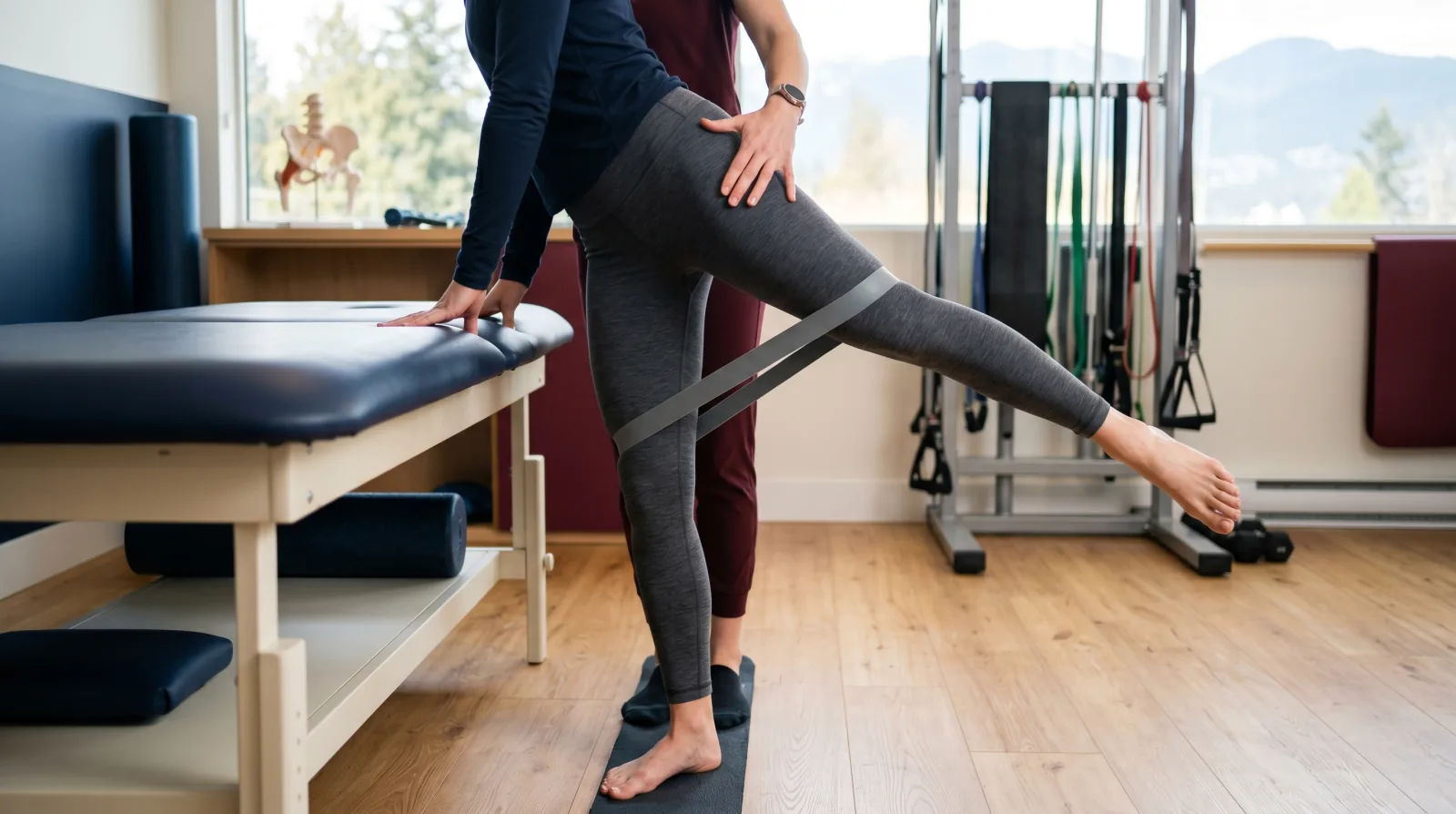
Load the tendon progressively. As with every tendinopathy, the tendon gets better when you build its tolerance through progressive strengthening of the gluteal muscles. We start at a level the tendon can handle and build from there, paced to how it responds.
The combination of removing the compressive aggravators and loading the tendon is what reliably settles gluteal tendinopathy, where rest and injections alone fall short. This is the same loading philosophy that runs through our approach to hip pain and lower-limb tendon problems generally.
A realistic timeline
Like other lower-limb tendinopathies, gluteal tendinopathy is often slow, improving over a few months with consistent loading and load management rather than in a couple of weeks. The timeline depends on how irritable the tendon is and how long it has been there before treatment starts. The single biggest factor in progressing steadily is consistently avoiding the compressive positions that aggravate it, because a tendon that gets re-irritated every night by sleeping on it cannot settle no matter how good the loading program is.
We reassess against function, your ability to climb stairs, stand, and sleep on the side comfortably, rather than chasing the pain day to day.
When to get it assessed
If you have pain on the outside of your hip that flares when you lie on it, climb stairs, or stand on one leg, an assessment confirms whether it is gluteal tendinopathy and builds a plan that addresses the tendon rather than just chasing inflammation. If rest and an injection have already failed to give lasting relief, that is a strong sign the tendon was the issue all along.
Book a 30-minute appointment and we will assess the hip, identify the compressive loads aggravating it, and build a loading and load-management plan to settle it for good.
This article is general information about gluteal tendinopathy and lateral hip pain. It is not personal medical advice. A regulated practitioner can confirm whether the patterns described apply to you.
Sources
- Mellor et al., Education plus exercise versus corticosteroid injection use versus a wait and see approach on global outcome and pain from gluteal tendinopathy (LEAP trial), BMJ (2018)
- Grimaldi et al., Gluteal Tendinopathy: A Review of Mechanisms, Assessment and Management, Sports Medicine (2015)
- College of Physical Therapists of BC (CPTBC)
Common questions
Frequently asked questions.
What causes pain on the outside of the hip?
The most common cause of pain on the outer hip in adults is gluteal tendinopathy, an irritation of the gluteal tendons where they attach to the bony point on the side of the hip. It is often labelled bursitis, but the tendon is usually the bigger driver. The pain typically worsens with lying on that side, climbing stairs, and prolonged standing on one leg.
Is it bursitis or gluteal tendinopathy?+
The two often coexist, but research shows the gluteal tendon is usually the primary problem, with any bursa irritation being secondary. This matters because treating it as simple bursitis, with rest and injections, often disappoints, whereas treating the tendon with appropriate loading and load management tends to work better. An assessment clarifies the picture.
Why do cortisone injections for hip bursitis often not last?+
An injection can settle the pain in the short term, but if the underlying gluteal tendon problem is not addressed, the relief often fades and symptoms return. As with other tendon problems, the tendon needs progressive loading to build tolerance, which an injection does not provide. Injections may have a limited role, but they are not a stand-alone cure.
Should I rest a sore outer hip?+
Complete rest tends not to help gluteal tendinopathy and can leave the tendon weaker. More useful is managing the loads that compress and irritate the tendon, such as crossing your legs, standing with your weight on one hip, or lying on the painful side, while progressively loading the gluteal muscles to build tolerance. Activity modification plus loading beats rest.
How long does gluteal tendinopathy take to improve?+
Like other lower-limb tendinopathies, it is often slow, improving over a few months with consistent loading and load management rather than in weeks. The timeline depends on how irritable the tendon is and how long it has been there. Avoiding the compressive positions that aggravate it is a key part of progressing steadily.
Could my outer hip pain actually be coming from my back?+
It is worth ruling out. Gluteal tendinopathy can refer pain down the outside of the thigh, which sometimes leads people to suspect the back, but the source is the hip itself in most of these cases. An assessment checks the hip and the lower back so the pain is not treated in the wrong place, since back-referred pain follows a different pattern and needs a different plan.
What happens at a first physiotherapy visit for outer hip pain?+
The physiotherapist asks about the pattern, pain lying on that side, on stairs, or standing on one leg, and examines the hip to confirm whether the gluteal tendon is the driver rather than the back or the joint itself. They identify the compressive positions aggravating your tendon day to day and set a starting point for the loading program, matched to how irritable the tendon currently is.
What sleeping position helps with gluteal tendinopathy?+
Lying directly on the painful side compresses the gluteal tendon against the bone and tends to aggravate it, which is why it disturbs sleep so often. Many people do better lying on the unaffected side with a pillow between the knees, or on their back, to reduce that compression. A physiotherapist can help you find a position that avoids flaring the tendon overnight.
Share this post
Copies a ready-to-publish LinkedIn post to your clipboard and opens the LinkedIn share dialog. Paste the text into the composer and publish.

Written by
Sanaz Davarian, PhDDr. Sanaz Davarian is a Registered Physiotherapist with a PhD and 20+ years of experience. Certified IMS Therapist, former Assistant Professor of Physiotherapy. North Vancouver.
This article is for general information only and does not constitute medical advice, diagnosis, or treatment. Individual presentations vary, and assessment findings and treatment plans differ from person to person. If you are experiencing severe symptoms, neurological changes (numbness, weakness, bowel or bladder changes), or a significant trauma, contact your physician or emergency services. Care at Medstar Sport Physio & Health is provided by practitioners registered with their respective British Columbia regulatory colleges.
Filed under
- gluteal-tendinopathy
- hip-bursitis
- hip-pain
- loading
- north-vancouver