
Foot & heel
Plantar Fasciitis & Heel Pain | North Vancouver
The classic morning heel-stab that makes you hobble out of bed. We sort out whether it's the fascia, the calf, or the way your foot loads, then fix the actual cause.
What it is
Understanding your plantar fasciitis / heel pain.
Plantar fasciitis is the misleading name we give to most chronic heel pain. "Itis" implies inflammation, but the tissue under the heel is usually more degenerative than inflamed, which is why anti-inflammatories help for about three days and then stop. At Medstar Sport Physio in North Vancouver, we assess and treat this through a one-on-one physiotherapy appointment, confirming the pattern and building a plan from there. We see patients from across Vancouver and the North Shore, many of whom cross Lions Gate Bridge or take the SeaBus for treatment here.
The classic presentation is hands-down: stabbing heel pain in the first few steps in the morning, easing as you walk, then coming back later in the day after standing or training. Sometimes the arch is also tender. Sometimes the achilles is tight as a rope.
What's actually going on is usually a combination: a calf that doesn't lengthen well under load, foot mechanics that overload the inside of the heel, and a fascia that's stopped tolerating its normal job. The fix is rarely one thing.
What to expect
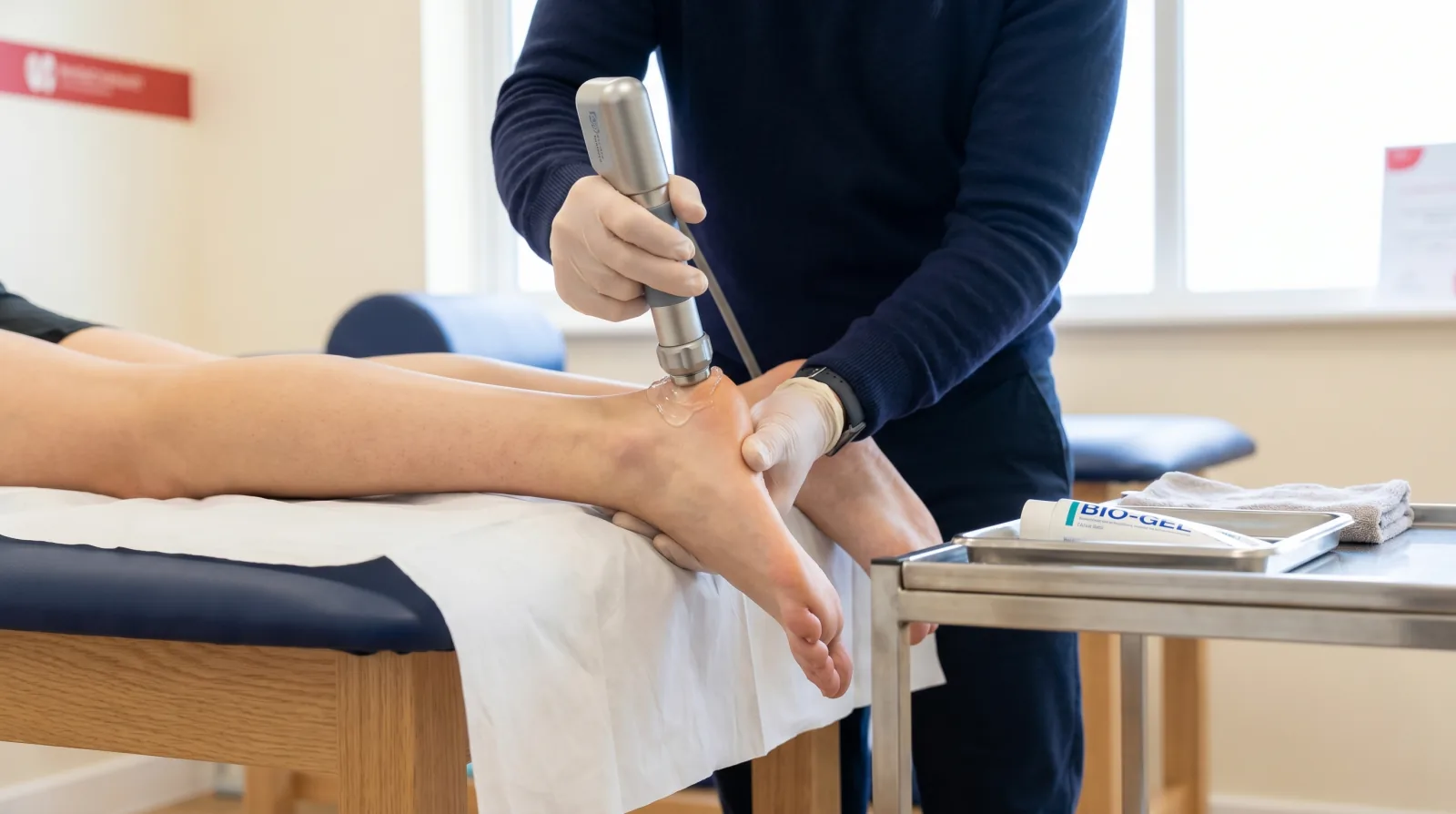
Acute cases often settle inside 4 to 6 weeks with the right loading. Chronic plantar fasciitis (over 6 months) usually needs 3 to 5 shockwave sessions on top, but most respond meaningfully inside 8 weeks.

Book a sports assessment with Ali Shafiei
Ali leads sport and orthopaedic physiotherapy at the clinic: manual therapy, IMS dry needling, and exercise-based rehab built around getting you back to your sport, with pain relief along the way. He is taking new patients with same-week availability.
Get a plan
Not sure if we're the right fit?
Send us a quick note about what's going on. A physiotherapist will read it personally and reply with what they'd recommend. No commitment to book.
Common questions
About plantar fasciitis / heel pain.
Is shockwave therapy actually evidence-based?
Yes. For chronic plantar fasciitis specifically, it's one of the more consistently supported modalities in the physiotherapy literature. We use it as a layer on top of loading and manual therapy, not as a standalone treatment. Chronic cases, meaning pain that has lasted over 6 months, typically need 3 to 5 shockwave sessions added to the loading program before symptoms meaningfully settle.
Do I need a cortisone injection?+
Usually no. Cortisone can settle pain short-term but doesn't change the underlying tissue, and repeated injections can weaken the fascia. We reserve injection referrals for stubborn cases that haven't responded to conservative care such as heavy slow calf loading, manual therapy, and shockwave, since those address the calf, foot mechanics, and fascia together rather than masking pain alone.
Will I need custom orthotics for life?+
Not necessarily. Some people benefit long-term, others use them as a bridge while the tissue heals and then phase them out. Orthotics help when foot mechanics are overloading the inside of the heel, but they are one piece alongside calf loading and manual therapy, not the whole plan. We're happy to fit you with them if they're indicated, and equally happy to say so if they're not.
Can I keep running while we treat this?+
Usually yes, at reduced volume and on a smarter schedule. Complete rest often makes plantar fasciitis worse, not better, since the fascia and calf both need controlled load to adapt. We'll set running parameters and pair them with footwear and load-management coaching that let the tissue calm down without de-conditioning you.
I've been rolling a frozen water bottle for months. Is that helping?+
It helps for a few minutes, then wears off. Pain modulation, not tissue healing. Heavy slow calf loading is the exercise approach with the strongest long-term evidence for this recovery, and that loading work is what actually changes the underlying tissue over weeks. Roll the bottle if it feels good between sessions, but don't expect it to be the whole answer.
Why does my heel hurt most with the first few steps in the morning?+
That morning stabbing pain is the classic pattern of plantar fasciitis, easing as you walk and then often returning later in the day after standing or training. It happens because the tissue under the heel is usually degenerative rather than actively inflamed, which is also why anti-inflammatories only help for a few days before the effect wears off.
Is it just my foot, or is something else contributing?+
Plantar fasciitis is rarely one thing. It's usually a combination of a calf that doesn't lengthen well under load, foot mechanics that overload the inside of the heel, and a fascia that's stopped tolerating its normal job. That's why treatment addresses the calf and ankle with manual therapy alongside the fascia itself, not the heel in isolation.
How long until plantar fasciitis actually goes away?+
Acute plantar fasciitis often settles inside 4 to 6 weeks with the right loading program. Chronic cases, meaning pain that has lasted over 6 months, usually need 3 to 5 shockwave sessions added on top, but most people still see meaningful improvement inside 8 weeks. Heavy slow calf loading is the exercise approach with the strongest long-term evidence for this recovery.

Reviewed by Amir Ahmadi, PhD, MSc PT, Registered Physiotherapist, Certified IMS Therapist, College of Physical Therapists of British Columbia (CPTBC). Last reviewed July 2026.
This page is for general information only and does not constitute medical advice, diagnosis, or treatment. Individual presentations vary, and assessment findings and treatment plans differ from person to person. If you are experiencing severe symptoms, neurological changes (numbness, weakness, bowel or bladder changes), or a significant trauma, contact your physician or emergency services. Physiotherapy at Medstar Sport Physio & Health is provided by physiotherapists registered with the College of Physical Therapists of British Columbia (CPTBC).
Sources
- Martin RL et al.: Heel Pain—Plantar Fasciitis: Revision 2014 Clinical Practice Guidelines, Journal of Orthopaedic & Sports Physical Therapy (2014)
- Rompe JD et al.: Eccentric loading versus eccentric loading plus shock-wave treatment for midportion Achilles tendinopathy, American Journal of Sports Medicine (2009)
- College of Physical Therapists of British Columbia (CPTBC)
- HealthLink BC: Plantar Fasciitis
Related reading
- Heel spurs: if your X-ray showed a bony growth and you're wondering if it's the real problem →
- Shockwave therapy: the strongest evidence base for chronic plantar fasciitis →
- Class IV laser therapy: adjunct for acute inflammation and pain modulation →
- Sport physiotherapy: the loading and progression that keeps it gone →
- Morning heel pain: what plantar fasciitis is and what actually helps →
- Shockwave therapy for plantar fasciitis: when it helps and when it doesn't →