
Snapping Hip: What Is Actually Clicking, and When It Matters
A hip that clicks with every stride worries most people. The structure making the noise is usually a tendon sliding over bone, and most of the time it does not hurt.
BY MEDSTAR SPORT PHYSIO TEAM
A hip that clicks on every stride sounds alarming from the inside. The structure making the noise is usually doing something quite ordinary.
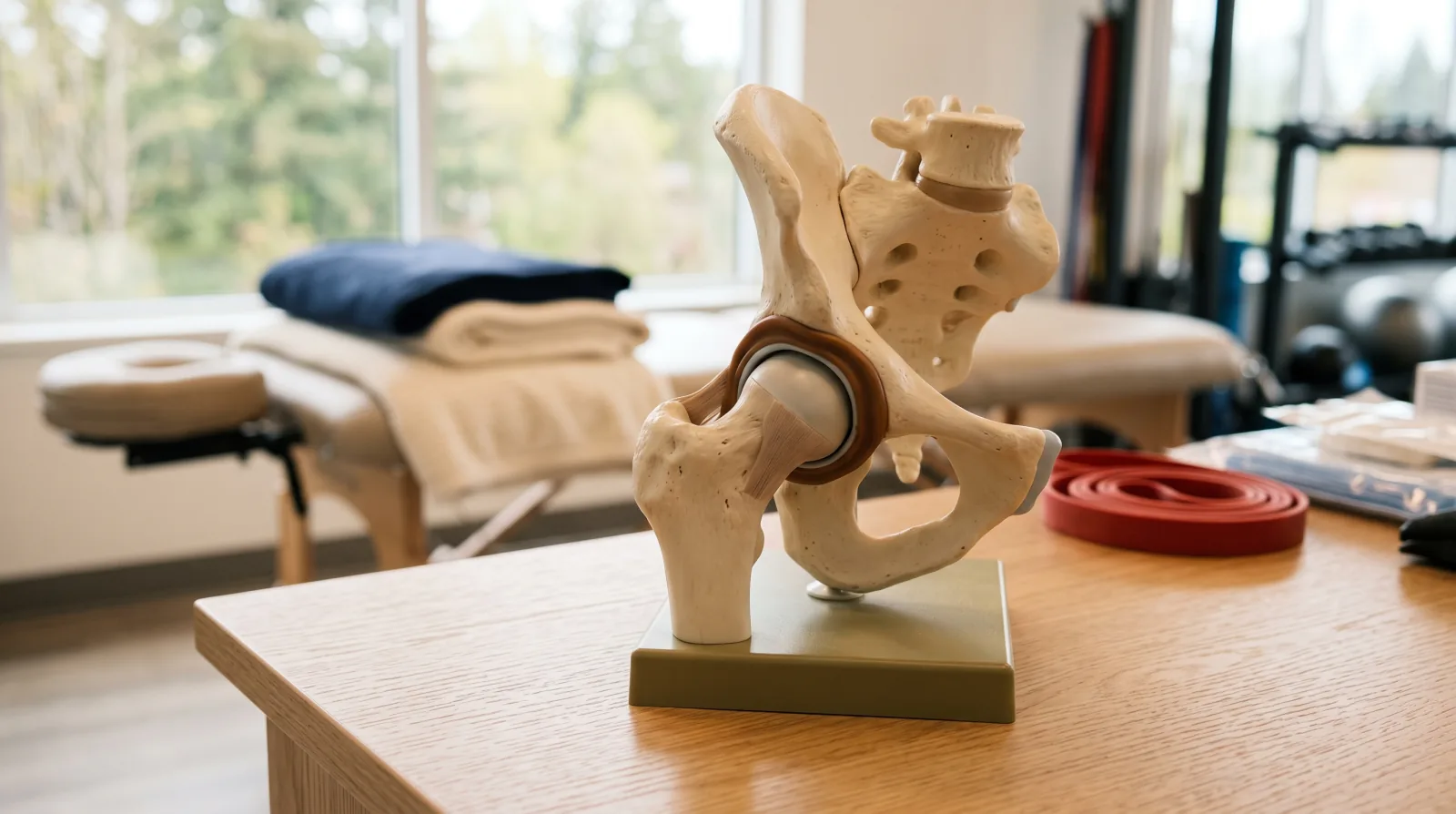
At Medstar Sport Physio in North Vancouver, a snapping hip is most often a tendon or a band of tissue sliding across a bony bump and catching briefly before it releases. The clinical name is coxa saltans, also called dancer's hip. It is grouped into three types: an external type on the outer side, where the iliotibial band moves over the greater trochanter of the femoral head, an internal type at the front, where the iliopsoas tendon snaps over bony prominences such as the iliopectinal eminence, and an intra-articular type coming from inside the joint, such as loose bodies or a labral tear. Roughly 5 to 10 percent of the population is affected, and the majority of patients experience painless snapping. Conservative care is the first approach when it does hurt.
Here is what each type involves, how a clinician tells them apart, and the point at which a click stops being harmless.
What the word snapping actually describes
Snapping hip syndrome is defined by the sensation itself. The StatPearls overview of snapping hip syndrome describes it as a palpable or audible snapping sensation heard during movement of the hip joint. Palpable means you can feel it with a hand on the hip. Audible means other people in the room can hear it.
That definition is deliberately about the symptom rather than the cause, because several different structures can produce the same experience. A tendon crossing a bony ridge is under tension. As the leg moves, the tendon is dragged sideways across that ridge, holds for a moment, then releases and springs back into place. The release is the snap.
The condition also goes by coxa saltans and by dancer's hip. That second name says a lot about who gets it. Among competitive ballet dancers, almost 90 percent reported symptoms of snapping hip syndrome, and 80 percent had it on both sides. In the general population the figure is much lower, at approximately 5 to 10 percent.
The external type: the outside of the hip
The external type involves the iliotibial band moving over the greater trochanter of the femoral head. The greater trochanter is the bony point you can feel on the outside of your hip, the one that gets sore if you lie on a hard floor. The iliotibial band is the thick strip of tissue running down the outside of the thigh from the hip to just below the knee.
When the hip bends and straightens, the band has to pass over that bony point. Normally it glides. When the band is tight or the movement pattern loads it hard, it catches and then flips across, producing a snap you can often see as well as feel.
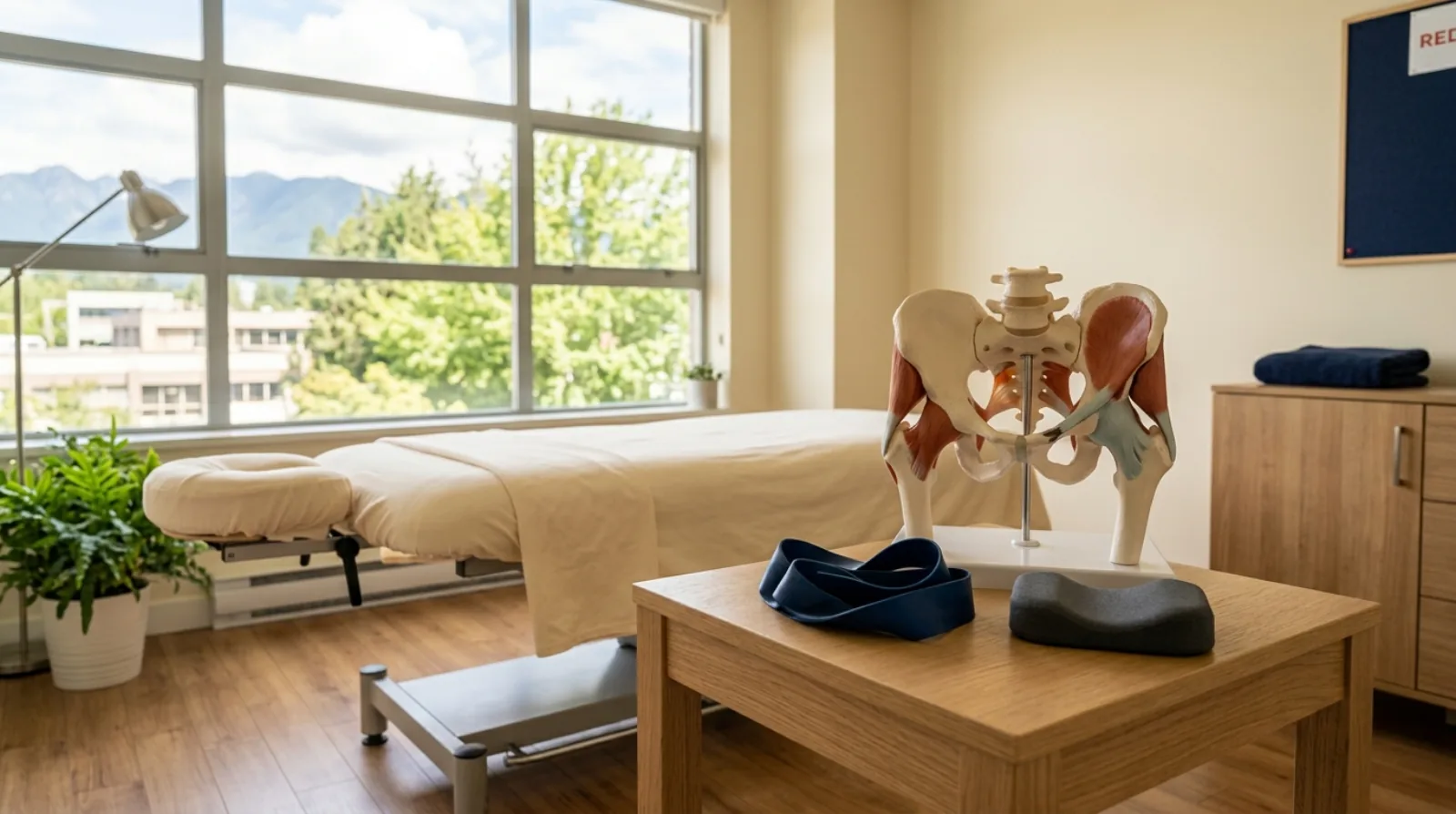
The gluteus maximus tendon is involved too. The thickened front edge of that muscle sits in the same region and contributes to the same mechanism.
People notice this one when walking, running, or climbing stairs. The outer hip is also where several other problems live, so a snap on the outside of the hip sits close to the territory covered in our guide to gluteal tendinopathy and hip bursitis. The distinction matters, because a tendon that snaps and a tendon that is painful to load are managed differently.
The internal type: the front of the hip
The internal type comes from the iliopsoas tendon. This is the tendon of the main hip flexor group, running from the lower spine and the inside of the pelvis down to the inner thigh bone. It passes across the front of the hip on its way there.
The snap occurs when that tendon slides over underlying bony prominences such as the iliopectinal eminence, a ridge on the front of the pelvis, or the anterior aspect of the femoral head, which is the front of the ball of the hip joint.
The movement that reproduces it is usually bringing the leg from a bent and turned-out position back toward straight. Anyone who does high kicks, deep hip flexion work, or repeated leg swings will recognise the position. It often feels deeper and more central than the external type, closer to the groin than to the outer hip.
That deeper location is why the internal type gets more clinical attention. Structures inside the joint sit nearby, and pain in that region overlaps with the pattern described in our article on femoroacetabular impingement and labral tears.
The third type comes from inside the joint
The intra-articular category covers causes inside the hip joint itself, including loose bodies and labral tears. A loose body is a fragment of tissue floating inside the joint. A labral tear is damage to the ring of cartilage around the socket rim.
This group behaves differently from the other two. The snapping from a tendon is usually repeatable: same movement, same point in the range, same noise every time. Something inside the joint is more likely to catch unpredictably, and it more often comes with pain, a sense of the hip locking or giving way, or a history of a specific injury.
Sorting an intra-articular cause from a tendon cause is the main reason imaging gets ordered in this condition.
How a clinician works out which one it is
Assessment starts by reproducing the snap and watching where it comes from.
For the external type, the Ober test is used to check iliotibial band tightness. The patient lies on their side while the hip and knee are cycled through flexion and extension. If the band is the culprit, the snap appears at a predictable point in that cycle, and it can often be felt directly over the greater trochanter.
For the internal type, the patient lies on their back with the hip externally rotated and flexed, then the leg is extended back to neutral. That movement drags the iliopsoas tendon across the bony prominence at the front and reproduces the snap when the tendon is the source.
Imaging is added when the picture needs clarifying. A T1 axial MRI can show a thickened iliotibial band or a thickened anterior edge of the gluteus maximus, which supports the external diagnosis. Dynamic ultrasonography lets the clinician watch the tendon move in real time while the patient reproduces the snap, which is useful because the problem only exists during movement. For internal snapping, MR arthrography is preferred, because it detects pathology inside the joint.
Why most snapping hips need no treatment at all
The majority of patients experience painless snapping. That single fact should change how most people react to the noise.
A hip that clicks, does not hurt, does not give way, and does not limit what you can do is generally left alone. Tendons cross bony bumps. In some hips, given the shape of the bone and the tension in the tissue, that crossing is audible. It is not evidence of damage on its own.
The conversation changes when pain appears. Once the snap hurts, the repeated catching is irritating the tendon or the tissue around it, and continuing to load it in the same way tends to keep it going.
Conservative care described in the clinical literature includes rest, stretching, steroid injections, oral anti-inflammatory medications, physical therapy, and activity modification. Most of the time patients experience relief with these measures. The published source does not attach a timeframe to that, and honestly the answer depends on the type, how long it has been present, and how much of the driving activity can be adjusted.
In practice, the physiotherapy side focuses on the mechanics. Reducing tension through the structure that is snapping, improving how the hip and pelvis control movement, and adjusting the specific activity that reproduces it most. For a dancer or a runner, that adjustment is a negotiation rather than a stop order, using the same graded approach described in our guide to hip impingement and conservative care.
When to get it looked at
A snapping hip is worth assessing when it hurts, when the pain sits deep in the groin, when the hip catches or gives way, or when the snapping started after a specific injury or a sharp increase in training. Loss of range of movement or a hip that feels like it locks is also a reason to be seen rather than to wait.
Some situations need medical attention rather than a physiotherapy booking: inability to bear weight after a fall, an obvious deformity, or severe hip pain with fever. Those are calls to your physician or to Lions Gate Hospital.
If your hip has been clicking and you want to know which structure is doing it and whether it needs anything, book a 30-minute assessment and we will reproduce the snap and test it properly. You can see what we treat or reach the clinic here.
This article is general information, not personal medical advice. A regulated practitioner can confirm whether the patterns described apply to you.
Sources
- Snapping Hip Syndrome, StatPearls, NCBI Bookshelf
- College of Health and Care Professionals of BC public registry
Common questions
Frequently asked questions.
What is snapping hip syndrome?
It is a condition where you feel or hear a snapping sensation during movement of the hip joint. The clinical name is coxa saltans, and it is also called dancer's hip. The snap can be felt with a hand on the hip, heard, or both. It usually happens at a repeatable point in a movement, such as bringing the leg from a bent position back to straight.
What is actually snapping?+
In most cases a tendon or a thick band of tissue is sliding across a bony bump and catching briefly before it releases. On the outside of the hip, the iliotibial band moves over the greater trochanter of the femoral head. On the inside, the iliopsoas tendon snaps over bony prominences such as the iliopectinal eminence or the front of the femoral head. A third type comes from inside the joint itself.
What are the three types of snapping hip?+
Clinical references divide it into extra-articular external, extra-articular internal, and intra-articular. External means the snap comes from outside the joint on the outer side, involving the iliotibial band and the gluteus maximus tendon. Internal means it comes from outside the joint at the front, involving the iliopsoas tendon. Intra-articular means the cause sits inside the joint, such as loose bodies or a labral tear.
How common is snapping hip?+
Clinical literature reports that approximately 5 to 10 percent of the population is affected by coxa saltans. It is far more common in dancers. Among competitive ballet dancers, almost 90 percent reported symptoms of snapping hip syndrome, and 80 percent of those had it on both sides. That difference reflects how much repeated end-range hip movement a dance schedule involves compared with everyday activity.
Should I worry if the click does not hurt?+
The majority of patients experience painless snapping. A hip that clicks without pain, without giving way, and without limiting what you can do is generally not treated as urgent. Assessment becomes more useful when the snap starts to hurt, when it appears alongside groin or deep hip pain, or when it changes after a specific injury.
How is snapping hip assessed?+
By reproducing the snap and watching where it comes from. For the external type, the Ober test checks iliotibial band tightness with the patient on their side while the hip and knee are cycled through bending and straightening. For the internal type, the patient lies on their back with the hip turned outward and bent, then the leg is brought back to neutral to see whether the snap appears.
Do I need a scan?+
Not usually for a straightforward painless click. When imaging is used, a T1 axial MRI can show a thickened iliotibial band or a thickened front edge of the gluteus maximus. Dynamic ultrasound lets a clinician watch the tendon move in real time while the snap happens. For internal snapping, MR arthrography is preferred because it detects problems inside the joint.
What treatment works for a painful snapping hip?+
Conservative care comes first. Options described in the clinical literature include rest, stretching, steroid injections, oral anti-inflammatory medication, physical therapy, and activity modification. Most of the time patients experience relief with these measures. The published source does not attach a timeframe to that, and in practice how long it takes depends on which type is involved, how long it has been going on, and how much the driving activity can be adjusted.
Share this post
Copies a ready-to-publish LinkedIn post to your clipboard and opens the LinkedIn share dialog. Paste the text into the composer and publish.
Written by
Medstar Sport Physio Team
Registered clinician at Medstar Sport Physio & Health, North Vancouver.
This article is for general information only and does not constitute medical advice, diagnosis, or treatment. Individual presentations vary, and assessment findings and treatment plans differ from person to person. If you are experiencing severe symptoms, neurological changes (numbness, weakness, bowel or bladder changes), or a significant trauma, contact your physician or emergency services. Care at Medstar Sport Physio & Health is provided by practitioners registered with their respective British Columbia regulatory colleges.
Filed under
- snapping-hip
- hip-pain
- dancers
- coxa-saltans
- north-vancouver