
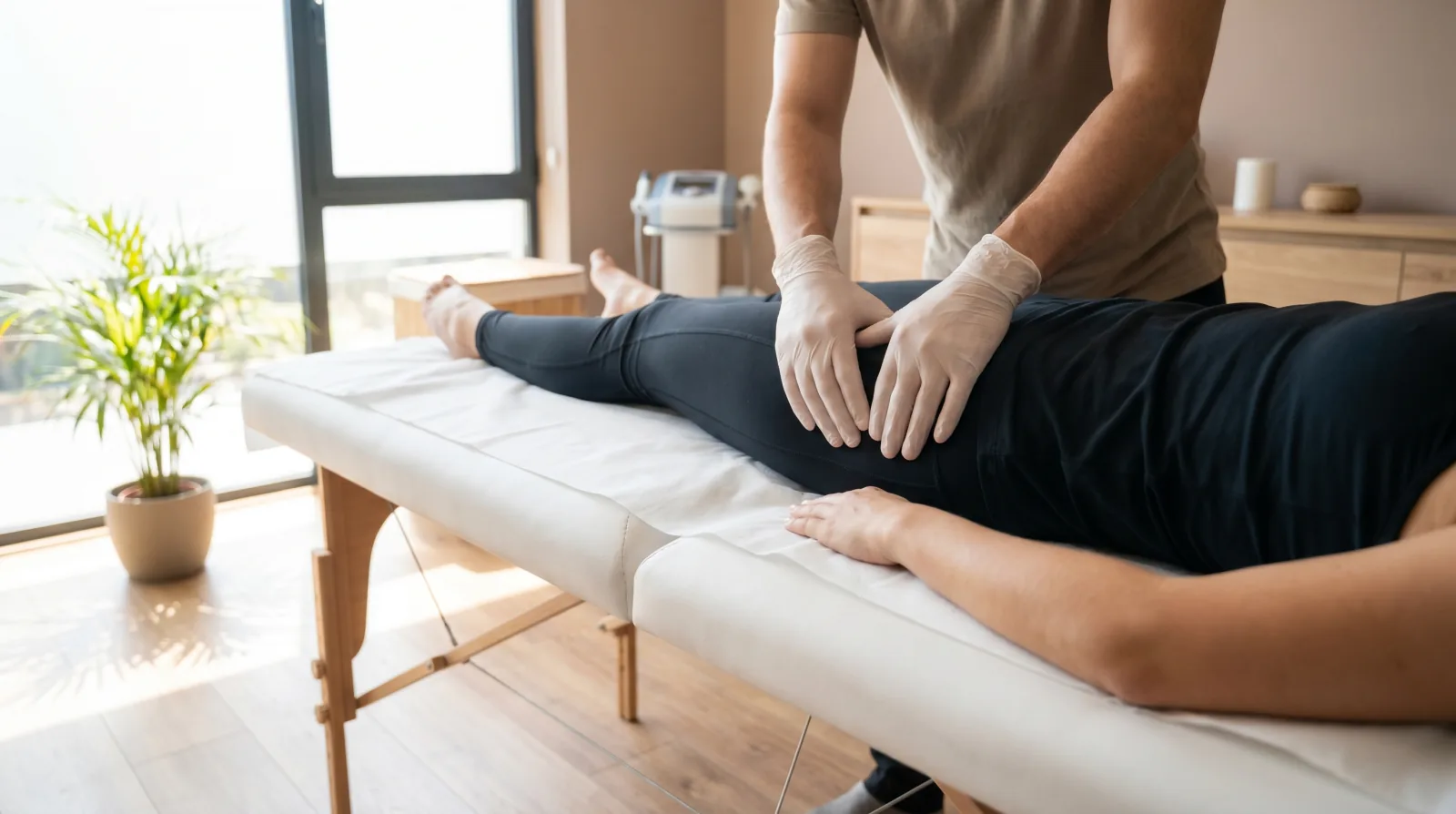
Hip & groin injuries
Hip Pain | North Vancouver
Deep groin ache during a squat. Lateral hip pain after a long run. That catching sensation every time you get out of the car. The hip is a load-bearing joint with a lot of moving parts, so we find the actual source and build a plan that gets you back to what you were doing.
What it is
Understanding your hip pain.
Hip pain is one of the more commonly misattributed complaints we see. What patients call 'hip pain' can come from the hip joint itself, the surrounding muscles and tendons, the sacroiliac joint, or even a nerve root originating in the lumbar spine. Sorting out which structure is responsible changes the treatment completely. At Medstar Sport Physio in North Vancouver, we assess and treat this through a one-on-one physiotherapy appointment, confirming the pattern and building a plan from there. We see patients from across Vancouver and the North Shore, many of whom cross Lions Gate Bridge or take the SeaBus for treatment here.
The most frequent culprits we treat at Medstar include femoro-acetabular impingement (FAI), hip labral tears, gluteal tendinopathy (the modern name for what used to be called greater trochanteric bursitis), hip flexor strains, groin injuries in kicking athletes, and osteoarthritic changes in the older active population.
FAI and labral pathology in particular are often under-diagnosed in active people who are told their pain is 'just tightness'. Impingement tends to produce a deep groin pinch at the end of hip flexion: sitting in a low car seat, deep squatting, or kicking. A proper clinical assessment, sometimes combined with diagnostic imaging, clarifies the picture quickly.
Underneath all of these sits a common set of triggers: muscle strains, tendon irritation, ligament injuries, and joint problems like arthritis or labral tears, often set off by a sudden twist, heavy lifting, or repetitive hip motion. Weak or tight muscles around the hip leave the joint absorbing load it shouldn't, and pain tends to bite hardest with prolonged sitting, running, or sport. The discomfort doesn't always stay put either, and it can radiate into the lower back, the thigh, or the groin, which is part of why the source is so often misread. Common day-to-day symptoms are stiffness, a limited range of motion, and pain on specific movements. Getting assessed early is what keeps a manageable strain from settling into chronic pain or a long-term mobility problem.
What to expect
Hip pain presentations vary considerably in recovery timeline. Muscle and tendon injuries such as gluteal tendinopathy, hip flexor strains, and groin strains typically respond within 6 to 10 weeks of a structured loading program. FAI and labral pathology often take 3 to 5 months of progressive rehab; surgical outcomes depend heavily on post-op physiotherapy quality. Your physiotherapist will confirm a realistic timeline at your first session after a full movement and load assessment.
Get a plan
Not sure if we're the right fit?
Send us a quick note about what's going on. A physiotherapist will read it personally and reply with what they'd recommend. No commitment to book.
Common questions
About hip pain.
Do I need imaging before coming in?
Not necessarily. A clinical assessment tells us a great deal without X-rays or MRI, including whether the pain is coming from the hip joint itself, the surrounding muscles and tendons, the sacroiliac joint, or a nerve root from the lower back. If your history or movement findings suggest a labral tear or significant structural problem, we'll recommend imaging and point you toward the right diagnostic pathway.
Is this hip bursitis?+
What used to be diagnosed as trochanteric bursitis is now understood to be primarily a gluteal tendinopathy, which is a load and compression problem at the tendon rather than an inflamed bursa. That distinction matters because the treatment is different: loading and compression management in place of rest and anti-inflammatories. We'll tell you which pattern you have.
My hip clicks: is that a problem?+
Most hip clicking (coxa saltans) is benign, usually a tendon snapping over a bony prominence. It only warrants attention if it's painful or associated with giving way. If your click is painless and your hip is otherwise strong and stable, it's probably not causing your symptoms.
Can physio help if I'm waiting for a hip replacement?+
Yes, often it helps a great deal. Pre-operative physiotherapy, which strengthens the muscles around a deteriorating joint, improves post-surgical outcomes and can sometimes push back the timeline for surgery. Osteoarthritic changes in the hip are one of the common causes of hip pain we see in the older active population, and post-operatively, physiotherapy is essential for restoring gait, strength, and return to activity.
Do you direct-bill extended health?+
Yes. We direct-bill most major extended-health plans, ICBC, and WorkSafeBC. This is relevant for hip pain because a sudden twist, a fall, or heavy lifting is a common trigger for muscle strains, tendon irritation, and joint problems around the hip, so many of these cases arrive through an ICBC or WorkSafeBC claim rather than a private extended-health plan.
My hip pain radiates into my back or thigh. Does that mean it's not really my hip?+
Not necessarily. Hip pain doesn't always stay put, and discomfort can radiate into the lower back, the thigh, or the groin, which is part of why the true source gets misread so often. What patients call hip pain can come from the hip joint itself, the surrounding muscles and tendons, the sacroiliac joint, or a nerve root from the lumbar spine, so a proper assessment sorts out which structure is actually responsible.
How long does hip pain take to recover from?+
It depends on what's driving it. Muscle and tendon injuries like gluteal tendinopathy, hip flexor strains, and groin strains typically respond within six to ten weeks of a structured loading program. FAI and labral pathology often take three to five months of progressive rehab, and surgical outcomes depend heavily on the quality of post-op physiotherapy.
What treatments do you use for hip pain besides exercise?+
Alongside manual therapy and targeted strengthening, we use high-power laser and shockwave therapy for deep tissue inflammation and stubborn tendon pain, and TECAR deep-tissue therapy for stiff hip capsule restrictions and post-surgical joint tightness. Early on, activity modification with ice or heat helps settle an irritable hip before we build back toward full load.

Reviewed by Amir Ahmadi, PhD, MSc PT, Registered Physiotherapist, Certified IMS Therapist, College of Physical Therapists of British Columbia (CPTBC). Last reviewed July 2026.
This page is for general information only and does not constitute medical advice, diagnosis, or treatment. Individual presentations vary, and assessment findings and treatment plans differ from person to person. If you are experiencing severe symptoms, neurological changes (numbness, weakness, bowel or bladder changes), or a significant trauma, contact your physician or emergency services. Physiotherapy at Medstar Sport Physio & Health is provided by physiotherapists registered with the College of Physical Therapists of British Columbia (CPTBC).
Related reading