Shoulder
Shoulder & Rotator Cuff Pain | North Vancouver
Whether it's a frozen shoulder, a rotator cuff that snags every time you reach overhead, or a post-op repair, we get shoulders moving again without the guesswork.
What it is
Understanding your shoulder / rotator cuff pain.
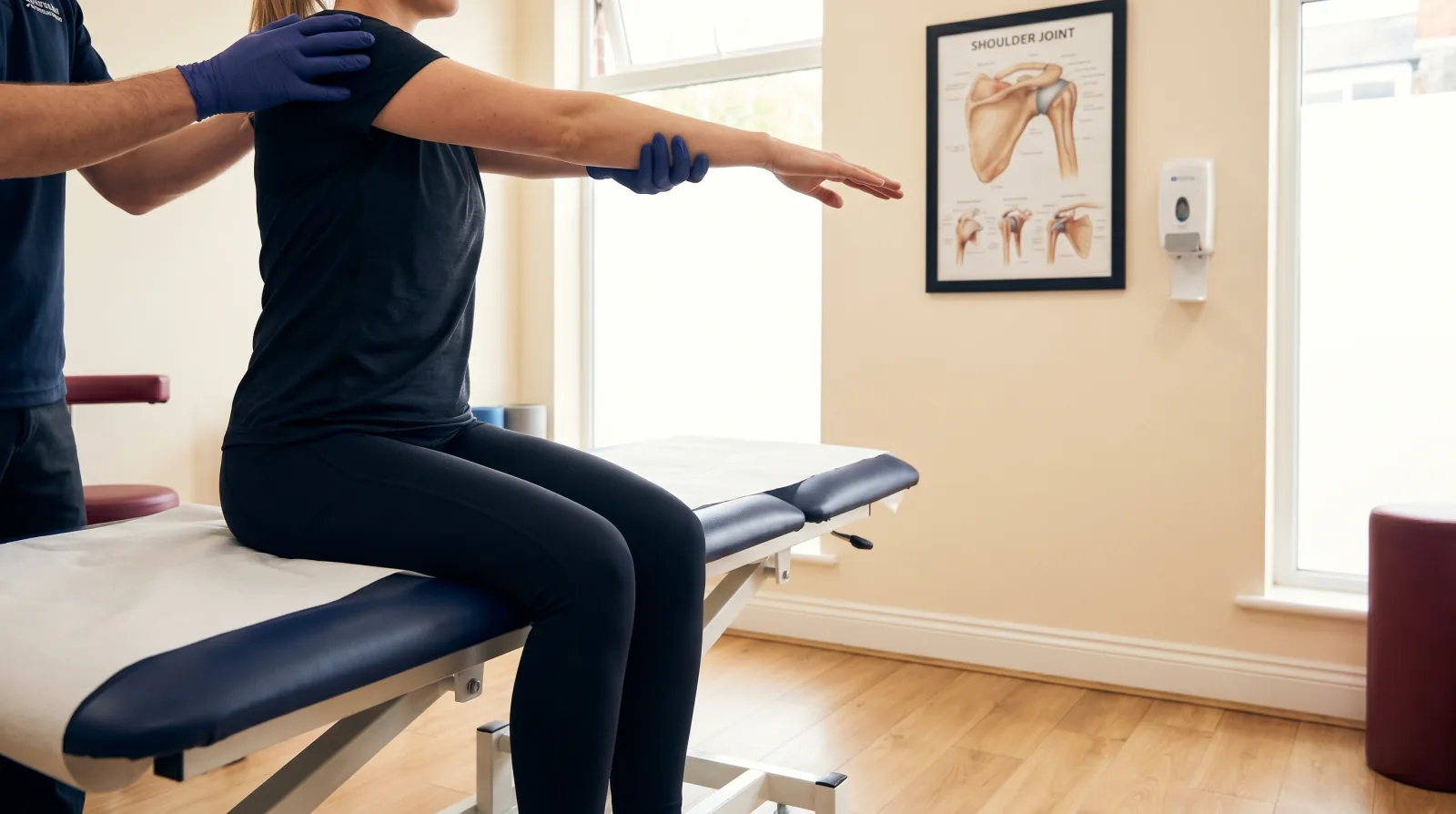
The shoulder is the most mobile joint in the body, which is exactly why it's also the most pain-prone. "Rotator cuff issue" is shorthand for half a dozen different problems: tendinopathy, partial tears, full-thickness tears, bursitis, and impingement under the acromion. They don't all need the same treatment. At Medstar Sport Physio in North Vancouver, we assess and treat this through a one-on-one physiotherapy appointment, confirming the pattern and building a plan from there. We see patients from across Vancouver and the North Shore, many of whom cross Lions Gate Bridge or take the SeaBus for treatment here.
Tears themselves are not one category. A small, atraumatic partial tear in a 55-year-old's supraspinatus often does well with loaded rehab and never needs a surgeon. These build quietly, because repetitive overhead work, poor shoulder mechanics, and tendons that lose elasticity with age all wear the cuff down over time. A traumatic full-thickness tear is a different conversation: the fall onto an outstretched arm, the heavy object lifted the wrong way. The timeline to surgical opinion matters there. Imaging findings on their own do not decide the path. What your shoulder can actually do, how it responds to load, and what you need from it determine the plan.
On top of that you've got frozen shoulder (which behaves nothing like a torn tendon and responds badly to aggressive stretching), AC joint sprains, biceps tendon irritation, and the post-op shoulders we see after rotator cuff repair or labrum surgery.
First session, we sort out which one you actually have. Everything after that depends on the answer.
What to expect
Most rotator cuff tendinopathies start turning the corner within a handful of sessions once loading begins. Frozen shoulder is a longer arc, often several months, but pain typically eases well before mobility fully returns. Post-op timelines follow your surgeon's protocol.
Book a sports assessment with Ali Shafiei
Ali leads sport and orthopaedic physiotherapy at the clinic: manual therapy, IMS dry needling, and exercise-based rehab built around getting you back to your sport, with pain relief along the way. He is taking new patients with same-week availability.
Get a plan
Not sure if we're the right fit?
Send us a quick note about what's going on. A physiotherapist will read it personally and reply with what they'd recommend. No commitment to book.
Common questions
About shoulder / rotator cuff pain.
How do I know if it's a tear or just inflammation?
Most rotator cuff pain is tendinopathy, bursitis, or impingement, not a full-thickness tear. We test specific muscles and movement patterns on the first visit to sort out which of these you actually have, since they don't all need the same treatment. If we suspect a structural tear that needs imaging, we'll say so and route you to your GP for a requisition rather than guessing from the exam alone.
I've had this for over a year. Is it too late?+
No. Chronic rotator cuff issues respond to loaded rehab, sometimes better than acute ones, because there's less guarding. Shockwave therapy is often the unlock for tendons that have stayed irritated for 6 or more months and haven't responded to exercise alone. We build the loading program around kettlebell carries, landmine presses, and banded external rotation rather than basic theraband work.
Do I need surgery?+
Most rotator cuff problems don't. A small, atraumatic partial tear often does well with loaded rehab and never needs a surgeon, while a traumatic full-thickness tear from a fall or a heavy lift is a different conversation where the timeline to surgical opinion matters more. We'll be honest if we think a surgical consult is warranted, and we work with the Lions Gate orthopaedic team when it is.
Partial-thickness tear vs full-thickness tear: does it change my plan?+
Yes. Most partial tears respond to a loading-first approach and never need surgery. Full-thickness tears, especially traumatic ones in active patients under 60, more often warrant earlier surgical opinion to avoid retraction. Massive or chronic full-thickness tears in older, lower-demand patients can still do well conservatively. We map your specific case to the right pathway.
What about post-op? When can I start?+
Usually within the first 1 to 2 weeks, following your surgeon's sling and range-of-motion protocol. We stage post-op rotator cuff repair rehab through passive range of motion, then active-assisted, then loaded work, coordinated with your surgeon's protocol rather than a generic timeline. Bring the post-op instructions to your first session so we can match the plan to what your surgeon specified.
Will laser therapy help?+
For acute pain and post-op swelling, often yes, since laser therapy targets the inflammatory phase directly. For chronic tendinopathy that hasn't responded to exercise alone, shockwave therapy is usually the better choice. We sort out which category your shoulder falls into during the first session, then recommend the option that fits your specific tendon and timeline.
Is frozen shoulder the same thing as a rotator cuff tear?+
No. Frozen shoulder behaves nothing like a torn tendon and responds badly to aggressive stretching, while a rotator cuff problem is tendinopathy, a partial tear, or a full tear. Sorting out which one you actually have is the point of the first session, since frozen shoulder is a longer arc, often several months, where pain typically eases well before mobility fully returns.
What does rotator cuff treatment actually involve?+
Treatment for a rotator cuff problem combines manual therapy to restore glenohumeral and scapular movement with loaded rehab, kettlebell carries, landmine presses, and banded external rotation rather than just theraband work. We add IMS dry needling for stubborn supraspinatus and upper trap tension, shockwave for chronic tendinopathies that haven't responded to exercise alone, and sleeping position or desk-setup coaching so you stop irritating it at night.
Reviewed by Amir Ahmadi, PhD, MSc PT, Registered Physiotherapist, Certified IMS Therapist, College of Physical Therapists of British Columbia (CPTBC). Last reviewed July 2026.
This page is for general information only and does not constitute medical advice, diagnosis, or treatment. Individual presentations vary, and assessment findings and treatment plans differ from person to person. If you are experiencing severe symptoms, neurological changes (numbness, weakness, bowel or bladder changes), or a significant trauma, contact your physician or emergency services. Physiotherapy at Medstar Sport Physio & Health is provided by physiotherapists registered with the College of Physical Therapists of British Columbia (CPTBC).
Related reading
- Shoulder injuries after a car crash: ICBC-covered rehab →
- Shoulder impingement: the related pinch pattern when reaching overhead →
- Return to sport guide: progressive loading and return-to-play criteria →
- Return-to-play testing: the strength-symmetry and readiness checks before you're cleared →
- Tennis elbow: upper limb overuse with similar tendon loading principles →
- Shockwave therapy: for calcific rotator cuff tendinitis specifically →
- Class IV laser therapy: post-op recovery and frozen-shoulder inflammatory phase →
- Rotator cuff pain: why exercise usually comes before surgery →
- Frozen shoulder or rotator cuff? Why telling them apart changes everything →
- Sport physiotherapy: the manual therapy and loading plan behind shoulder rehab →
- Massage therapy: soft-tissue release for rotator cuff muscle tension and guarding →