Hip Impingement (FAI): When to Manage It and When to Consider Surgery
Deep groin pain when you squat or sit for too long may be hip impingement. Many people improve with a structured physiotherapy program before surgery ever enters the picture.
BY AMIR AHMADI, PHD
A deep ache in the front of the hip or groin, made worse by squatting, deep hip bending, or long stretches of sitting, is a common and confusing complaint in active people. Often the cause is femoroacetabular impingement, usually shortened to FAI. The encouraging part of the story is that for many people, a structured physiotherapy program is a reasonable and effective first step, long before surgery enters the conversation.
Femoroacetabular impingement (FAI) causes deep groin or front-of-hip pain that is often worse with squatting or prolonged sitting. Many active people can manage this well without surgery through a structured physiotherapy program. The bone shape that causes impingement is very common, and pain often comes from irritation rather than the shape itself. At Medstar Sport Physio in North Vancouver, conservative rehabilitation is the first step before any surgical referral. The program typically focuses on strengthening the muscles around the hip and pelvis, improving movement control, and modifying the activities that provoke the pinching. Surgery may be considered if conservative care does not provide enough relief over time, or if there is significant structural damage. The right path depends on the individual.
What FAI actually is
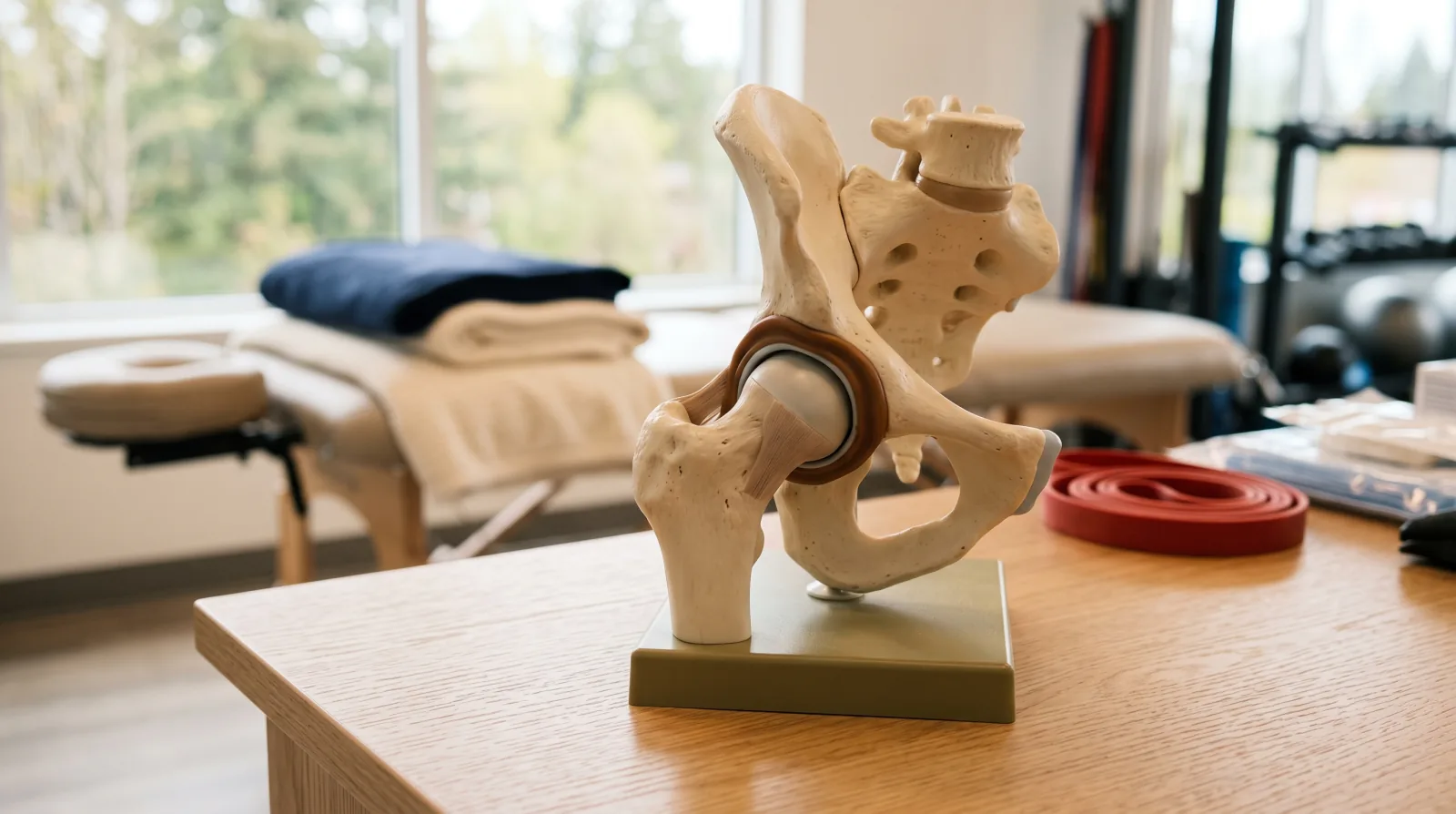
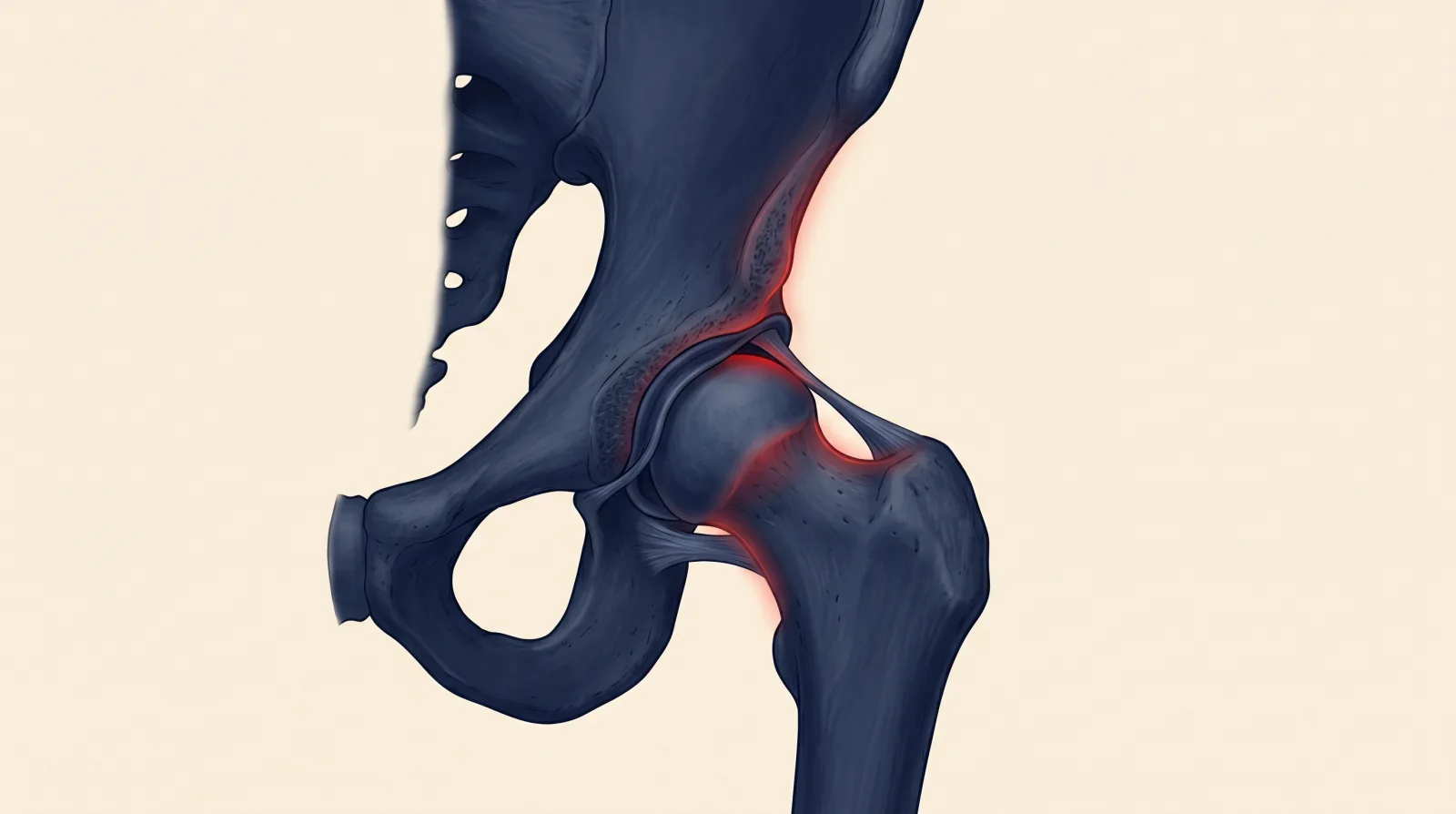
The hip is a ball-and-socket joint. In FAI, the bones are shaped in a way that causes the ball and the rim of the socket to pinch against each other during certain movements, particularly deep hip flexion like squatting, or sustained positions like prolonged sitting. There are different shapes that cause this, some on the ball side, some on the socket side, and often a combination.
That extra bone contact can irritate the joint and the labrum, the rim of cartilage that deepens the socket, producing deep groin or front-of-hip pain. It is common in active people and athletes, and it sits within the broader family of hip pain problems we assess regularly.
Why a physiotherapy-first approach makes sense
The instinct, when imaging shows a hip shape that causes impingement, is to assume the bone needs to be reshaped surgically. But the shape itself is extremely common, and plenty of people have it without pain. The pain comes from irritation, and irritation can often be reduced without changing the bone.
A structured physiotherapy program helps many people with FAI-related pain by:
- Strengthening the muscles around the hip and pelvis so the joint is better supported.
- Improving movement control of the hip and trunk, so the joint moves in ways that provoke less pinching.
- Modifying activities and positions that cause the impingement, reducing the daily irritation.
The aim is to reduce the irritation, build the hip's tolerance to load, and restore function. Many people return to their activities through this approach without ever needing surgery, which is why a physiotherapy-first plan is reasonable for many.
How surgery compares
Arthroscopic surgery for FAI reshapes the bone to reduce the pinching and repairs the labrum if it is damaged. The research shows it can be effective, particularly in younger athletes with clear structural findings and symptoms that have not responded to conservative care.
When surgery and physiotherapy have been compared directly, both can help, and many clinical guidelines support trying a quality conservative program first, reserving surgery for those who do not respond adequately over time. The right choice is genuinely individual: it depends on your age, your activity demands, how much structural damage is present, and how you respond to a good rehabilitation effort. If surgery is the path, the recovery is a structured post-surgical rehab process, and the strength built beforehand helps, much as it does in ACL prehab.
Can you keep doing sport?
Often, yes, in a modified form. We identify the positions and loads that provoke the pinching, deep squats, certain lunges, sustained deep hip flexion, and adjust them while building the strength and control that lets the hip tolerate more over time. Many people continue their sport with some modification while symptoms settle, rather than stopping entirely.
The plan is individualized to your hip, your sport, and how irritable the joint is. A climber, a cyclist, and someone who lifts weights all load the hip differently, and the modifications reflect that.
What a realistic course looks like
A physiotherapy program for FAI is typically measured in months rather than weeks, because building strength and control and changing how the hip is loaded takes time. We pace it to how the hip responds, progressing load and reducing modifications as the joint settles. We reassess against function, your strength, your tolerance to provocative positions, and your ability to do your activities, rather than chasing the pain day to day.
If, after a genuine effort at a quality program, the hip is not improving enough, that is when a surgical opinion is warranted. Trying conservative care first does not close the door to surgery; it simply means surgery is reserved for those who actually need it.
When to get it assessed
If you have deep groin or front-of-hip pain that worsens with squatting, deep bending, or prolonged sitting, an assessment confirms whether FAI is the likely driver and builds a structured program to settle it. Hip pain that comes with locking, giving way, or significant loss of movement, or that does not respond to a good program, warrants a surgical opinion, and we coordinate that when it is appropriate.
Book a 30-minute appointment and we will assess your hip, build a conservative program tailored to your activities, and advise honestly on whether and when a surgical opinion makes sense.
This article is general information about femoroacetabular impingement. It is not personal medical advice. Surgical decisions belong with an orthopaedic surgeon. A regulated practitioner can confirm whether the patterns described apply to you.
Sources
- Griffin et al., Hip arthroscopy versus best conservative care for the treatment of femoroacetabular impingement syndrome (UK FASHIoN): a multicentre randomised controlled trial, The Lancet (2018)
- Kemp et al., Physiotherapist-led treatment for femoroacetabular impingement syndrome (the PhysioFIRST study), British Journal of Sports Medicine (2020)
- College of Physical Therapists of BC (CPTBC)
Common questions
Frequently asked questions.
What is femoroacetabular impingement (FAI)?
FAI is a condition where the bones of the hip joint are shaped in a way that causes the ball and socket to pinch against each other during certain movements, particularly deep hip flexion like squatting or prolonged sitting. The extra bone contact can irritate the joint and the labrum, producing deep groin or front-of-hip pain. It is common in active people and athletes.
Does hip impingement always need surgery?+
No. Many people with FAI-related pain improve with a structured physiotherapy program that builds hip and core strength, addresses movement patterns, and modifies the activities that provoke pinching. Surgery is considered when conservative care does not provide enough relief over time, or when there is significant structural damage. A physiotherapy-first approach is reasonable for many.
What does physiotherapy do for hip impingement?+
It focuses on strengthening the muscles around the hip and pelvis, improving how you control hip and trunk movement, and modifying the positions and activities that cause the pinching. The aim is to reduce the irritation, improve the hip's tolerance to load, and restore function. Many people return to their activities without surgery through this approach.
How does FAI surgery compare to physiotherapy?+
Arthroscopic surgery reshapes the bone and repairs the labrum, and research shows it can be effective, particularly in younger athletes with clear structural findings. Comparisons with physiotherapy show both can help, and many guidelines support trying a quality conservative program first, reserving surgery for those who do not respond. The right choice depends on the individual.
Can I keep doing sport with hip impingement?+
Often yes, in a modified form. We identify the positions and loads that provoke the pinching and adjust them, while building the strength and control that lets the hip tolerate more. Many people continue their sport with some modification while symptoms settle. The plan is individualized to your hip, your sport, and how irritable the joint is.
What happens at a first physiotherapy visit for suspected FAI?+
A physiotherapist takes a history of when the pinching pain shows up, then examines hip range of motion, strength, and specific impingement tests that reproduce the pinch in deep hip flexion. You leave with a working diagnosis, an explanation of whether imaging is needed, and a starting strengthening and movement-modification plan built around your sport or daily activities.
How is hip impingement different from hip arthritis?+
FAI is a bone-shape problem that causes pinching in certain positions, most common in younger active people, and pain is often position-dependent. Hip arthritis is joint cartilage wear, more common with age, and pain tends to be more constant and worsen with general use rather than only specific deep positions. FAI left irritated for years can contribute to cartilage wear over time, so the two can overlap in an older active patient.
Does extended health or ICBC cover physiotherapy for hip impingement?+
Most extended health plans cover physiotherapy for FAI up to an annual limit, and direct billing is available at our clinic for major insurers. If the hip pain followed a motor vehicle collision, ICBC's Enhanced Care coverage funds physiotherapy in the weeks after a crash without a claim number. Check your specific plan for details, since coverage limits vary by provider.
Share this post
Copies a ready-to-publish LinkedIn post to your clipboard and opens the LinkedIn share dialog. Paste the text into the composer and publish.

Written by
Amir Ahmadi, PhDDr. Amir Ahmadi is a Registered Physiotherapist, Certified IMS Therapist and former Associate Professor. 20+ years of clinical practice in North Vancouver.
This article is for general information only and does not constitute medical advice, diagnosis, or treatment. Individual presentations vary, and assessment findings and treatment plans differ from person to person. If you are experiencing severe symptoms, neurological changes (numbness, weakness, bowel or bladder changes), or a significant trauma, contact your physician or emergency services. Care at Medstar Sport Physio & Health is provided by practitioners registered with their respective British Columbia regulatory colleges.
Filed under
- hip-impingement
- fai
- hip-pain
- rehab
- north-vancouver