Concussion rehab
Concussion Management in North Vancouver
A structured, evidence-based approach to concussion recovery. Cervical spine, vestibular system, and exertion tolerance assessed and treated together.
What it is
Concussion Management in North Vancouver at Medstar.
Medstar Sport Physio in North Vancouver offers concussion assessment and rehabilitation for sport injuries, ICBC motor-vehicle crashes, and workplace head injuries. A concussion is a functional brain injury. There is no bruising, no bleeding, and no structural change on MRI, but the electrochemical processes that run normal brain function are disrupted. The symptoms that follow (headaches, dizziness, brain fog, light sensitivity, sleep disruption, emotional changes, and exertion intolerance) are real, measurable, and treatable.
What makes concussion physiotherapy different from standard physio is the need to assess four separate body systems: the cervical spine (whose injured joints and muscles directly mimic or amplify concussion symptoms), the vestibular system (which controls balance and spatial orientation), the oculomotor system (which controls eye movement and is frequently disrupted by concussion), and the autonomic nervous system (which governs exertion tolerance and explains why many post-concussion patients crash after mild physical effort).
At Medstar, the approach follows the Berlin consensus model for sport concussion management and the VOMS (Vestibular Ocular Motor Screening) framework, adapted for the full range of patients we see: youth athletes at North Shore schools, adult recreational players, and ICBC patients whose concussion followed a motor-vehicle collision. The cervical spine is always assessed separately, because upper cervical joint dysfunction can drive headaches, dizziness, and light sensitivity that look identical to pure concussion but respond specifically to manual therapy. Treating the cervical component often accelerates the overall recovery.
How it works
Inside a session.
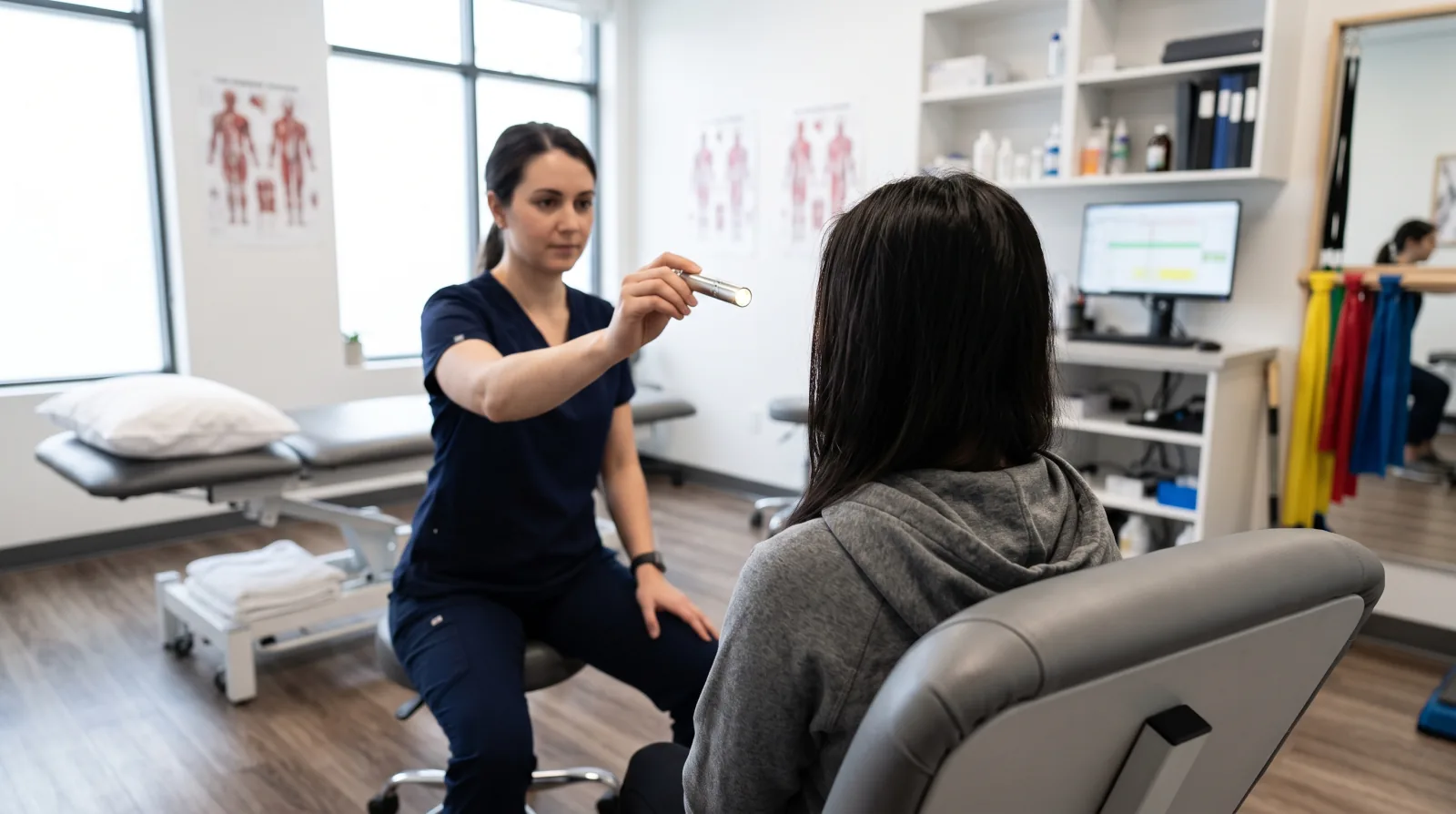
The first visit is 60 minutes. We begin with a structured symptom history: mechanism of injury, immediate symptoms, how symptoms have evolved, what makes them worse (screens, movement, exertion, social activity), sleep quality, and any prior concussions. Then the multi-system physical assessment: upper cervical mobility and tenderness, Dix-Hallpike and head impulse testing for vestibular function, smooth-pursuit and King-Devick for oculomotor, and a brief sub-symptom exertion screen to identify your current aerobic threshold.
Based on that assessment, we identify which sub-systems are driving your symptoms and prioritise treatment accordingly. Cervical dysfunction gets manual therapy and specific cervical exercises from the first visit, which is often the fastest route to meaningful symptom relief. Vestibular dysfunction gets the appropriate repositioning manoeuvre or graded gaze-stabilisation programme. Oculomotor dysfunction gets structured eye-movement exercises. Sub-symptom aerobic training begins as soon as we have your tolerance baseline.
Return-to-sport clearance follows a six-stage graduated return-to-play protocol: symptom-limited activity, light aerobic exercise, sport-specific exercise, non-contact training drills, full-contact practice, then return to competition. Each stage requires 24 hours symptom-free before advancing. We document the progression in writing, which matters for school, sport, and ICBC purposes.
Conditions we treat with this
See how concussion management fits into specific recovery plans.
- Concussion: the full clinical picture and symptom breakdown
- Positional dizziness: BPPV that can accompany a concussion
- Headaches: cervicogenic and post-concussion headache patterns
- Neck pain & whiplash: cervical spine involvement in concussion
- Whiplash: MVA mechanism that often co-occurs with concussion
What to expect
Simple sport concussion with no prior concussion history: most patients complete the six-stage return-to-sport protocol within 4 to 6 weeks. Post-concussion syndrome (symptoms beyond 4 weeks): the cervical component often responds within 3 to 5 visits; vestibular and oculomotor issues typically improve over 6 to 10 visits; full resolution of exertion intolerance may take 8 to 16 weeks of graduated aerobic training. No two concussions are the same, so we give you a realistic timeline after the first assessment rather than before it.
Talk to us
Not sure if it's the right fit?
Send a quick note about what's going on. A physiotherapist will read it and tell you honestly whether concussion management is the right tool, or whether something else makes more sense first.
Common questions
About concussion management.
When should I start physiotherapy after a concussion?
The old advice was 48 to 72 hours of complete rest, then gradual return. Current evidence supports starting sub-symptom aerobic activity as early as 24 to 48 hours post-injury, and beginning physiotherapy assessment within the first week if symptoms are not rapidly resolving. Early physiotherapy that stays below the symptom threshold speeds recovery up rather than slowing it down. Complete rest beyond 48 hours has been associated with slower recovery in multiple studies.
I was told to just rest. Why is physio different?+
The "cocoon therapy" approach (complete rest until all symptoms resolve) was the standard recommendation prior to 2017. The Berlin consensus and subsequent research overturned it. For most people, prolonged rest leads to deconditioning, sleep disruption, anxiety, and a symptom flare when they try to return to activity. A graded, monitored return to activity and targeted treatment of the cervical, vestibular, and oculomotor sub-systems gets people back faster with a lower risk of prolonged symptoms.
Is this covered by ICBC if my concussion was from a car accident?+
Yes. Concussion following a motor-vehicle collision is covered under ICBC's pre-approved 25-session physiotherapy block. If your recovery requires more sessions, we submit clinical documentation to ICBC to justify the extension. We direct-bill ICBC directly, so there is no upfront cost at the visit. The same pre-approved block also covers the cervical, vestibular, and exertion-tolerance assessment that a concussion visit involves, since it is billed as physiotherapy rather than as a separate service.
My child plays hockey. Do you work with youth athletes?+
Yes. Youth concussion management follows the same principles as adult concussion, with additional attention to academic impact (we can provide a letter for the school supporting a modified workload), and a more conservative return-to-sport timeline since growing brains have a longer vulnerability window. A parent or guardian attends the first visit for patients under 16.
I had a concussion 6 months ago and I still have symptoms. Is it too late for physio?+
No. Post-concussion syndrome responds to physiotherapy even months or years after the injury. The cervical spine and vestibular components in particular can be directly treated regardless of how long they have been present. The exertion intolerance component responds to a graded aerobic training programme at any stage. What changes with a longer time course is the assessment, because we need to rule out other causes of persistent symptoms and make sure the programme is calibrated to your current baseline.
What's the difference between seeing physio for a concussion versus seeing a sport medicine doctor?+
Sport medicine physicians diagnose concussion, manage medication when relevant (sleep aids, anti-nausea), and provide the medical clearance that some leagues require before return-to-contact training. Physiotherapists deliver the hands-on treatment: cervical manual therapy, vestibular repositioning and rehabilitation, oculomotor exercises, and the graded return-to-sport protocol. The two roles are complementary. We can work alongside your sport med doctor or family physician, and we'll write a clear clinical summary at any stage if they need one.
Will I need imaging, such as an MRI or CT scan?+
Most concussions do not require imaging because concussion is a functional injury that does not show up on CT or standard MRI. The Canadian CT Head Rule guides the decision for CT: it's indicated for specific red flags (LOC over 30 seconds, GCS below 15, suspected skull fracture, age over 65, two or more vomiting episodes). If you have any of those features, go to Lions Gate Hospital emergency rather than physio first. For most sport and MVA concussions, imaging is not indicated and physiotherapy can begin without it.
What are the stages of return-to-sport clearance after a concussion?+
Return-to-sport clearance after a concussion follows a six-stage graduated protocol: symptom-limited activity, light aerobic exercise, sport-specific exercise, non-contact training drills, full-contact practice, then return to competition. Each stage requires 24 hours symptom-free before advancing to the next one. The progression is documented in writing, which matters for school, sport, and ICBC purposes.
Reviewed by Amir Ahmadi, PhD, MSc PT, Registered Physiotherapist, Certified IMS Therapist, College of Physical Therapists of British Columbia (CPTBC). Last reviewed July 2026.
This page is for general information only and does not constitute medical advice, diagnosis, or treatment. Treatment suitability is determined case-by-case during assessment; not every service is appropriate for every presentation. If you have a medical implant, are pregnant, take blood thinners, or have an active infection, tell your physiotherapist before treatment. Physiotherapy at Medstar Sport Physio & Health is provided by physiotherapists registered with the College of Physical Therapists of British Columbia (CPTBC).
Related reading
- Vestibular physiotherapy: balance and dizziness rehab, often part of concussion recovery →
- ICBC concussion after a crash: what ICBC covers and how to start treatment →
- Youth concussion: a parent's guide to recovery and return to school →
- Concussion return to play: criteria-based return for North Shore athletes →
- Whiplash dizziness: cervical-vestibular overlap that complicates concussion recovery →
Ready to book?