
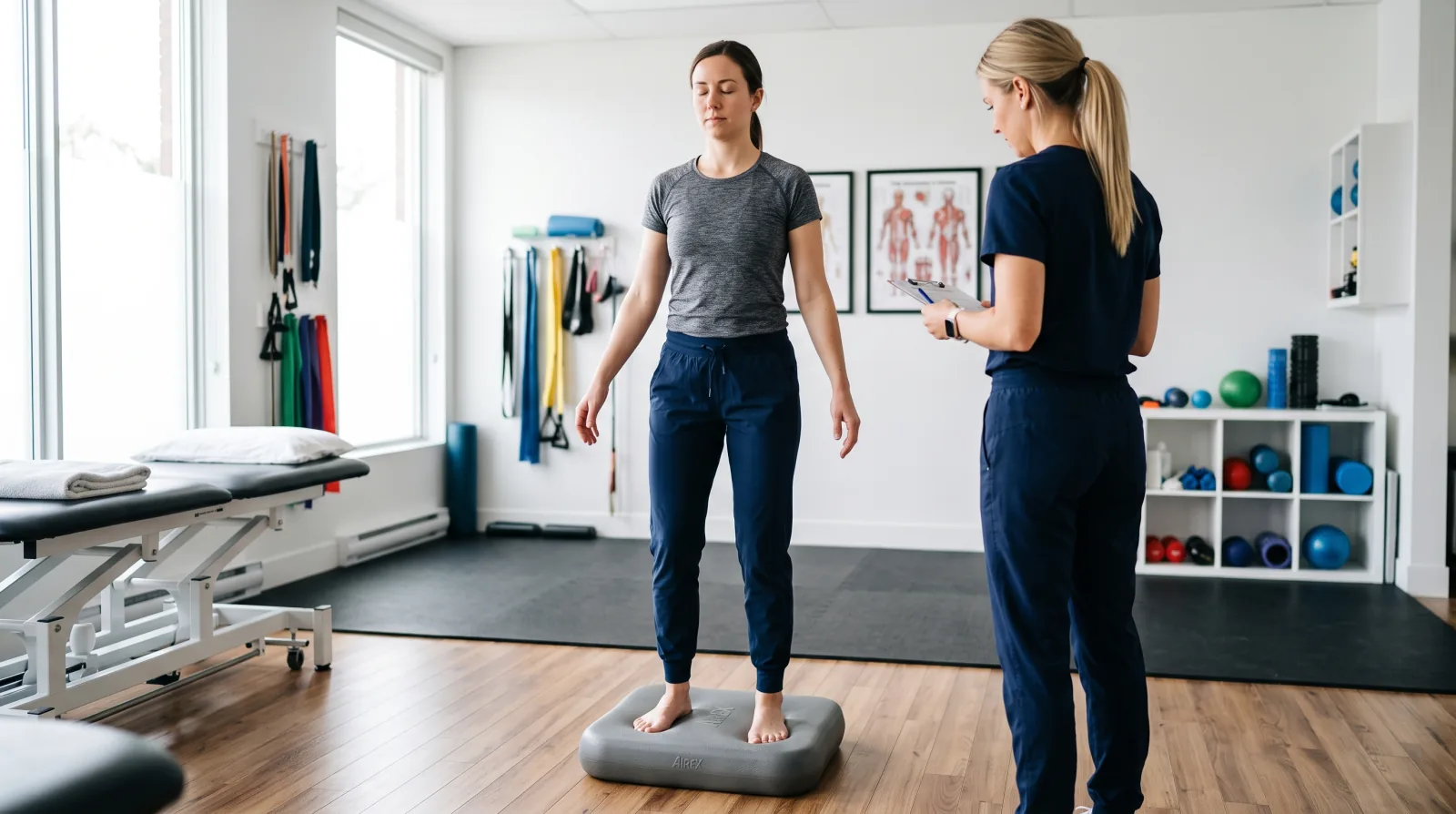
Vestibular rehab
Vestibular Physiotherapy in North Vancouver
Dizziness, BPPV, and post-concussion balance problems are treatable. Most patients see meaningful improvement within 3 to 6 visits.
What it is
Vestibular Physiotherapy in North Vancouver at Medstar.
At Medstar Sport Physio in North Vancouver, vestibular physiotherapy treats dizziness, BPPV, and balance problems by targeting the part of the system that has failed. The vestibular system is the balance and spatial-orientation hardware in your inner ear. It can malfunction because of a displaced calcium crystal (BPPV), a viral infection, a concussion, or age-related degeneration. When that happens, the brain receives conflicting signals from the eyes, ears, and body. The result is dizziness, vertigo, nausea, unsteadiness, or a floating sensation that makes normal daily life difficult.
Vestibular physiotherapy is a specific branch of rehab designed to diagnose which part of the system has failed and retrain the brain to compensate. The most common and treatable cause is Benign Paroxysmal Positional Vertigo, or BPPV. A displaced otolith crystal in the semicircular canal sends the brain a false spin signal whenever the head moves into certain positions. The Epley manoeuvre physically repositions that crystal, and most BPPV patients are symptom-free within one or two sessions.
Post-concussion vestibular dysfunction is a different problem: the neural pathways that integrate vestibular, visual, and somatosensory signals were disrupted by the impact. Treatment involves a graded programme of gaze-stabilisation exercises, habituation training, and cervical physiotherapy, because the neck's proprioceptive system and the vestibular system overlap substantially after a concussion.
How it works
Inside a session.
The first visit begins with a structured vestibular history: when the dizziness started, what triggers it, whether it comes with nausea or hearing changes, what prior imaging or specialist opinions you've had. Then a hands-on assessment: Dix-Hallpike for posterior canal BPPV, the Head Impulse Test and Head Shake Nystagmus for unilateral hypofunction, and Dynamic Visual Acuity to quantify how well the vestibulo-ocular reflex is working. For patients with a concussion history, we also screen the cervical spine and run a baseline King-Devick test.
If BPPV is confirmed, treatment begins immediately. The Epley or Semont manoeuvre moves your head through a precise sequence of positions over about five minutes, guiding the displaced crystal back into the utricle where it stops causing signals. Most patients feel the room briefly spinning during the manoeuvre, which confirms the crystal is moving. The spin settles as the crystal returns to its resting position.
For vestibular hypofunction or post-concussion vestibular problems, treatment is a progressive exercise programme: gaze-stabilisation drills, balance tasks on progressively challenging surfaces, and habituation sequences that gradually expose the brain to the motions or environments that trigger symptoms. The goal is to teach the brain to process those triggers correctly again.
Conditions we treat with this
See how vestibular physiotherapy fits into specific recovery plans.
- Concussion: the full clinical picture including vestibular involvement
- Positional dizziness (BPPV): causes, the Epley manoeuvre, and recovery
- Whiplash & ICBC: cervical and vestibular overlap after a crash
- Headaches: cervicogenic headache and its link to vestibular symptoms
- Balance & falls: age-related balance decline and fall prevention
What to expect
BPPV: most patients are symptom-free within 1 to 3 sessions after a successful repositioning manoeuvre. Vestibular hypofunction and post-concussion vestibular problems: meaningful functional improvement is typically apparent by weeks 4 to 6, with most patients completing the programme within 8 to 10 visits. Cervicogenic dizziness often improves in parallel with the cervical spine work within 4 to 6 sessions.
Talk to us
Not sure if it's the right fit?
Send a quick note about what's going on. A physiotherapist will read it and tell you honestly whether vestibular physiotherapy is the right tool, or whether something else makes more sense first.
Common questions
About vestibular physiotherapy.
How do I know if my dizziness is BPPV or something else?
BPPV produces a brief, intense spinning sensation triggered by specific head positions such as rolling over in bed, looking up at a shelf, or bending forward. The spinning typically lasts less than a minute. If your dizziness is constant, comes with hearing loss, or includes neurological symptoms like double vision or weakness, you should see your doctor first to rule out other causes before starting vestibular physio. A vestibular physiotherapist can also run the Dix-Hallpike and related tests to confirm BPPV at the first visit.
Do I need a doctor's referral for vestibular physiotherapy?+
No. Physiotherapists in BC are primary-care practitioners and can assess and treat vestibular conditions directly. That said, if you have a new onset of vertigo with sudden hearing loss, tinnitus, or neurological signs (facial numbness, difficulty swallowing), see a physician first. Those presentations need medical screening before physio.
Will my extended health insurance cover vestibular physiotherapy?+
Yes, if your plan covers physiotherapy. Vestibular sessions are billed as physiotherapy (there is no separate vestibular billing code), so the same direct-billing rules apply. ICBC covers vestibular physiotherapy for dizziness following a motor-vehicle injury as part of the standard pre-approved treatment block. Most patients complete a programme within 8 to 10 visits, so check your plan's annual physiotherapy visit limit if you are paying through extended health rather than ICBC.
I had the Epley manoeuvre done years ago but the BPPV came back. Is that normal?+
Yes. BPPV recurs in roughly 30 to 50% of patients within a year. Some people have structurally looser otolith membranes (associated with vitamin D deficiency, head trauma, or aging) and experience multiple episodes. The treatment is the same each time, and repositioning is just as effective on a recurrence as on the first episode. We can also teach you a self-Epley variation to manage mild recurrences at home.
I had a concussion 3 months ago and still feel dizzy. Is vestibular physio still useful?+
Yes. Post-concussion vestibular dysfunction responds to rehab even months after the injury. The brain retains the ability to compensate and adapt well beyond the acute window. What changes is the emphasis: earlier intervention focuses on gaze-stabilisation and habituation; later intervention often involves more cervical spine work and exertion tolerance training to clear the remaining dizziness with activity.
Can you treat vestibular problems through ICBC?+
Yes. Dizziness, vertigo, and balance problems are common after motor-vehicle injuries, especially when there's a concussion or whiplash component. ICBC's pre-approved 25-session block covers vestibular physiotherapy. If you need more sessions, we can submit the clinical rationale to ICBC on your behalf. See our ICBC concussion and dizziness pages for more detail.
What tests does a vestibular physiotherapist actually run at the first visit?+
A structured vestibular assessment, including the Dix-Hallpike test for posterior canal BPPV, the Head Impulse Test and Head Shake Nystagmus test for unilateral vestibular hypofunction, and Dynamic Visual Acuity to check how well the vestibulo-ocular reflex is working. Patients with a concussion history also get a cervical spine screen and a baseline King-Devick test as part of the same visit.
I just feel unsteady with age, not spinning. Does vestibular physiotherapy still apply to me?+
Yes. Age-related balance decline is one of the conditions vestibular physiotherapy addresses directly, using graded balance training and proprioceptive rehab to reduce fall frequency. You don't need the intense spinning of BPPV or the aftermath of a concussion to benefit from a balance-focused programme at this clinic.

Reviewed by Amir Ahmadi, PhD, MSc PT, Registered Physiotherapist, Certified IMS Therapist, College of Physical Therapists of British Columbia (CPTBC). Last reviewed July 2026.
This page is for general information only and does not constitute medical advice, diagnosis, or treatment. Treatment suitability is determined case-by-case during assessment; not every service is appropriate for every presentation. If you have a medical implant, are pregnant, take blood thinners, or have an active infection, tell your physiotherapist before treatment. Physiotherapy at Medstar Sport Physio & Health is provided by physiotherapists registered with the College of Physical Therapists of British Columbia (CPTBC).
Ready to book?