
Sciatica
Sciatica & Sciatic Nerve Pain | North Vancouver
Burning down the back of the leg, pins and needles in the foot, a back that won't let you sit through a meeting. We figure out which nerve, which level, and what to actually do about it.
What it is
Understanding your sciatica / sciatic nerve pain.
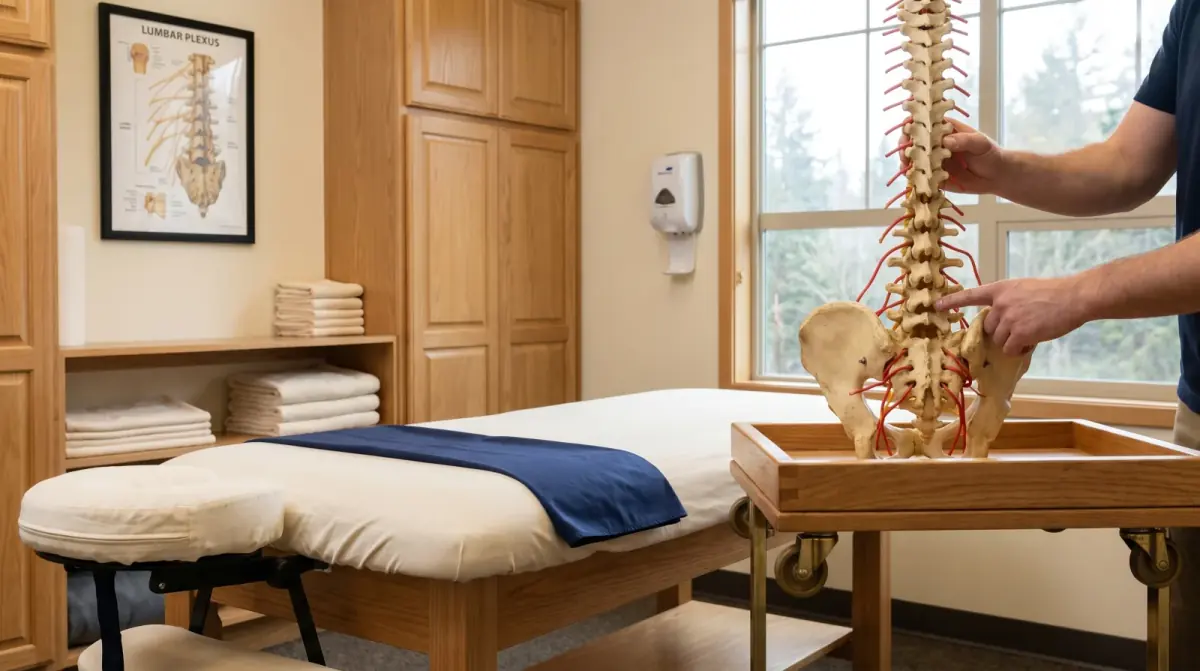
Sciatica is shorthand for pain caused by irritation or compression of the sciatic nerve, which starts in the lower back, runs through the buttock, and travels down the back of the leg. It can be sharp, burning, or radiating, and often brings numbness, tingling, or weakness in the leg or foot. It ranges from a mild nuisance to pain severe enough to disrupt walking, sitting, or everyday activities. It is a symptom, not a diagnosis. At Medstar Sport Physio in North Vancouver, we assess and treat this through a one-on-one physiotherapy appointment, confirming the pattern and building a plan from there. We see patients from across Vancouver and the North Shore, many of whom cross Lions Gate Bridge or take the SeaBus for treatment here.
The same leg pain can come from a herniated or bulging disc pressing on a nerve root in the lumbar spine, from tightness in the deep buttock muscles (often the piriformis) squeezing the nerve as it leaves the pelvis, from a narrowed spinal canal (spinal stenosis) or age-related degenerative changes crowding the nerve roots, or from inflammation and stiffness in the lower-back joints referring pain along a familiar pattern. Poor posture, prolonged sitting, repetitive lifting with poor form, and a weak core all make it more likely and slower to settle.
Sometimes it follows an obvious trigger: a heavy lift, an awkward twist. Just as often there is no single moment to blame: the irritation builds gradually from cumulative stress on the spine until one ordinary movement tips it over.
Getting the source right is most of the work. A disc-driven sciatica responds to one set of movements and gets worse with another. A piriformis-driven case usually needs the opposite. Treating both the same way is why so many people end up doing months of stretches that don't help.
The other thing worth knowing is that most sciatica improves. It does not always improve quickly, and it almost never improves on a fixed timeline, but the trajectory bends with the right plan. The exception is the small group with true neurological signs (progressive weakness, numbness in the saddle area, loss of bowel or bladder control). That's a same-day call to a physician rather than a physio booking.
What to expect
Many sciatica cases ease in the first 2 to 6 weeks once the right movement bias is found. Some take longer, especially with a clear disc involvement. Your physiotherapist will set the next milestone after assessment and adjust if symptoms aren't moving in the right direction.
Get a plan
Not sure if we're the right fit?
Send us a quick note about what's going on. A physiotherapist will read it personally and reply with what they'd recommend. No commitment to book.
Common questions
About sciatica / sciatic nerve pain.
Do I need an MRI before starting physio?
No. Imaging is rarely the first step in BC. We can identify the likely source clinically, whether that's a disc, the piriformis muscle, or spinal stenosis, and refer for imaging if findings warrant it, for example progressive weakness, failed conservative care, or red-flag symptoms. Many sciatica cases never need an MRI to get better, since directional preference testing tells us enough to start treatment.
Is it ever a 'don't stretch it, strengthen it' situation?+
Often. The reflex to stretch a tight hamstring or piriformis can actually wind up an irritated nerve when the underlying driver is disc-related, while a piriformis-driven case usually needs the opposite approach. Part of the first assessment is directional preference testing to figure out which camp you're in, so the home exercises and targeted core and hip strengthening help instead of hurt.
Should I be lying down or staying active?+
Staying active within a tolerated range, in most cases. Strict bed rest delays recovery for non-radicular back pain and most sciatica, and many cases ease within 2 to 6 weeks once the right movement bias is found. We'll help you find the activities that move you forward and the ones to pause for now, based on what calms or winds up the nerve in your assessment.
What about my numb foot: is that nerve damage?+
It is nerve irritation rather than damage in most cases, and sensation usually returns as nerve mobility work and the right movement bias calm the nerve down. Persistent or worsening numbness, weakness, or a foot that won't lift cleanly when walking are different, and those warrant earlier physician review rather than a physiotherapy booking.
Do you direct-bill ICBC and extended health?+
Yes. Direct billing for most major extended-health insurers, plus ICBC and WorkSafeBC. We handle the paperwork. Sciatica after a crash is common, since a heavy lift, an awkward twist, or the jolt of a collision can trigger disc or piriformis irritation, so ICBC claims for sciatic nerve pain come through this clinic regularly alongside workplace and extended-health cases.
What actually causes sciatica?+
Sciatica comes from irritation or compression of the sciatic nerve, which runs from the lower back through the buttock and down the back of the leg. The most common sources are a herniated or bulging disc pressing on a nerve root, tight piriformis muscle squeezing the nerve as it exits the pelvis, spinal stenosis crowding the nerve roots, or stiff, inflamed lower-back joints referring pain along the same pattern. Poor posture, prolonged sitting, and a weak core make any of these more likely.
How long does it take for sciatica to get better?+
Most sciatica improves, often within 2 to 6 weeks once the right movement bias is found, though it does not follow a fixed timeline and some cases take longer, especially with clear disc involvement. Your physiotherapist sets the next milestone after assessment and adjusts the plan if symptoms aren't moving in the right direction.
Why does the same stretch help one person's sciatica and worsen another's?+
Because sciatica has different sources, and a disc-driven case responds to one set of movements while a piriformis-driven case usually needs the opposite. Treating every case the same way is why so many people spend months on stretches that don't help. Getting the source right through assessment is most of the work, and it's what determines which exercises calm the nerve rather than winding it up.

Reviewed by Amir Ahmadi, PhD, MSc PT, Registered Physiotherapist, Certified IMS Therapist, College of Physical Therapists of British Columbia (CPTBC). Last reviewed July 2026.
This page is for general information only and does not constitute medical advice, diagnosis, or treatment. Individual presentations vary, and assessment findings and treatment plans differ from person to person. If you are experiencing severe symptoms, neurological changes (numbness, weakness, bowel or bladder changes), or a significant trauma, contact your physician or emergency services. Physiotherapy at Medstar Sport Physio & Health is provided by physiotherapists registered with the College of Physical Therapists of British Columbia (CPTBC).
Related reading
- Low back pain: lumbar spine overview and treatment →
- Nerve root impingement: when the nerve is pinched at the spine →
- Disc bulge & herniation: when the disc is the source →
- Sciatica after a crash: ICBC guide →
- Acupuncture: neurological pain modulation for sciatic nerve sensitivity →
- Sciatica: when it's a disc, when it's referred, and why it matters →
- Piriformis syndrome or true sciatica? Why the label is debated and what it changes →
- IMS dry needling: deep muscle release for piriformis and lumbar guarding →