Desk Ergonomics for Neck and Back Pain: What Actually Matters
Ergonomics advice is everywhere, much of it overstated. Here is what actually reduces desk-related neck and back pain, and the one principle that beats any perfect setup.
BY AMIR AHMADI, PHD
Ergonomics advice is everywhere, and much of it is overstated, promising that the right chair or the perfect monitor height will banish your neck and back pain. The reality is more useful and a lot cheaper. Here is what actually matters for desk-related discomfort, and the one principle that beats any perfect setup.
The single biggest driver of desk-related neck and back pain is not a bad chair or monitor. It is prolonged static posture with too little movement. The body tolerates almost any reasonable position for a while, but holding one position for hours, even a good one, leads to discomfort. A sensible setup helps and is worth doing once: screen near eye level, forearms supported, a chair that fits reasonably well. Moving regularly, ideally every 30 to 60 minutes, does more than any equipment change. At Medstar Sport Physio in North Vancouver, movement habits and targeted neck and back strengthening are paired with ergonomic guidance, because the two together work better than either alone. What the plan involves depends on the specific setup and movement patterns driving each person's pain.
The body dislikes being still, not a particular posture
The most important idea in this whole topic is that sustained static postures contribute to desk-related discomfort far more than any single bad posture does. Your body is built to move, and it tolerates almost any reasonable position for a while. What it does not tolerate is being held in one position, even a textbook-perfect one, for hours on end.
This reframes the entire conversation. The villain in most desk-related neck and back pain is not how you are sitting. It is how long you sit that way without moving. That is why people with excellent chairs and perfectly arranged monitors still develop discomfort when they sit motionless for hours, and it connects to the same understanding that runs through our pieces on cervicogenic headaches from desk and neck strain and on returning to lifting after low back pain: the body responds to varied, tolerable load, not to rigid stillness.
A reasonable setup, worth doing once
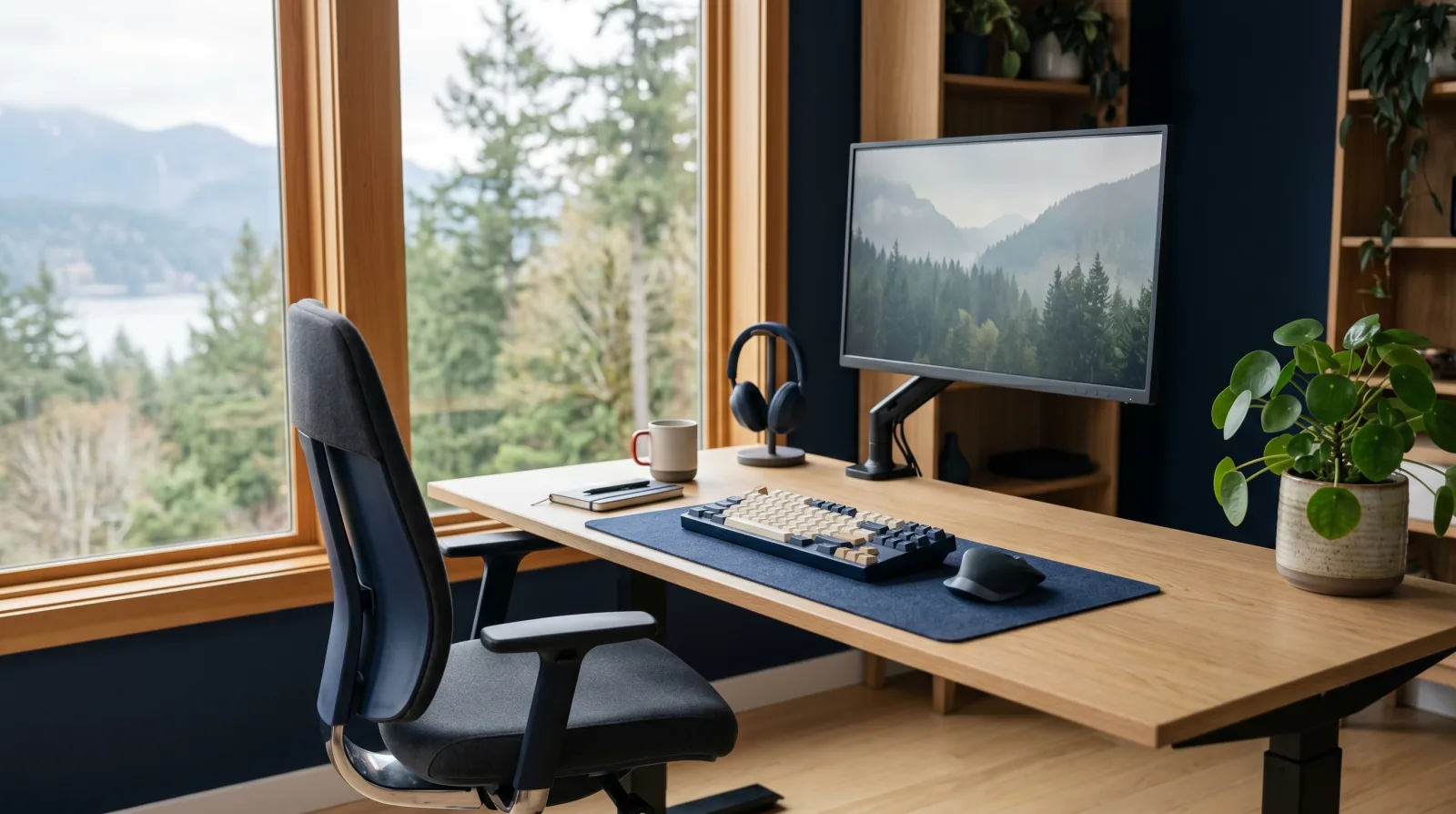
None of this means setup is irrelevant. A sensible workstation reduces the strain on your neck, shoulders, and back, and it is worth getting roughly right. A reasonable starting point:
- Screen near eye level, so you are not holding your head tipped down or craned forward for hours.
- Forearms supported, so the shoulders and neck are not constantly working to hold your arms up.
- A supportive chair that fits you reasonably well, with support for your lower back.
The key word is reasonable. There is no single perfect posture to achieve, and chasing one is a distraction. A supported, relaxed position is a good default, but the setup is the small lever, not the big one.
The big lever: move regularly
The most effective ergonomic intervention is also the cheapest: move regularly throughout the day. Ideally, change position or get up every 30 to 60 minutes, even briefly. Stand up, walk to refill your water, stretch, shift how you are sitting, or take a phone call standing. These small interruptions break up the sustained loading that drives desk discomfort.
The exact interval matters less than the habit of interrupting long static periods. The body responds to the variety and the movement, and frequent small movements across a workday add up to a real difference. This is the principle behind the saying that the best posture is your next posture, because the value is in the change itself.
Where standing desks fit
A standing desk can genuinely help, but not for the reason people assume. The benefit is not that standing is inherently better than sitting; standing all day brings its own aches. The benefit is that a sit-stand desk lets you alternate between positions, adding movement and variety to your day.
Used that way, to move between sitting and standing rather than to replace one static posture with another, a standing desk is a useful tool. Used as a way to stand motionless for eight hours, it simply swaps one sustained position for another. The variety is the medicine, not the standing.
Why an expensive chair is not the answer
People often hope that buying an expensive ergonomic chair will solve their pain. A supportive chair that fits you reasonably well does help, and it is worth a sensible investment if you can. But an expensive chair does not substitute for moving regularly. The person with the premium chair who sits motionless for hours still develops discomfort, because the chair never addressed the actual problem, which is the stillness.
So if you are deciding where to put your effort and money: get a reasonable setup once, then invest at least as much energy in building movement into your day. The movement costs nothing and does more.
Building strength alongside the habits
Beyond setup and movement, building general strength and the endurance of the neck, shoulder, and back muscles makes the body more tolerant of desk work. A body that is strong and conditioned handles sustained postures and the demands of a workday far better than a deconditioned one. We often pair ergonomic guidance with a simple strengthening plan, because the two together are more effective than either alone.
When to get it assessed
If desk work is leaving you with persistent neck or back pain, an assessment identifies what is driving it, addresses the contributing factors, and builds a plan that combines sensible ergonomics, movement habits, and strengthening. Pain that radiates into the arm or leg, comes with numbness or weakness, or is not settling is worth assessing rather than managing with setup changes alone.
Book a 30-minute appointment and we will assess your neck and back, review how you work, and build a practical plan that goes well beyond chasing the perfect chair.
This article is general information about desk ergonomics and related neck and back pain. It is not personal medical advice. Pain with radiating symptoms, numbness, or weakness should be assessed. A regulated practitioner can confirm whether the patterns described apply to you.
Sources
- Waongenngarm et al., The effects of breaks on low back pain, discomfort, and work productivity in office workers: A systematic review, Applied Ergonomics (2020)
- Healy et al., Reducing sitting time in office workers: short-term efficacy of a multicomponent intervention, Preventive Medicine (2013)
- College of Physical Therapists of BC (CPTBC)
Common questions
Frequently asked questions.
Is bad posture causing my neck and back pain?
Sustained static postures, holding any position for hours, contribute to desk-related discomfort more than any single 'bad' posture does. The body dislikes being held still far more than it dislikes a particular position. So while a reasonable setup helps, the bigger issue is usually how long you stay in one position without moving, rather than whether your posture is textbook-perfect.
What is the best sitting posture for working at a desk?+
There is no single perfect posture. A reasonable starting point is a supported, relaxed position with the screen roughly at eye level and forearms supported, but the most important thing is that you change positions regularly rather than holding one ideal posture all day. The best posture is genuinely your next posture, because movement is what the body needs.
Will a standing desk fix my back pain?+
A standing desk can help by letting you alternate between sitting and standing, which adds movement and position variety. But standing all day brings its own discomfort, so it is not a cure on its own. The benefit comes from the variety it enables, not from standing being inherently better than sitting. Use it to move between positions, not to replace one static posture with another.
How often should I move when working at a desk?+
Regularly, ideally every 30 to 60 minutes, even briefly. Standing up, walking to refill water, stretching, or simply changing position breaks up the sustained loading that drives desk discomfort. The exact interval matters less than the habit of interrupting long static periods. Frequent small movements throughout the day add up to a real difference.
Do I need an expensive ergonomic chair?+
Not necessarily. A supportive chair that fits you reasonably well helps, but an expensive chair does not substitute for moving regularly. People with excellent chairs who sit motionless for hours still develop discomfort. Spend on a reasonable setup if you can, but invest at least as much effort in building movement into your day, which costs nothing.
When is desk-related neck or back pain a reason to see a physiotherapist rather than just adjust the setup?+
See a physiotherapist if desk-related pain radiates into an arm or leg, comes with numbness, tingling, or weakness, or is not settling despite reasonable setup and movement changes. Persistent pain that limits your work or sleep is also worth assessing. Ordinary end-of-day stiffness that eases once you get up and move usually responds to the setup and movement habits described above.
What happens at a first physiotherapy visit for desk-related pain?+
The physiotherapist takes a history of your workday, including how long you sit without moving and your current setup, then examines the neck, shoulders, and back for movement, strength, and any signs pointing beyond a simple postural pattern. From there we agree on a combination of movement habits, setup adjustments, and targeted strengthening suited to what is actually driving your discomfort.
Is a laptop worse for neck and back pain than a desktop setup?+
A laptop used on its own often forces the neck into a bent-forward position and the shoulders into a hunched one, because the screen and keyboard cannot be positioned independently. Using a separate keyboard and mouse with the laptop raised to eye level, or docking it to an external monitor, removes that problem. As with any setup, the bigger factor remains how long you hold any position without moving.
Share this post
Copies a ready-to-publish LinkedIn post to your clipboard and opens the LinkedIn share dialog. Paste the text into the composer and publish.

Written by
Amir Ahmadi, PhDDr. Amir Ahmadi is a Registered Physiotherapist, Certified IMS Therapist and former Associate Professor. 20+ years of clinical practice in North Vancouver.
This article is for general information only and does not constitute medical advice, diagnosis, or treatment. Individual presentations vary, and assessment findings and treatment plans differ from person to person. If you are experiencing severe symptoms, neurological changes (numbness, weakness, bowel or bladder changes), or a significant trauma, contact your physician or emergency services. Care at Medstar Sport Physio & Health is provided by practitioners registered with their respective British Columbia regulatory colleges.
Filed under
- ergonomics
- desk
- neck-pain
- back-pain
- north-vancouver