Rehab After a Lumbar Discectomy: What the First 12 Weeks Look Like
After disc surgery your surgeon sets the limits and a physiotherapist works inside them. Here is what the research says about walking, exercise, lifting, work and the warning signs.
BY SANAZ DAVARIAN, PHD
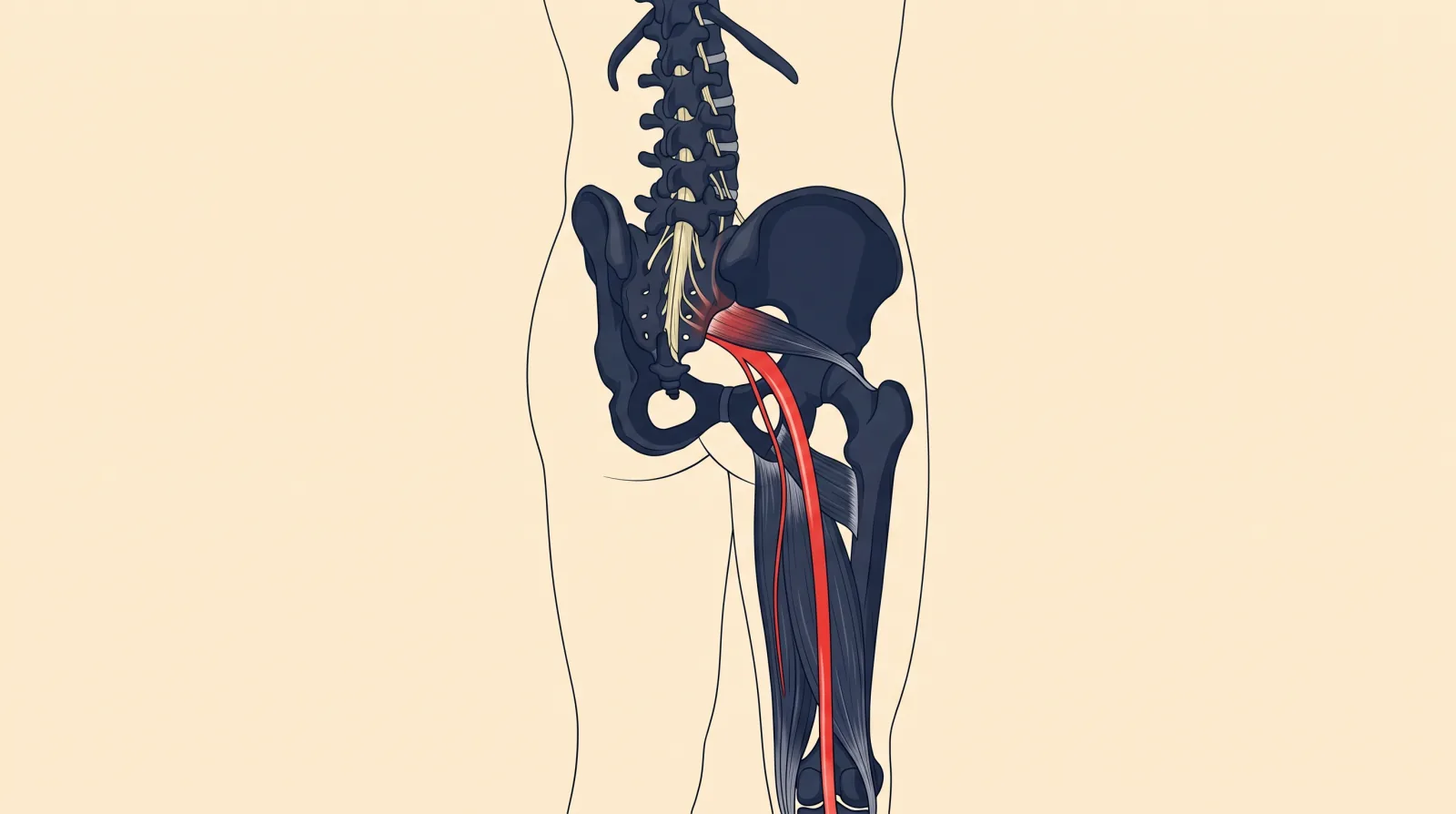
A lumbar discectomy is surgery that removes the part of a herniated disc pressing on a nerve in the lower back. A microdiscectomy does the same through a smaller opening, using a microscope. This guide covers who sets the rules after the operation, what the research says about rehab, and which warning signs need your surgeon or an emergency department.
At Medstar Sport Physio in North Vancouver, rehab after a lumbar discectomy works inside your surgeon's written limits: short walks first, then exercise that most trials started 4 to 6 weeks after surgery, then a staged return to lifting and work. New bladder or bowel changes, numbness around the groin or new leg weakness need emergency care the same day.
Your surgeon sets the limits and physiotherapy works inside them
The surgeon knows what was done in your operation, so the surgeon's discharge instructions come first. A physiotherapist plans exercise inside those limits and cannot override them.
The evidence behind the limits is thin. A 2025 review in the Journal of Spine Surgery searched for studies on activity restrictions after spine surgery, such as limits on bending, twisting, driving or weightlifting. It found 4 studies, all on disc operations. The certainty of the evidence was low for every outcome, and the authors wrote that the literature prevents a definitive conclusion.
Surgeons restrict activity anyway, and they do not all agree. In a 2026 survey of 703 spine surgeons, 79% recommended activity restrictions after discectomy and 34% recommended a back brace.
Ask for your limits in writing before you leave the hospital, and bring the sheet to your first physiotherapy visit. If your surgeon's sheet and this article differ, follow the sheet.
Early limits on walking, sitting, driving and lifting differ
The MedlinePlus spine surgery discharge page, published by the US National Library of Medicine and reviewed in June 2025, shows a usual pattern. It covers all spine operations, including fusion, so your own plan may differ. It advises short walks for the first 2 weeks, no sitting longer than 20 or 30 minutes at one time, and stairs once a day in the first 1 or 2 weeks. It asks you to keep the incision dry for 5 to 7 days and to check it every day.
Walking is the main activity at this stage. A common plan is to add walking time in small steps and to rest before leg or back pain builds. A nerve may take longer to settle than the wound, so leg numbness or tingling can continue for some time. Tell your surgeon about any change. If leg pain was the reason for surgery, our article on how disc pain differs from other causes of sciatica explains the common patterns.
In the AO Spine survey, prolonged standing, prolonged sitting and driving were usually restricted for 2 weeks. Bending, twisting, lifting and low-intensity physical activity were usually restricted for 3 months. High-intensity activity and direct contact sports were usually restricted for 6 months.
Driving has its own small body of research. A study in the European Spine Journal measured driving reaction time in 46 patients with a lumbar disc herniation. In patients with right-sided leg symptoms, the typical (median) time fell from 664 milliseconds before surgery to 605 at discharge. Healthy volunteers had a typical time of 487 milliseconds. The authors judged it safe to continue driving after discharge.
A 2017 review of driving after spine surgery found that evidence on when to resume driving is scarce. It says pain level, use of strong pain medicine such as opioids, and clear thinking should all be considered. MedlinePlus advises no driving for the first 2 weeks. The sources give different answers, so ask your surgeon.
For lifting, the MedlinePlus page sets a limit of 10 pounds (4.5 kilograms) in the early weeks. Your surgeon may set a higher or lower limit. After the surgeon clears you, lifting returns in steps: lighter loads and good technique first, heavier loads later. Our article on returning to lifting after back pain describes that staged return.
Most trials started exercise four to six weeks after surgery
The main source on rehab after disc surgery is a Cochrane review by Oosterhuis and colleagues. Cochrane is an organization that combines the results of medical trials. This review, the most recent version, from 2014, covered 22 trials with 2,503 participants who had a discectomy or microdiscectomy. Programs lasted 12 weeks on average. Four started immediately after surgery, 16 started 4 to 6 weeks after surgery and 2 started one year after.
Its results:
- Programs that started immediately were not more effective than their comparison programs, which included exercise.
- Exercise starting 4 to 6 weeks after surgery gave a faster fall in pain and disability than no treatment, with small to medium effect sizes. The difference in function was gone at longer follow-up.
- Higher-intensity exercise gave a faster fall in pain and disability than lower-intensity exercise in two trials with 103 people.
- Supervised and home programs showed no clear difference.
- None of the trials reported that exercise increased the number of second operations.
The authors rate the evidence as low to very low quality.
Newer reviews add to this. A 2025 review found lower pain in exercise groups in the short term and the long term, and lower disability in the short term only. Results varied widely between trials. A 2023 review of 45 trials, 41 of them on disc herniation, found that supervised exercise reduced pain more than unsupervised exercise (5 trials, 250 people), and was equal to no treatment at 3 and 6 months (2 trials, 166 people). The authors rate that evidence as very low to low quality. A 2024 review of timing, which also included fusion operations, concluded that early rehab could improve pain and disability without more complications.
Together, these studies suggest that exercise helps in the first months and that early supervised rehab seems safe. The best start date and the best program remain unclear. A physiotherapist matches the plan to your surgeon's limits and to how your leg and back respond, usually building walking time, then trunk and hip strength, then daily movements.
Work and lifting come back in stages
A 2025 review of return to work after microdiscectomy combined 31 studies. Across 21 studies, 78% of people returned to work (range of likely values 71% to 83%). Across 13 studies, the mean time to return was 4.79 weeks (range of likely values 3.88 to 5.70 weeks). The authors conclude that 70% to 80% of patients return within the first month and a half, and that a later return seems unlikely. Results varied a lot between studies, and job demands differ.
Your own date depends on your job, your surgeon's advice and how your leg and back settle. Ask your surgeon whether lighter duties or shorter days are allowed at first, and ask for a note for your employer.
Second operations happen in a minority of people
A 2026 review in Global Spine Journal combined 25 studies with 1,031,348 patients. It found that 8.5% had a second operation (range of likely values 6.2% to 11.6%). The rate was 4% within 1 year, 11.1% between 1 and 5 years and 8.8% beyond 5 years. Smoking, older age and a large opening in the outer wall of the disc were linked to higher odds of a second operation, by factors of 1.39, 1.52 and 2.19.
The 8-year data from the SPORT trial, which followed people treated surgically for disc herniation (discectomy or laminectomy), found a second operation in 15% of patients (119 of 810), and 62% of those were for a disc herniating again. In SPORT, older patients were less likely to have a second operation, and smoking and diabetes were not linked to it. The 2026 review found the opposite for age, so the studies disagree.
These figures count operations. A disc can herniate again and settle without surgery, so they do not give the total number of recurrences. Smoking is the one factor listed that you can change, and your family doctor can help. Report returning leg pain early. If it returns, our guide on nonsurgical care for a herniated disc explains treatment without surgery, and your surgeon decides about any scan or second operation.
Warning signs that need your surgeon or emergency care
Go to the Lions Gate Hospital emergency department or call 911 for any of these:
- new loss of bladder or bowel control, or being unable to pass urine
- new numbness around the groin, genitals, anus or inner thighs
- new weakness in one or both legs
- chest pain or trouble breathing
The first three can signal pressure on the group of nerves at the base of the spine, called cauda equina syndrome. A 2025 review of nine international guidelines found that all nine list numbness in the saddle area (the groin and inner thighs) and bladder or bowel problems as warning signs, with urgent MRI when they are present. Chest pain and shortness of breath can come from a blood clot that has travelled to the lung, so go to emergency care and do not wait for a callback.
Call your surgeon's team the same day for these signs:
- a fever or chills (MedlinePlus uses 101°F or 38.3°C, and your sheet may give a different number)
- a wound that is more red, swollen or warm, that drains fluid (especially green or yellow), or that opens
- calf pain or calf swelling
- worse back pain that does not settle with rest and pain medicine
- a new change in feeling in the legs or feet
If you cannot reach the surgeon's team the same day, go to an emergency department.
Book once you have your surgeon's instructions
At Medstar Sport Physio, the physiotherapist reviews your surgeon's sheet, checks how your back, hips and legs move and feel, and plans exercise in steps inside the limits. Our physiotherapy service page describes how assessments work.
You do not need a referral to book physiotherapy in British Columbia. The clinic is at 1325 Marine Drive, North Vancouver, BC V7P 3E5. You can book at medstar.janeapp.com or call (604) 988-5411. Physiotherapists in BC are licensed by the College of Health and Care Professionals of BC, and you can check any name in its public registry. Bring the discharge sheet, the operation report if you have it, and a list of your medicines.
This article is general information, not personal medical advice, and is not a substitute for assessment by a regulated practitioner. A regulated practitioner can confirm whether the patterns described apply to you.
Sources
- Oosterhuis T, et al. Rehabilitation after lumbar disc surgery. Cochrane Database Syst Rev, 2014
- Jin H, et al. Effects of Exercise on Pain and Disability After Lumbar Disc Herniation Surgery: a systematic review and meta-analysis of randomized controlled trials. Am J Phys Med Rehabil, 2025
- Manni T, et al. Rehabilitation after lumbar spine surgery in adults: a systematic review with meta-analysis. Arch Physiother, 2023
- Ruffilli A, et al. Timetable for physical therapy after single-level lumbar surgery for degenerative disc disease: a systematic review and meta-analysis. J Clin Med, 2024
- Mathew K, et al. The effects of postoperative activity restrictions on outcomes after spine surgery: a systematic review. J Spine Surg, 2025
- Hamouda WO, et al. Bracing and Activity Restriction After Lumbar Discectomy Surgery: an international survey of AO Spine members. Neurospine, 2026
- Saltychev M, et al. Return to Work After Lumbar Microdiskectomy: a systematic review and meta-analysis. Spine, 2025
- Thaler M, et al. Driving reaction time before and after surgery for lumbar disc herniation in patients with radiculopathy. Eur Spine J, 2012
- Alhammoud A, et al. Driving Safety after Spinal Surgery: a systematic review. Asian Spine J, 2017
- Samir A, et al. Risk Factors and Reoperation Rate in Revision Lumbar Disc Herniation Surgery. Global Spine J, 2026
- Leven D, et al. Risk Factors for Reoperation in Patients Treated Surgically for Intervertebral Disc Herniation: eight-year SPORT data. J Bone Joint Surg Am, 2015
- Hennessy O, et al. Assessment and early investigation of cauda equina syndrome: a systematic review of international guidelines. Eur Spine J, 2025
- MedlinePlus: Spine surgery, discharge (National Library of Medicine, reviewed 4 June 2025)
- College of Health and Care Professionals of BC: public registry
Common questions
Frequently asked questions.
When can I start physiotherapy after a lumbar discectomy?
Your surgeon decides. In the Cochrane review of 22 trials, 16 trials started exercise programs 4 to 6 weeks after surgery and 4 started immediately after surgery. Programs that started immediately were not more effective than their comparison programs, which also included exercise. A later review of 14 studies found no extra complications with early rehab. Ask your surgeon for a start date and a written list of limits.
How much should I walk after a discectomy?+
Short walks are the usual starting point. A general MedlinePlus discharge page for spine surgery advises short walks for the first 2 weeks and no sitting longer than 20 or 30 minutes at one time. That page covers all spine operations, including fusion, so your surgeon's sheet comes first. A physiotherapist can help you increase walking time in steps within those limits.
When can I drive after a lumbar discectomy?+
Surgeons give different answers. In a survey of 703 spine surgeons, driving was usually restricted for 2 weeks. One study of 46 patients found that driving reaction times improved after disc surgery, and its authors judged driving safe after discharge. A review of driving after spine surgery says pain and strong pain medicine must be considered. Ask your surgeon before you drive.
When can I lift things after a discectomy?+
In the same survey of 703 surgeons, bending, twisting and lifting were usually restricted for 3 months, and high-intensity activity and contact sports for 6 months. A general MedlinePlus spine surgery page sets a limit of 10 pounds (4.5 kilograms). Limits vary by surgeon and by operation, so follow your own discharge instructions and ask before you add weight.
When can I go back to work after a microdiscectomy?+
A 2025 review of 31 studies found that 78% of people returned to work after microdiscectomy, with a mean time of 4.79 weeks. Results varied a lot between studies. A desk job and a job with heavy lifting need different plans, so ask your surgeon what duties are allowed and when.
Can exercise after surgery cause the disc to herniate again?+
The Cochrane review found that none of the trials reported an increase in second operations after first-time lumbar disc surgery. The quality of the evidence is low to very low, so the finding is limited. Exercise starts inside your surgeon's limits and increases in steps. Report new or returning leg pain to your surgeon or physiotherapist.
How likely is a second operation after disc surgery?+
A 2026 review of 25 studies and 1,031,348 patients found that 8.5% had a second operation (range of likely values 6.2% to 11.6%). The rate was 4% within 1 year and 11.1% between 1 and 5 years. The 8-year data from the SPORT trial reported 15%. Studies count different groups, so the figures differ.
Which symptoms after disc surgery are an emergency?+
Go to Lions Gate Hospital emergency or call 911 for new loss of bladder or bowel control, new numbness around the groin, genitals, anus or inner thighs, new leg weakness, chest pain or trouble breathing. These can mean pressure on the nerves at the base of the spine or a blood clot. Call your surgeon's team the same day for fever, wound redness or drainage, or calf swelling.
Is supervised physiotherapy better than home exercise after disc surgery?+
The evidence is mixed and of low quality. The Cochrane review found no clear difference between supervised and home programs. A 2023 review of 45 trials found supervised exercise reduced pain more than unsupervised exercise (5 trials, 250 people). A physiotherapist adds the ability to adjust exercises to your surgeon's limits and to how your leg and back respond.
Do I need a referral to see a physiotherapist after surgery?+
No. In British Columbia you can book physiotherapy without a referral. At Medstar Sport Physio, 1325 Marine Drive in North Vancouver, you can book online at medstar.janeapp.com or call (604) 988-5411. Bring your surgeon's discharge sheet and any written limits to the first visit. Some extended health plans ask for a referral before they reimburse you, so read your policy.

Written by
Sanaz Davarian, PhDDr. Sanaz Davarian is a Registered Physiotherapist with a PhD and 20+ years of experience. Certified IMS Therapist, former Assistant Professor of Physiotherapy. North Vancouver.
This article is for general information only and does not constitute medical advice, diagnosis, or treatment. Individual presentations vary, and assessment findings and treatment plans differ from person to person. If you are experiencing severe symptoms, neurological changes (numbness, weakness, bowel or bladder changes), or a significant trauma, contact your physician or emergency services. Care at Medstar Sport Physio & Health is provided by practitioners registered with their respective British Columbia regulatory colleges.
Filed under
- discectomy
- microdiscectomy
- lumbar-disc-herniation
- sciatica
- post-surgery-rehab
- return-to-work
- north-vancouver