Lumbar Disc Herniation: What Nonsurgical Care Actually Looks Like
A disc herniation on a scan sounds alarming, but most cases improve with conservative care rather than surgery. Here is what that care actually involves, and when it isn't the right first step.
BY SANAZ DAVARIAN, PHD
A disc herniation on an MRI report reads like bad news, and the instinct is to start looking at surgery options. For most people, that instinct gets ahead of the evidence.
At Medstar Sport Physio in North Vancouver, most lumbar disc herniations are managed with conservative care rather than surgery, because a large share of herniated disc material shrinks back on its own over time and symptoms improve over weeks to a few months with structured nonsurgical treatment. Conservative care means staying active within what symptoms allow, avoiding prolonged bed rest, and a graded loading program, not simply waiting for it to pass. Surgery is reserved for specific situations: a clear progressive neurological deficit, severe symptoms that have not responded to a real trial of conservative care, or a red-flag presentation like cauda equina syndrome, which is an emergency.
What a disc herniation actually is
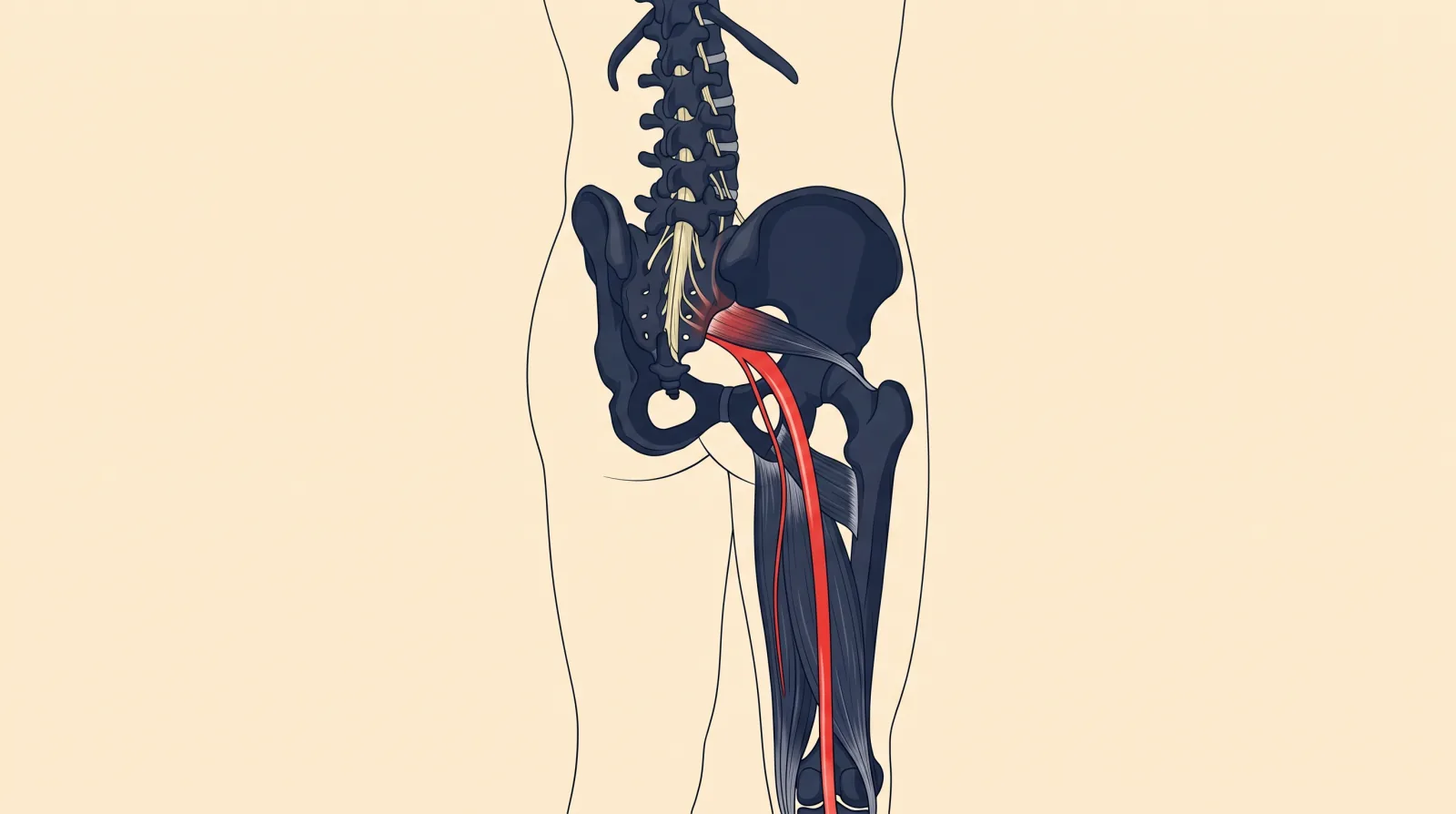
The discs between the vertebrae have a tougher outer layer and a softer inner core. A herniation happens when part of that inner material pushes out through a weakness or tear in the outer layer. Depending on how far the material moves, this gets described as a bulge, protrusion, extrusion, or sequestration, in roughly increasing order of how far the material has migrated from the disc.
The pain and symptoms that come with a herniation depend heavily on whether the displaced material is irritating or compressing a nearby nerve root. When it is, the result is often true sciatica or radicular leg pain following a specific nerve pattern, rather than pain confined to the back itself. When the nerve is not significantly involved, the presentation can look more like ordinary mechanical back pain.
Why the scan finding alarms people more than it should
A large part of the anxiety around a disc herniation diagnosis comes from picturing it as permanent structural damage that only surgery can fix. The evidence points the other way for most cases.
A meta-analysis on the incidence of spontaneous resorption of lumbar disc herniation, and a related systematic review published in Clinical Rehabilitation, found that the probability of a herniated disc shrinking back on its own varies by type: roughly 13 percent for a simple bulge, 41 percent for a protrusion, 70 percent for an extrusion, and 96 percent for a sequestration. The counterintuitive part is that the more severe-looking herniation types are the ones most likely to resorb, not the least likely, because the migrated material is more exposed to the body's own clean-up processes.
This does not mean every herniation disappears, and it does not mean imaging findings and symptoms always move together. Some people improve clinically well before a repeat scan shows much change, and resorption can continue for months after the worst of the pain has already settled. The practical takeaway is that a scary-looking MRI report is not, by itself, a reason to expect a worse outcome or to assume surgery is inevitable.
What conservative care actually involves
Nonsurgical management of a disc herniation is not simply waiting for symptoms to fade. It is an active plan built around a few consistent elements, adjusted to the individual's specific pain pattern.
Staying as active as symptoms allow is the starting point. Prolonged bed rest is not recommended and is associated with worse outcomes than continuing reasonable activity. For a true nerve-root pattern, treatment often includes specific movements or positions that reduce the load or irritation on the affected nerve, guidance on which activities to modify temporarily, and a gradual return to normal movement as sensitivity settles. As symptoms improve, the plan shifts toward graded strengthening and loading to rebuild the capacity that was lost while symptoms were acute.
This active approach lines up with how we treat back-related leg pain more broadly. Our piece on sciatica and telling nerve-root pain from referred pain apart covers how that initial sorting shapes the specific exercises chosen, since a true nerve-root pattern and a referred pain pattern do not respond to identical treatment even when both trace back to the same disc.
Why imaging is usually not the first step
Confirming a disc herniation with an MRI feels like it should come before treatment starts, but for most presentations it does not change the early plan. Clinical assessment, the pattern of pain, movement testing, and specific nerve signs, is usually enough to start a sensible conservative program.
We go through the reasoning behind this in more detail in our piece on when MRI is actually needed for low back pain. The short version: imaging becomes more useful when red flags are present, when severe symptoms are not improving after a real trial of conservative care, or when surgery is genuinely being discussed, not as a routine first step for a typical presentation.
The red flags that change everything
Most disc herniations, even ones that cause real leg pain, are not surgical emergencies. A small number of presentations are, and recognizing them matters more than any other single piece of information in this article.
Seek immediate medical attention for numbness around the groin, inner thighs, or buttocks, new loss of bladder or bowel control, or leg weakness that is worsening quickly rather than staying stable. This combination can signal cauda equina syndrome, a condition caused by significant compression of the nerve bundle at the base of the spinal canal. It is treated as a surgical emergency, since delayed treatment is associated with a higher risk of permanent bladder, bowel, or leg function loss. If any of these features appear, the right move is Lions Gate Hospital's emergency department or a call to 911, not a scheduled physiotherapy assessment.
Outside of that specific pattern, a progressive neurological deficit that is clearly getting worse over days, such as new or worsening foot drop, also warrants a prompt medical reassessment rather than continuing with the original conservative plan unchanged.
When surgery is the right call
Conservative care being the recommended first approach does not mean surgery is never appropriate. It is considered when there is a clear progressive neurological deficit that is not stabilizing, when severe radicular pain has not responded to a genuine trial of conservative care over several weeks to a few months, or in the cauda equina scenario described above, which needs emergency surgery rather than a trial of anything else.
For the far larger group of people without those features, the decision is not surgery versus nothing. It is a structured nonsurgical plan, given a fair chance to work, with clear criteria for when to revisit the conversation if it is not.
A practical observation from our clinic
The patients who do best with a disc herniation are rarely the ones who wait passively for it to resolve, and they are rarely the ones who push through sharp nerve pain trying to prove they are fine. The pattern we see most often is steady, graded activity guided by how the nerve responds, with the plan adjusted along the way rather than fixed on day one. That approach takes more communication between patient and physiotherapist than either extreme, and it is also the one the evidence on natural resorption and conservative outcomes actually supports.
If you have a new disc herniation diagnosis and are not sure whether physiotherapy or a surgical opinion is the right next step, book a 30-minute assessment and we will screen for the red flags first, then build the plan from there. You can also read more about how we approach back and leg pain or reach the clinic here.
This article is general information about lumbar disc herniation. It is not personal medical advice. The red-flag features described require urgent medical attention. A regulated practitioner can confirm whether the patterns described apply to you.
Sources
- Chiu et al., The probability of spontaneous regression of lumbar herniated disc: a systematic review, Clinical Rehabilitation (2015)
- North American Spine Society: Evidence-Based Clinical Guidelines for Lumbar Disc Herniation with Radiculopathy
- Cauda Equina Syndrome - American Association of Neurological Surgeons (AANS)
- College of Physical Therapists of BC (CPTBC)
Common questions
Frequently asked questions.
Does a herniated disc always need surgery?
No. Most lumbar disc herniations improve with conservative care rather than surgery. A systematic review found that the herniated portion of disc tissue shrinks back on its own in a large share of cases, more so with the more severe-looking herniation types, and pain and function often improve over weeks to a few months with structured nonsurgical management. Surgery is reserved for specific situations rather than being the default response to a scan finding.
What does nonsurgical care for a disc herniation actually involve?+
It combines staying active within what your symptoms allow, avoiding prolonged bed rest, specific movements or positions that reduce nerve irritation, and a graded loading program as symptoms settle. The exact mix depends on whether the pain is a true nerve-root pattern or more of a back-dominant ache, and on how irritable the symptoms are at the start. It is an active process, not a wait-and-see approach.
How long does it take for a disc herniation to improve without surgery?+
Many people improve substantially over 6 to 12 weeks with structured conservative care, though the exact timeline depends on the size and type of herniation, how long symptoms have been present, and how consistently the rehab plan is followed. Some resorption of the disc material continues for months after symptoms have already improved, so imaging and symptoms do not always move on the same timeline.
What are the red flags that mean I should not just try physiotherapy first?+
Seek urgent medical care for numbness around the groin or inner thighs, new loss of bladder or bowel control, or rapidly worsening leg weakness. These can signal cauda equina syndrome, a surgical emergency caused by significant compression of the nerves at the base of the spine. Significant or progressively worsening leg weakness on its own, even without those other features, also warrants prompt medical assessment rather than a routine physiotherapy booking.
Will physical therapy make a disc herniation worse?+
Appropriately dosed physiotherapy is not expected to worsen a disc herniation and is a first-line recommendation in clinical guidelines for lumbar disc herniation with radiculopathy. Treatment is adjusted to symptom behaviour, meaning movements or loads that clearly aggravate nerve symptoms are modified rather than pushed through. The goal is graded exposure to movement and load, not testing pain tolerance.
Do I need an MRI before starting nonsurgical treatment?+
Not usually. Conservative care for a suspected disc herniation with a typical nerve-root pain pattern often starts based on the clinical assessment alone, without waiting for imaging, unless red flags are present. Imaging becomes more relevant when severe symptoms are not improving after a reasonable trial of conservative care, or when surgery is being considered.
When is surgery actually the right choice for a disc herniation?+
Surgery is considered when there is a clear progressive neurological deficit, such as worsening leg weakness or foot drop, severe radicular pain that has not responded to a competent course of conservative care over several weeks to a few months, or a red-flag presentation like cauda equina syndrome, which needs emergency surgery. Outside these situations, conservative care remains the recommended first approach in most clinical guidelines.
Can I keep working with a disc herniation while doing conservative care?+
In most cases, yes, adjusted to what your symptoms and job demands allow. Staying active, including at work, supports recovery better than prolonged rest for most disc-related back and leg pain. Depending on how irritable your symptoms are and what your job involves, that might mean modified duties, more frequent position changes, or a short period of reduced hours while the plan gets underway.
Share this post
Copies a ready-to-publish LinkedIn post to your clipboard and opens the LinkedIn share dialog. Paste the text into the composer and publish.

Written by
Sanaz Davarian, PhDDr. Sanaz Davarian is a Registered Physiotherapist with a PhD and 20+ years of experience. Certified IMS Therapist, former Assistant Professor of Physiotherapy. North Vancouver.
This article is for general information only and does not constitute medical advice, diagnosis, or treatment. Individual presentations vary, and assessment findings and treatment plans differ from person to person. If you are experiencing severe symptoms, neurological changes (numbness, weakness, bowel or bladder changes), or a significant trauma, contact your physician or emergency services. Care at Medstar Sport Physio & Health is provided by practitioners registered with their respective British Columbia regulatory colleges.
Filed under
- disc-herniation
- low-back-pain
- conservative-care
- sciatica
- north-vancouver