Sciatica: When It's a Disc, When It's Referred, and Why It Matters
Sciatica is one of the most misused words in back pain. Telling true nerve-root pain from referred pain changes what helps, and most leg pain settles without surgery.
BY SANAZ DAVARIAN, PHD
Few words in back pain are used as loosely as sciatica. People reach for it to describe almost any pain that travels into the leg. But the term has a specific meaning, and telling true sciatica from the look-alikes changes what actually helps. The good news running through all of it is that most of this pain settles without surgery.
True sciatica means a nerve root in the lower back is irritated or compressed, often by a disc bulge, sending pain down the leg along a defined path. Much of what people call sciatica is actually referred pain from back joints or buttock muscles, which can feel similar but responds to different treatment. At Medstar Sport Physio in North Vancouver, we distinguish between the two through careful assessment before designing any program. Most disc-related nerve pain improves over weeks to a few months without surgery, even when a scan shows a bulge. An MRI is usually not the first step. The right approach depends on the source of the pain, how the symptoms behave, and whether any red-flag signs are present.
What sciatica actually means
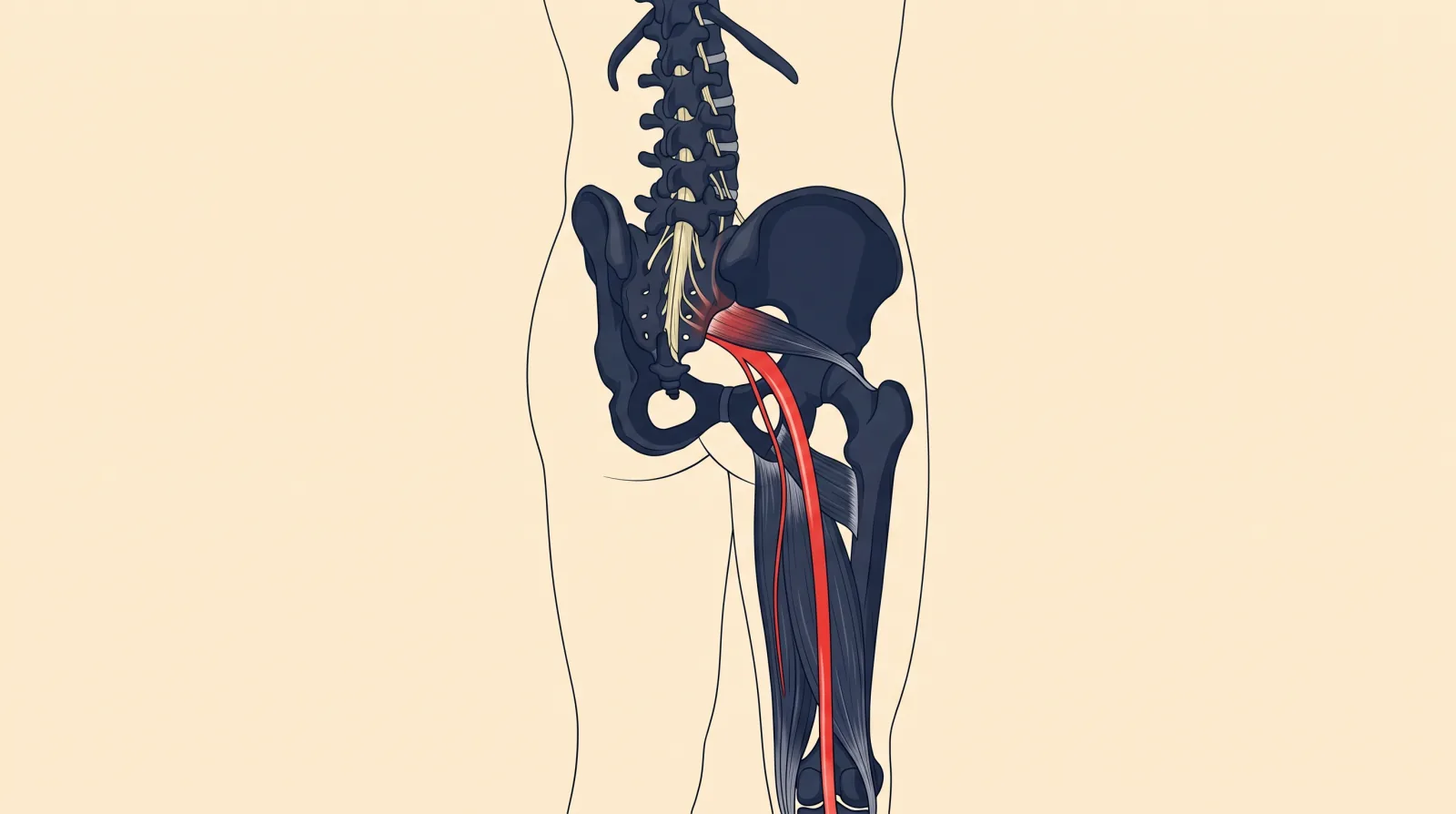
True sciatica is irritation or compression of a nerve root in the lower back, most often producing sharp, shooting, or burning pain that follows a defined path down the leg, sometimes with pins and needles, numbness, or weakness. The classic cause is a disc bulge pressing on or irritating the nerve where it exits the spine, which is why sciatica and disc involvement are so closely linked. See our sciatica condition guide for a full breakdown of causes, treatment, and recovery timelines.
But not all leg pain from the back is nerve-root pain. A large share of it is referred pain, an ache that spreads from back structures or the deep buttock muscles into the thigh and sometimes lower. It can feel like it is travelling down the leg, but it is not the nerve root being compressed. The difference is not academic, because the two respond to different approaches.
How we tell them apart
At assessment, we look at the quality and distribution of the pain, how it behaves with movement, and whether there are true nerve signs. True nerve-root pain tends to follow a recognizable path, may come with numbness or weakness in a specific pattern, and often responds to particular positions or movements that change the load on the nerve. Referred pain is usually more diffuse, lacks the clear nerve signs, and tracks more with back and hip movement than with nerve tension.
This is the same careful sorting we apply across back-related leg pain, including nerve-root impingement and broader low back pain. Getting the category right is what lets us choose the right plan rather than treating every leg pain the same way.
Why an MRI usually is not the first step
People often assume sciatica means they need a scan. For most cases, an MRI does not change the early plan. The standard approach for leg pain from the back is to stay as active as the pain allows and let symptoms settle with guided care, and imaging does not alter that. We cover the broader logic in our piece on when MRI is actually needed for low back pain.
Scanning too early has a real downside. MRIs routinely show disc bulges and age-related changes in people with no pain at all, so an early scan often finds something that looks alarming but is not actually the source of the trouble. That can lead to fear, unnecessary worry, and sometimes treatment aimed at a finding that was never the problem.
Imaging earns its place when there are red-flag features, when severe symptoms are not improving over a reasonable timeframe, or when surgery is genuinely being considered.
Most of it settles without surgery
This is the reassuring core of the topic. A large share of disc-related nerve pain improves over weeks to a few months without surgery, even when a scan shows a disc bulge. Discs can reabsorb over time, and the nerve sensitivity settles as the irritation calms. Staying active within your limits, avoiding prolonged bed rest, and following a guided program gives the best chance of a good recovery.
Surgery is reserved for cases that do not improve over time despite good conservative care, or that have specific features such as significant progressive weakness. It is the exception, not the default.
What physiotherapy does
For true nerve-root pain, treatment focuses on reducing the nerve's sensitivity. That can include specific movements or positions that ease the load on the nerve, guidance on staying active in ways that do not flare it, and graded loading as symptoms settle. The aim is to keep you moving while the nerve calms, then rebuild your capacity to load the back and leg normally.
For referred pain, we address the back and hip structures driving it, restoring movement and building strength and tolerance. In both cases, the through-line is the same: keep moving, reduce sensitivity, and rebuild capacity, rather than waiting passively for the pain to disappear.
The red flags that do not wait
Most sciatica is not dangerous, but a few features need urgent care. Seek immediate medical attention if you develop numbness around the groin or buttocks, loss of bladder or bowel control, or rapidly worsening weakness in the leg. These can signal a serious condition called cauda equina syndrome, which is a surgical emergency. Significant or progressive leg weakness, even without those other features, also warrants prompt assessment.
These are uncommon, but they are the reason we always screen for them, and the reason we tell people clearly what to watch for.
When to get it assessed
If you have leg pain coming from your back, an assessment sorts true nerve-root pain from referred pain, rules out the red flags, and gives you a clear plan to settle it, usually without imaging and almost always without surgery. The most common mistake is lying still and waiting, which tends to leave you stiffer and more deconditioned.
Book a 30-minute appointment and we will work out what is actually driving your leg pain and build a plan to calm it and get you moving again.
This article is general information about sciatica and back-related leg pain. It is not personal medical advice. A regulated practitioner can confirm whether the patterns described apply to you, and the red-flag features described require urgent medical attention.
Sources
- North American Spine Society: Evidence-Based Clinical Guidelines for Lumbar Disc Herniation with Radiculopathy (2012)
- Chiu et al., The probability of spontaneous regression of lumbar herniated disc: a systematic review, Clinical Rehabilitation (2015)
- College of Physical Therapists of BC (CPTBC)
Common questions
Frequently asked questions.
Is sciatica always caused by a disc?
No. True sciatica means irritation or compression of a lower-back nerve root, and a disc bulge is a common cause but not the only one. Much of what people call sciatica is actually referred pain from back structures or the buttock muscles, which feels like it travels down the leg but is not true nerve-root pain. The distinction changes what helps.
Do I need an MRI for sciatica?+
Usually not at first. For most leg pain from the back, imaging does not change the early plan, which is to stay active and let symptoms settle with guided care. An MRI is considered when there are red-flag features, when severe symptoms are not improving over time, or when surgery is being considered. Imaging too early often finds harmless changes that muddy the picture.
Will sciatica go away on its own?+
Often, yes. A large share of disc-related nerve pain improves over weeks to a few months without surgery, even when an MRI shows a disc bulge. Staying as active as the pain allows, avoiding prolonged bed rest, and following a guided program gives the best chance of settling. Surgery is reserved for cases that do not improve or that have specific features.
What does physiotherapy do for sciatica?+
It depends on the cause. For true nerve-root pain we use movements and positions that reduce nerve sensitivity, guided activity, and graded loading as symptoms settle. For referred pain we address the back and hip structures driving it. In both cases the aim is to keep you moving, reduce sensitivity, and rebuild capacity rather than wait passively.
When is sciatica an emergency?+
Seek urgent care if you have numbness around the groin or buttocks, loss of bladder or bowel control, or rapidly worsening weakness in the leg. These can signal a serious condition called cauda equina syndrome and need immediate medical attention. Significant or progressive leg weakness also warrants prompt assessment.
What happens at a first physio visit for sciatica?+
The physiotherapist screens for red flags first, then assesses the quality and distribution of your pain, how it behaves with movement, and whether there are true nerve signs such as numbness or weakness in a specific pattern. That assessment sorts true nerve-root pain from referred pain and shapes the plan from there, without needing a scan to get started.
How is sciatica different from a simple muscle strain in the back?+
A muscle strain usually stays localized to the back and eases within days with normal movement. True sciatica follows a defined path down the leg and can come with numbness, tingling, or weakness in a specific pattern, because a nerve root is involved rather than muscle tissue alone. The nerve-root pattern is what a physiotherapist checks for at assessment.
Should I keep working if I have sciatica?+
In most cases, yes, adjusted to what your symptoms allow. Staying active and avoiding prolonged bed rest supports recovery for most leg pain from the back. Whether that means modified duties, more frequent position changes, or a short adjustment period depends on your job demands and how irritable your symptoms are, which your physiotherapist can help you plan around.
Share this post
Copies a ready-to-publish LinkedIn post to your clipboard and opens the LinkedIn share dialog. Paste the text into the composer and publish.

Written by
Sanaz Davarian, PhDDr. Sanaz Davarian is a Registered Physiotherapist with a PhD and 20+ years of experience. Certified IMS Therapist, former Assistant Professor of Physiotherapy. North Vancouver.
This article is for general information only and does not constitute medical advice, diagnosis, or treatment. Individual presentations vary, and assessment findings and treatment plans differ from person to person. If you are experiencing severe symptoms, neurological changes (numbness, weakness, bowel or bladder changes), or a significant trauma, contact your physician or emergency services. Care at Medstar Sport Physio & Health is provided by practitioners registered with their respective British Columbia regulatory colleges.
Filed under
- sciatica
- low-back-pain
- nerve-pain
- disc
- north-vancouver