
Piriformis Syndrome or True Sciatica? Why the Label Is Debated and What It Changes
Buttock pain that shoots down the leg gets called piriformis syndrome or sciatica, sometimes both. Here is how they differ, why the piriformis label is argued over, and why the treatment often overlaps anyway.
BY MEDSTAR SPORT PHYSIO TEAM
Buttock pain that shoots down the leg often gets two names, sometimes from two different people about the same pain. One clinician calls it sciatica, another calls it piriformis syndrome, and a third might say deep gluteal syndrome. It is confusing, and the confusion is not your fault. These labels overlap, one of them is genuinely debated, and telling them apart is harder than most people expect.
Sciatica is a symptom, pain travelling along the sciatic nerve, and true sciatica usually starts from an irritated nerve root in the low back. Piriformis syndrome is a proposed cause of similar pain, where the nerve is thought to be irritated deep in the buttock near the piriformis muscle instead of at the spine. The piriformis label is debated because no single test confirms it. At Medstar Sport Physio in North Vancouver, the reassuring part is that both are usually managed with the same first steps, staying active, targeted exercise, and rebuilding tolerance, so the exact label matters less than ruling out the serious warning signs.
Sciatica is a symptom, not a diagnosis
The first thing to clear up is that sciatica is not a diagnosis on its own. It is a description of a symptom: pain that travels along the path of the sciatic nerve, usually down the back of the buttock, thigh, and sometimes into the lower leg and foot. It can come with numbness, tingling, or weakness in the same path.
Most true sciatica, the kind clinicians mean when they use the word carefully, starts at the spine. An irritated or compressed nerve root in the low back, often from a disc bulge or a narrowing of the space the nerve travels through, sends pain down the leg in a nerve pattern. So when the source is the spine, the word points upstream to the nerve root, even though the pain is felt down the leg. We go deeper into the spinal side of this in sciatica from a disc versus referred pain.
What piriformis syndrome claims to be
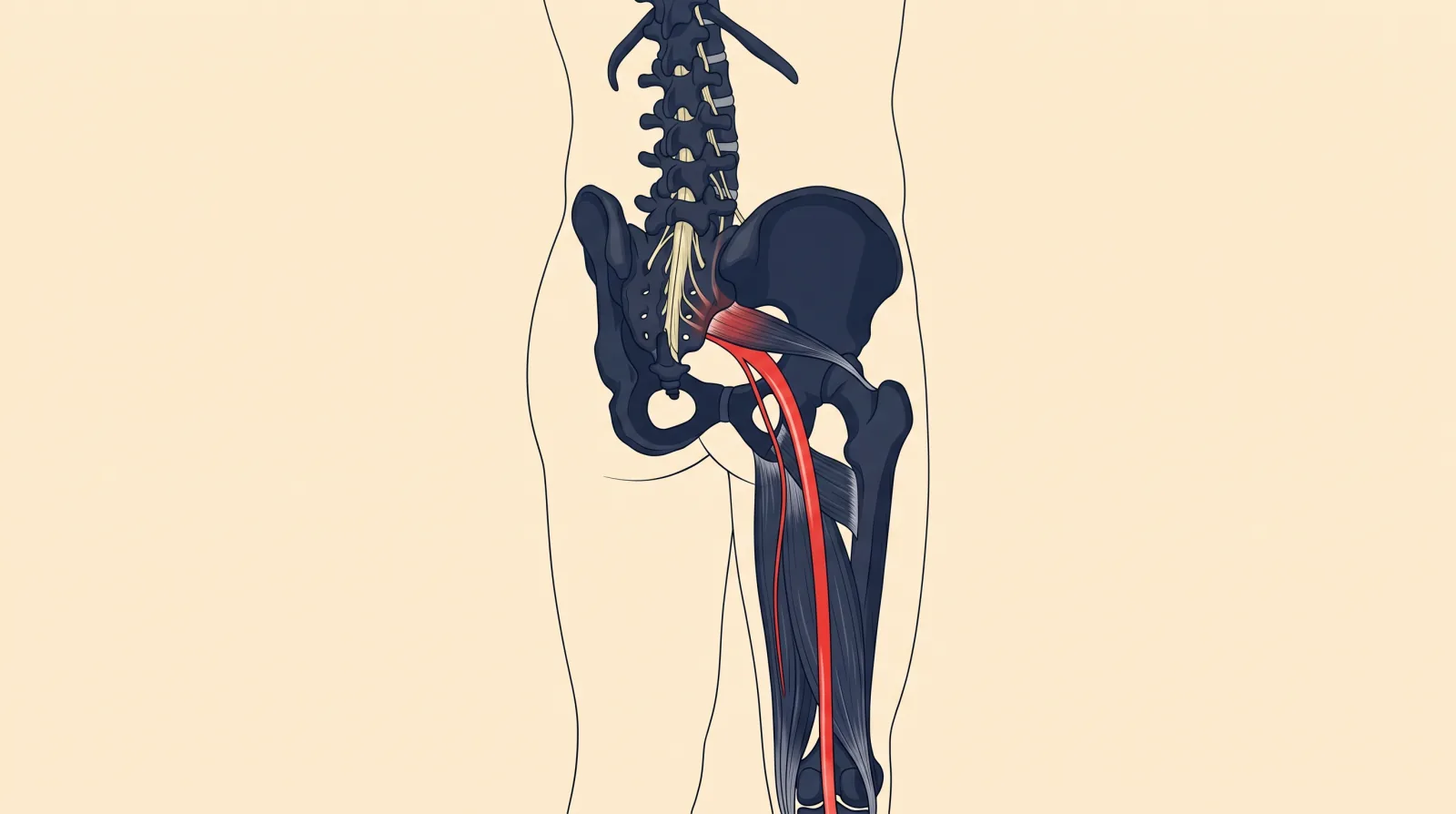
Piriformis syndrome is a different idea about where similar pain comes from. The piriformis is a small muscle deep in the buttock that helps rotate the hip. The sciatic nerve runs very close to it, and in some people through it. The theory is that when the piriformis is tight, overworked, or irritated, it can press on or irritate the sciatic nerve right there in the buttock, producing pain that travels down the leg and looks a lot like sciatica.
The key difference in the story is location. True radicular sciatica starts at the spine. Piriformis syndrome starts in the buttock, below the spine, with the nerve being irritated near the muscle rather than at the nerve root. According to clinical references on piriformis syndrome, the typical pattern is deep buttock pain that can shoot or burn down the back of the leg, often worse with prolonged sitting and certain hip movements.
Why the piriformis label is debated
Here is the part that surprises people: piriformis syndrome is a genuinely argued-over diagnosis, not a settled fact. The main reason is that no single test or scan confirms it. Clinical references describe it as a diagnosis of exclusion, meaning it is considered only after spinal and other causes have been ruled out, and there is no agreed set of criteria for making the call. Imaging is used mainly to rule out other problems rather than to prove the piriformis is the culprit.
Because of that uncertainty, some clinicians believe piriformis syndrome is over-diagnosed, blamed for pain that is really coming from the spine or from other structures deep in the buttock. Estimates of how common it is vary widely depending on the criteria used, so we will not put a single number on it. What matters is that the pain is real even when the exact label is uncertain. This is why many clinicians now prefer the broader term deep gluteal syndrome, which covers pain from the sciatic nerve being irritated anywhere in that deep buttock region rather than blaming one muscle specifically.
How the two can differ in the exam
Even though the line is blurry, some patterns can lean one way during an assessment.
Where it starts. Pain that clearly begins in the low back and then travels down the leg leans toward a spinal source. Pain that sits mainly deep in the buttock, without much back pain, can lean toward a piriformis or deep gluteal source.
What provokes it. Deep buttock pain that flares with prolonged sitting and with certain hip movements or positions can point toward the buttock as the source. Pain that changes with back positions and movements can point toward the spine.
Neurological signs. Clear numbness, tingling, or weakness in a specific nerve pattern raises concern for nerve-root involvement at the spine and needs careful assessment.
These are clues, not proof. Many people show a mix, and even a careful examination cannot always draw a clean line, which is exactly why the two are so often confused.
Why the treatment overlaps more than the label suggests
The reassuring part is that arguing over the perfect label often changes the treatment less than people fear. Whether the source is the spine or the deep buttock, the first-line approach is usually similar. Both are typically managed with conservative care first: staying active within tolerable limits, targeted exercise, and progressively rebuilding the tolerance of the area, rather than rushing to scans, injections, or surgery.
The exercises may differ in emphasis. A buttock-driven problem may focus more on hip and gluteal strength and on movements that settle the deep buttock, while a spine-driven problem may focus more on movements that calm the irritated nerve root and rebuild back tolerance. Pain from the gluteal region can also come from the tendons rather than the nerve, which is a different problem again, and we cover that in gluteal tendinopathy and hip bursitis. The overlap in the general approach is why an assessment focused on your specific pattern beats chasing a label that even the experts argue about.
The warning signs that change everything
Most buttock and leg pain, whatever its exact label, is not dangerous and settles with conservative care. A few features change the plan entirely and need prompt attention.
See a physiotherapist or doctor if the pain is severe, keeps getting worse, or does not settle over a few weeks, if there is numbness, tingling, or weakness in the leg or foot, or if it followed an injury. Seek urgent medical care right away for loss of bladder or bowel control, numbness around the groin or inner thighs, or spreading weakness in the legs. Those features can point to a serious spinal problem that needs immediate assessment, and they matter regardless of whether anyone has used the word piriformis or sciatica.
When to get it assessed
If you have buttock pain that travels down the leg and you are not sure what is driving it, an assessment sorts out the pattern, screens for the warning signs, and builds a plan around your specific problem rather than a disputed label. It is worth an assessment sooner if the pain is severe or if you have any neurological signs.
Book a 30-minute appointment and we will examine where your pain starts, what provokes it, and whether it points to the spine or the deep buttock, then build a conservative plan matched to your pattern. You can see what we treat or reach the clinic here.
This article is general information about buttock and leg pain. It is not personal medical advice. A regulated practitioner can confirm whether the patterns described apply to you.
Sources
- Piriformis Syndrome - StatPearls, NCBI Bookshelf
- Brief review: piriformis syndrome: etiology, diagnosis, and management, Canadian Journal of Anesthesia (2013)
- HealthLinkBC - Sciatica
- College of Physical Therapists of BC (CPTBC)
Common questions
Frequently asked questions.
What is the difference between piriformis syndrome and sciatica?
Sciatica is a symptom: pain that travels along the sciatic nerve, usually starting from an irritated nerve root in the low back, often from a disc or narrowing. Piriformis syndrome is a proposed cause of similar pain, where the sciatic nerve is thought to be irritated near the piriformis muscle deep in the buttock rather than at the spine. So true sciatica points to the spine as the source, while piriformis syndrome points to the buttock. In practice they can be hard to tell apart.
Why is piriformis syndrome a controversial diagnosis?+
There is no single test or scan that confirms it. Clinical references describe it as a diagnosis of exclusion, meaning it is considered after spinal causes have been ruled out, and there is no agreed set of criteria. Because of that, some clinicians think it is over-diagnosed and blamed for pain that actually comes from the spine. The pain is real, but the exact label is uncertain, which is why many now use the broader term deep gluteal syndrome.
How can I tell if my buttock pain is from my spine or my piriformis?+
There is no perfectly reliable home test, which is part of why the two are confused. Some clues can lean one way. Pain that clearly starts in the low back and travels down the leg in a nerve pattern, especially with numbness or weakness, leans toward a spinal cause. Pain centred deep in the buttock that is worse with prolonged sitting and certain hip movements can lean toward a piriformis or deep gluteal source. A physiotherapist can examine the pattern, but even then the line is not always clear.
Does the treatment differ for piriformis syndrome versus sciatica?+
Often less than you would expect. Both are usually managed first with conservative care, including staying active within limits, targeted exercise, and progressive loading, rather than jumping to scans or surgery. The exercises may differ in emphasis, but the overall approach of calming the irritated nerve and rebuilding tolerance overlaps a lot. That is one reason the exact label matters less than people fear.
When should buttock or leg pain be assessed?+
See a physiotherapist or doctor if the pain is severe, keeps getting worse, or does not settle over a few weeks, if there is numbness, tingling, or weakness in the leg or foot, or if it followed an injury. Seek urgent care for loss of bladder or bowel control, numbness around the groin or inner thighs, or spreading leg weakness, as these can point to a serious spinal problem that needs immediate attention.
Share this post
Copies a ready-to-publish LinkedIn post to your clipboard and opens the LinkedIn share dialog. Paste the text into the composer and publish.
Written by
Medstar Sport Physio Team
Registered clinician at Medstar Sport Physio & Health, North Vancouver.
This article is for general information only and does not constitute medical advice, diagnosis, or treatment. Individual presentations vary, and assessment findings and treatment plans differ from person to person. If you are experiencing severe symptoms, neurological changes (numbness, weakness, bowel or bladder changes), or a significant trauma, contact your physician or emergency services. Care at Medstar Sport Physio & Health is provided by practitioners registered with their respective British Columbia regulatory colleges.
Filed under
- piriformis-syndrome
- sciatica
- buttock-pain
- deep-gluteal-syndrome
- nerve-pain
- north-vancouver