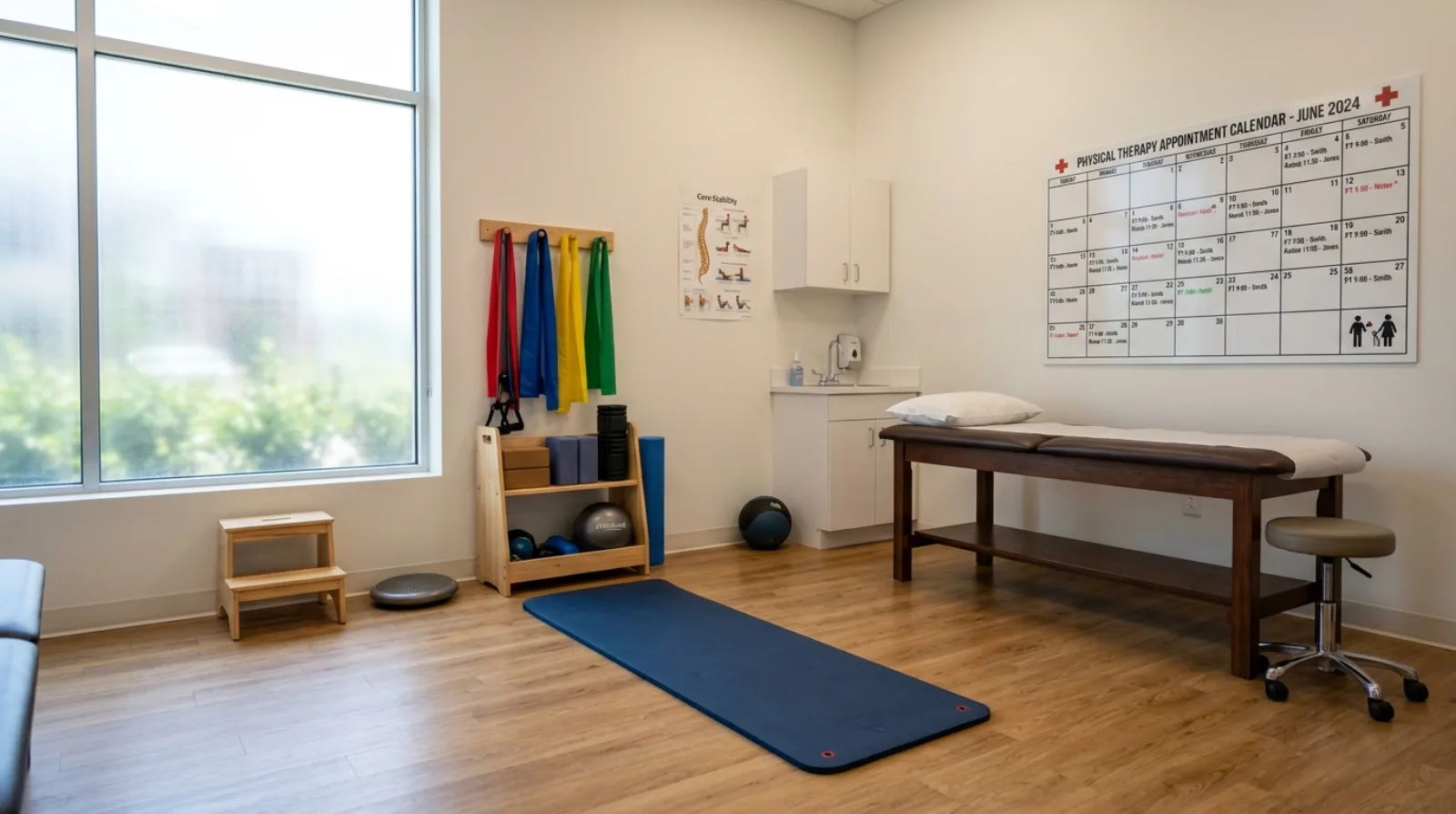
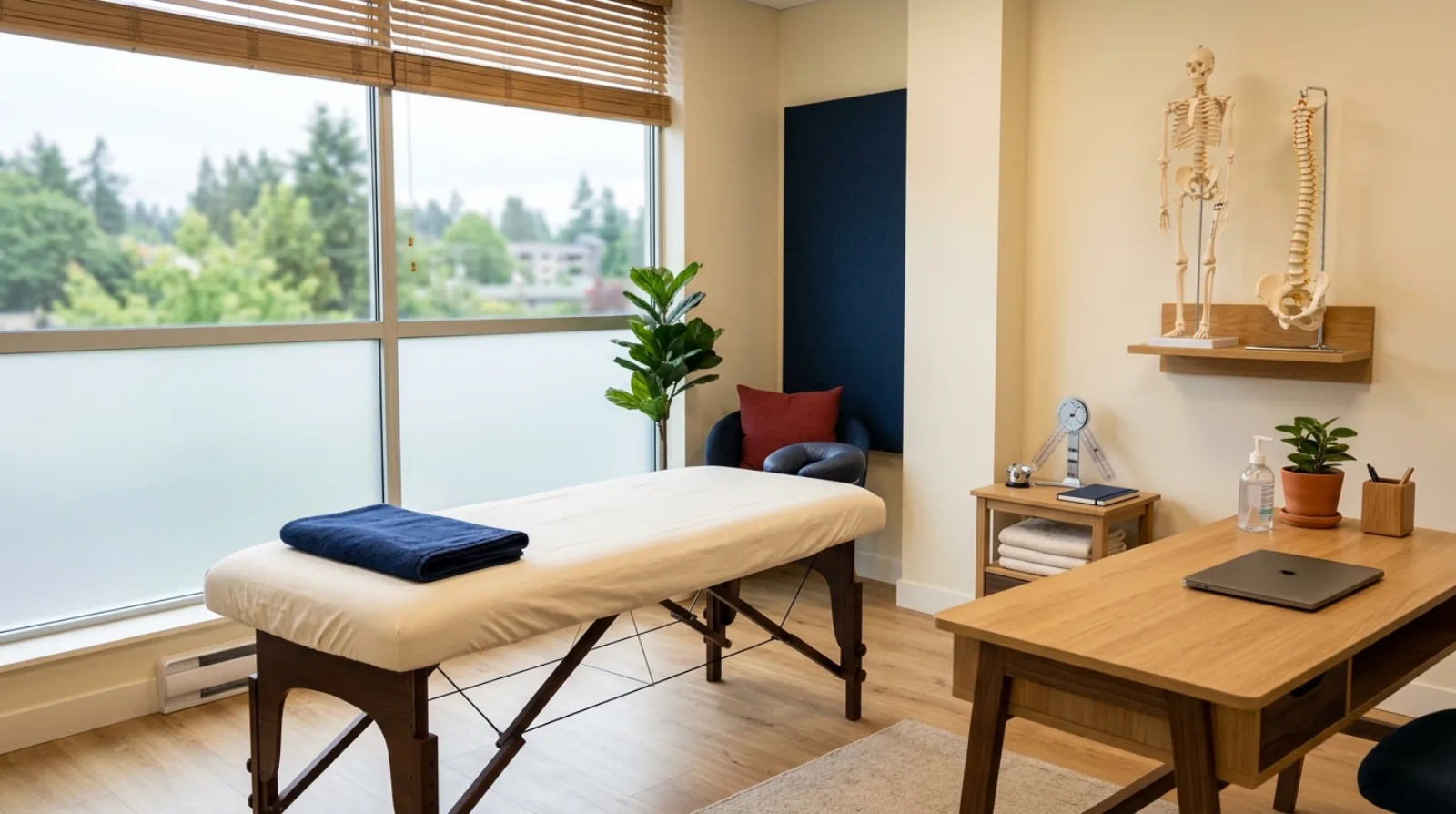
What to Expect at Your First Physiotherapy Appointment in North Vancouver
Your first physiotherapy visit is a 60-minute assessment. Here is what happens, what to bring, what to wear, who pays, and whether you will be treated that day.
BY MEDSTAR SPORT PHYSIO TEAM
Booking a first physiotherapy visit raises practical questions. How long will it take, what should you wear, who pays, and will anything actually be done that day? This guide answers each one for a patient booking at a clinic in North Vancouver.
At Medstar Sport Physio in North Vancouver, your first physiotherapy visit is a 60-minute initial assessment with no referral needed: the physiotherapist asks about your history, examines the painful area, explains what they found, and agrees a plan with you, and whether treatment starts that day depends on the findings.
You do not need a referral to book
In British Columbia you can book a physiotherapist yourself. A referral from a family physician is not required at our clinic. ICBC states the same for its own pre-approved treatment: you don't need a referral from a family physician or nurse practitioner, or approval from ICBC.
Insurance plans differ. Some extended health plans have their own rules about receipts or paperwork. Pacific Blue Cross, for example, says on its physiotherapy questions page that you do not need to submit a pre-determination before getting physiotherapy, and it lists what a receipt must show. Call your insurer before you book to confirm your own plan.
Physiotherapists in BC are regulated by the College of Health and Care Professionals of BC (CHCPBC). The college regulates nine health professions, including physical therapists. The older College of Physical Therapists of BC merged into it. You can confirm that any physiotherapist is currently licensed on the college's public registry, using only a name.
You can book through our online booking page or by calling (604) 988-5411. You do not need to know what is wrong before you call.
What to bring and what to wear
Bring these to the first visit:
- Your BC health card, which carries your Personal Health Number.
- Your extended health insurance card, if you have one.
- Your ICBC or WorkSafeBC claim number, if the injury is from a crash or from work.
- A list of your medications and any health conditions, including past surgery.
- Scan, X-ray or ultrasound reports, and any discharge papers from a hospital or urgent care visit.
- The shoes you use for your sport or job, if the problem shows up when you run, lift or stand for long hours.
For an ICBC claim, you'll need your Personal Health Number (PHN) and your ICBC claim number. Bring both so the clinic can set up billing at the first visit.
Wear clothes you can move in, and that let the physiotherapist see the joint above and below the sore area. Shorts work well for hip, knee, ankle and foot problems. A fitted tank top or sports top works well for shoulder and neck problems. For the low back, a loose t-shirt and shorts or leggings are enough. If you are unsure, bring a change of clothes. Tell the physiotherapist if you are uncomfortable removing any clothing. They can often examine the area in another way.
Arrive a few minutes early so the forms do not use up your 60 minutes.
What happens during the 60-minute initial assessment
In our clinic the initial assessment is 60 minutes. It has four parts, and each one has a purpose.
The physiotherapist starts by asking questions. Where is the pain, and when did it start? What makes it better or worse? Does it wake you at night? What do you do for work and for sport? What have you already tried? The answers often point to the likely cause before any physical test starts.
Next the physiotherapist checks for signs that your problem needs a doctor or a hospital first. These include changes in bladder or bowel control, numbness in the groin area, sudden severe weakness, unexplained fever or weight loss, and the chance of a broken bone. The checks are quick. They come first because they decide whether it is safe to go on.
The physiotherapist will watch how you stand, walk and move, then test the painful area and the joints around it. They measure how far a joint moves (range of motion), test the strength of key muscles, and may press on tissue to find which structures are sore. They may also check reflexes and skin sensation if pain travels into an arm or leg. Some tests reproduce your symptoms on purpose, and you can ask the physiotherapist to pause at any time.
Finally the physiotherapist explains what they found in plain language, what they think is driving the problem, what you can do for it, and what the next visits will focus on. You should leave knowing what is going on and what to do over the next few days. If something is unclear, ask. A good assessment ends with your questions answered.
For more on how the profession is organised and how to compare clinics, see our guide on how to choose a physiotherapist in North Vancouver.
Will you be treated on the first day?
Whether treatment starts on the first day depends on the findings.
Some patients leave their first visit having had treatment. When the examination points to a clear cause and treatment is safe, the physiotherapist may start with manual therapy (using their hands to move or press on joints and muscles), taping, or a first set of exercises.
Other patients leave with a plan and home exercises, and treatment begins at the second visit. This happens when the findings are unclear, when the pain is high enough that the area needs time to settle, or when the physiotherapist wants you to see your family physician or have a scan first. A first visit that ends with a plan and no treatment still gives you what you need to start. The assessment is where decisions are made, and they are better made with full information.
Active rehab, meaning exercises that rebuild strength and movement, is part of most plans. Your physiotherapist will show you each exercise and watch you do it. Ask for the exercises in writing or on your phone so you can repeat them at home.
Our physiotherapy service page describes the treatments our physiotherapists use, including manual therapy and exercise programmes.
How long visits last and how many you will need
The initial assessment is 60 minutes. Follow-up visits at our clinic are 30 or 45 minutes. The length depends on what the visit needs.
The number of visits is harder to predict. We cannot give a reliable number before the examination, because the answer depends on the condition, how long you have had it, your goals, your work and sport, and how your body responds. After the assessment your physiotherapist can explain what pattern of visits they expect, and they will change it as you improve.
As you get stronger and rely more on your home programme, your physiotherapist may space visits further apart. The aim is for you to manage the problem yourself.
Who pays for your visit
Payment depends on how you are covered. Here are the main routes, and what each source says.
ICBC. If you were injured in a crash, ICBC's Enhanced Care program pre-approves treatment for the first 12 weeks after the crash. ICBC lists physiotherapy among the treatments and states that 25 treatments are approved in the initial 12-week period. ICBC also says many health care providers use direct billing, so you won't have to make any payments yourself. We direct bill ICBC. Our ICBC page explains the process in more detail.
WorkSafeBC. For a work injury, WorkSafeBC says that once we accept your claim, we will cover the cost of the health care services and supplies that are considered reasonably necessary to treat your injuries. It adds that your provider should bill WorkSafeBC and that you should not have to pay fees. WorkSafeBC also warns that if you pay before the claim is accepted, or choose a provider that does not have a contract with it, reimbursement may be limited to its own rates and you could owe the difference. Our WorkSafeBC section covers claim numbers, reports and deadlines.
Extended health insurance. Many employer plans cover physiotherapy up to a yearly limit. Limits and rules vary by plan, so ask your insurer what is covered and whether you need a receipt in a set format. We direct bill several named extended health insurers. Ask when you book.
MSP supplementary benefits. BC's Medical Services Plan helps only people who applied and were found eligible. The province's page on supplementary benefits says MSP contributes $23 per visit, for a combined limit of 10 visits each calendar year, for eligible people. The same limit is shared across acupuncture, chiropractic, massage therapy, naturopathy, physical therapy and non-surgical podiatry.
Other payers. We also direct bill RCMP and Veterans Affairs claims. If none of these apply to you, you pay at the visit. We do not publish fees on this site. The current rates are on our booking page, and the front desk can explain them by phone.
When to go to emergency instead
Some symptoms need urgent medical care, and a physiotherapy appointment is the wrong first step. Go to the emergency department at Lions Gate Hospital, or call 911, if you have:
- New loss of control over your bladder or bowels.
- Numbness around the groin or inner thighs.
- Sudden, severe weakness in an arm or leg.
- Chest pain.
- An injury where you think a bone may be broken.
If your symptoms are getting worse each day but none of these apply, call your family physician or a walk-in clinic.
Write down your symptoms the night before: where, when, what helps and what makes it worse. Bring one goal, such as running 5 km or sitting through a work day without pain, so the plan can be built around it. If you are unsure whether to start with physiotherapy, book the 60-minute assessment. The physiotherapist will tell you at the end of it whether physiotherapy fits your problem or whether another clinician should see you first. Our team page lists the clinicians you may meet, and our clients page answers common questions about forms and billing. The clinic is at 1325 Marine Drive, North Vancouver, and the number is (604) 988-5411.
This article is general information, not personal medical advice, and it is not a substitute for assessment by a regulated practitioner. A regulated practitioner can confirm whether the points described apply to you.
Sources
- ICBC: Accessing treatment during your first 12 weeks of recovery
- WorkSafeBC: Health care benefits
- Province of BC: MSP supplementary benefits
- College of Health and Care Professionals of BC: Professions regulated
- College of Health and Care Professionals of BC: Public registry
- Pacific Blue Cross: Physiotherapy frequently asked questions
Common questions
Frequently asked questions.
Do I need a doctor's referral to book physiotherapy in BC?
No. In BC you can book a physiotherapist directly, and our clinic does not ask for a referral. ICBC also states that you do not need a referral from a family physician or nurse practitioner for its pre-approved treatment. Some extended health plans may have their own paperwork rules, so check your plan before you book if you plan to claim.
How long is the first physiotherapy appointment at Medstar Sport Physio?+
The initial assessment at Medstar Sport Physio is 60 minutes. That time covers your history, a physical examination, an explanation of what the physiotherapist found, and a plan. Follow-up visits are shorter, at 30 or 45 minutes. Arrive a few minutes early so the 60 minutes go to your assessment and not to paperwork.
What should I wear to my first physiotherapy visit?+
Wear clothes you can move in, and that let the physiotherapist see the area that hurts. Shorts suit a hip, knee, ankle or foot problem. A fitted tank top or sports top suits a shoulder or neck problem. A loose t-shirt is fine for most back problems. If you are unsure, bring a change of clothes.
Will I be treated during the first visit?+
It depends on the findings. The first job is to understand your problem and check for anything serious. If the assessment shows that treatment is safe and useful that day, the physiotherapist may start with manual therapy, exercises or advice. If more information is needed first, the visit may end with a plan and home exercises.
Will the physiotherapist touch me during the assessment?+
Yes, in most assessments. The physiotherapist may press on muscles and joints, move your limb, and test your strength and reflexes. You can ask what is happening at any point. You can also say stop or ask for a break at any time, and your physiotherapist will respect that. Tell them about any area that is too painful to touch.
What should I bring to a first physiotherapy appointment?+
Bring your BC health card with your Personal Health Number, any insurance card, and a list of your medications. Bring scan or X-ray reports, surgery notes, or discharge papers if you have them. For an ICBC claim, bring your claim number. For a WorkSafeBC claim, bring your claim number and your adjuster's details. Bring the shoes you use for sport.
Who pays for physiotherapy in BC?+
It depends on how you are covered. ICBC pays for pre-approved treatment after a crash, and WorkSafeBC pays for treatment once it accepts a claim. Many extended health plans cover physiotherapy up to a yearly limit. MSP supplementary benefits help only people who apply and qualify. At Medstar Sport Physio, direct billing is available for several payers, so ask when you book.
How many physiotherapy visits will I need?+
The number depends on your condition, how long you have had it, your goals, and how your body responds. Your physiotherapist will give you an expected pattern after the assessment and change it as you improve. If you have an ICBC claim, a set number of pre-approved sessions applies in the first 12 weeks, and the physiotherapist will explain how that works.
When should I go to emergency instead of booking a physiotherapy appointment?+
Go to Lions Gate Hospital emergency or call 911 for new loss of bladder or bowel control, numbness around the groin or inner thighs, sudden severe weakness in a limb, chest pain, or an injury where you think a bone is broken. A physiotherapy booking is the wrong first step for these. They need urgent medical care.
Share this post
Copies a ready-to-publish LinkedIn post to your clipboard and opens the LinkedIn share dialog. Paste the text into the composer and publish.
Written by
Medstar Sport Physio Team
Registered clinician at Medstar Sport Physio & Health, North Vancouver.
This article is for general information only and does not constitute medical advice, diagnosis, or treatment. Individual presentations vary, and assessment findings and treatment plans differ from person to person. If you are experiencing severe symptoms, neurological changes (numbness, weakness, bowel or bladder changes), or a significant trauma, contact your physician or emergency services. Care at Medstar Sport Physio & Health is provided by practitioners registered with their respective British Columbia regulatory colleges.
Filed under
- first-visit
- physiotherapy
- north-vancouver
- initial-assessment
- patient-education