
Isometrics for Tendon Pain: What Happened After the First Study
One small study made isometric holds famous as an instant switch for tendon pain. The follow-up work told a quieter story, and it changes how you should use them.
BY MEDSTAR SPORT PHYSIO TEAM
A single small study turned isometric holds into the most repeated tendon tip of the last decade. The follow-up research is much less enthusiastic, and it changes how the holds should be used.
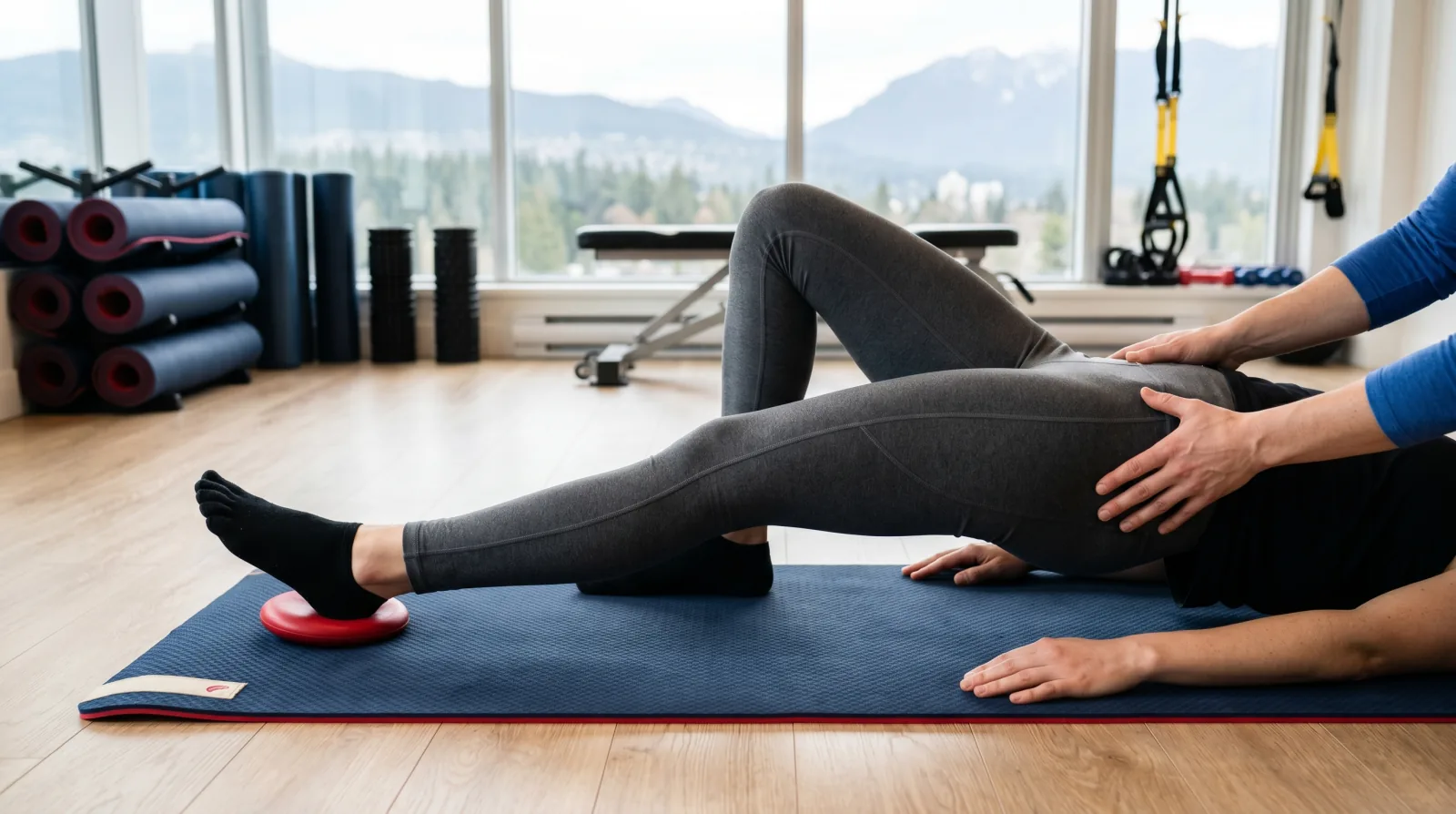
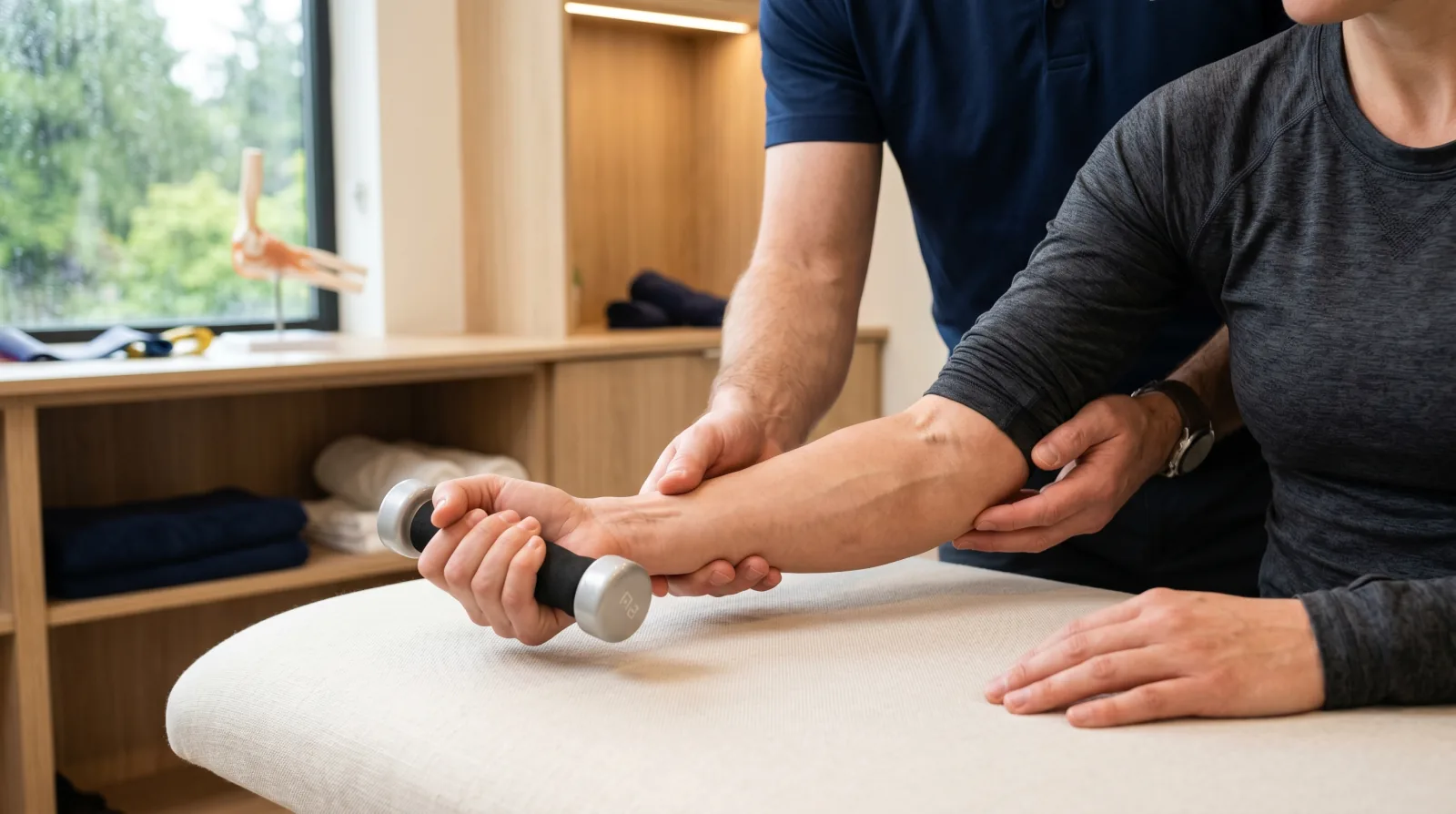
At Medstar Sport Physio in North Vancouver, isometric exercise is treated as a short-term symptom management tool for tendon pain rather than a cure. A 2015 study reported an immediate pain drop of 4.3 points on a pain scale after isometric holds, and that result travelled widely. It came from six jumping athletes. A 2020 systematic review of 10 randomised trials and 294 participants found the effect was much smaller when repeated in 2017 and absent in a 2020 trial, and concluded there is limited evidence that isometrics beat isotonic exercise for chronic tendon pain. A 2025 review still supports isometrics for immediate relief, which is genuinely useful in season, while eccentric loading and other progressive work carry the longer-term change.
Here is what the original study found, what happened when other researchers tried to repeat it, and how to use isometrics sensibly now.
The study that started it
In 2015 a research group tested isometric holds against isotonic exercise in athletes with patellar tendon pain, the tendon just below the kneecap. The 2020 systematic review in BMJ Open Sport and Exercise Medicine records the result: an immediate pain reduction of 4.3 points favouring the isometric group, with a 95 percent confidence interval running from 7.4 to 1.2 points.
On a pain scale, a drop of that size is enormous. It reads like a switch being flipped.
A 2025 review in Frontiers in Rehabilitation Sciences adds that the pain reduction in that 2015 study was still present when measured again 45 minutes later, at a significance level of p equals 0.004. The same review notes a 2016 study from the same group that found a greater reduction in pain scores with isometric work than isotonic work, 1.8 points against 0.9 points.
The idea spread quickly for understandable reasons. It was simple, it needed no equipment beyond something to push against, and the reported effect was large.
What happened when it was repeated
The 2020 review is the part of the story that did not travel. It pooled 10 randomised trials with 294 participants, covering the patellar tendon in four studies, the rotator cuff in two, the lateral elbow in two, the Achilles in one, and the gluteal tendons in one.
Three results sit side by side in that review, and they tell the story on their own.
The 2015 study found a 4.3-point reduction. A 2017 study from the same lead author found 0.9 points, with a confidence interval from 1.1 to 0.7. A 2020 study by a different group found 0.3 points in the other direction, with a confidence interval from 0.7 to 1.3, which did not reach statistical significance.
The review authors are direct about the original result. The findings came from six jumping athletes, have not been replicated, and therefore may not be generalisable. Six participants is a starting point for a research question, not a basis for a universal recommendation.
Their overall conclusion was that there is limited evidence, which they graded level 3, that isometric exercise is not superior to isotonic exercise for reducing pain in chronic tendinopathy, either immediately or in the short term. They also noted that most of the included studies lacked a no-treatment control group, so improvement over time cannot always be separated from the effect of the exercise itself.
Why some people still get a big response
The review contains a line that matters more than any single number. The response to isometric exercise is variable both within and across tendinopathy populations.
That variability is the practical finding. Some people with patellar tendon pain get a clear drop in symptoms from isometric holds. Others get nothing. The same is true across different tendons, and the small number of studies at each site means the picture for the rotator cuff or the gluteal tendons rests on one or two trials.
An average effect close to zero can hide two groups: people who respond well and people who do not respond at all. That is why the useful question is not whether isometrics work in general. It is whether they work for you, tested on the movement that actually hurts.
Where isometrics still earn their place
The 2025 Frontiers review compared dry needling, isometric exercise, and eccentric exercise in patellar tendinopathy across nine clinical trials with 330 participants, split as 186 in eccentric groups, 75 in isometric groups, and 69 in dry needling groups. The evidence quality for the isometric studies was rated moderate, at 75 percent.
Their verdict separates two different jobs. Dry needling and eccentric exercise were more effective for long-term pain reduction. Isometric exercise was best positioned for immediate pain relief, which the authors describe as useful for in-season athletes managing flare-ups.
That is a reasonable and honest place for the tool. An athlete who needs to get through a game week with a painful tendon has a real problem, and something that reduces symptoms for the next hour has value even if it does not change the tendon itself. The comparison between contraction types is covered further in our look at eccentric versus concentric loading.
What actually changes a tendon
Progressive loading over months is what builds a tendon's capacity to handle the work you want to do. That principle sits behind the programmes described in our guides to heavy slow resistance for patellar tendinopathy and heavy slow loading for the Achilles.
The pattern is consistent across sites. Load the tendon in a controlled, progressive way, keep going long enough for the tissue to adapt, and manage symptoms along the way so that the person can keep doing the programme. The same approach applies at the elbow, as set out in our golfer's elbow loading programme.
Symptom management is part of that, which is where isometrics fit, alongside other options such as TECAR therapy for tendinopathy. None of these replaces the loading work. They help someone stay in the programme long enough for the loading to do its job.
How to test isometrics on yourself
Because the response varies so much between people, your own result is more useful than the pooled average.
Pick a movement that reliably brings on your tendon pain and rate it out of 10. A single-leg decline squat for a patellar tendon. A hop or a calf raise for an Achilles. A gripping task for a painful elbow. Then do the isometric protocol your physiotherapist has prescribed, at the effort level and hold length they set. Repeat the test movement and rate it again.
If the pain drops meaningfully, isometrics are worth keeping in your programme as a pre-training or in-season tool. If nothing changes after a fair trial, that is a real answer and the time is better spent on the loading work.
Keep two things in mind. Isometrics being ineffective for you says nothing about whether your rehabilitation is working. And a large drop in pain during a session does not mean the tendon is ready for more load that day.
When to get it looked at
Tendon pain that has been present for more than a few weeks, that limits training, or that is getting worse despite rest is worth having assessed. Tendons respond to a structured, progressive plan, and guessing at the load is the most common reason these problems drag on for months.
Some situations need medical attention first. Sudden severe pain with a snapping sensation, an inability to push off or bear weight, a visible gap in a tendon, or swelling with redness and fever are all reasons to contact your physician or attend Lions Gate Hospital rather than booking a rehabilitation appointment.
If your tendon pain has been coming and going for a season and you are unsure which parts of your programme are actually doing the work, book a 30-minute assessment. You can see what we treat or reach the clinic here.
This article is general information, not personal medical advice. A regulated practitioner can confirm whether the patterns described apply to you.
Sources
- Effectiveness of isometric exercise in the management of tendinopathy: a systematic review and meta-analysis of randomised trials (BMJ Open Sport and Exercise Medicine, 2020)
- A systematic review: impact of dry needling, isometric, and eccentric exercises on pain and function in individuals with patellar tendinopathy (Frontiers in Rehabilitation Sciences, 2025)
- College of Health and Care Professionals of BC public registry
Common questions
Frequently asked questions.
What is an isometric exercise?
An isometric exercise is a hold where the muscle produces force without the joint moving. A wall sit is one. Pressing into an immovable object is another. In tendon rehabilitation the usual version is a long hold at a set effort level, repeated a few times, with the joint kept still. The alternative is isotonic work, where the joint moves through a range under load.
Do isometrics really stop tendon pain instantly?+
Sometimes, for some people, and by much less than the first study suggested. A 2020 systematic review in BMJ Open Sport and Exercise Medicine found that the large immediate effect reported in 2015 was not repeated in later trials. One follow-up found a much smaller drop in pain and another found no effect at all. The response varies within and across tendon problems.
What did the original 2015 study actually show?+
It reported an immediate pain reduction of 4.3 points on a pain scale, with a wide confidence interval running from 7.4 to 1.2 points, favouring isometric exercise. The 2020 review notes that these findings came from six jumping athletes, have not been replicated, and therefore may not be generalisable. Six participants is a very small base for a treatment recommendation.
Are isometrics better than moving exercises for tendon pain?+
The evidence pooled so far puts them on roughly equal footing for pain. The 2020 review graded its conclusion as limited evidence at level 3, finding that isometric exercise performs about the same as isotonic exercise for chronic tendinopathy pain, both immediately and in the short term. Both approaches load the tendon. The review also noted that most included studies lacked a no-treatment control group, which limits how firmly any comparison can be stated.
So should I stop doing isometric holds?+
No. A 2025 review in Frontiers in Rehabilitation Sciences positions isometrics as the better option for immediate pain relief, which is useful for athletes managing a flare-up during a season. The same review found dry needling and eccentric exercise more effective for longer-term pain reduction. Isometrics are a reasonable tool for short-term symptom control alongside a loading programme.
Which tendons has this been studied in?+
The 2020 review pooled 10 randomised trials with 294 participants across five sites: four studies on the patellar tendon at the front of the knee, two on the rotator cuff, two on the lateral elbow, one on the Achilles, and one on the gluteal tendons at the hip. The evidence base is small for any single site.
How would I know if isometrics work for me?+
Test it and record what happens. Rate your pain during a movement that reliably provokes it, do the isometric protocol your physiotherapist prescribes, then rate the same movement again. Because the response is variable between people, your own before-and-after is more informative than the average result in a study. If nothing changes, that is useful information too.
What builds the long-term recovery, if not isometrics?+
Progressive loading over months is what changes the tendon's capacity to handle the work you ask of it. The 2025 review in Frontiers in Rehabilitation Sciences found that eccentric exercise and dry needling gave better long-term pain reduction than isometrics in patellar tendinopathy. Heavy slow resistance programmes are also well supported at several tendon sites. Isometrics sit alongside these as a symptom management tool that helps people keep going with the loading work.
Share this post
Copies a ready-to-publish LinkedIn post to your clipboard and opens the LinkedIn share dialog. Paste the text into the composer and publish.
Written by
Medstar Sport Physio Team
Registered clinician at Medstar Sport Physio & Health, North Vancouver.
This article is for general information only and does not constitute medical advice, diagnosis, or treatment. Individual presentations vary, and assessment findings and treatment plans differ from person to person. If you are experiencing severe symptoms, neurological changes (numbness, weakness, bowel or bladder changes), or a significant trauma, contact your physician or emergency services. Care at Medstar Sport Physio & Health is provided by practitioners registered with their respective British Columbia regulatory colleges.
Filed under
- isometrics
- tendinopathy
- tendon-pain
- loading
- north-vancouver