
High Hamstring Pain: The Sitting-and-Running Ache of Proximal Hamstring Tendinopathy
Deep pain right at the sit-bone, worse when you sit and when you run uphill, is the signature of proximal hamstring tendinopathy. And stretching it, the obvious instinct, usually backfires.
BY AMIR AHMADI, PHD
A deep, nagging ache right at the bone you sit on, worse during a long drive and worse when you run uphill or push the pace, is a distinctive and often misunderstood problem. It is proximal hamstring tendinopathy, and the most instinctive thing to do about it, stretching, is usually exactly wrong. Here is what is going on and what actually settles it.
The deep ache at the sit-bone that worsens during long drives and uphill running is often proximal hamstring tendinopathy. Stretching tends to make it worse, not better, because it compresses and lengthens the irritated tendon against the bone. At Medstar Sport Physio in North Vancouver, we treat this with two things: reducing the compressive loads that aggravate it (prolonged sitting, deep stretching) and progressively loading the tendon to rebuild its tolerance. We start in positions that do not heavily compress the tendon, then advance toward the loaded, lengthened demands of running. This tendinopathy often takes a couple of months or more to settle with consistent loading. What determines the pace is how irritable the tendon is and how well sitting habits can be managed alongside the loading program.
What it is and where it hurts
Proximal hamstring tendinopathy is an irritation of the hamstring tendons where they attach to the sit-bone, the bony point at the base of the pelvis that you sit on. As a load-related tendon problem, it develops when the demand on that tendon attachment exceeds what it can tolerate, often in runners and active people who load the hamstring heavily in lengthened positions.
The pain sits deep in that sit-bone area and has a characteristic pattern. It worsens with sitting, especially prolonged sitting and driving, and with activities that load the hamstring in a lengthened position, running uphill, fast running, lunging, and deep hip-flexed movements. That combination of sitting pain and loaded-lengthened pain is the signature that points to this diagnosis.
Why sitting hurts
The sitting pain has a specific mechanical explanation. Sitting compresses the hamstring tendon against the sit-bone, and in an already irritated tendon, that compression provokes the pain. This is why long drives, desk work, and hard seats are such reliable aggravators.
Understanding this compression is central to treatment, because reducing it, through sitting modifications, cushioning, and avoiding the most provocative positions, is an important and frequently overlooked part of settling the problem. A tendon that gets compressed against the bone for hours every day cannot calm down no matter how good the rest of the plan is.
Why stretching backfires
Here is the mistake almost everyone makes. The hamstring feels tight, so the natural response is to stretch it. But stretching lengthens and compresses the irritated tendon against the sit-bone, which for this particular tendinopathy usually aggravates it rather than helping.
This runs counter to intuition, which is exactly why it trips people up. The feeling of tightness is not a signal that the tendon needs stretching; it is part of the tendon's irritation. We make a similar point about other tendinopathies, where loading rather than stretching is the active ingredient, as in our guides to Achilles tendinopathy and loading and patellar tendinopathy and heavy slow resistance. The hamstring tendon follows the same rule, with the added twist that it is particularly sensitive to the compression that stretching creates.
What actually works
Effective treatment combines two things:
Reduce the compressive loads. Cutting down the prolonged sitting and driving that compress the tendon, modifying how you sit, and avoiding aggressive deep stretching all reduce the daily irritation. This is the load-management half of the plan, and it matters as much here as it does for the gluteal tendinopathy we treat at the hip, which shares this compression sensitivity.
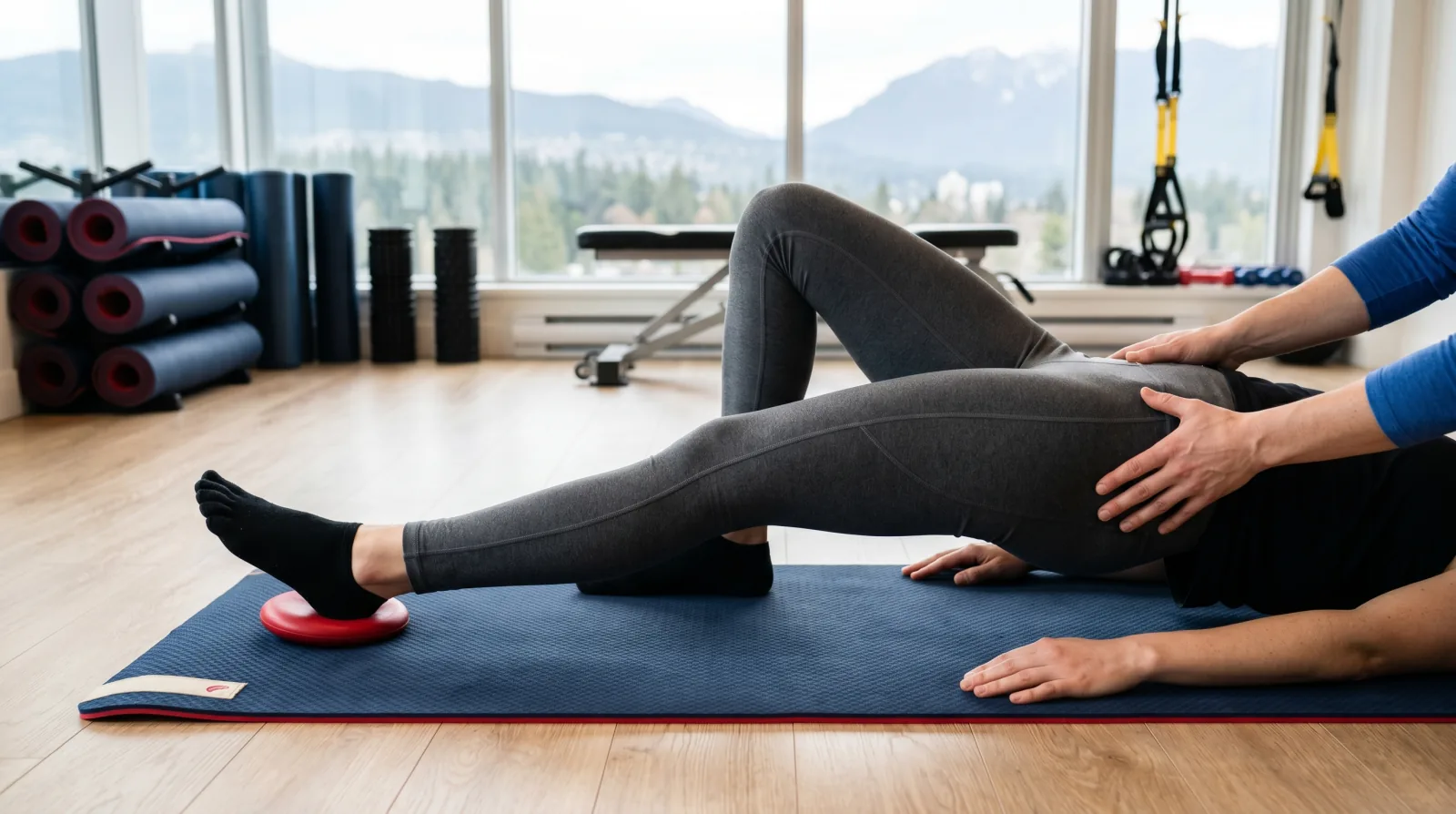
Load the tendon progressively. As with every tendinopathy, the tendon improves when you build its tolerance through progressive loading. The key adaptation here is starting in positions that do not heavily compress the tendon, with the hip less flexed, then gradually advancing toward the lengthened, higher-load demands of running and sport as the tendon settles. We build the load in a sequence the tendon can handle rather than throwing it straight into the provocative positions.
The combination of removing the compressive aggravators and loading the tendon in a graded way is what reliably settles proximal hamstring tendinopathy, where stretching and rest tend to fail.
A realistic timeline
Like other tendinopathies, this one is often slow, improving over a couple of months or more with consistent loading and load management rather than in a few weeks. The timeline depends on how irritable the tendon is and how long it has been present before treatment starts. The single biggest factor in steady progress is consistently avoiding the compressive aggravators, especially prolonged sitting, because the tendon needs relief from that daily compression to respond to the loading.
We reassess against function, your tolerance to sitting and to loaded running, rather than chasing the pain day to day, since pain in tendons is a noisy signal that lags behind the actual recovery.
When to get it assessed
If you have deep sit-bone pain that flares with sitting and with running, an assessment confirms whether it is proximal hamstring tendinopathy, rules out other causes of deep buttock pain, and builds a loading and load-management plan that settles it, without the stretching that tends to make it worse. Pain that radiates down the leg, comes with numbness or tingling, or does not fit this pattern is worth assessing to be sure of the cause.
Book a 30-minute appointment and we will assess the area, identify the compressive loads aggravating it, and build a graded loading plan that gets you back to comfortable sitting and running.
This article is general information about proximal hamstring tendinopathy. It is not personal medical advice. A regulated practitioner can confirm whether the patterns described apply to you.
Sources
- Goom et al., Proximal Hamstring Tendinopathy: Clinical Aspects of Assessment and Management, Journal of Orthopaedic & Sports Physical Therapy (2016)
- Cook & Purdam, The challenge of managing tendinopathy in and around tendons subject to compression, British Journal of Sports Medicine (2012)
- College of Physical Therapists of BC (CPTBC)
Common questions
Frequently asked questions.
What is proximal hamstring tendinopathy?
It is an irritation of the hamstring tendons where they attach to the sit-bone (the bony point you sit on) at the bottom of the pelvis. It causes deep pain in that area, typically worse with sitting, driving, and activities that load the hamstring in a lengthened position like running uphill, lunging, or fast running. It is a load-related tendon problem, common in runners and active people.
Why does my sit-bone hurt when I sit?+
Sitting compresses the hamstring tendon against the sit-bone, which irritates an already sensitive tendon in proximal hamstring tendinopathy. That is why prolonged sitting and driving are classic aggravators. Reducing this compression, through sitting modifications and avoiding the most provocative positions, is an important and often overlooked part of settling the problem.
Should I stretch a sore hamstring tendon?+
Usually not, and this is a common mistake. Stretching compresses and lengthens the irritated tendon against the sit-bone, which often aggravates proximal hamstring tendinopathy rather than helping. The tendon responds better to progressive loading that builds its tolerance, started in positions that do not heavily compress it. Aggressive stretching tends to make this particular problem worse.
How is proximal hamstring tendinopathy treated?+
Treatment combines reducing the compressive loads that aggravate it, such as prolonged sitting and deep stretching, with a progressive loading program that builds the tendon's tolerance, starting in less provocative positions and advancing toward the lengthened, higher-load demands of running and sport. It is the same loading principle used for other tendinopathies, adapted to the compression sensitivity here.
How long does proximal hamstring tendinopathy take to settle?+
Like other tendinopathies, it is often slow, improving over a couple of months or more with consistent loading and load management rather than in weeks. The timeline depends on how irritable the tendon is and how long it has been there. Avoiding the compressive aggravators consistently, especially prolonged sitting, is key to steady progress.
Is proximal hamstring tendinopathy the same as a hamstring strain or tear?+
No, and mixing the two up leads to the wrong treatment. A hamstring strain or tear usually comes from a sudden sprinting or kicking movement and causes sharp pain, often with bruising, in the muscle belly. Proximal hamstring tendinopathy builds up gradually at the tendon attachment near the sit-bone and is triggered by sitting and loaded, lengthened positions rather than one specific moment.
Can I keep training my other muscle groups while this settles?+
Usually yes. Proximal hamstring tendinopathy is specific to the hamstring tendon's compressed and lengthened positions, so most upper-body and non-provocative lower-body training can often continue. Your physiotherapist can help identify which exercises compress or lengthen the hamstring tendon and should be modified, versus which ones are safe to keep doing.
What driving or work positions make this worse, besides sitting itself?+
Long drives with the seat reclined, low or soft chairs, and any position that keeps the hip bent for a long stretch tend to compress the tendon the most. Small changes, standing breaks during long drives, a firmer or higher chair, and shifting position regularly at a desk, can reduce the daily irritation while the loading program does its work.
Share this post
Copies a ready-to-publish LinkedIn post to your clipboard and opens the LinkedIn share dialog. Paste the text into the composer and publish.

Written by
Amir Ahmadi, PhDDr. Amir Ahmadi is a Registered Physiotherapist, Certified IMS Therapist and former Associate Professor. 20+ years of clinical practice in North Vancouver.
This article is for general information only and does not constitute medical advice, diagnosis, or treatment. Individual presentations vary, and assessment findings and treatment plans differ from person to person. If you are experiencing severe symptoms, neurological changes (numbness, weakness, bowel or bladder changes), or a significant trauma, contact your physician or emergency services. Care at Medstar Sport Physio & Health is provided by practitioners registered with their respective British Columbia regulatory colleges.
Filed under
- hamstring-tendinopathy
- tendinopathy
- running
- loading
- north-vancouver