Tennis Elbow vs Golfer's Elbow: Same Idea, Opposite Sides of the Elbow
Tennis elbow and golfer's elbow sound like different injuries. They are the same tendon problem on opposite sides of the elbow, and the fix follows the same logic.
BY MEDSTAR SPORT PHYSIO TEAM
Tennis elbow and golfer's elbow sound like two separate injuries from two different sports. They are actually the same kind of tendon problem sitting on opposite sides of the elbow, and most people who get them have never played either sport. Knowing which side is sore tells you which one you have, and the plan to fix both follows the same logic.
Tennis elbow and golfer's elbow are the same type of tendon problem at the elbow, on opposite sides. Tennis elbow (lateral epicondylalgia) causes pain on the outer side and involves the muscles that straighten the wrist and fingers. Golfer's elbow (medial epicondylalgia) causes pain on the inner side and involves the muscles that bend the wrist and close the hand. At Medstar Sport Physio in North Vancouver, the treatment for both follows the same idea, a progressive loading program that rebuilds the tendon's tolerance, and the only real difference is which muscles you load.
Two names, one type of problem
Both of these conditions are tendinopathies at the elbow. A tendinopathy is an irritated, overloaded tendon, meaning the tendon has been asked to do more than it can currently handle, often through repeated gripping and wrist movement. The elbow has tendon attachments on both the outer and the inner side, and each side can develop the same kind of problem.
The sport names are just history. Tennis elbow got its name because the backhand loads the outer-side tendons, and golfer's elbow because the golf swing loads the inner-side tendons. In real life, most cases come from everyday gripping and repetitive work, not from sport. Painters, tradespeople, desk workers who grip a mouse all day, and new parents lifting a baby all get these. So do not rule one out just because you have never picked up a racquet or a club.
Because they are the same type of problem, the way you think about recovering from both is the same. The differences are about location and which muscles you target, not about the underlying nature of the injury. For a full breakdown of causes, treatment options, and timelines, see our tennis elbow condition guide and golfer's elbow condition guide.
Where the pain sits
The quickest way to tell them apart is where the pain and tenderness are. Tennis elbow causes pain on the outer side of the elbow, and golfer's elbow causes pain on the inner side. If you press on the bony point on the outside of your elbow and that reproduces your pain, tennis elbow is likely. If the tender spot is on the bony point on the inside, golfer's elbow is more likely.
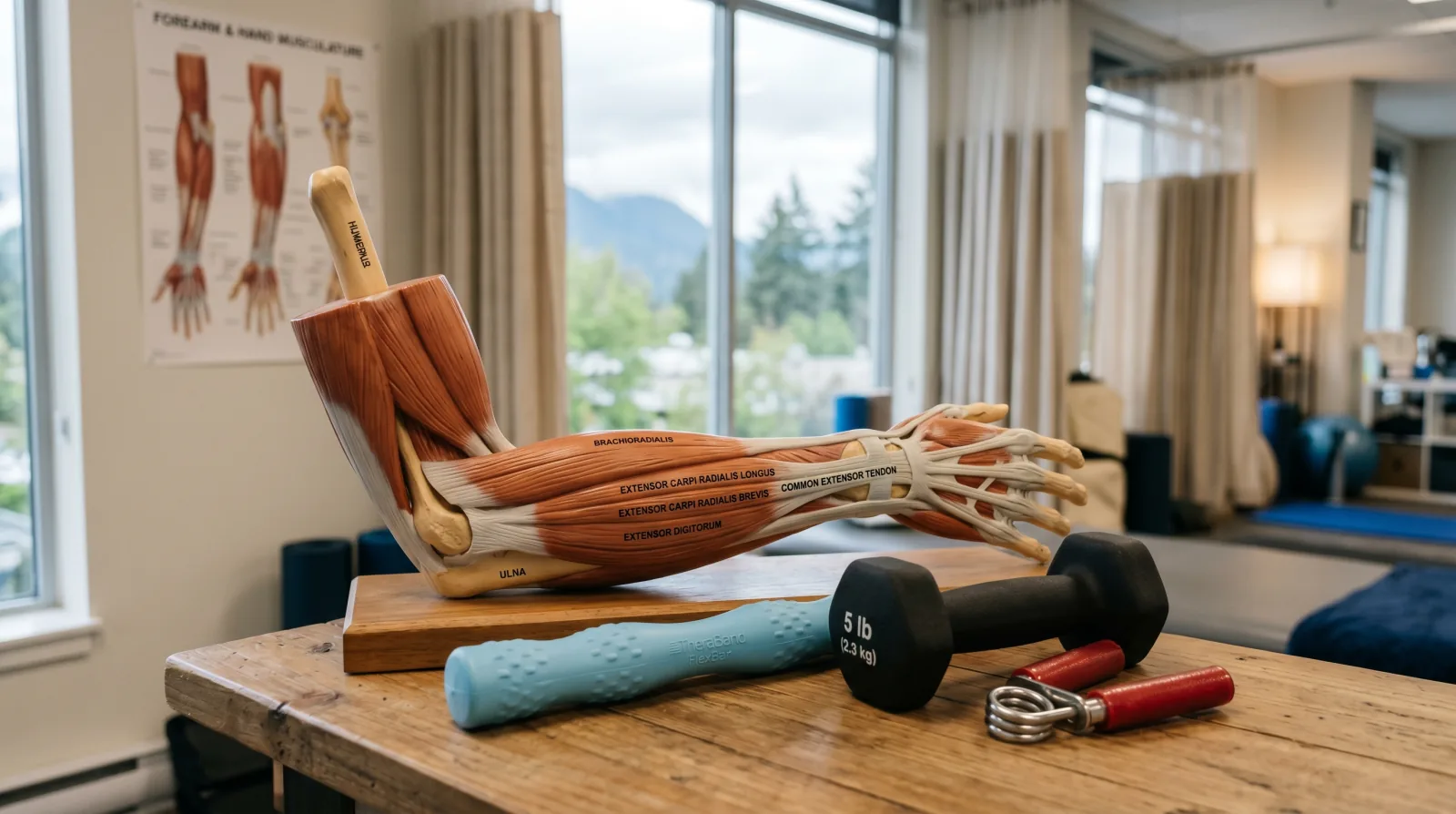
This lines up with the anatomy. Tennis elbow involves the common extensor tendon, the shared attachment of the muscles that straighten the wrist and fingers. Golfer's elbow involves the common flexor tendon, the shared attachment of the muscles that bend the wrist and close the hand into a fist. Same design, opposite sides of the joint.
What movements provoke each one
The provoking movements follow the muscles involved, which gives you a second useful clue.
Tennis elbow. The outer-side muscles straighten the wrist and stabilise it when you grip. So tennis elbow tends to flare with gripping and lifting when the palm faces down, shaking hands, using a screwdriver, or carrying a bag by the handle. People often notice trouble lifting, gripping, or grasping objects.
Golfer's elbow. The inner-side muscles bend the wrist and close the hand. So golfer's elbow tends to flare with curling the wrist, gripping, and making a fist, and with repeated pulling or lifting with the palm up. Overhead throwing and repetitive wrist bending at work are common backgrounds.
If your elbow hurts on the outside when you grip with the palm down, think tennis elbow. If it hurts on the inside when you make a fist or curl the wrist, think golfer's elbow. The two occasionally occur in the same elbow, but that is less common than one on its own.
The loading program: same idea, different muscles
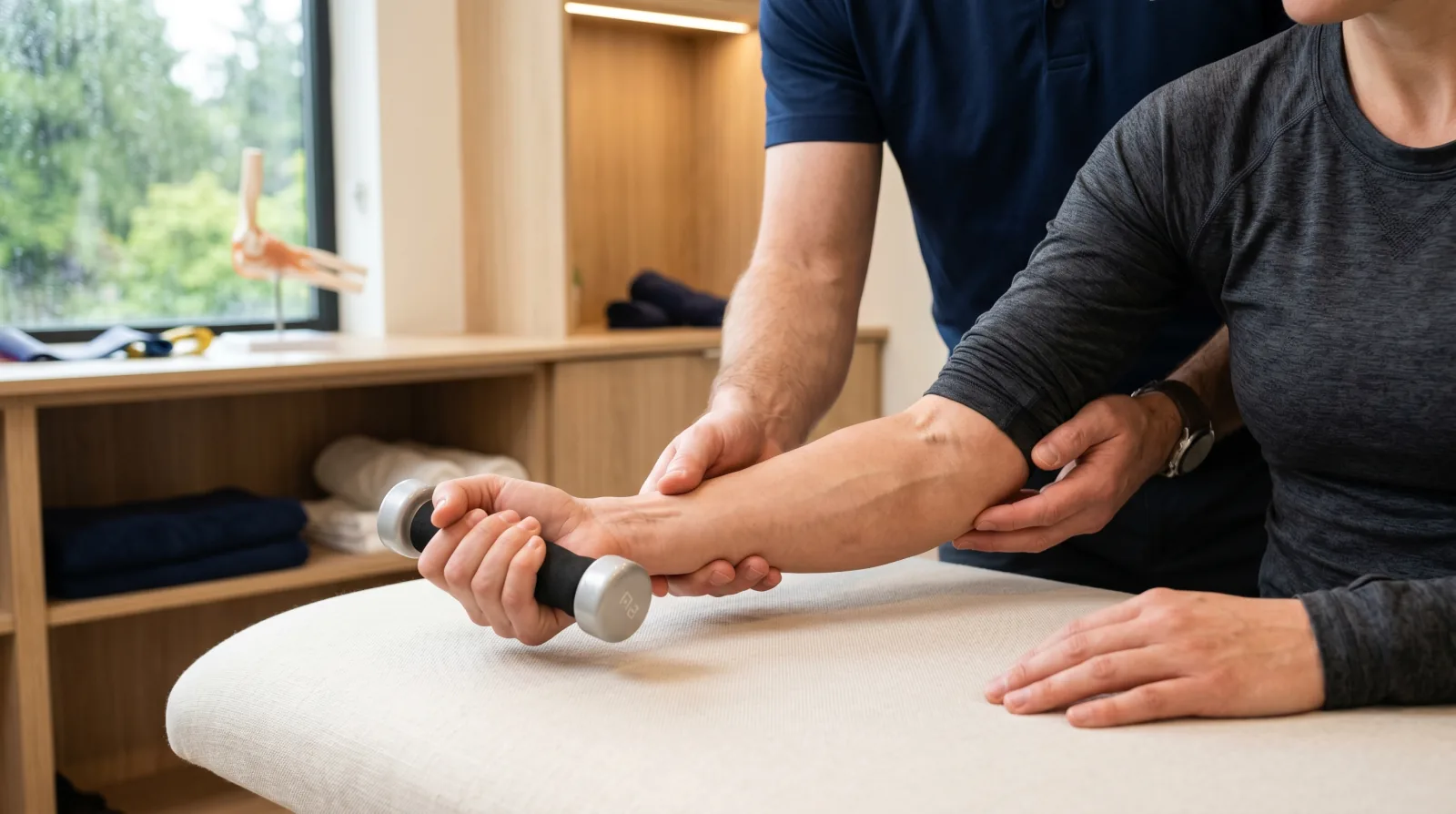
Here is the part that ties the two together. For both conditions, the mainstay of treatment is a progressive loading program: gradually loading the sore tendon so it rebuilds its capacity and tolerates the demands you put on it again. Early on, some activity changes settle the irritation so the tendon is not being flared constantly, but the plan is not rest. Tendons respond to the right amount of load, not to being avoided.
The only real difference between the two programs is which muscles you load. For tennis elbow, you load the wrist and finger extensors on the outer side. For golfer's elbow, you load the wrist flexors on the inner side. In both cases the load starts at a level the tendon can handle and progresses as it gets stronger, and some ache during the exercises is acceptable as long as it settles rather than steadily climbing.
Because the two share this logic, our detailed write-ups map onto each other. For the outer-side version, our post on tennis elbow, loading versus cortisone walks through why loading beats a quick injection for most people. For the inner-side version, our post on the golfer's elbow loading program covers how we build the inner-side program step by step.
Why injections are usually not the first move
People often want a cortisone injection to make elbow pain go away quickly. Cortisone can reduce the pain in the short term, but it does not build the tendon's capacity, and the longer-term results are often worse than doing the loading work. That is the same story on both sides of the elbow, because it is the same type of tendon problem.
This does not mean an injection never has a place. It can be part of the discussion for a very irritable elbow that is hard to settle, decided with your doctor alongside the rehabilitation plan. But for most people, starting the loading program and giving it a fair run is the better first choice, because loading is the thing that actually changes the tendon over time.
What recovery usually looks like
Elbow tendon problems are slow, and being honest about that up front helps people stick with the plan. Recovery is usually a matter of months rather than weeks, and it depends on how long the pain has been present, how irritable the tendon is, and how consistently the loading is done. A tendon that has been sore for a year does not settle in a fortnight.
We measure progress by function, not by a single day's pain score. Can you grip and lift the things your day or your sport demands without a flare afterwards? Can you carry a bag, turn a key, or make a fist without the elbow complaining? Those markers tell us more than how the elbow feels on any one morning. Flares happen, especially after a busy week, and a flare usually means the load ran ahead of the current capacity rather than the plan failing.
When to get it assessed
If you have elbow pain that flares with gripping, lifting, or wrist movement and has not settled with a sensible reduction in the activity that aggravates it, an assessment confirms which side is involved, rules out other causes, and builds the right loading program. It is worth being seen sooner if the elbow locks or gives way, if there is numbness or tingling into the hand, or if the pain followed a fall or direct blow, since those point to something other than simple tendinopathy.
Book a 30-minute appointment and we will assess your elbow, work out whether it is the outer-side or inner-side tendon, and build a loading program matched to what your arm needs to do.
This article is general information about elbow pain. It is not personal medical advice. A regulated practitioner can confirm whether the patterns described apply to you.
Sources
- Golfer's Elbow vs Tennis Elbow (Midwest Orthopaedics at Rush)
- Lateral and Medial Epicondylitis of the Elbow (OrthoPaedia)
- College of Physical Therapists of BC (CPTBC)
Common questions
Frequently asked questions.
What is the difference between tennis elbow and golfer's elbow?
Both are tendon problems at the elbow, on opposite sides. Tennis elbow (lateral epicondylalgia) causes pain on the outer side of the elbow and involves the muscles that straighten the wrist and fingers. Golfer's elbow (medial epicondylalgia) causes pain on the inner side of the elbow and involves the muscles that bend the wrist and close the hand. The side of the pain is the quickest way to tell them apart.
How do I know which one I have?+
Feel where the pain sits. Tennis elbow is tender on the outer bony point of the elbow and hurts with gripping and lifting with the palm facing down. Golfer's elbow is tender on the inner bony point and hurts with curling the wrist, gripping, and making a fist. An assessment confirms it and rules out other causes of elbow pain, but the location of the tenderness is the main clue.
Do tennis elbow and golfer's elbow need different treatment?+
The core approach is the same for both: a progressive loading program that gradually rebuilds the tendon's tolerance, with activity changes early on to settle the irritation. The difference is which muscles you load. Tennis elbow targets the wrist and finger extensors on the outer side, and golfer's elbow targets the wrist flexors on the inner side. The principle of loading the sore tendon is shared.
Should I get a cortisone injection for elbow tendinopathy?+
A cortisone injection can reduce elbow tendon pain in the short term, but the longer-term picture is less favourable, and it does not build the tendon's capacity the way loading does. For most people a progressive loading program is the better first choice, with injection reserved for specific situations discussed with your doctor. Loading is what changes the tendon over time.
How long does tennis elbow or golfer's elbow take to recover?+
Tendon problems at the elbow tend to be slow, and recovery timelines depend on how long the pain has been present, how irritable it is, and how consistently the loading program is done. It is often a matter of months rather than weeks. Progress is measured by what you can grip, lift, and do without a flare, not by a pain score on a single day.
Can I have tennis elbow and golfer's elbow at the same time?+
It is uncommon but possible, especially with repetitive gripping tasks that load both sides of the forearm, such as certain manual jobs or racquet sports with a lot of wrist action. If both sides of the elbow are tender, an assessment can confirm whether both tendons are involved and build a loading plan that addresses each without overloading the arm.
Is a forearm brace or strap worth wearing for elbow tendinopathy?+
A counterforce brace can reduce strain on the tendon during specific tasks and ease symptoms for some people, but it is a symptom-management tool, not a substitute for the loading program that rebuilds the tendon's tolerance. It is reasonable to use one during aggravating activities while the loading program does the actual work of recovery.
What everyday activities commonly aggravate tennis elbow or golfer's elbow?+
For tennis elbow, activities that involve gripping with the palm down, such as carrying a heavy bag, shaking hands firmly, or using a screwdriver, tend to flare it. For golfer's elbow, curling the wrist and making a fist, such as lifting with an underhand grip or gripping tools tightly, are common triggers. Identifying and briefly modifying the specific trigger is part of settling the irritation early on.
Share this post
Copies a ready-to-publish LinkedIn post to your clipboard and opens the LinkedIn share dialog. Paste the text into the composer and publish.
Written by
Medstar Sport Physio Team
Registered clinician at Medstar Sport Physio & Health, North Vancouver.
This article is for general information only and does not constitute medical advice, diagnosis, or treatment. Individual presentations vary, and assessment findings and treatment plans differ from person to person. If you are experiencing severe symptoms, neurological changes (numbness, weakness, bowel or bladder changes), or a significant trauma, contact your physician or emergency services. Care at Medstar Sport Physio & Health is provided by practitioners registered with their respective British Columbia regulatory colleges.
Filed under
- tennis-elbow
- golfers-elbow
- elbow-pain
- tendinopathy
- loading-program
- north-vancouver