Tennis Elbow: Why a Cortisone Shot Can Cost You Later
A cortisone shot can settle tennis elbow for a few weeks. The trade-off shows up a year later, and the evidence on it is hard to ignore.
BY AMIR AHMADI, PHD
Tennis elbow is the kind of nagging pain that makes a cortisone injection sound like an easy win. It often is, for about a month. The problem is what the evidence shows happens after that.
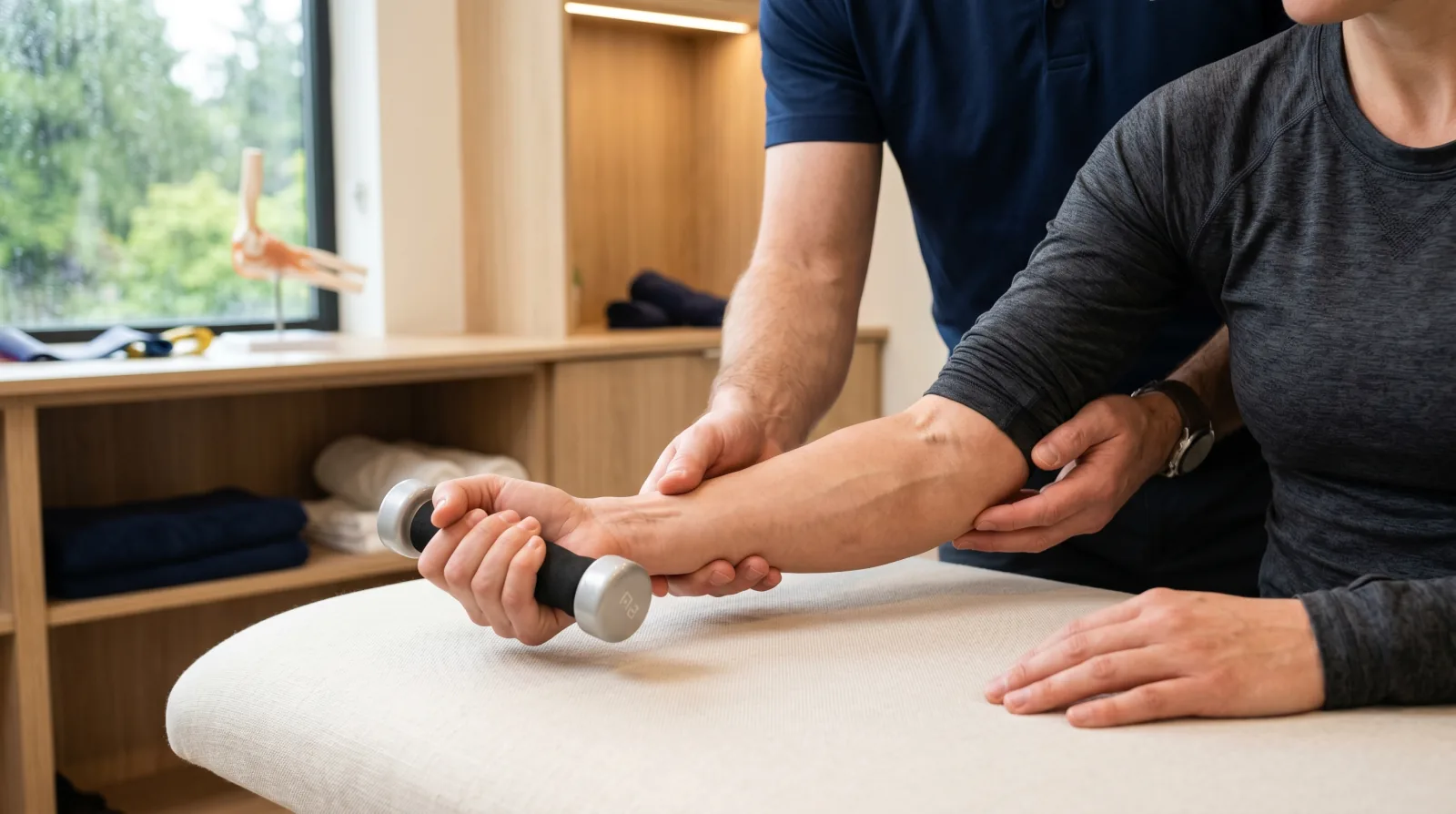
A cortisone injection for tennis elbow may reduce pain in the first few weeks, but research shows it is associated with worse outcomes at one year compared with physiotherapy or a wait-and-see approach. The recurrence rate after injection is much higher than after a loading program. At Medstar Sport Physio in North Vancouver, we prioritize a graded loading program for the wrist extensor tendon as the first treatment. The loading builds tendon tolerance, which is what changes the condition over time. Symptom aids like a counterforce brace or manual therapy can support the process, but they are not the treatment. Tennis elbow is often slow to settle, and the right plan depends on how irritable the tendon is and which daily tasks keep aggravating it.
If someone has offered you a shot for a sore outer elbow, this is the trade-off worth understanding before you book it.
What tennis elbow actually is
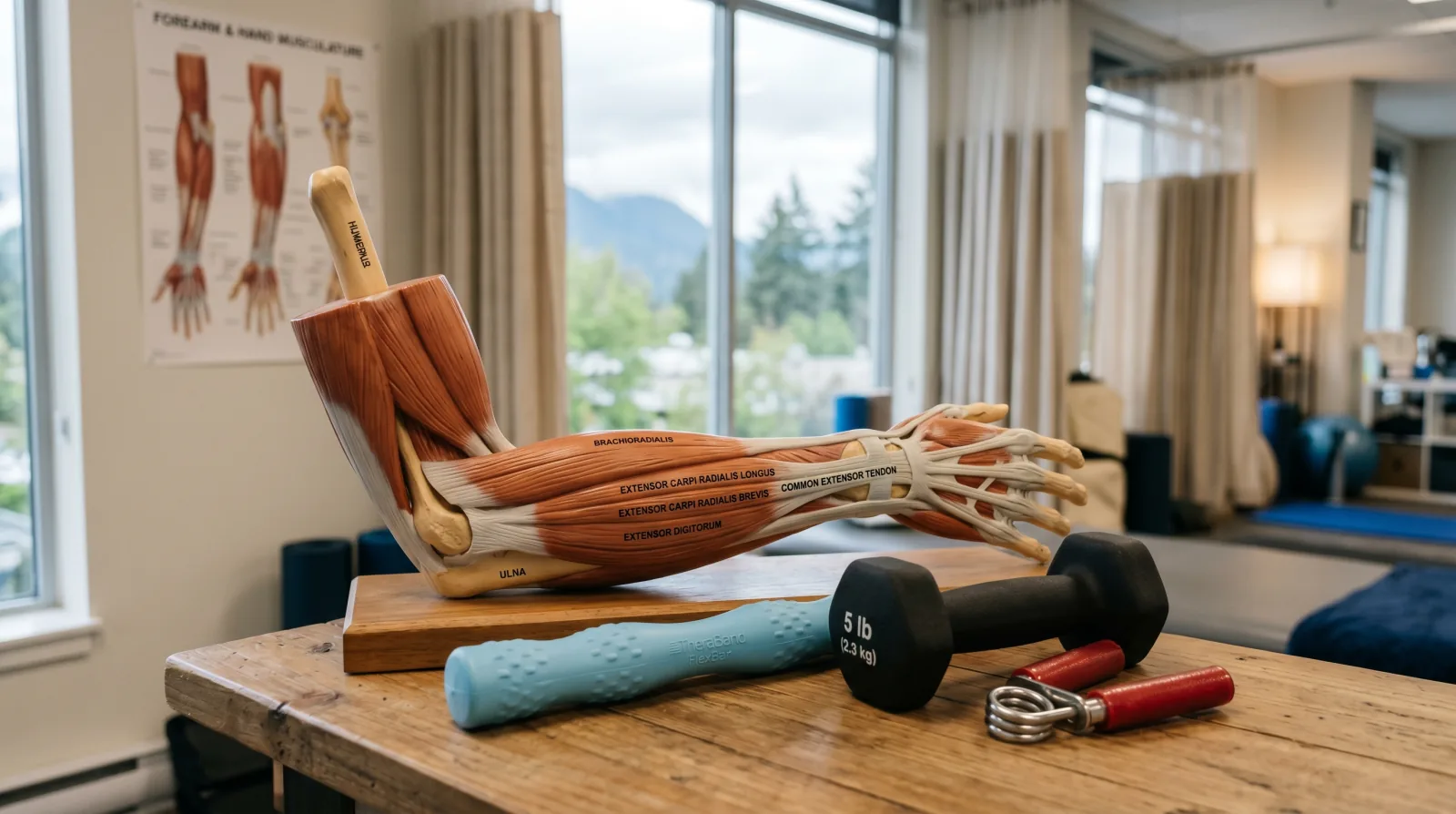
Lateral epicondylalgia, the clinical name for tennis elbow, is a tendinopathy of the wrist extensor tendons where they attach on the outside of the elbow. Despite the name, most people who get it do not play tennis. It usually comes from repeated gripping and lifting, at work, in the gym, or around the house, that loads the tendon faster than it can adapt.
The pain shows up on gripping, lifting with the palm down, and pressing on the bony point at the outside of the elbow. It can be stubborn, and it tends to settle over months rather than weeks. That slow timeline is exactly why a fast fix is so tempting.
The cortisone trade-off, in the numbers
Here is the part that changes the decision. In a randomised controlled trial, corticosteroid injection for chronic lateral epicondylalgia produced worse clinical outcomes at one year compared with placebo. The injection settled pain in the short term, then the advantage reversed.
The recurrence picture is the most striking part. In that line of research, recurrence after a corticosteroid injection ran far higher than after physiotherapy or a simple wait-and-see approach, with the wait-and-see and physiotherapy groups recurring in well under one in ten cases and the injection group recurring in the large majority.
So a cortisone shot is not a cure for tennis elbow. For the typical case it buys a few comfortable weeks at the cost of a worse year and a high chance the pain comes back. That trade rarely makes sense for a condition that tends to resolve with loading anyway.
Why loading is the active ingredient
A tendon gets better when you load it progressively so it learns to tolerate more. That is the principle behind every credible tendinopathy program, and tennis elbow is no exception. The loading does the work. Everything else supports it.
In our clinic, a tennis elbow plan starts with two things at once: a graded physiotherapy loading program for the wrist extensor tendon, and a hard look at the daily tasks that keep re-irritating it. Similar loading principles apply to golfer's elbow on the inside of the elbow. The grip pattern at work, the way you carry the kettle, the deadlift or rows that flare it, those inputs matter as much as the exercises. Fixing the input is often half the result.
A counterforce brace or some manual therapy can take the edge off symptoms while the loading does its job. We use them as comfort aids, not as the treatment.
Why complete rest is not the answer either
Plenty of people try the opposite of an injection and simply stop using the arm until it stops hurting. That tends to leave the tendon weak and just as sensitive the moment they go back to normal activity. The pain returns because nothing built the tolerance back up.
The middle path is the productive one. We modify the worst aggravators, keep the tendon loading at a level you can manage, and progress the load as the elbow settles. A mild ache during loading that calms by the next morning is usually fine. Symptoms that climb day to day mean the dose is too high and we back off.
What a realistic plan looks like
A tennis elbow course in our clinic usually runs over a few months, paced to the tendon rather than the calendar. Early on, we load in a range you tolerate and strip back the most provocative grip and lift tasks. As tolerance builds, the load increases and the modified tasks come back gradually. Later, the program rebuilds the specific grip and carry demands you need for work or sport.
Recovery timelines depend on how irritable the tendon is, how long it has been going on, and how consistently the loading gets done. We set expectations after the assessment, and we reassess against function, your grip strength and pain-free lifting, rather than pain alone.
When to get it assessed
Most tennis elbow is a straightforward tendinopathy, but a few patterns deserve a proper look. Pain with numbness or tingling into the hand, pain that does not follow the usual gripping pattern, or a sudden traumatic onset are worth ruling out before assuming it is a simple tendinopathy.
If your outer elbow has been nagging for weeks and a cortisone injection is on the table, get the elbow assessed first. Book a 30-minute appointment and we will confirm the diagnosis, screen the aggravating tasks, and build a loading plan, so you are not trading a good month for a worse year.
This article is general information about lateral epicondylalgia. It is not personal medical advice. A regulated practitioner can confirm whether the patterns described apply to you.
Sources
- Coombes et al., Effect of corticosteroid injection, physiotherapy, or both on clinical outcomes in unilateral lateral epicondylalgia: a randomised controlled trial, JAMA (2013)
- College of Physical Therapists of BC (CPTBC)
Common questions
Frequently asked questions.
Is a cortisone injection bad for tennis elbow?
It is not dangerous, but the evidence is unfavourable for the typical case. A corticosteroid injection tends to reduce pain in the first few weeks, then leads to worse outcomes and higher recurrence at one year compared with physiotherapy or simply waiting and loading. For most people, that trade is not worth it.
How long does tennis elbow take to settle?+
Lateral epicondylalgia is often slow. Many cases improve over months rather than weeks with a loading program and activity modification. The timeline depends on how irritable the tendon is, how long it has been going on, and the demands you keep putting through it. Your physiotherapist will set expectations after assessment.
What actually fixes tennis elbow?+
Progressive loading of the wrist extensor tendon is the active ingredient, paired with modifying the grip and lifting tasks that keep aggravating it. We may add manual therapy or a brace for symptom relief, but those are supports, not the cure. The loading is what builds tendon tolerance.
Should I stop using my arm completely?+
No. Complete rest tends to leave the tendon weak and just as sensitive when you return to activity. We modify the worst aggravators, keep the arm loading at a tolerable level, and progress from there based on how the elbow responds.
Will a tennis elbow brace help?+
A counterforce brace can take the edge off symptoms for some people during aggravating tasks, which can make loading and daily activity more comfortable. It is a symptom aid, not a treatment on its own. We use it alongside the loading program when it helps.
Share this post
Copies a ready-to-publish LinkedIn post to your clipboard and opens the LinkedIn share dialog. Paste the text into the composer and publish.

Written by
Amir Ahmadi, PhDDr. Amir Ahmadi is a Registered Physiotherapist, Certified IMS Therapist and former Associate Professor. 20+ years of clinical practice in North Vancouver.
This article is for general information only and does not constitute medical advice, diagnosis, or treatment. Individual presentations vary, and assessment findings and treatment plans differ from person to person. If you are experiencing severe symptoms, neurological changes (numbness, weakness, bowel or bladder changes), or a significant trauma, contact your physician or emergency services. Care at Medstar Sport Physio & Health is provided by practitioners registered with their respective British Columbia regulatory colleges.
Filed under
- tennis-elbow
- lateral-epicondylalgia
- tendinopathy
- loading
- north-vancouver