Elbow tendinopathy
Tennis Elbow & Golfer's Elbow | North Vancouver
Outer-elbow burn when you pour the kettle. Inner-elbow ache after a long climbing session. We treat the tendon (not just the painful spot) and build it back to a load it can hold.
What it is
Understanding your tennis elbow / golfer's elbow.
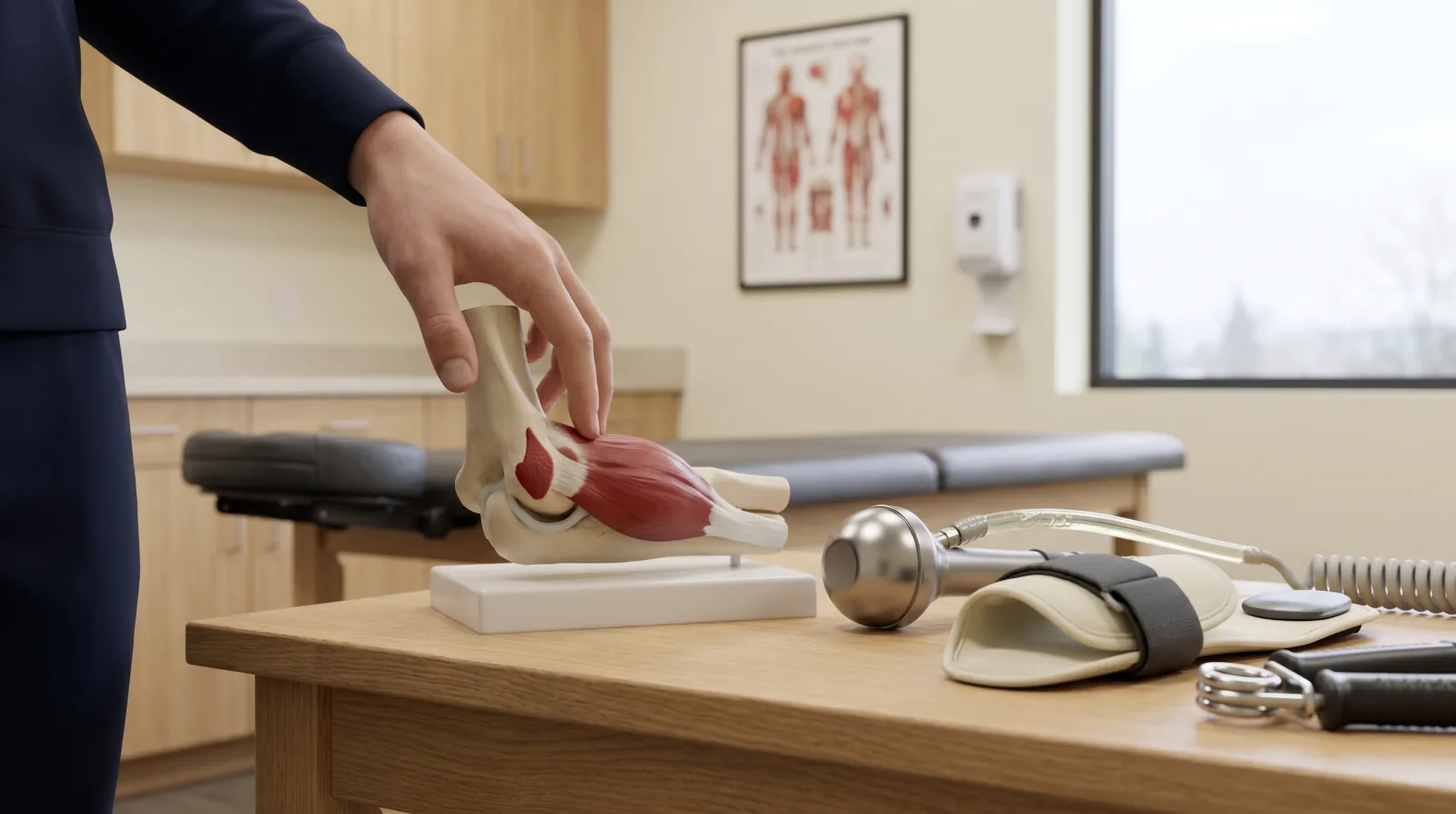
Tennis elbow (lateral epicondylitis) is a tendinopathy of the common extensor tendon at the outside of the elbow. Golfer's elbow is the medial-side cousin, involving the common flexor tendon. Despite the names, most cases we see have nothing to do with tennis or golf. They come from climbers, trades-people, new parents, programmers, and anyone whose week involves a lot of gripping, pinching, or wrist movement under load. At Medstar Sport Physio in North Vancouver, we assess and treat this through a one-on-one physiotherapy appointment, confirming the pattern and building a plan from there. We see patients from across Vancouver and the North Shore, many of whom cross Lions Gate Bridge or take the SeaBus for treatment here.
Underneath the pain, the repeated stress and strain of all that gripping, lifting, and twisting causes tiny tears in the tendon fibres, which is what drives the pain and inflammation. Poor technique (gripping or lifting awkwardly) piles extra strain onto the tendon, and a sudden jump in how often or how hard you load it (a fresh renovation, a ramped-up climbing block) can overload the tissue and tip it into a flare or trigger the problem outright.
What makes elbow tendinopathy frustrating is that resting it almost never works. Rest calms the irritability briefly, but the tendon stays under-conditioned and lights up again the first time you wring out a dishcloth. The tendon needs the right kind of load (not zero load) to remodel.
There is a small piece of the puzzle the elbow itself doesn't tell you about. Tight or weak shoulder and scapular muscles often offload everything down the chain into the wrist and elbow. A good elbow rehab usually includes a brief tour of the shoulder.
What to expect
Many elbow tendinopathies show meaningful change in the first 6 to 8 weeks of a properly loaded program. Long-standing cases (over six months) often take longer and benefit from the addition of shockwave. Your physiotherapist will set the next milestone after assessment and adjust the load as response dictates.
Book a sports assessment with Ali Shafiei
Ali leads sport and orthopaedic physiotherapy at the clinic: manual therapy, IMS dry needling, and exercise-based rehab built around getting you back to your sport, with pain relief along the way. He is taking new patients with same-week availability.
Get a plan
Not sure if we're the right fit?
Send us a quick note about what's going on. A physiotherapist will read it personally and reply with what they'd recommend. No commitment to book.
Common questions
About tennis elbow / golfer's elbow.
Should I just rest it?
Not in isolation. Complete rest tends to make the next return to load feel worse, not better. The right approach is reducing the irritating volume of the activity while progressively loading the tendon in a controlled way. We'll set the floor and the ceiling for you.
Is a cortisone shot the fix?+
Usually no. Short-term cortisone can quiet pain for a few weeks but is associated with worse outcomes at 6 to 12 months for lateral epicondylitis. We recommend it as a last resort, not a first step. Loaded rehab plus shockwave is the better trajectory in most cases.
What about a brace?+
A counterforce brace can take the edge off during aggravating tasks and let you keep working. It is a bridge, not a destination: the tendon still needs strengthening underneath, paired with grip and shoulder work, so the brace isn't doing the job for you forever. We'll fit one if it's the right call for your case.
Is shockwave painful?+
It's strong sensation rather than pain for most people. The intensity is adjustable and you tell us when it's enough. Most patients tolerate it well, and the sensation eases after the first session. We use radial shockwave for chronic elbow tendinopathy cases that haven't responded to loading alone, so it's added on top of your rehab program, not instead of it.
Do you direct-bill extended health?+
Yes. Direct billing for most major extended-health insurers, plus ICBC and WorkSafeBC. WorkSafeBC billing matters here because tennis elbow and golfer's elbow often come from repetitive gripping and lifting on the job, not from a racquet sport, so a good number of the cases we treat are work-related claims rather than private extended-health visits.
What's the difference between tennis elbow and golfer's elbow?+
Tennis elbow, or lateral epicondylitis, is a tendinopathy of the common extensor tendon on the outside of the elbow. Golfer's elbow is the medial-side cousin, involving the common flexor tendon on the inside. Despite the names, most cases we see have nothing to do with tennis or golf. They come from climbers, trades-people, new parents, and anyone whose week involves a lot of gripping or wrist movement under load.
Why do I have tennis elbow if I don't play tennis?+
Tennis elbow develops from repeated gripping, lifting, and twisting that causes tiny tears in the tendon fibres, which drives the pain and inflammation. Poor technique piles extra strain onto the tendon, and a sudden jump in how often or how hard you load it, like a fresh renovation or a ramped-up climbing block, can overload the tissue and tip it into a flare.
How long does tennis elbow take to heal with physio?+
Many elbow tendinopathies show meaningful change in the first 6 to 8 weeks of a properly loaded program. Long-standing cases of tennis elbow, over six months, often take longer and benefit from adding shockwave. Your physiotherapist sets the next milestone after assessment and adjusts the load as your tendon's response dictates.
Reviewed by Amir Ahmadi, PhD, MSc PT, Registered Physiotherapist, Certified IMS Therapist, College of Physical Therapists of British Columbia (CPTBC). Last reviewed July 2026.
This page is for general information only and does not constitute medical advice, diagnosis, or treatment. Individual presentations vary, and assessment findings and treatment plans differ from person to person. If you are experiencing severe symptoms, neurological changes (numbness, weakness, bowel or bladder changes), or a significant trauma, contact your physician or emergency services. Physiotherapy at Medstar Sport Physio & Health is provided by physiotherapists registered with the College of Physical Therapists of British Columbia (CPTBC).
Related reading
- IMS dry needling, release the forearm extensor trigger points that hold elbow pain in place →
- Shockwave therapy, for chronic lateral epicondylalgia that has not responded to bracing and eccentrics →
- Sport physiotherapy, the manual therapy and tendon-loading plan that resolves the case →
- Tennis elbow vs golfer's elbow: same idea, opposite sides of the elbow →
- Tennis elbow: why a cortisone shot can cost you later →