Running Cadence and Injury: What Step Rate Really Does, and the 180 Myth
You have probably heard you should run at 180 steps per minute. That number is mostly a myth, but a small change in your cadence can still lower the load on sore knees and shins.
BY MEDSTAR SPORT PHYSIO TEAM
You have probably seen the advice that you should run at 180 steps per minute, whether from a coach, a magazine, or your own running watch. It sounds precise and official, so people chase it. The truth is more useful and a lot less strict: the 180 number is mostly a myth for everyday runners, but a small change in your own cadence can genuinely lower the load on sore knees and shins.
Running cadence is how many steps you take per minute. The famous 180 figure came from watching elite runners race and was never a rule for everyone, so most recreational runners sit between about 150 and 170 and that is normal. What the evidence supports is a small increase from your own current cadence, usually 5 to 10 percent, which lowers the loading rate and the force at the knee. At Medstar Sport Physio in North Vancouver, we measure your actual step rate first and set a target that suits your body, rather than pushing everyone toward 180.
Where the 180 number came from
The 180 figure has a real origin, and knowing it helps explain why it does not fit most runners. A running coach counted the steps of elite distance runners competing at a major championship and noticed most of them took at least 180 steps per minute. That was an observation about fast athletes racing, not a target designed for a recreational runner doing an easy jog.
When that number turned into a rule, something got lost. Cadence naturally changes with pace, height, and leg length. A tall runner at an easy pace will usually have a lower cadence than a short runner sprinting, and neither is wrong. A systematic review of running cadence notes that elite runners often exceed 180 steps per minute while recreational runners typically range from about 150 to 170. So if your watch says 162, you are in normal company, not doing something broken.
What cadence actually does to load
The reason cadence matters for injury is about how force is shared. At a given pace, a lower cadence means longer steps. Longer steps tend to mean you land with your foot further out in front of your body, which increases the braking force and the load your joints absorb with each step. A higher cadence at the same pace means shorter, quicker steps and less load per step.
This is where the evidence is genuinely helpful. The same systematic review found that a moderate increase in cadence, usually in the range of 5 to 10 percent, produced lower vertical loading rates, shorter stride length, and reduced stress at the tibia, knee, and hip, with roughly a 20 percent reduction in peak impact at the knee level. The change is not magic. It simply spreads the same distance over more, smaller steps so each one costs your joints a little less.
The evidence linking cadence to injury
It is one thing to change forces in a lab and another to change real injury rates. Here the strongest signal comes from a study that followed runners over time rather than measuring a single treadmill session.
A prospective study of collegiate cross country runners found that step rate was the strongest biomechanical predictor of bone stress injury, and that each one-step-per-minute increase in step rate was associated with about a 5 percent lower risk of bone stress injury. That is a meaningful finding because bone stress injuries in runners are common and slow to heal. It does not prove that raising your cadence will prevent injury for certain, but it points in a consistent direction alongside the loading studies.
Worth being honest about the limits. This was a group of young competitive runners, so the exact numbers may not transfer to a 45-year-old running three times a week. The direction of the finding is still useful, but treat it as support for a small change, not a promise.
Why chasing 180 can backfire
If a small increase helps, why not just aim high and go straight to 180? Because a large, forced change often creates new problems. If your natural cadence is 158 and you push to 180, that is a jump of roughly 14 percent, which is far more than the 5 to 10 percent range the evidence supports. A jump that size usually feels rushed and tiring, and it can change how you land in ways that trade one sore spot for another.
Your body also has to adapt to any change in loading. Shorter, quicker steps shift some load away from the knee, but they can put a bit more work through the calf and ankle. That is fine when the change is small and gradual. It is not fine when you force a big change overnight, which is a similar mistake to adding too much distance too fast. We cover that pattern of doing too much too soon in our guide to shin splints and load management.
How a small change is actually done
In practice, raising cadence is one of the more boring interventions in running, and that is a good thing. The steps are simple.
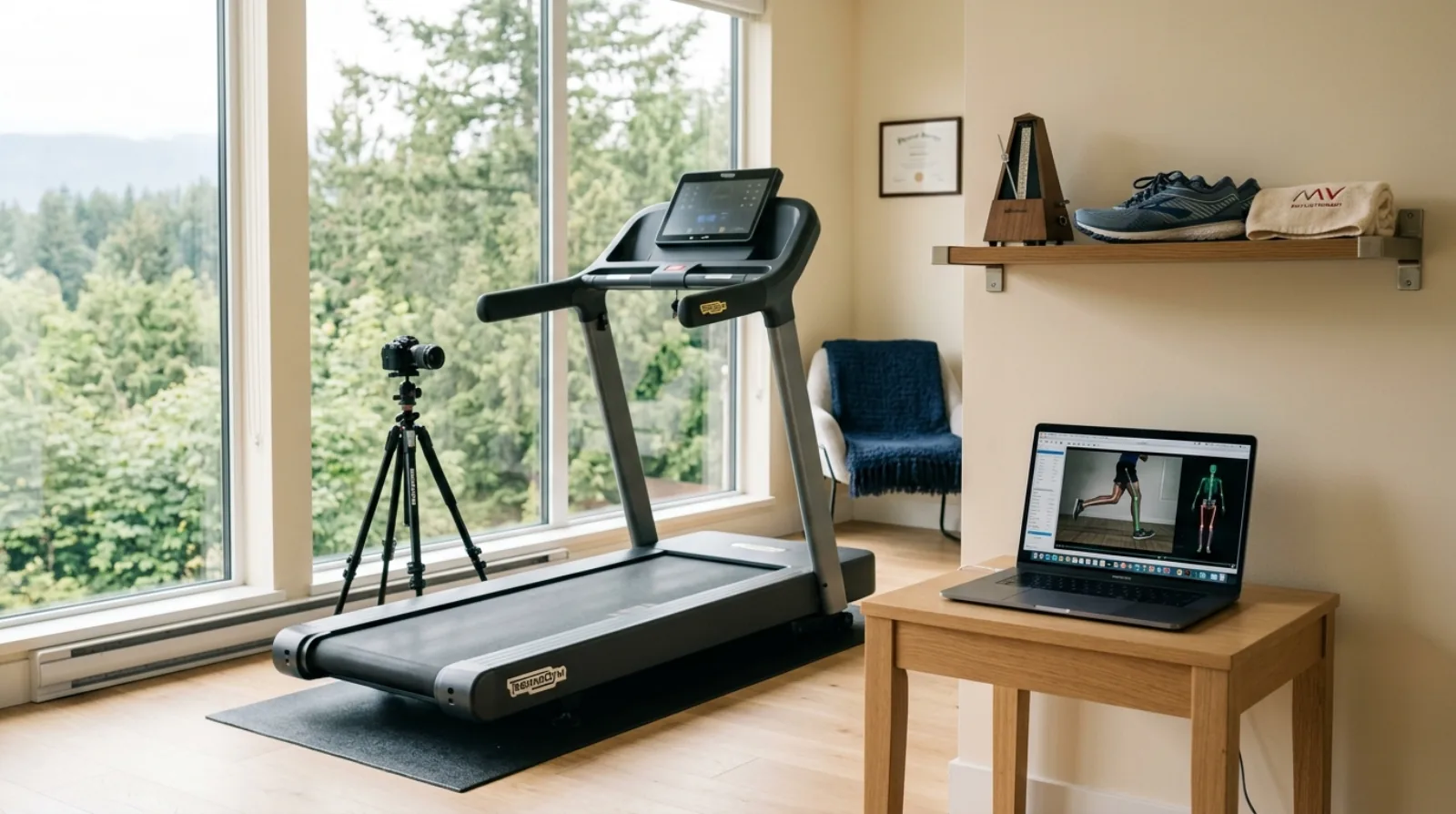
Measure your real baseline first. Guessing your cadence from a watch during a stop-start run is not reliable. We measure it during steady running so the starting number is accurate, which is part of a proper running gait analysis.
Aim for a small percentage, not a fixed number. A target around 5 to 10 percent above your own baseline is what the evidence supports. If you run at 160, a target near 168 to 176 is sensible, not 180.
Use a beat to hold it. A metronome app or a music playlist at the target beats per minute gives your legs something to match. Many runners find it easier to hold a rhythm than to think about it.
Hold it for short segments at first. Start with a minute or two at the new cadence inside an easy run, then build up over several weeks. Trying to hold a new cadence for a whole run on day one usually does not last.
Where cadence fits in the bigger picture
A cadence change is a load-management tool, and it works best as one part of a plan rather than the whole plan. If your knee or shin is sore, the amount you run and how quickly you increased it usually matter more than your exact step rate. A slightly higher cadence can reduce the load per step, but it will not rescue a training week that jumped too fast.
For some runners, cadence work pairs well with other changes. Someone with pain on the outside of the knee may benefit from cadence plus hip strengthening, which we discuss in our piece on IT band syndrome in runners and cyclists. The cadence tweak reduces load, and the strength work builds the tissue's capacity to handle load. Together they do more than either alone.
When to get your running assessed
If you keep getting the same running injury, if your knees or shins ache in a pattern that returns whenever you build up distance, or if your watch has you worried about a cadence number, an assessment sorts out what is actually going on. We measure your real step rate, look at how you load through the run, and decide whether a small cadence change is even the right lever for you, or whether your training load, strength, or recovery is the bigger issue.
Book a 30-minute appointment and we will measure your cadence properly, set a target that fits your body rather than a one-size-fits-all 180, and build the rest of the plan around how much you actually run.
This article is general information about running and injury. It is not personal medical advice. A regulated practitioner can confirm whether the patterns described apply to you.
Sources
- The Influence of Running Cadence on Biomechanics and Injury Prevention: A Systematic Review (PMC)
- Lower Step Rate is Associated with a Higher Risk of Bone Stress Injury: A Prospective Study of Collegiate Cross Country Runners (PMC)
- College of Physical Therapists of BC (CPTBC)
Common questions
Frequently asked questions.
What is a good running cadence for injury prevention?
There is no single ideal number that fits every runner. What the evidence supports is a small increase from your own current cadence, usually in the range of 5 to 10 percent, rather than aiming for a fixed target. A moderate increase like this lowers the load on the knee and shin without asking your body to do something drastic. The right cadence depends on your height, pace, and stride, so your own baseline matters more than any universal number.
Is 180 steps per minute the right cadence?+
For most recreational runners, no. The 180 figure comes from observations of elite runners racing at fast paces, and it was never meant to be a rule for everyone at every speed. Recreational runners commonly land somewhere between 150 and 170 steps per minute, and elite runners often exceed 180. Chasing 180 when your natural cadence is 160 can force an awkward, tiring stride. A small increase from your own number is more useful than a fixed target.
Does increasing cadence reduce running injuries?+
The evidence is encouraging but not a guarantee. Increasing step rate by about 5 to 10 percent lowers vertical loading rates and the force at the knee, and lower step rate has been linked to a higher risk of bone stress injury in runners. That said, cadence is only one piece of the picture. Training load, strength, recovery, and how quickly you increase your running all matter, and a cadence change alone will not fix an injury caused by doing too much too soon.
How do I increase my running cadence safely?+
Increase it gradually and by a small amount. A common approach is to raise your step rate by roughly 5 to 10 percent above your usual number, often using a metronome app or music at the target beat, and to hold that only for short segments at first. Think shorter, quicker steps rather than a rushed pace. Rushing a large change can create new problems, so a physiotherapist can measure your current cadence and set a target that suits your body.
Will a higher cadence make me run faster?+
Not directly. Cadence and speed are related, but a higher step rate on its own is a way to change how load is shared across your joints, not a speed workout. At the same pace, a slightly quicker cadence usually means shorter steps and less impact per step. Speed comes from a mix of stride length, cadence, and fitness, so cadence work is better thought of as a way to manage load than a way to get quick.
Does cadence matter the same way for trail running as road running?+
The same load-sharing principle applies, but terrain adds variables that a fixed number cannot account for. Uneven ground, climbs, and descents naturally change your step rate from moment to moment, so on trails cadence is better used as a general habit, shorter and quicker steps when your knees or shins are the issue, rather than a number you try to hold constantly.
How do I know if my cadence is even part of my injury, or if it is something else?+
Cadence is one of several load factors, alongside total running volume, how quickly you increased it, strength, and recovery. A running assessment looks at your actual step rate alongside your training history to work out whether cadence is a meaningful lever for your specific injury or whether the bigger issue is how much and how fast you built up your mileage.
Can changing my cadence too quickly cause a new injury?+
Yes, this is a real risk. Jumping straight to a much higher cadence, rather than the supported 5 to 10 percent range, shifts load onto the calf and ankle faster than those tissues can adapt. That is why cadence changes are introduced gradually, in short segments within a run, and increased over weeks rather than switched on overnight.
Share this post
Copies a ready-to-publish LinkedIn post to your clipboard and opens the LinkedIn share dialog. Paste the text into the composer and publish.
Written by
Medstar Sport Physio Team
Registered clinician at Medstar Sport Physio & Health, North Vancouver.
This article is for general information only and does not constitute medical advice, diagnosis, or treatment. Individual presentations vary, and assessment findings and treatment plans differ from person to person. If you are experiencing severe symptoms, neurological changes (numbness, weakness, bowel or bladder changes), or a significant trauma, contact your physician or emergency services. Care at Medstar Sport Physio & Health is provided by practitioners registered with their respective British Columbia regulatory colleges.
Filed under
- running-cadence
- step-rate
- injury-prevention
- running-injury
- gait-retraining
- north-vancouver