
Shin Splints: Why Load Management Beats Stretching and New Shoes
Shin splints are a training-load problem, not a shoe problem or a stretching problem. Manage the load correctly and they settle, and you avoid the more serious injury they can hide.
BY AMIR AHMADI, PHD
When the days lengthen and the trails dry out, the shin splints arrive. It is one of the most predictable running injuries we see, and one of the most misunderstood. People reach for new shoes and calf stretches when the real issue, and the real fix, is the training load.
Shin splints, properly called medial tibial stress syndrome, are caused by loading the shin faster than the bone and surrounding tissues can adapt, not by the wrong shoes or tight calves. The trigger is almost always a spike in running volume, intensity, or surface. The most effective approach is reducing training to a level that does not provoke symptoms, keeping cross-training that does not load the shin, and rebuilding gradually. At Medstar Sport Physio in North Vancouver, load management is the foundation of treatment. It is also important to distinguish shin splints from a bone stress injury, since focal pain that worsens during a run or hurts at rest is a different pattern that needs assessment. How quickly the shin settles depends on how disciplined the load management is.
What shin splints actually are
The proper name is medial tibial stress syndrome, and it describes pain along the inner border of the shin bone where muscles attach and where the bone is absorbing repetitive load. It happens when you load the shin faster than the bone and surrounding tissues can adapt. The body is constantly remodelling bone in response to stress, but that adaptation takes time, and if the load climbs faster than the tissue can keep up, the result is the aching, tender shin that defines the condition.
The trigger is almost always a spike in load. More kilometres, more speed, more hill work, a switch to harder surfaces, or simply ramping back up after a layoff. This is why shin splints cluster at the start of a season or a new training block. See our shin splints condition guide for a full breakdown of causes, treatment, and recovery timelines.
Why shoes and stretching miss the point
Footwear and calf flexibility get a lot of attention, but neither is the core problem. Footwear can play a small supporting role, and very tight or weak calves can contribute, but the dominant factor is how much load the shin is absorbing and how fast that load increased. Buying new shoes without changing the training spike usually disappoints, because the shoes were never the cause.
This is the same lesson that runs through so many running injuries. The tissue can handle a lot, but it needs the load to climb at a rate it can adapt to. We make the same point about the calf in our guide to returning to running after a calf strain, and the underlying principle is identical.
Load management is the treatment
The core of managing shin splints is adjusting the load rather than removing it entirely. For most people that means:
- Reducing running volume and intensity to a level that does not provoke significant symptoms, rather than stopping completely.
- Keeping cross-training that does not load the shin, such as cycling, swimming, or pool running, so you hold your fitness and stay sane.
- Rebuilding gradually, letting the bone adapt to each step before adding the next, much like the staged progressions we use elsewhere.
Complete rest will settle the pain, but it leaves you deconditioned and primed to flare again the moment you return to full training. Managing the load keeps you moving while the shin catches up, which is both more effective and more bearable.
We also look at training structure: how quickly volume climbed, whether there is enough easy running relative to hard sessions, and how recovery is spaced. Often a small restructuring of the week does more than any single intervention. Where running mechanics or footwear are genuinely contributing, we address those too, but as secondary factors, not the headline.
The warning sign you should not ignore
Here is the part that matters most for safety. Shin splints can sit right next to a more serious problem, a bone stress injury or stress fracture, and the two can be confused. The patterns differ in important ways.
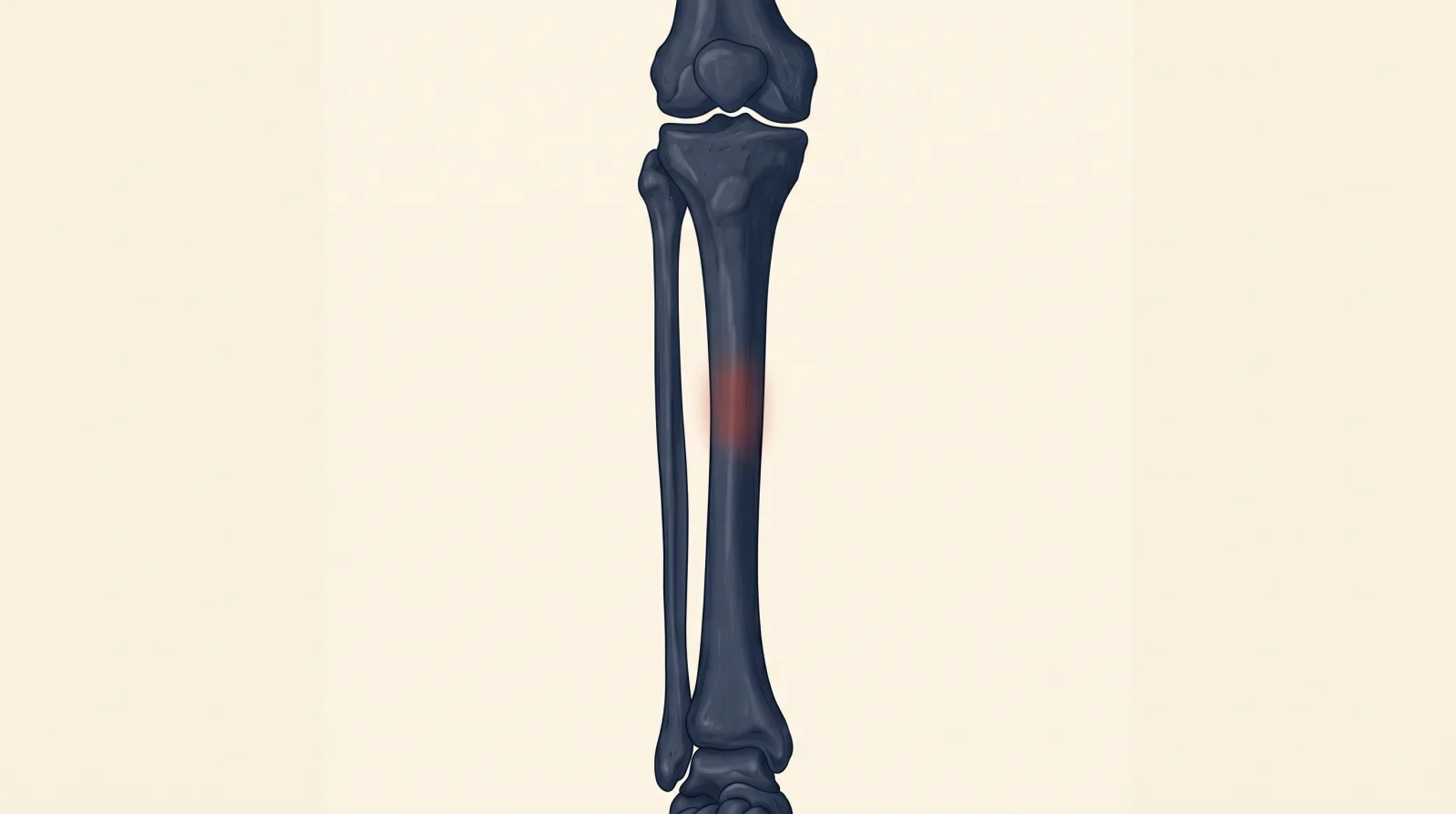
Shin splints typically cause pain spread diffusely along the inner shin, often worse at the start of a run and easing as you warm up. A bone stress injury tends to cause more focal pain at a specific point, pain that worsens the longer you run rather than warming up, and sometimes pain at rest or at night. Those features, focal, worsening, or rest pain, are a different signal, and they warrant assessment and possibly imaging. We go deeper on this in our piece on bone stress injuries in runners, because catching that transition early protects your season and your bone.
This is why we do not simply tell people to push through shin pain. Most of the time it is shin splints and load management is the answer, but part of good care is recognizing when the pattern has shifted toward something that needs more caution.
A realistic timeline
With disciplined load management, many cases of shin splints improve over a few weeks. Stubborn cases take longer, especially when someone has been training through the pain for months, because the shin has had no chance to adapt. The single most common reason shin splints drag on or recur is returning to full training too quickly, before the bone has built the tolerance to handle it.
We reassess against how the shin responds to progressive load, not against the calendar, and we hold each step until it is comfortably tolerated before advancing.
When to get it assessed
If your shins ache when you run and the pain is diffuse and warms up, a load-management plan will usually settle it, and an assessment helps you build that plan without losing your fitness. If the pain is focal, worsening through a run, or present at rest or at night, get it assessed promptly to rule out a bone stress injury before continuing to train.
Book a 30-minute appointment and we will assess the shin, sort shin splints from a more serious bone stress problem, review your training load, and build a plan that settles the symptoms and keeps you running.
This article is general information about medial tibial stress syndrome. It is not personal medical advice. Focal, worsening, or rest pain in the shin should be assessed to rule out a bone stress injury. A regulated practitioner can confirm whether the patterns described apply to you.
Sources
- Winters et al., Treatment of medial tibial stress syndrome: a systematic review, Sports Medicine (2013)
- Reinking et al., Medial Tibial Stress Syndrome in Active Individuals: A Systematic Review and Meta-analysis of Risk Factors, Sports Health (2017)
- College of Physical Therapists of BC (CPTBC)
Common questions
Frequently asked questions.
What causes shin splints?
Shin splints, properly called medial tibial stress syndrome, are caused by loading the shin faster than the bone and surrounding tissues can adapt. The usual trigger is a spike in running volume, intensity, or surface change. It is fundamentally a load problem, which is why managing training load is the core of treatment rather than stretching or equipment changes.
Do I need to stop running with shin splints?+
Often not completely. For most cases we reduce running volume and intensity to a level that does not provoke significant symptoms, keep cross-training that does not load the shin, and build back gradually. Complete rest can settle the pain but leaves you deconditioned and prone to recurrence when you return. The goal is to manage load, not eliminate it entirely.
Will new running shoes fix shin splints?+
Rarely on their own. Footwear can play a small role, but shin splints are primarily about how much load the shin is absorbing and how quickly that load increased. Buying new shoes without addressing the training spike usually disappoints. We look at the training load first, then consider footwear and running mechanics as secondary factors.
How do I know if it is shin splints or a stress fracture?+
Shin splints typically cause pain spread along the inner shin that often eases as you warm up. A bone stress injury or stress fracture tends to cause more focal pain at a specific point that worsens with continued activity and may hurt at rest or at night. Focal, worsening, or rest pain warrants assessment and possibly imaging, because a stress fracture needs different management.
How long do shin splints take to settle?+
With good load management, many cases improve over a few weeks, though stubborn cases take longer, especially if training continued through the pain. The timeline depends on how irritable the shin is and how disciplined the load management is. Returning to full training too quickly is the most common reason shin splints drag on or recur.
What should I bring to a first physio visit for shin splints?+
Bring your running shoes and a rough log of recent training: weekly distance, any new hills or surfaces, and when the pain started. That history is what tells the physiotherapist whether the trigger was a volume spike, an intensity jump, or a surface change, which shapes the load-management plan more than the shin exam alone.
Can shin splints turn into a stress fracture if I keep running?+
Continuing to load a shin without addressing the training spike can push a load problem toward a bone stress injury. The warning signs are focal pain at one point that worsens the longer you run, or pain at rest or at night, rather than the diffuse ache that warms up. Those features warrant assessment before continued training rather than after.
Does calf strength matter for shin splints?+
It can be part of the picture, though it is secondary to overall training load. A calf and lower-leg strengthening program supports the shin's capacity to absorb repetitive load as training builds back up. We address it alongside load management rather than instead of it, since strength alone does not undo a load spike.
Share this post
Copies a ready-to-publish LinkedIn post to your clipboard and opens the LinkedIn share dialog. Paste the text into the composer and publish.

Written by
Amir Ahmadi, PhDDr. Amir Ahmadi is a Registered Physiotherapist, Certified IMS Therapist and former Associate Professor. 20+ years of clinical practice in North Vancouver.
This article is for general information only and does not constitute medical advice, diagnosis, or treatment. Individual presentations vary, and assessment findings and treatment plans differ from person to person. If you are experiencing severe symptoms, neurological changes (numbness, weakness, bowel or bladder changes), or a significant trauma, contact your physician or emergency services. Care at Medstar Sport Physio & Health is provided by practitioners registered with their respective British Columbia regulatory colleges.
Filed under
- shin-splints
- mtss
- running
- load-management
- north-vancouver