Running Shoes and Injury Prevention: What the Evidence Actually Supports
A lot of running shoe advice sounds more certain than the evidence behind it. Here is what cushioning, drop, and pronation-matched shoes are actually shown to do.
BY AMIR AHMADI, PHD
Running shoe advice online sounds more certain than the science behind it. Pronation control, drop height, "correct" gait, each gets sold as a fix. The actual evidence is narrower, and in places surprising.
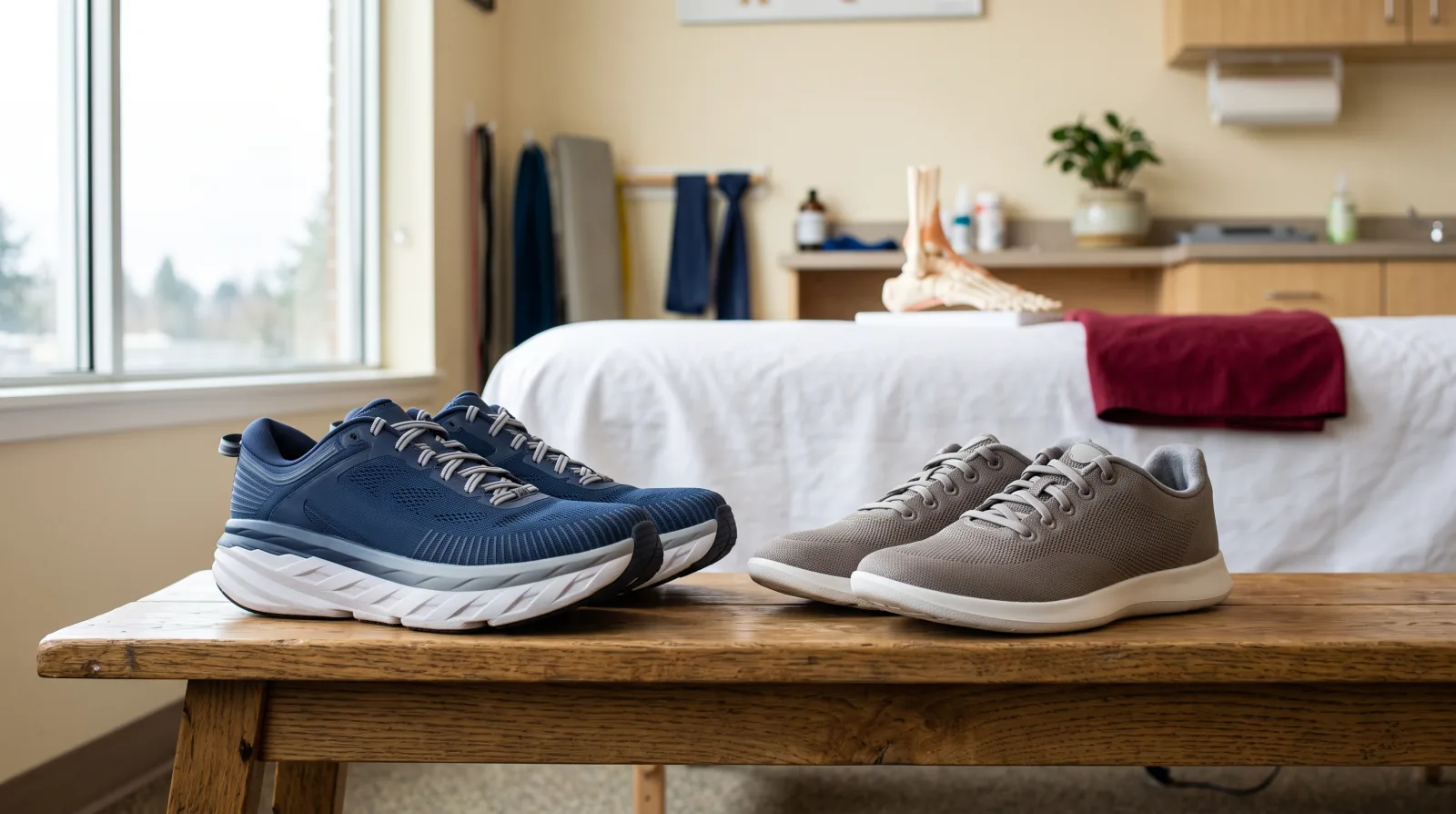
At Medstar Sport Physio in North Vancouver, we tell runners that shoe choice is one factor in injury prevention, not the deciding one, and that comfort at your own training volume is a reasonable basis for choosing a shoe. A recent review concluded there is no single best shoe to prevent running injury, motion-control shoes reduce pronation-related injuries specifically without lowering overall injury risk, and heel-to-toe drop shows no clear overall injury advantage between common options. Training load and how quickly it increases matter more than the shoe itself.
Why "the right shoe" is a harder question than it sounds
The idea that a specific shoe category prevents injury is intuitive: match the shoe to the foot, and the foot stays healthy. A 2025 review of running shoe and injury considerations lays out why the evidence does not support that as cleanly as the marketing does. Running injury patterns correlate strongly with experience level, weekly training volume, and how quickly training progresses, while footwear's own effect on clinically relevant injury outcomes is limited despite clear biomechanical differences between shoe types in a lab setting. In plain terms, a shoe can change forces measured on a treadmill without that change reliably translating into fewer injuries in the real world.
The review's stated conclusion is direct: there is no single best shoe to prevent injury, and the authors recommend an individualized approach based on comfort, experience level, and performance goals rather than a prescriptive category match.
Pronation-matched shoes: a real but narrow benefit
The idea of matching a shoe to how much your foot rolls inward, called pronation, when it lands is one of the oldest pieces of running shoe advice. The research here is genuinely mixed rather than a flat myth or a flat truth.
A randomized controlled trial comparing motion-control and standard neutral shoes in 372 recreational runners over six months found that motion-control shoes lowered the risk specifically of pronation-related injuries, a category that includes some presentations of plantar fasciopathy, Achilles tendinopathy, exercise-related lower-leg pain, and anterior knee pain. The hazard ratio for this specific injury category favoured motion-control shoes.
The same trial found no meaningful difference in overall running injury risk between the two shoe types once every injury category was combined. That distinction matters. A motion-control shoe may genuinely help a runner with a pronation-related injury history, without acting as a general injury shield for everyone who happens to pronate more than average. Choosing a shoe based on an in-store pronation test alone, without weighing your own injury history, overstates what that test can actually predict.
Heel-to-toe drop: less decisive than the marketing suggests
Drop is the height difference between the heel and the forefoot of a shoe, often marketed in millimetres as a headline feature. A systematic review of footwear constructions in running biomechanics and the broader 2025 review both describe a similar pattern: one large study comparing 10mm, 6mm, and 0mm drop in standard cushioned shoes found no significant overall difference in injury risk between them, despite real biomechanical differences at each drop height.
There is a more specific finding worth knowing. Some research associates a higher drop with a greater rate of knee-related injuries and a lower drop with a greater rate of ankle and foot injuries, which suggests drop may redistribute where load lands in the body rather than simply raising or lowering total risk. The 2025 review also notes that regular runners showed a higher injury rate with lower-drop shoes compared with occasional runners, which points toward experience and training history shaping how well a runner tolerates a given drop, not the drop number in isolation.
The practical read: changing your drop meaningfully, in either direction, is a loading change for your calf, Achilles, and forefoot, and it deserves the same gradual introduction you would give a jump in weekly mileage.
Minimalist shoes: real trade-offs, not a clear winner
Minimalist and "barefoot-style" shoes reduce certain impact forces measured in biomechanics studies, which sounds like an unambiguous injury-prevention story. The 2025 review complicates that picture, reporting an association between minimalist shoes and increased injury risk specifically in runners above roughly 71 kilograms of body weight, despite the biomechanical loading benefits these shoes can produce.
This does not mean minimalist shoes are unsafe. It means the shift from a cushioned shoe to a minimalist one changes load distribution enough that body weight and adaptation time matter, and a rapid, full-volume switch is a common way this transition goes wrong. Anyone changing shoe style significantly benefits from treating it like a new training stimulus: small doses first, built up over weeks.
The comfort filter: an underrated, evidence-informed shortcut
If pronation matching and drop selection are both narrower tools than advertised, what should guide a purchase? A BJSM paper proposing the "comfort filter" and "preferred movement path" concepts argued that a runner's own perceived comfort in a shoe is a reasonable, evidence-informed selection method, because comfort tends to reflect how well a shoe matches the runner's own natural movement pattern rather than forcing a correction onto it.
This is a more modest claim than "buy the comfortable one and you are guaranteed injury-free running." It is a case for trusting your own feel over a prescriptive in-store fitting ritual, particularly when that fitting is based on a brief pronation observation rather than your actual injury history and training load.
Where a gait analysis actually fits in
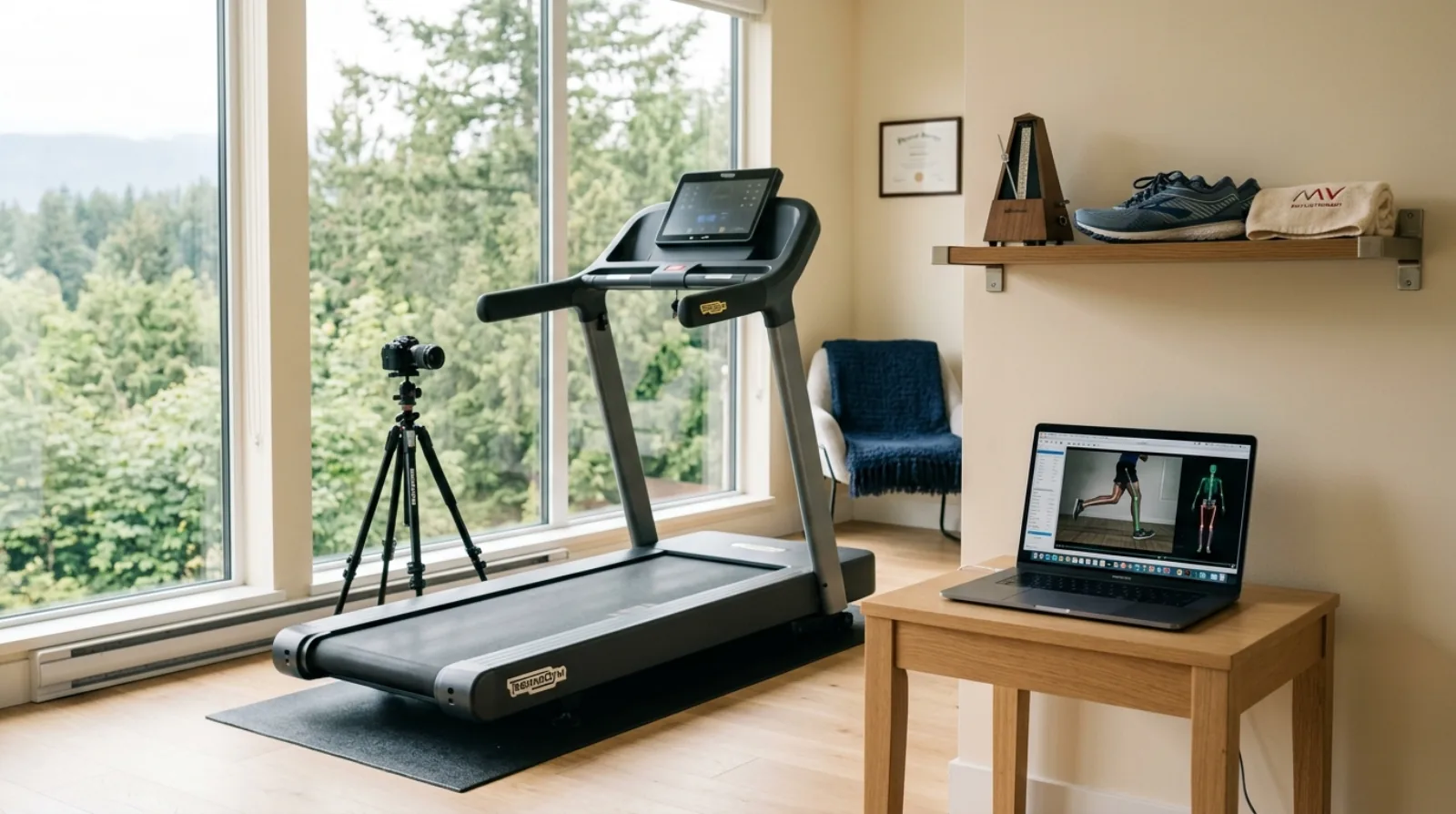
None of this means gait and movement pattern are irrelevant. A running gait analysis is genuinely useful for a runner with a recurring injury in a specific spot, since it can identify a movement pattern that correlates with that symptom and guide a targeted intervention, which sometimes includes a shoe change but usually also includes strength work, cadence adjustments, or a mileage change. It is a different tool than a general retail shoe fitting for a runner without symptoms, and the evidence does not support chasing a single "correct" gait for everyone.
What actually moves the needle on injury risk
Across the running injury literature, the factors that show up again and again as the strongest predictors are training load and how quickly it increases, along with prior injury history. A shoe that fits your foot and feels comfortable at your current training volume is a reasonable, defensible choice. It becomes a much smaller lever than mileage progression, strength, and recovery once you zoom out to the full picture of what actually causes running injuries.
When to get it assessed
If you keep getting the same running injury regardless of the shoes you try, or you are considering a significant shoe change, such as a large drop shift or a move to a minimalist shoe, an assessment is a better next step than guessing. We look at your training history, your injury pattern, and where relevant your running mechanics, to work out whether the shoe, the training load, or something else is the actual driver.
Book a 30-minute assessment and we will sort out what is actually behind a recurring running injury and build a plan that fits your training, rather than sending you shopping for a different shoe. You can also read about our return-to-sport approach or see what we treat.
This article is general information about running injury prevention. It is not personal medical advice. A regulated practitioner can confirm whether the patterns described apply to you.
Sources
- Updates to the Running Shoe and Injury Considerations (PMC, 2025)
- Motion-Control Shoes Reduce the Risk of Pronation-Related Pathologies in Recreational Runners: A Secondary Analysis of a Randomized Controlled Trial (PubMed)
- Systematic Review of the Role of Footwear Constructions in Running Biomechanics: Implications for Running-Related Injury and Performance (PMC)
- Running shoes and running injuries: mythbusting and a proposal for two new paradigms: 'preferred movement path' and 'comfort filter' (British Journal of Sports Medicine)
- College of Physical Therapists of BC (CPTBC)
Common questions
Frequently asked questions.
Does the right running shoe actually prevent injury?
Shoe choice is one factor among several, and not the strongest one. Training load, how quickly mileage increases, and prior injury history generally matter more than which shoe you wear. A recent review concluded there is no single best shoe to prevent injury and recommended an individualized approach based on comfort, experience level, and goals rather than prescriptive shoe matching.
Should I buy running shoes based on my arch type or pronation?+
The evidence here is more mixed than the popular advice suggests. One randomized controlled trial found motion-control shoes reduced the risk of pronation-related injuries specifically, such as some cases of plantar fasciopathy and shin pain, but did not reduce overall running injury risk compared with standard shoes. Arch-based fitting alone is not a reliable predictor of which shoe prevents injury for a given runner.
What is the 'comfort filter' approach to choosing running shoes?+
It is the idea that a runner's own sense of comfort in a shoe is a reasonable, evidence-informed way to select footwear, because comfort reflects how well a shoe matches an individual's natural movement pattern. Research introducing this concept found it a more defensible approach than trying to correct someone's gait with a prescribed shoe category. It does not mean any comfortable shoe is risk-free, only that comfort is a legitimate factor to weigh.
Does heel-to-toe drop matter for injury risk?+
A systematic review comparing 10mm, 6mm, and 0mm drop in standard cushioned shoes found no clear overall difference in injury risk between them. Some research links a higher drop to more knee-related injuries and a lower drop to more ankle and foot injuries, suggesting drop may shift where load goes rather than raising or lowering total risk. Regular runners appeared to have a higher injury rate with lower-drop shoes compared with occasional runners in one study, so a change in drop is worth introducing gradually.
Are minimalist or barefoot-style shoes safer?+
Not automatically. Minimalist shoes change loading patterns, generally reducing certain impact forces, but research has linked them to a higher injury risk in heavier runners specifically. A large, fast change from a cushioned shoe to a minimalist one is also a training-load change for the foot and calf, and that transition needs to be gradual regardless of which style you choose.
Should I get a gait analysis to find the 'correct' shoe?+
A gait analysis is most useful for a runner with a recurring injury in a specific area, not as a general shoe-fitting exercise for someone without symptoms. The evidence does not support a single universally correct running pattern that a shoe should be matched to. Our article on running gait analysis on the North Shore covers when this assessment adds real value.
How often should I replace my running shoes?+
There is no single verified mileage figure that applies to every shoe and every runner, since cushioning materials, body weight, and running surface all affect how quickly a shoe breaks down. A more reliable approach is watching for a change in how the shoe feels underfoot or a new ache appearing after your usual training volume, rather than tracking a fixed number.
If shoes are not the main factor, what actually reduces running injury risk?+
Training load and how quickly it increases are consistently the biggest modifiable factors in the running injury literature, alongside prior injury history and overall strength. A shoe that is comfortable and suits your running volume is a reasonable choice, but it works best as one part of a plan that also manages mileage progression and addresses any strength or mobility limits found at assessment.
Share this post
Copies a ready-to-publish LinkedIn post to your clipboard and opens the LinkedIn share dialog. Paste the text into the composer and publish.

Written by
Amir Ahmadi, PhDDr. Amir Ahmadi is a Registered Physiotherapist, Certified IMS Therapist and former Associate Professor. 20+ years of clinical practice in North Vancouver.
This article is for general information only and does not constitute medical advice, diagnosis, or treatment. Individual presentations vary, and assessment findings and treatment plans differ from person to person. If you are experiencing severe symptoms, neurological changes (numbness, weakness, bowel or bladder changes), or a significant trauma, contact your physician or emergency services. Care at Medstar Sport Physio & Health is provided by practitioners registered with their respective British Columbia regulatory colleges.
Filed under
- running-shoes
- injury-prevention
- gait
- running-injury
- north-vancouver