After a Hip Replacement: What Rehab Looks Like From Week One to Month Six
A new hip joint arrives with a leg that has spent years compensating around pain. Rehab has to teach the hip abductor muscles to do their job again, and that is the part that decides how walking feels months later.
BY SANAZ DAVARIAN, PHD
A new hip joint arrives with a working surface and a leg that has spent years learning to lean away from pain. Rehab is the process of teaching that leg it is allowed to carry full weight again, confidently and without a limp.
At Medstar Sport Physio in North Vancouver, the part of hip replacement recovery that decides how steady the leg feels months later is the strength of the hip abductor muscles, not the joint itself. Surgery resurfaces a worn hip joint, but the muscles on the side of the hip that control the pelvis during walking are often already weak going in, since a painful hip gets used less. Rehab moves through three broad phases: protecting the healing tissue and following surgeon-specific precautions in the first weeks, rebuilding strength and normalizing gait through roughly weeks six to twelve, and then progressing toward higher-demand activity over the following months as testing shows the hip is ready.
Here is what a realistic phase-by-phase picture looks like, why the abductor muscles matter more than the range-of-motion number people fixate on, and what changes the pace.
The surgery fixes the joint surface, not the muscle around it
A total hip replacement removes the worn ball and socket and replaces them with an artificial joint. For a hip that has been painful and stiff for years, this is a highly effective mechanical fix, and most people get real, lasting pain relief from the joint itself.
What the operation does not directly fix is the muscle that surrounds and controls that joint. By the time most people reach surgery, the hip abductor muscles, the group on the outside of the hip that keeps the pelvis level every time you stand on one leg, have usually been weakening for a long time, because a hip that hurts to load is a hip people quietly stop loading fully. Surgery then adds a period of swelling, guarded movement, and reduced activity on top of a muscle group that was already behind.
That combination is why so many people describe a similar pattern months out: the hip itself feels good, but the leg feels unreliable, particularly on stairs or when standing up from a low chair. The joint has been replaced. The muscle controlling it has not, at least not yet.
Getting ready before surgery matters
Preparation ahead of the operation is not just paperwork. Preoperative education, covering what to expect from the recovery, what precautions apply to your specific surgical approach, and how to set up your home for the first weeks, contributes to a smoother start once surgery is done. Removing trip hazards, arranging any needed equipment, and understanding your own timeline in advance reduces the number of unknowns you are managing while also recovering from an operation.
This is the same logic behind preparing the knee before ACL surgery: whatever readiness you bring into the operating room is the starting point rehab builds from afterward. For an older hip heading into a planned replacement, that mostly means preparation and education rather than the intensive prehab strength work an ACL case would need, but the underlying idea, that the runway before surgery is useful time, still applies.
The first six weeks: protecting the joint and following precautions
The early phase after hip replacement centres on protecting the healing tissue while restoring safe, independent movement. This is also the phase where surgical approach matters most, because the specific hip precautions you are given, commonly involving limits on combining hip flexion, internal rotation, and adduction beyond certain points, depend on which surgical approach your surgeon used.
Traditional guidance has these precautions in place for around six weeks, with some surgeons extending that to twelve depending on the approach and the individual case. It is worth knowing that research on hip precautions has increasingly questioned whether the same restrictions are equally necessary for every surgical approach, since some study populations show similar dislocation rates whether or not restrictions were strictly followed. This is not an invitation to disregard your own instructions. It is a reason to follow the specific precautions your surgeon gives you rather than a generic list found online, since the approach used in your case determines what actually applies.
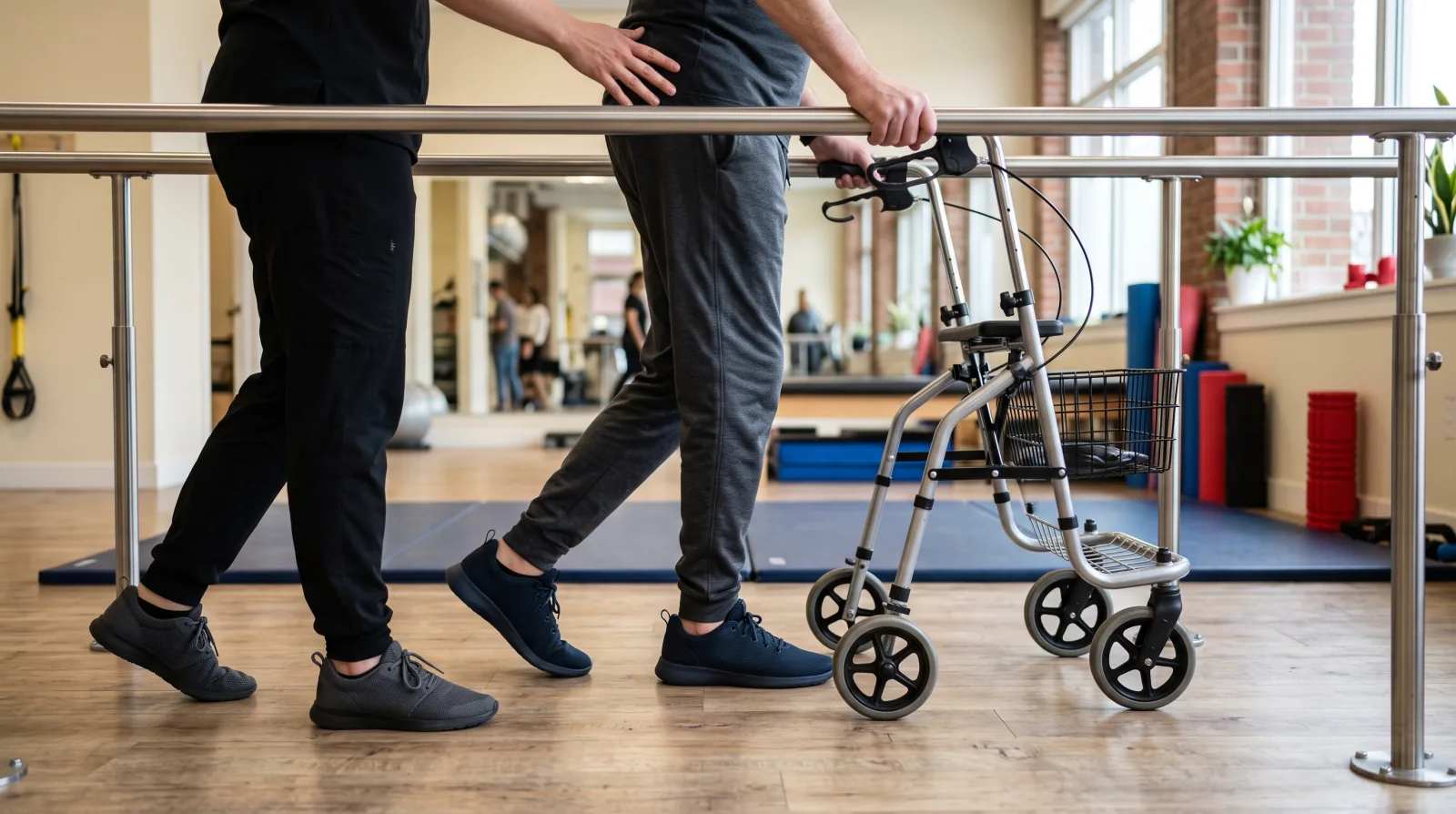
Progression criteria for moving past this early phase typically include minimal pain and swelling with everyday activities and the ability to maintain a level pelvis while standing on the operated leg without it dropping to one side. Early rehab work focuses on restoring hip range of motion, walking safely with the appropriate aid, and starting to activate the abductor and surrounding hip muscles.
Weeks six to twelve: strength and gait take over
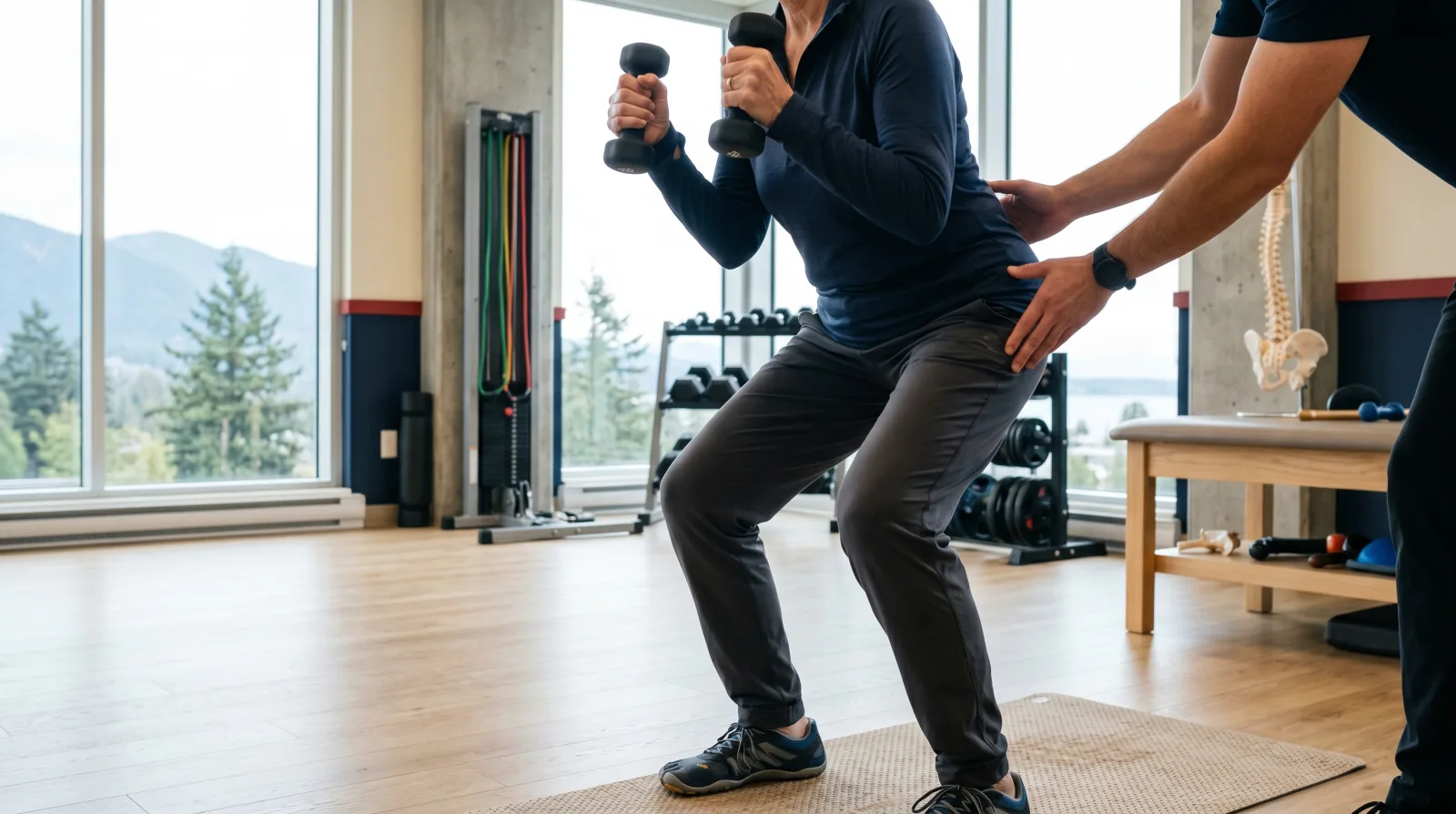
Once the joint has settled and early precautions typically ease, the focus shifts toward building strength and correcting the walking pattern that developed while the hip was painful. This phase is where the abductor muscles get direct attention, since a hip that regains range of motion but cannot yet control the pelvis during a single-leg stance still produces an uneven, effortful gait.
Progression criteria for this phase generally include full, pain-free hip motion, strength sufficient for functional tasks like getting up from a chair without pushing off with the arms, and the ability to walk community distances. Walking mechanics get deliberate attention here rather than being left to correct on their own, because a limp built up over years of a painful hip is a learned pattern that does not disappear automatically just because the joint no longer hurts.
Three months onward: building toward your actual activities
Function continues to improve well past the point many people expect rehab to end. This later phase is about building the capacity for whatever your life actually demands: managing stairs at home without a rail, walking the trails on the North Shore, gardening, or getting in and out of a car without a second thought.
For people aiming at higher-demand activities such as hiking longer trails or returning to golf, this phase includes building aerobic fitness, strength, and the more complex movement patterns those activities need. The pace of this later progress is genuinely slower than the first weeks, which can feel discouraging if you are expecting the same rate of visible change. It is a normal part of the timeline rather than a sign that something has stalled.
What tends to slow recovery down
A few patterns come up often enough to be worth naming directly. Stopping the strengthening work once the hip itself stops hurting is the most common one. Pain relief from a well-functioning new joint typically arrives faster than the strength rebuild does, and the gap between those two timelines is where people quietly plateau.
Being overly cautious for longer than the surgical precautions actually require is another. Precautions exist for a defined period tied to tissue healing and your specific surgical approach, not indefinitely, and continuing to move cautiously well past that point can slow the return of normal movement patterns. Following your surgeon's specific guidance, and asking directly when precautions can ease, avoids both under- and over-caution.
Other joints and general health also shape the picture. Someone managing arthritis or weakness in the opposite hip or knee, or building bone strength safely with osteoporosis, has a different rehab picture than someone with one strong leg to rely on during the early weeks.
When to call someone
Persistent groin or thigh pain that is not settling, a hip that feels like it might give way, or a limp that is not improving with the rehab plan are reasons to be reassessed rather than to push through alone.
Increasing swelling with warmth, redness, fever, or calf pain is different and needs a same-day call to your surgeon or physician, or a trip to Lions Gate Hospital if it is severe, rather than a physiotherapy appointment first. A hip that suddenly becomes very painful, especially with a popping sensation or the leg appearing shortened or rotated, needs urgent medical assessment, since this can indicate a dislocation.
If you have a hip replacement scheduled or are recovering from one now, book a 30-minute assessment and we will look at where your strength and gait actually are, review your surgeon's specific precautions, and build the next stage of the plan around them. You can also read about what we treat or reach the clinic here.
This article is general information, not personal medical advice. A regulated practitioner can confirm whether the patterns described apply to you, and your surgeon's own protocol always takes priority over any general guidance.
Sources
- Rehabilitation Phases, Precautions, and Mobility Goals Following Total Hip Arthroplasty, PMC
- Clinical Practice Guideline for Physical Therapist Management of Total Knee Arthroplasty: Revision 2026, Physical Therapy
- College of Health and Care Professionals of BC public registry
Common questions
Frequently asked questions.
How soon after a hip replacement should physiotherapy start?
Early, often the same day or the day after surgery in hospital, followed by outpatient physiotherapy in the first weeks after discharge. The preoperative phase matters too. Education and preparation before surgery, covering expected precautions, home safety, and what the first weeks will look like, sets up a smoother start once the operation is done.
How long do hip precautions last after surgery?+
Traditional hip precautions, avoiding certain combinations of hip flexion, internal rotation, and adduction, are commonly followed for around 6 weeks, with some surgeons extending to 12 weeks depending on the surgical approach. Emerging research has questioned how strictly these need to be followed for every approach, and dislocation rates appear similar whether restrictions are enforced or not in some study populations. Always follow your own surgeon's specific instructions over any general guidance, since the approach used in your surgery changes what applies.
Why does my leg still feel weak months after a good hip replacement?+
The surgery replaces the joint surface, not the muscle around it. The hip abductor muscles on the side of the hip, which control the pelvis when you stand on one leg, are often already weak going into surgery because a painful hip gets used less. Surgery adds a healing and swelling period on top of that. Rebuilding abductor strength is a longer process than the pain relief from the new joint, which is why the leg can feel steady later than the hip feels comfortable.
When can I walk without a cane or walker after hip replacement?+
It depends on strength, balance, pain, and your surgeon's protocol, and there is no single number that fits everyone. Many people progress from a walker to a cane to no aid over the early weeks, guided by how safely and symmetrically they can bear weight and control the pelvis while walking. Progressing an aid too early, before the hip and gait pattern are ready, tends to reinforce a limp that takes longer to correct later.
How long until I can return to hiking or golf after hip replacement?+
Function keeps improving for months after surgery, and higher-demand activities like hiking North Shore trails or a full golf swing typically come later in the process, once strength, gait, and balance testing show the hip and leg can tolerate that load. This is a conversation with both your surgeon and physiotherapist, since implant type and surgical approach affect what activities are appropriate and when.
What happens at the first physiotherapy visit after hip replacement?+
The physiotherapist reviews your surgeon's protocol and any precautions, checks your wound, swelling, and hip range of motion, and assesses how well you can control the pelvis while standing on the operated leg. Early goals usually focus on safe walking with the right aid, hip abductor activation, and confirming you understand your specific precautions before progressing further.
Does MSP or extended health cover hip replacement physiotherapy?+
Coverage varies by plan, so check your extended health benefits or ask your case manager what applies to your situation. The clinic can direct bill many extended health plans. What matters clinically is starting rehab on the timeline your surgical team recommends, since early structured movement and strengthening are part of a good recovery regardless of the funding source.
How is hip replacement rehab different from knee replacement rehab?+
Both follow a staged, surgeon-directed protocol and both rely on rebuilding strength around a new joint surface, but the muscles and precautions differ. Hip rehab centres on the abductor muscles that control the pelvis and on specific movement precautions tied to the surgical approach, covered in our post on the [knee replacement rehab timeline](/journal/knee-replacement-rehab-timeline), where the priority is straightening the knee and switching the quadriceps back on. The underlying principle, that surgery fixes the joint and rehab has to rebuild the muscle, applies to both.
Share this post
Copies a ready-to-publish LinkedIn post to your clipboard and opens the LinkedIn share dialog. Paste the text into the composer and publish.

Written by
Sanaz Davarian, PhDDr. Sanaz Davarian is a Registered Physiotherapist with a PhD and 20+ years of experience. Certified IMS Therapist, former Assistant Professor of Physiotherapy. North Vancouver.
This article is for general information only and does not constitute medical advice, diagnosis, or treatment. Individual presentations vary, and assessment findings and treatment plans differ from person to person. If you are experiencing severe symptoms, neurological changes (numbness, weakness, bowel or bladder changes), or a significant trauma, contact your physician or emergency services. Care at Medstar Sport Physio & Health is provided by practitioners registered with their respective British Columbia regulatory colleges.
Filed under
- hip-replacement
- post-surgical-rehab
- osteoarthritis
- healthy-aging
- north-vancouver