Osteoporosis and Strength Training: Why the Right Loading Builds Bone
An osteoporosis diagnosis often leads people to do less, fearing a fracture. Done right, progressive strength training is one of the best things you can do for your bones.
BY SANAZ DAVARIAN, PHD
An osteoporosis diagnosis tends to land hard, and the instinct that follows is almost universal: be careful, do less, avoid anything that might break a bone. It is an understandable response, but taken too far it is exactly the wrong move. Done correctly, progressive strength training is one of the most powerful things you can do for your bones.
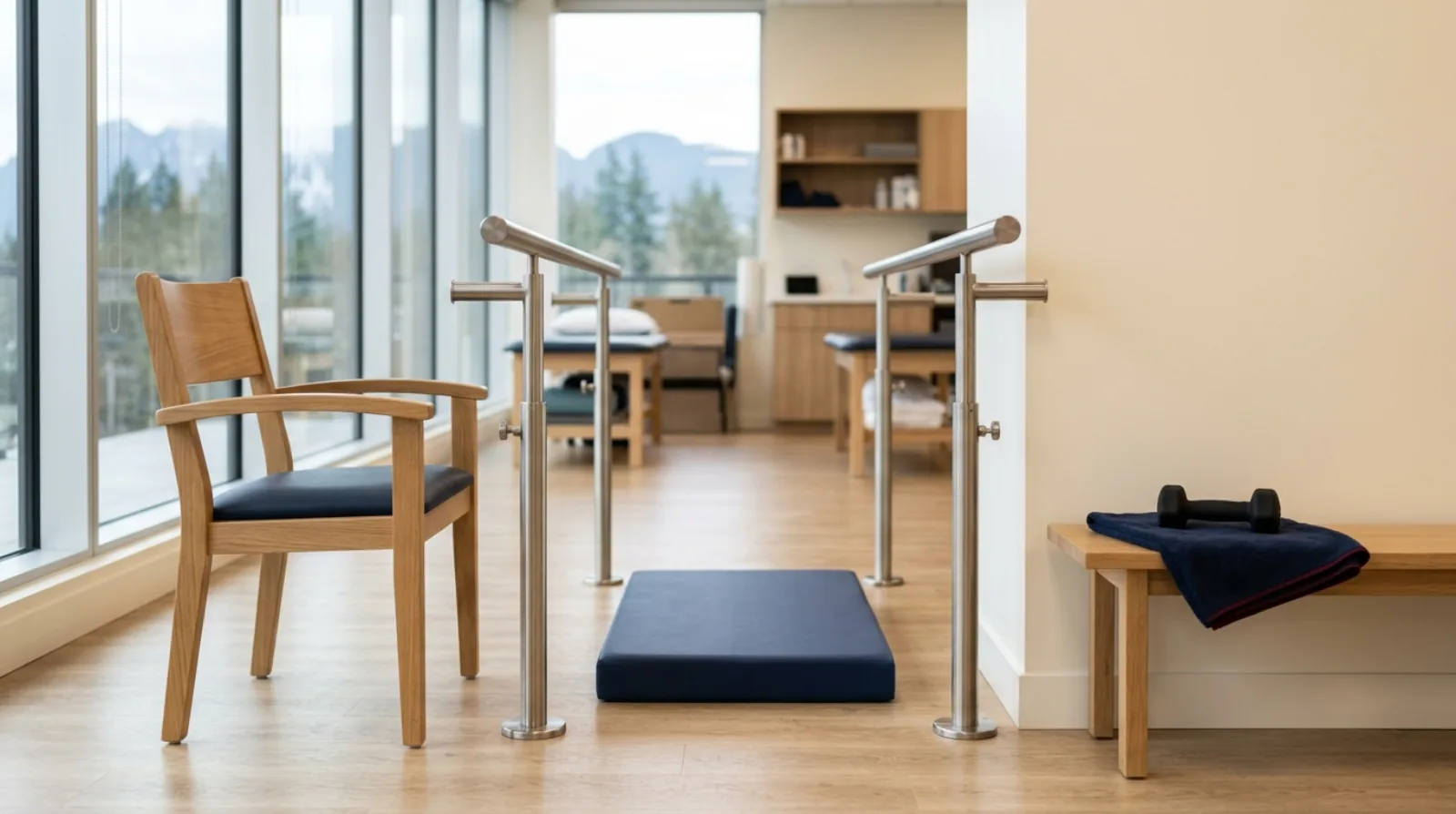
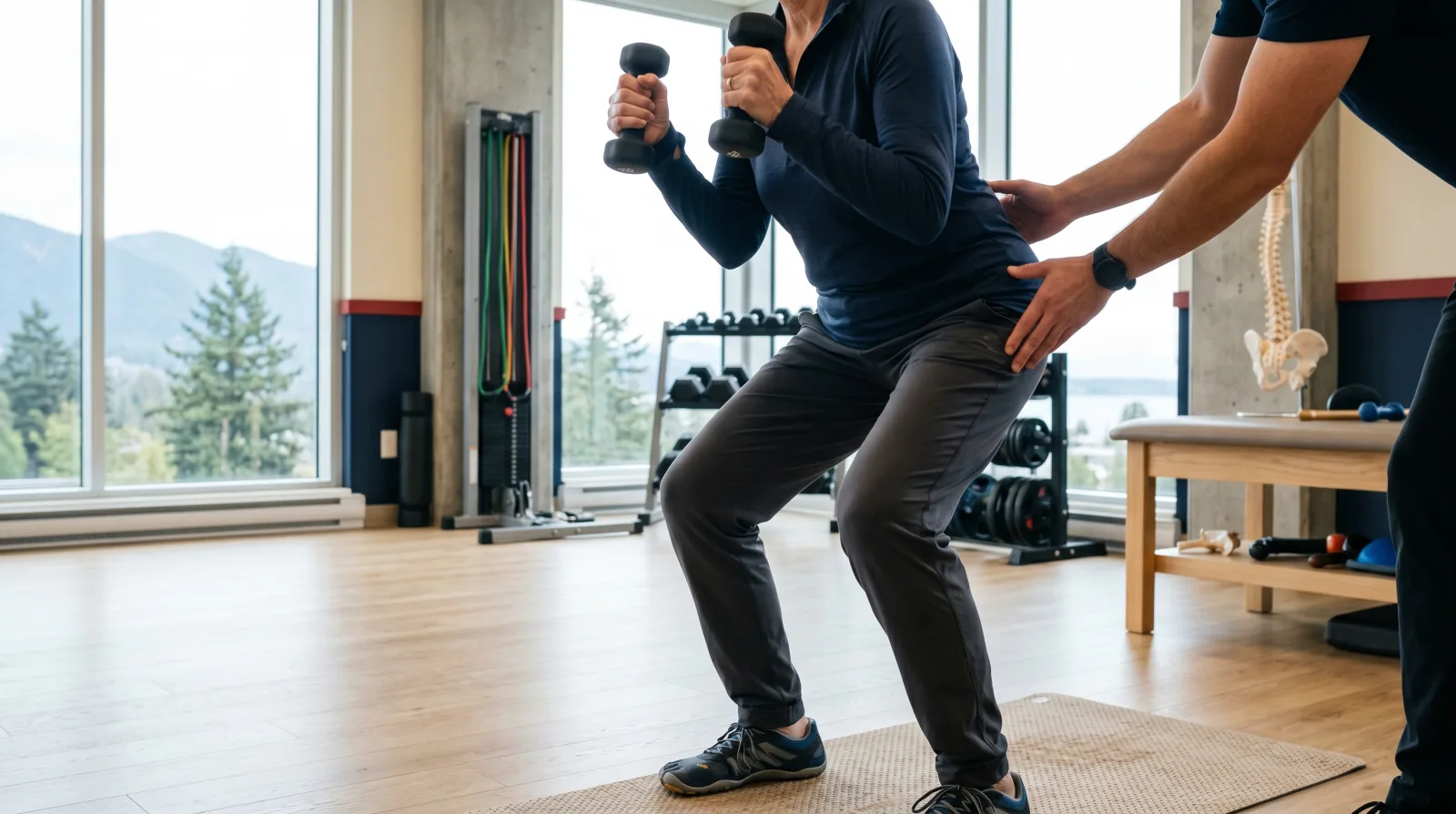
Progressive strength training is one of the most effective ways to maintain and build bone density in people with osteoporosis. It is not a risk to avoid. Bone is living tissue that responds to load. When loading stops, bone and muscle decline, which can raise fracture risk over time rather than lower it. At Medstar Sport Physio in North Vancouver, we design strength programs suited to your bone health, with movements that challenge the bone while avoiding the loaded spinal positions that carry higher risk in significant osteoporosis. Balance training is also included, because most fractures happen during falls. What determines the program is your bone density, your starting strength level, and which movements need to be modified for your situation.
Bone is living tissue
The key idea, and the one that reframes the whole topic, is that bone is not an inert scaffold. It is living tissue that constantly remodels in response to the demands placed on it. When bone is loaded meaningfully, it responds by maintaining and building density. When the load is removed, it does the opposite, gradually losing density along with the surrounding muscle.
This is why prolonged inactivity is bad for bone, and why the fearful, do-less response to an osteoporosis diagnosis can backfire. A body that loads its bones less ends up with weaker bones and weaker muscles, which over time raises fracture risk rather than lowering it. It connects to the same principle we apply across the body in our piece on knee osteoarthritis and exercise first: the tissue responds to appropriate load, and protecting it by avoiding load tends to weaken it.
What kind of exercise builds bone
Not all activity is equal for bone. Bone responds best to loading that genuinely challenges it:
- Progressive resistance training, meaning strength training with weights or resistance that is meaningful and increases over time. This is the cornerstone of building and maintaining bone density.
- Weight-bearing and impact activity appropriate to your situation, which also stimulates bone.
Gentle, non-loading activity such as easy walking or stretching is good for general health and well-being, but it does relatively little to build bone density. To get the bone benefit, the loading has to be substantial enough to challenge the bone, which is why a meaningful resistance-training program is so important.
Alongside the bone-building work, balance training matters enormously, because most fractures in osteoporosis happen during falls. Improving strength and balance reduces the chance of falling in the first place, which is part of why a comprehensive program addresses both, much like our approach to balance and falls.
The caution is specific, not general
There is a real safety dimension, but it is more specific than avoid exercise. The concern in significant osteoporosis is with certain loaded, repeated, or end-range spinal movements, particularly deeply rounding the back under load, which can stress vulnerable areas of the spine. A well-designed program approaches those with more caution.
But the answer to that concern is not to avoid loading altogether. It is to load appropriately, favouring safe movement patterns and good technique while still challenging the bone and muscle. A tailored program steers around the higher-risk movements while still delivering the loading that bone needs. This is exactly why supervision matters, especially at the start: a physiotherapist can design a program that builds bone effectively while modifying the movements that carry higher risk for your specific situation.
Why being overly cautious backfires
The trap is straightforward. Fear of fracture leads to doing less. Doing less lets bone and muscle decline. Weaker bone and muscle, plus poorer balance, raise the risk of both falls and fractures. The very caution meant to protect the bones ends up undermining them.
Breaking that cycle means replacing blanket caution with informed, appropriate loading. People are often surprised and relieved to learn that they can, and should, lift meaningful weight with osteoporosis, provided the program is designed for them. The goal is a stronger, more resilient body, not a smaller, more fearful life.
How a supervised program works
A physiotherapy-guided osteoporosis program typically starts by assessing your bone health, strength, balance, and any movements that warrant caution. From there we build a progressive resistance program at the right starting level, add balance and weight-bearing work as appropriate, and progress the load sensibly over time as your strength improves.
We coordinate with your physician, who manages the medical side of osteoporosis, including any medication and monitoring. The exercise program complements that medical management rather than replacing it, and together they give the best protection for your bones and your independence.
When to get it assessed
If you have been diagnosed with osteoporosis or low bone density, an assessment lets us build a strength and balance program that protects and builds your bones safely, rather than leaving you to guess what is safe. If fear of fracture has you doing less, that is exactly the situation where guidance helps most.
Book a 30-minute appointment and we will assess your strength, balance, and bone-health considerations, then build a program that loads your bones effectively while keeping you safe.
This article is general information about exercise and osteoporosis. It is not personal medical advice. Osteoporosis management should involve your physician. A regulated practitioner can confirm whether the patterns described apply to you and design an appropriate program.
Sources
- Watson et al., High-Intensity Resistance and Impact Training Improves Bone Mineral Density and Physical Function in Postmenopausal Women With Osteopenia and Osteoporosis: The LIFTMOR Randomized Controlled Trial, Journal of Bone and Mineral Research (2018)
- Beck et al., Exercise and Sports Science Australia (ESSA) position statement on exercise prescription for the prevention and management of osteoporosis, Journal of Science and Medicine in Sport (2017)
- College of Physical Therapists of BC (CPTBC)
Common questions
Frequently asked questions.
Is strength training safe with osteoporosis?
For most people, supervised, progressive strength training is safe and it benefits bone health. Bone responds to load by maintaining and building density, so appropriate resistance training is one of the most useful things you can do. The key is a program tailored to your bone health, started at the right level and progressed sensibly, ideally with professional guidance.
What kind of exercise builds bone?+
Bone responds best to loading that challenges it: progressive resistance (strength) training and weight-bearing or impact activity appropriate to your situation. Gentle, non-loading activity is good for general health but does less for bone density. A program that includes meaningful resistance training, alongside balance work to prevent falls, gives the best bone and fracture-prevention benefit.
Will exercise cause a fracture if I have osteoporosis?+
Appropriate, well-supervised exercise lowers fracture risk overall by building bone and improving strength and balance, which prevents falls. The risk comes from doing the wrong movements, such as certain high-risk loaded spinal positions, without guidance. A tailored program avoids those while still loading the bone effectively, which is why supervision matters, especially at the start.
Should I avoid lifting weights if I have osteoporosis?+
No, avoiding loading entirely tends to let bone and muscle decline further, raising fracture risk over time. The goal is to lift appropriately, with a program designed for your bone health, rather than to avoid loading altogether. Being overly cautious can backfire. A physiotherapist can design a program that builds bone safely and adjusts the movements that carry higher risk.
What movements should I be careful with if I have osteoporosis?+
Certain loaded, repeated, or end-range spinal flexion movements (deeply rounding the back under load) are generally approached with more caution in significant osteoporosis. A tailored program emphasizes safe loading patterns and good technique while still challenging the bone and muscle. A physiotherapist guides which movements to favour and which to modify based on your situation.
What happens at a first physiotherapy visit for osteoporosis?+
The physiotherapist assesses your current strength, balance, movement patterns, and bone-health history, including any results your physician has shared. From there we set a starting point for progressive resistance training, flag any movements that need modifying, and agree on how the program will progress over time.
How is an osteoporosis strength program different from a general gym program?+
A general program is not built around bone health, so it may include movements, such as deep loaded spinal flexion, that carry more caution in significant osteoporosis. An osteoporosis-specific program keeps the progressive loading that builds bone while steering around those higher-risk patterns and adding balance training aimed at fall prevention, since most fractures happen during falls.
Does strength training for osteoporosis help around the house too?+
Yes. Building strength and balance together reduces the chance of a fall on stairs, in the bathroom, or getting up from a low chair, which is where many fractures happen. The same program that builds bone density also supports the everyday tasks that keep someone living independently.
Share this post
Copies a ready-to-publish LinkedIn post to your clipboard and opens the LinkedIn share dialog. Paste the text into the composer and publish.
Written by
Sanaz Davarian, PhDDr. Sanaz Davarian is a Registered Physiotherapist with a PhD and 20+ years of experience. Certified IMS Therapist, former Assistant Professor of Physiotherapy. North Vancouver.
This article is for general information only and does not constitute medical advice, diagnosis, or treatment. Individual presentations vary, and assessment findings and treatment plans differ from person to person. If you are experiencing severe symptoms, neurological changes (numbness, weakness, bowel or bladder changes), or a significant trauma, contact your physician or emergency services. Care at Medstar Sport Physio & Health is provided by practitioners registered with their respective British Columbia regulatory colleges.
Filed under
- osteoporosis
- strength-training
- bone-health
- healthy-aging
- north-vancouver