Outer Knee or Outer Hip? Telling IT Band Pain From Gluteal Pain Apart
Outer-leg pain gets blamed on the IT band by default, but the same ache can start at the hip instead of the knee. The exact spot changes what actually helps.
BY SANAZ DAVARIAN, PHD
Pain running down the outside of the leg gets blamed on "the IT band" almost by default. The actual source is sometimes higher up, at the hip, not the knee, and the two need slightly different plans.
At Medstar Sport Physio in North Vancouver, we tell iliotibial band friction apart from gluteal tendinopathy mainly by location: IT band pain sits at the outer knee and shows up at a predictable running distance, while gluteal tendinopathy sits at the bony point on the side of the hip and is worse lying on that side, on stairs, or standing on one leg. Both usually respond to hip abductor and gluteal strengthening combined with load management, but the specific triggers to manage differ. Getting the location right before starting a plan saves weeks of treating the wrong spot.
Why the two get confused
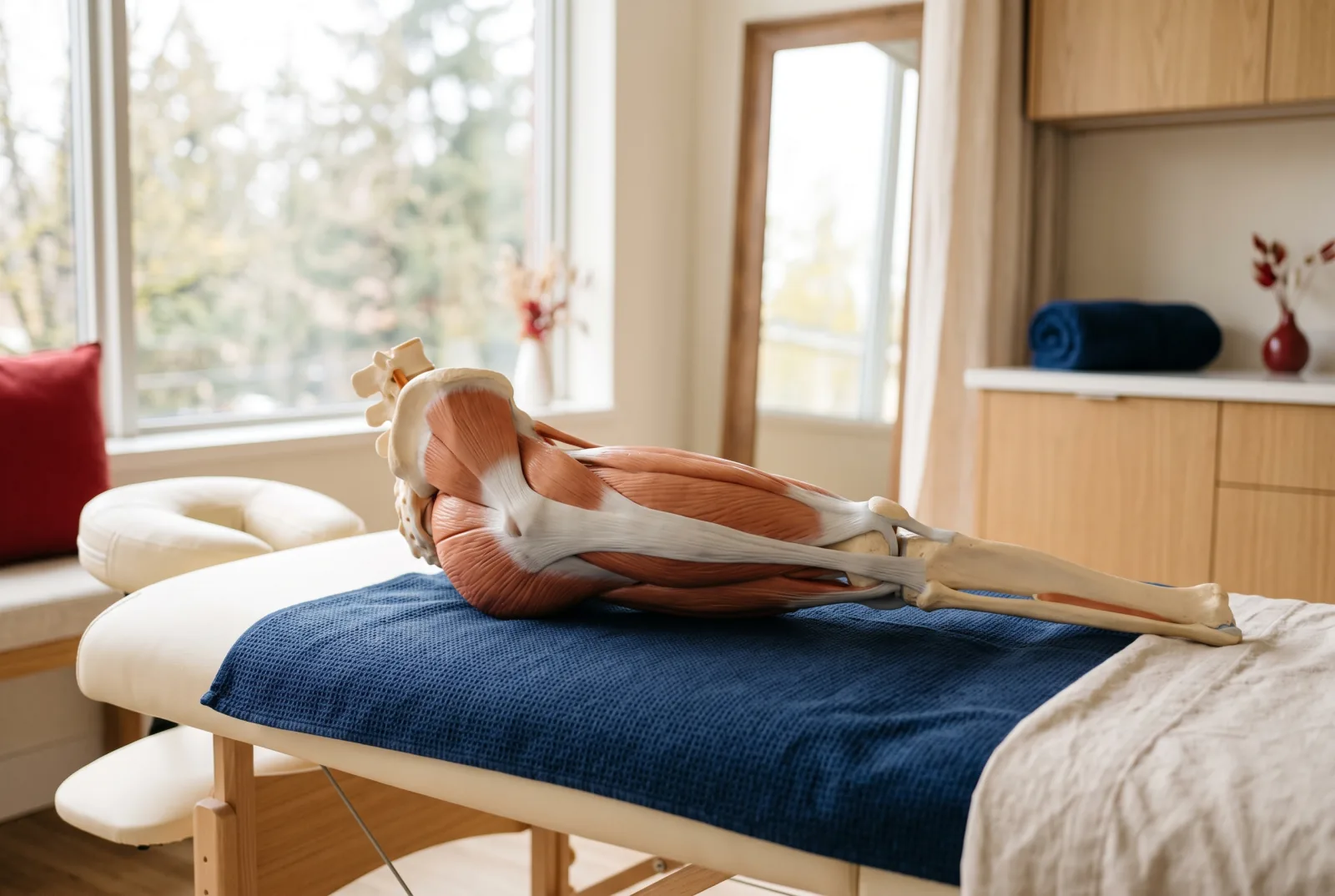
The iliotibial band is a long, dense sheet of tissue that runs from the outside of the hip down to just below the knee. Because it spans that whole distance, irritation anywhere along it, or in the muscles that control it, tends to get lumped under one label: "IT band syndrome." That is accurate for pain at the knee end. It is the wrong label when the pain is actually coming from the hip.
The two conditions share a cause, weakness or fatigue in the hip abductor muscles, mainly the gluteus medius, that lets the thigh drift inward with each stride. But they show up in different tissues and need different day-to-day management. Sorting out which one you have, before spending weeks on the wrong fix, is worth the five minutes it takes.
Where the pain actually sits
Location is the single most useful clue, and it is worth being precise about it rather than describing "outer leg pain" broadly.
IT band friction shows up over the bony bump on the outside of the knee, where the band crosses it. According to a clinical overview from Cleveland Clinic, the pain is often sharp or burning and tends to appear at a fairly predictable point in a run or ride, then eases with rest. It sits at the knee, not above it.
Gluteal tendinopathy, also called greater trochanteric pain syndrome, shows up at the bony point on the side of the hip, well above the knee. It affects a meaningful share of adults, more often women than men, with StatPearls reporting the condition in roughly 15 percent of women and 8 percent of men, with peak incidence between ages 40 and 50. The pain here is typically worse lying on that side at night, climbing stairs, or standing on one leg for a while, a very different trigger pattern from a set running distance.
If you can put one finger on the sore spot, doing that alone often tells you more than any description of "the outside of my leg hurts."
What triggers each one
The two conditions are provoked by different things, and that is often the fastest way to sort them without an exam.
IT band friction is triggered by repetitive knee bending under load: running, especially downhill, and cycling, especially with a saddle set too high. The pain tends to build with distance or time in the activity and settle with rest between sessions. We cover the running and cycling side of this in detail in our guide to IT band syndrome in runners and cyclists.
Gluteal tendinopathy is triggered by compression at the hip. Lying directly on the affected side, crossing the legs, standing with the weight shifted onto one hip, and sitting low with the knees together all compress the tendon against the bone and aggravate it. Running and stair climbing can provoke it too, but the sleeping and sitting triggers are the more distinctive tell. Our piece on gluteal tendinopathy and hip bursitis goes through why this gets mislabelled as simple bursitis.
Why the exam still matters
Location and triggers point you in the right direction, but they are not a substitute for a hands-on assessment, because the two conditions can overlap and because other problems can mimic either one.
For gluteal tendinopathy, a systematic review with meta-analysis published in the Journal of Orthopaedic & Sports Physical Therapy found that tests combining tendon palpation with an active muscle contraction, such as resisted hip abduction, were more useful for confirming the diagnosis than older passive stretch tests. A physiotherapist uses this kind of combined testing rather than relying on a single test in isolation.
The lower back and the hip joint itself can also refer pain into this same general area, and a proper assessment screens for those sources too, since treating a back-referred pain as a tendon problem, or the reverse, delays recovery either way.
Why the fix looks similar but is not identical
Once the diagnosis is clear, the two conditions share a foundation: both improve with progressive strengthening of the hip abductors and glutes, and both do poorly with prolonged complete rest. That said, the practical details diverge in ways that matter for day-to-day management.
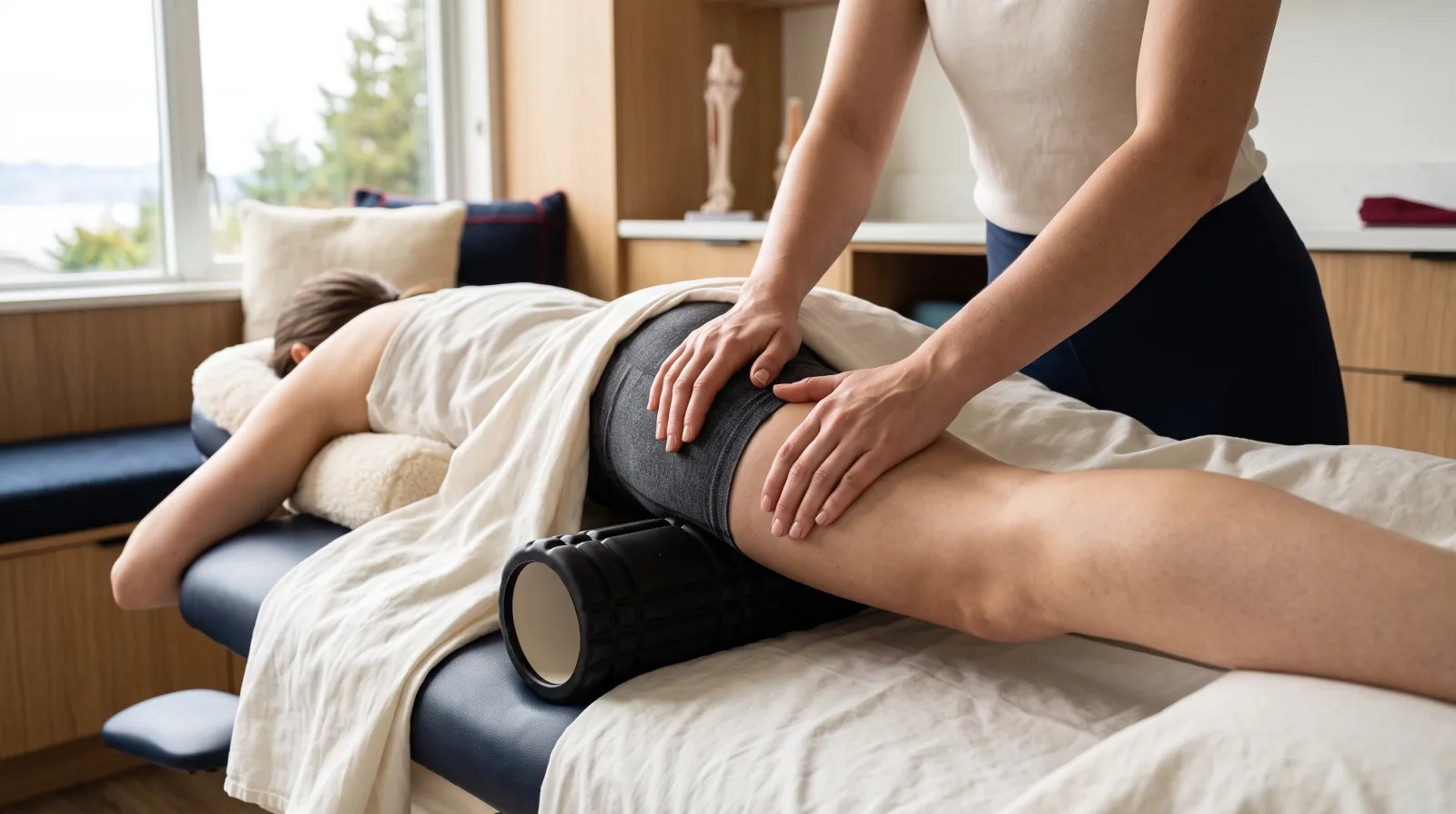
For IT band friction, the load side of the plan focuses on running and riding volume, downhill exposure, and, for cyclists, saddle height and cleat position. Foam rolling can offer short-term relief but the band itself does not lengthen much with rolling, so it earns a supporting role at best.
For gluteal tendinopathy, managing the compressive positions at the hip matters as much as the strengthening. That means adjusting sleep position, usually lying on the unaffected side with a pillow between the knees, avoiding crossing the legs, and being mindful of how you stand for long periods. Skipping this half of the plan is a common reason gluteal tendinopathy drags on even with a reasonable exercise program.
Both plans build hip abductor and gluteal strength progressively, but the compressive habits that need to change are specific to which tissue is actually irritated, which is exactly why the diagnosis has to come first.
What a realistic timeline looks like
IT band friction tends to respond over a matter of weeks once the triggering load is managed and hip strength improves. Gluteal tendinopathy is typically slower, often taking a few months to settle, because it behaves like other lower-limb tendon problems that need sustained, graded loading rather than a quick fix.
Neither timeline is fixed. How long either one takes depends on how long the symptoms have been present before treatment starts and how consistently the specific triggers, running load for one, compressive positions for the other, are managed alongside the strengthening.
When to get it assessed
If you have pain running down the outside of your leg and you are not sure whether it is coming from the knee or the hip, an assessment sorts out the location, rules out other causes, and builds a plan matched to the actual structure involved rather than a generic "IT band" label. Pain that comes with locking, giving way, or swelling in the knee joint, or hip pain with fever or an inability to bear weight, is worth assessing sooner rather than waiting.
Book a 30-minute appointment and we will pin down whether the pain is coming from the knee end or the hip end of the picture, then build a strengthening and load plan matched to what is actually irritated. You can also read more about what we treat or book online.
This article is general information about iliotibial band friction and gluteal tendinopathy. It is not personal medical advice. A regulated practitioner can confirm whether the patterns described apply to you.
Sources
- Kinsella et al., Diagnostic Accuracy of Clinical Tests for Assessing Greater Trochanteric Pain Syndrome: A Systematic Review With Meta-analysis, Journal of Orthopaedic & Sports Physical Therapy (2023)
- Greater Trochanteric Pain Syndrome - StatPearls, NCBI Bookshelf
- Iliotibial Band Syndrome (ITBS): Causes, Symptoms & Treatment - Cleveland Clinic
- College of Physical Therapists of BC (CPTBC)
Common questions
Frequently asked questions.
How do I know if my outer-leg pain is coming from my knee or my hip?
Location and behaviour are the biggest clues. IT band friction sits at the outer knee, over the bony bump the band crosses, and tends to show up at a predictable point in a run. Gluteal tendinopathy sits higher, over the bony point on the side of the hip, and is worse lying on that side, climbing stairs, or standing on one leg. An assessment confirms which structure is involved when the pattern is not clear.
Can IT band syndrome and gluteal tendinopathy happen at the same time?+
Yes. The iliotibial band runs from the hip to the knee and crosses both areas, and weak or fatigued hip abductor muscles are a common thread in both problems. Some runners have irritation at both ends at once. This is one reason a physiotherapy assessment looks at the whole band and the hip, not just the spot that hurts most.
Does the treatment differ for IT band pain versus gluteal tendinopathy?+
The underlying principle, building hip abductor and gluteal strength while managing the load that triggers symptoms, is similar for both. The difference is in the details: gluteal tendinopathy needs the compressive positions at the hip managed carefully, such as avoiding lying on the sore side, while IT band friction is managed more through running or riding load and downhill exposure. Getting the diagnosis right shapes which specifics matter most.
Will foam rolling the outside of my thigh help either condition?+
It rarely fixes either one on its own. The IT band itself is a dense sheet of tissue that does not lengthen much with rolling, and for gluteal tendinopathy, direct pressure over the hip can actually compress and irritate the tendon further. Both conditions respond more reliably to targeted hip strengthening and load management than to rolling or stretching.
Why does hip weakness show up as knee pain in IT band syndrome?+
The hip abductor muscles, mainly the gluteus medius, control how much the thigh drifts inward with each stride. When those muscles fatigue or are weak, the leg tracks differently and the iliotibial band experiences more friction where it crosses the outer knee. The pain shows up at the knee, but a meaningful part of the fix often happens at the hip.
Is lateral hip pain always gluteal tendinopathy?+
Not always, but it is the most common cause of pain on the outer hip in adults. The hip joint itself, the lower back, or a true bursitis can also produce pain in that area, and the pain pattern can look similar at first glance. An assessment checks the hip, the tendon, and the lower back so the plan targets the actual source rather than assuming.
How long does it take to settle either condition?+
Both usually respond to conservative care, though the timelines differ. IT band friction often improves over several weeks with load management and hip strengthening. Gluteal tendinopathy tends to be slower, often improving over a few months, because it behaves like other lower-limb tendon problems and needs consistent, graded loading. How quickly either settles depends on how long the pain has been present and how consistently the compressive or load triggers are managed.
Should I stop running while I sort out which one I have?+
Usually not completely. For both conditions, complete rest tends to settle the pain temporarily and lets it return once you resume training at the same load. Reducing the distance, downhill exposure, or intensity that triggers the pain, while keeping some training going, tends to work better than stopping outright. Your physiotherapist can help set that dose once the diagnosis is clear.
What should I mention at a first assessment if I am not sure whether it's my hip or my knee?+
Describe exactly where the pain sits, using one finger if you can, and what makes it worse: a specific running distance, downhill sections, lying on one side at night, or climbing stairs. That detail, along with a rough training history, helps the physiotherapist narrow down whether the iliotibial band at the knee or the gluteal tendon at the hip is the more likely source before any hands-on testing begins.
Share this post
Copies a ready-to-publish LinkedIn post to your clipboard and opens the LinkedIn share dialog. Paste the text into the composer and publish.

Written by
Sanaz Davarian, PhDDr. Sanaz Davarian is a Registered Physiotherapist with a PhD and 20+ years of experience. Certified IMS Therapist, former Assistant Professor of Physiotherapy. North Vancouver.
This article is for general information only and does not constitute medical advice, diagnosis, or treatment. Individual presentations vary, and assessment findings and treatment plans differ from person to person. If you are experiencing severe symptoms, neurological changes (numbness, weakness, bowel or bladder changes), or a significant trauma, contact your physician or emergency services. Care at Medstar Sport Physio & Health is provided by practitioners registered with their respective British Columbia regulatory colleges.
Filed under
- it-band-syndrome
- gluteal-tendinopathy
- lateral-hip-pain
- knee-pain
- running
- north-vancouver