Lateral Hip Pain: Is It Bursitis or Gluteal Tendinopathy? Why the Tendon Is Usually the Real Story
Pain on the outer hip gets labelled bursitis, but scans keep showing the tendon is the problem, not the sac. That changes how you should treat it.
BY MEDSTAR SPORT PHYSIO TEAM
Pain on the outer point of the hip gets a familiar label: bursitis. People are told a small fluid-filled sac is inflamed, and the advice that follows is usually rest, ice, and maybe an injection. The trouble is that the sac is often not the problem. In most cases the real driver is the tendon next to it, and that changes what actually helps.
Lateral hip pain, the ache over the bony point on the outer hip, is commonly called trochanteric bursitis, but imaging studies show the bursa is often not inflamed and the usual driver is gluteal tendinopathy, meaning irritation of the gluteus medius and minimus tendons where they attach to the bone. Both now sit under the term greater trochanteric pain syndrome. At Medstar Sport Physio in North Vancouver, this matters because a sore tendon responds to graded loading and reducing compression, not to rest and ice, and the evidence favours an exercise-and-education plan over an injection alone.
The same painful spot, two different labels
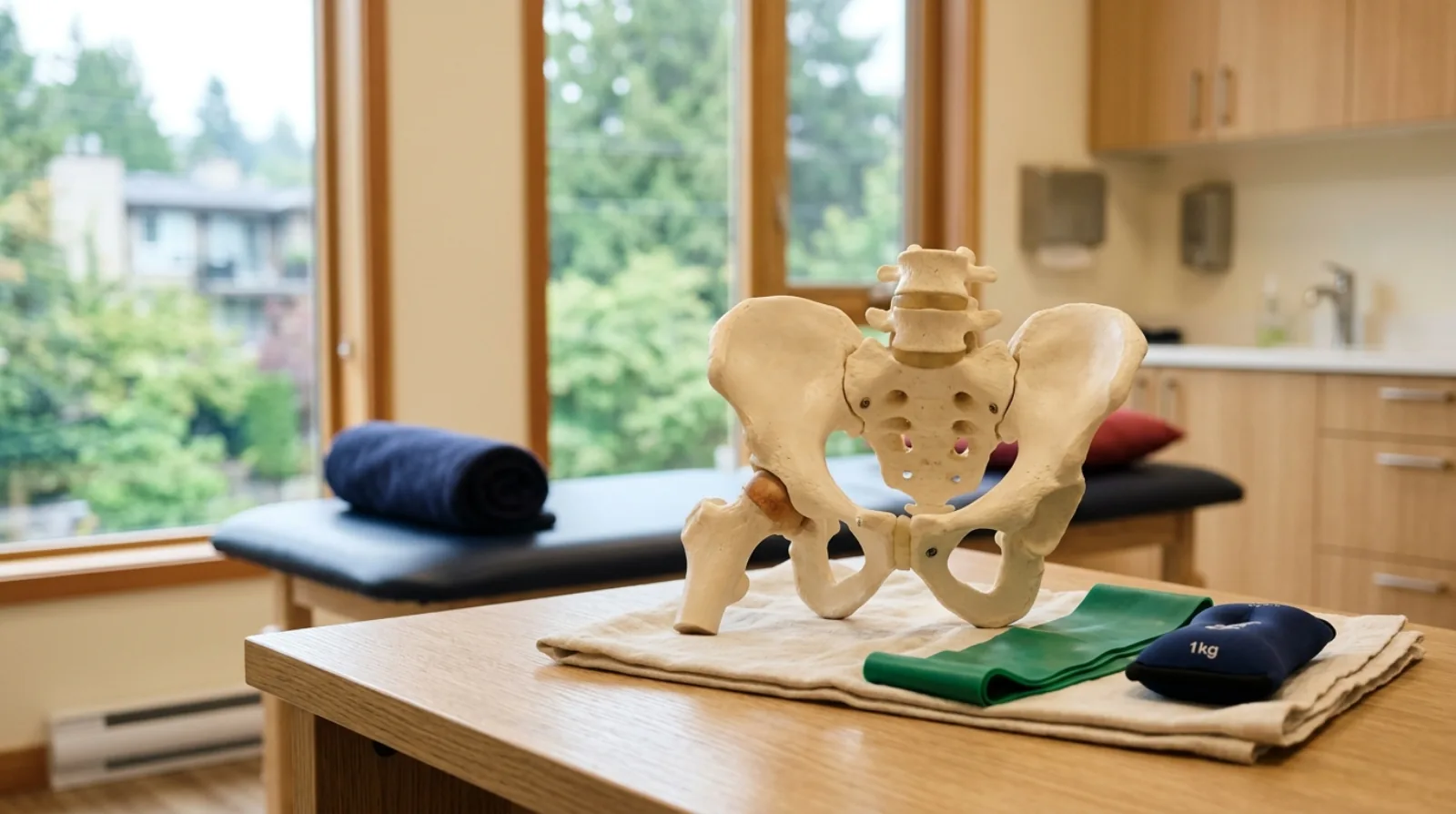
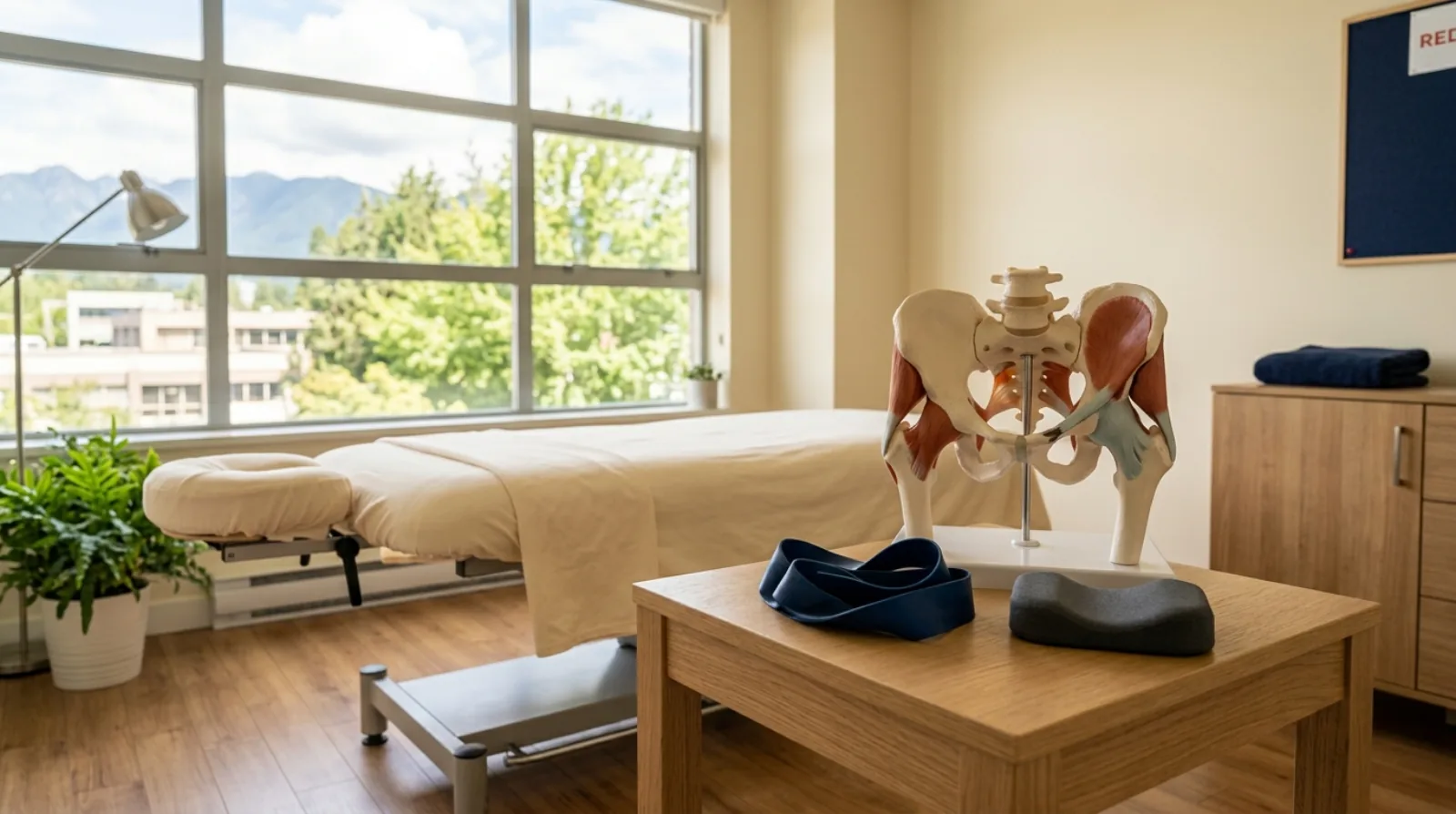
The pain lives over the greater trochanter, the bony bump you can feel on the outer hip. Right at that point, the gluteus medius and gluteus minimus tendons attach to the bone. These are the muscles that hold your pelvis level when you stand on one leg or take a step. Sitting just over those tendons is the trochanteric bursa, a small fluid-filled cushion that reduces friction as tissues glide.
Because the tendon and the bursa are packed together at the same spot, pain there gets blamed on whichever structure the label picks. For decades the default label was bursitis. The location was right. The named culprit was usually wrong.
Why "bursitis" is often the wrong name
When researchers looked closely at the outer hip in people with this pain, the bursa was frequently not the problem. Ultrasound and MRI studies found that most people had changes in the gluteus medius or minimus tendons, and true bursa inflammation was uncommon and, when present, tended to be a secondary finding rather than the main event. That is why current clinical writing describes trochanteric bursitis as a misnomer for most lateral hip pain and groups the whole picture under greater trochanteric pain syndrome.
The label is more than a naming argument. The word you use points the treatment somewhere. Call it bursitis, an inflamed sac, and the logical response is rest, ice, and anti-inflammatory injections. Call it tendinopathy, an irritated and under-conditioned tendon, and the logical response is the opposite: graded loading to rebuild the tendon's capacity. Getting the driver right is what puts you on the treatment that works.
The same pattern shows up elsewhere in the body
This is not unique to the hip. The shoulder has the exact same bursitis-versus-tendinopathy confusion, where subacromial "bursitis" and rotator cuff tendinopathy sit in the same small space and get treated as one problem under the heading of subacromial pain. In both the hip and the shoulder, the lesson is similar. The bursa gets named because it is easy to picture an inflamed cushion, but the tendon under load is usually doing the real work of causing pain.
If you want the deeper walk-through of the outer-hip condition itself, we cover it in more detail in our post on gluteal tendinopathy and hip bursitis. This article is about the decision the label pushes you toward, and why the tendon story should win.
What makes the tendon flare: compression
Here is the piece most people miss. Gluteal tendinopathy is about more than too much load. Compression matters too. When the tendon gets squeezed against the bone, it gets irritated, and several everyday positions do exactly that.
Standing with your weight dropped onto one hip squeezes the tendon. Sitting with your legs crossed does it. Sleeping on the painful side compresses it against the mattress, which is why night pain and pain lying on that side are such common complaints. Stretching the hip across the body, a stretch many people are told to do for "tight hips", also compresses the tendon and can make things worse.
Early in treatment, a large part of the plan is spotting these compression positions and reducing them. Standing evenly on both feet, avoiding crossing the legs, putting a pillow between the knees when side-lying, and dropping the across-the-body stretches often calms the hip enough that the loading program can do its job.
What the evidence says about treatment
The strongest evidence here comes from the LEAP trial, which compared three approaches in people with gluteal tendinopathy: education plus exercise, a single corticosteroid injection, and a wait-and-see approach. At eight weeks, 77 percent of the education-plus-exercise group were at least moderately better, compared with 58 percent for the injection group and 29 percent for wait and see. The exercise group stayed ahead at one year, and a later economic analysis found education plus exercise improved quality of life and was cost-effective compared with injection or waiting.
Read that carefully. The injection was not useless in the short term, but it lost to exercise even early on, and the gap held at a year. Rest and waiting did the worst. This is the clearest reason to treat the outer hip as a tendon problem and not a bursa problem: the tendon-focused plan is the one with the best results.
What a loading plan actually looks like
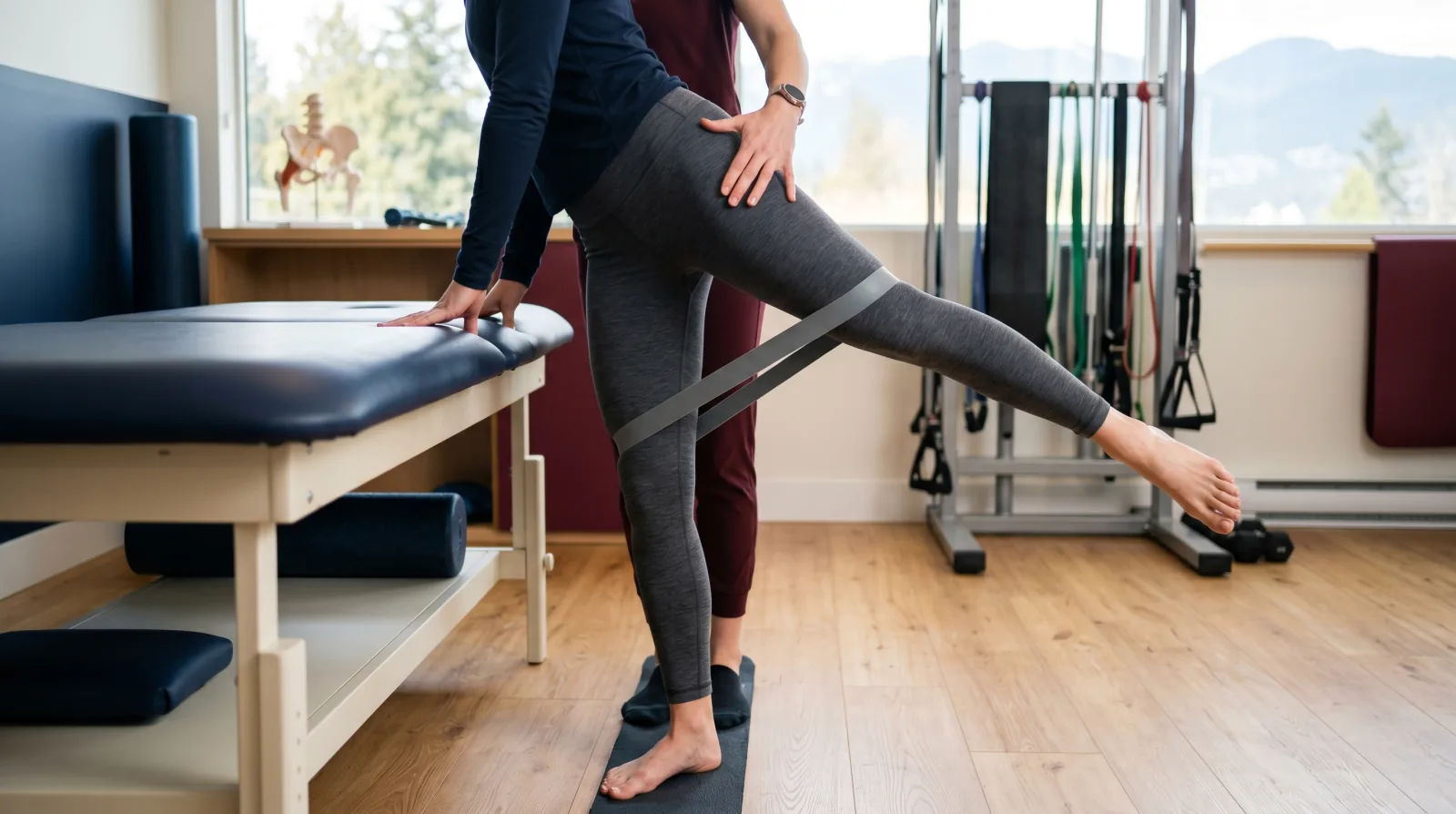
The exercise side is not a random sheet of hip stretches. It builds the capacity of the gluteus medius and minimus in a graded way, starting at a level the irritable tendon can tolerate and progressing as it settles.
Start with the tendon calm. Early on, isometric work, meaning holding a muscle contraction without much movement, can load the tendon while keeping compression low. This gives the tendon a stimulus without flaring it.
Reduce compression at the same time. The load-management side, cutting the standing-on-one-hip, crossing-the-legs, and side-lying positions, runs alongside the exercise. Loading without reducing compression tends to stall.
Build toward what you need. Over weeks, the program adds progressive strengthening for the hip muscles and rebuilds tolerance for walking, hills, and stairs, which are the single-leg loads that most often provoke this hip.
Expect a slow, bumpy climb. Tendon recovery takes time, and some soreness during and after the exercises is normal as long as it settles. A flare after a busy week is a dose problem, not a failure.
When to get it assessed
If you have pain over the outer point of your hip that is worse when you lie on that side at night, when you stand on one leg, or after walking and stairs, an assessment can sort out whether the tendon is the driver and how irritable it is. It is worth being seen sooner if the pain came on after a fall, if there is marked weakness lifting the leg out to the side, or if it is not settling with the usual load management. Some outer-hip pain can also be referred from the low back, so part of the assessment is checking that the hip really is the source, which we touch on in our post on sciatica and referred pain.
Book a 30-minute appointment and we will assess your hip, work out whether the tendon or something else is driving the pain, map the compression positions that are keeping it going, and build a loading plan matched to how irritable the hip is right now.
This article is general information about lateral hip pain. It is not personal medical advice. A regulated practitioner can confirm whether the patterns described apply to you.
Sources
- Greater Trochanteric Pain Syndrome - StatPearls, NCBI Bookshelf
- Gluteal Tendinopathy: Integrating Pathomechanics and Clinical Features in Its Management - JOSPT (2015)
- Mellor et al. LEAP trial - Education plus exercise versus corticosteroid injection versus wait and see, BMJ (2018), summary via RunningPhysio
- Economic evaluation of the LEAP trial - PubMed (2022)
- College of Physical Therapists of BC (CPTBC)
Common questions
Frequently asked questions.
What is the difference between hip bursitis and gluteal tendinopathy?
Hip bursitis means irritation of a fluid-filled sac called the trochanteric bursa on the outer hip. Gluteal tendinopathy means irritation of the gluteus medius and minimus tendons where they attach to the same bony point. They cause pain in almost the same spot, but imaging studies show the tendon is the usual problem and the bursa is often not inflamed. That is why clinicians now group both under the term greater trochanteric pain syndrome and treat the tendon.
Why do doctors say trochanteric bursitis is a misnomer?+
When researchers looked at the outer hip with ultrasound and MRI in people with this pain, most had tendon changes in the gluteus medius or minimus, and true bursa inflammation was uncommon. So the old name blamed the wrong structure. The pain is real and in the right place, but the driver is usually the tendon under load, not an inflamed sac. Naming it bursitis can push people toward rest and injections when loading the tendon works better.
Does a cortisone injection fix lateral hip pain?+
A corticosteroid injection can calm a very painful outer hip in the short term, but it is not the best long-term answer for most people. In the LEAP trial, education plus exercise beat a single injection at both eight weeks and one year for gluteal tendinopathy. An injection may have a place to settle a very irritable hip so you can start loading, but on its own it tends to fade. This is a discussion for your doctor alongside a rehab plan.
What makes gluteal tendinopathy worse?+
Compression of the tendon against the bone is a big driver. Standing with your weight on one hip, sitting with legs crossed, sleeping on the sore side, and stretching the hip across the body all squeeze the tendon and can flare the pain. Sudden jumps in walking, hiking, or hill work can also overload it. Part of early treatment is spotting and reducing these compression positions while you build the tendon back up.
How long does gluteal tendinopathy take to settle?+
Tendon problems are slower than most people hope, and honest timelines depend on how irritable the hip is, your age, and how early loading starts. A structured exercise and load-management plan often takes a couple of months to make a clear difference rather than a couple of weeks. Progress is not a straight line, and a flare after a busy week does not mean the plan failed. It usually means the load ran ahead of what the tendon could take that week.
Why does my hip hurt more at night when I am lying still?+
Lying on the sore side compresses the gluteal tendon against the mattress, which is exactly the kind of compression that irritates it. Even lying on the other side can sometimes stretch and compress the tendon on the sore hip if the top leg drops across the body. A pillow between the knees to keep the hips level is a simple change that often reduces night pain.
Is it bursitis or tendinopathy if imaging shows both a tendon problem and bursa fluid?+
It is common for imaging to show tendon changes alongside some fluid in the bursa, since the two sit right next to each other and the bursa can react as a bystander. Current understanding still points to the tendon as the main driver of pain and the target for treatment, even when bursa fluid is also visible on the scan.
Can weak core or low back muscles contribute to lateral hip pain?+
The gluteal muscles work together with the core and low back to control the pelvis, so weakness or poor control further up the chain can increase the demand on the hip tendons. This is one reason a full assessment looks beyond just the sore spot, since the plan sometimes needs to address hip and trunk control together, not the tendon in isolation.
Share this post
Copies a ready-to-publish LinkedIn post to your clipboard and opens the LinkedIn share dialog. Paste the text into the composer and publish.
Written by
Medstar Sport Physio Team
Registered clinician at Medstar Sport Physio & Health, North Vancouver.
This article is for general information only and does not constitute medical advice, diagnosis, or treatment. Individual presentations vary, and assessment findings and treatment plans differ from person to person. If you are experiencing severe symptoms, neurological changes (numbness, weakness, bowel or bladder changes), or a significant trauma, contact your physician or emergency services. Care at Medstar Sport Physio & Health is provided by practitioners registered with their respective British Columbia regulatory colleges.
Filed under
- lateral-hip-pain
- gluteal-tendinopathy
- trochanteric-bursitis
- greater-trochanteric-pain-syndrome
- hip-pain
- north-vancouver