Achilles Tendon Rupture: Recovery Phases and When You Can Return to Sport
A ruptured Achilles tendon recovers in stages. This guide covers the boot or surgery choice, what happens in each phase, and the tests that decide when running and sport return.
BY ALI SHAFIEI, RPT
A popping noise at the back of the heel, followed by weakness when you push off, can mark an Achilles tendon rupture. If this has just happened to you or someone in your family, two questions come first. Should the leg go in a boot or have surgery? And what does recovery look like week by week?
At Medstar Sport Physio in North Vancouver, rehabilitation after an Achilles tendon rupture follows the plan your surgeon or physician sets: a boot for 8 weeks in the two published protocols reviewed here, then walking, calf strength work, and running only after strength tests are passed. Those protocols start running at 12 to 16 weeks or at 24 weeks, and expect a return to sport between 6 and 12 months.
A doctor confirms the tear and sets the plan
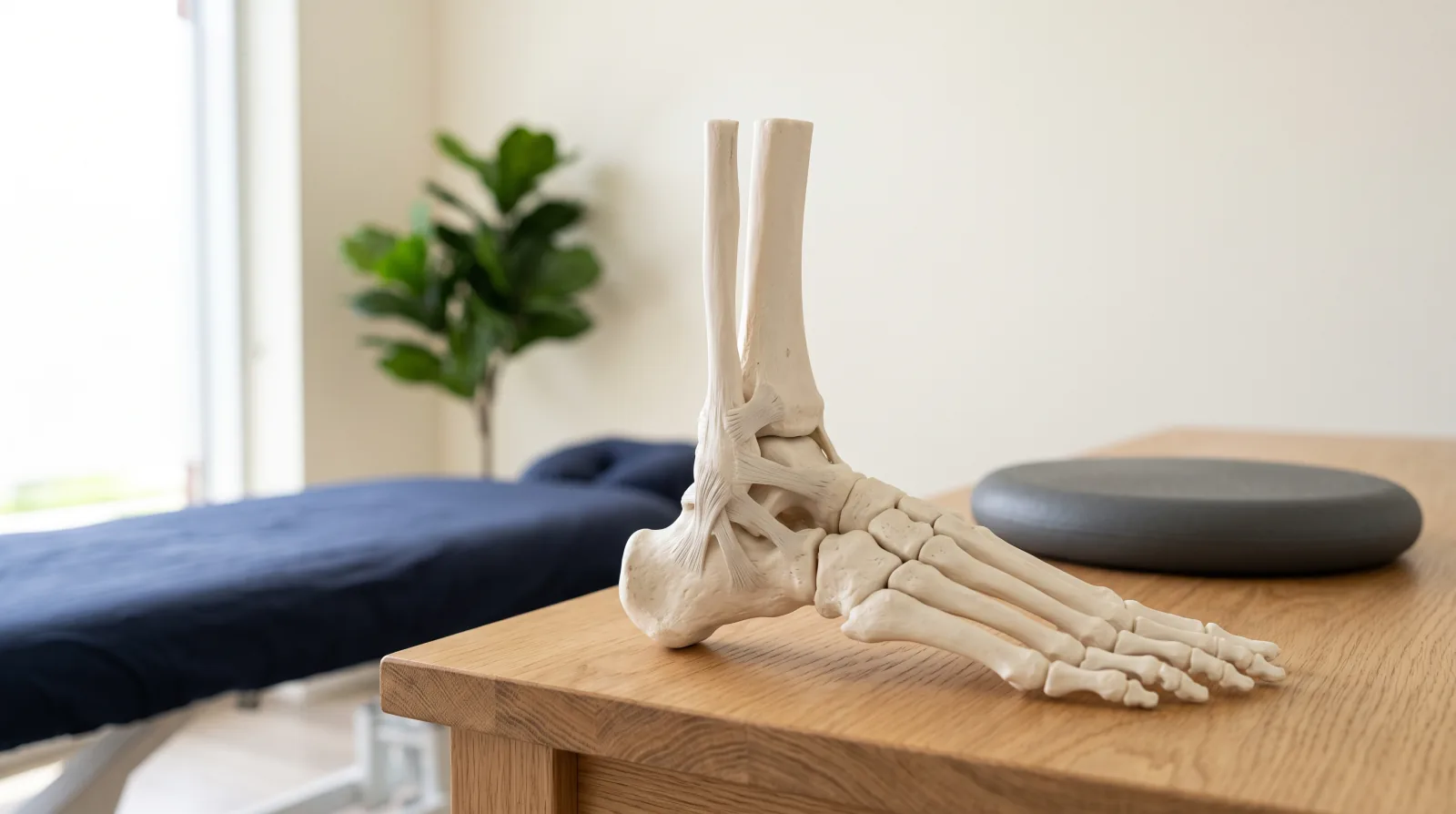
An Achilles tendon rupture is a complete tear of the thick tendon that joins the calf muscles to the heel bone. OrthoInfo, the patient site of the American Academy of Orthopaedic Surgeons, says people may hear a popping noise, feel severe pain and swelling near the heel, and be unable to stand on the toes of the injured leg. A doctor confirms the tear by examining the leg, including a calf squeeze that checks whether the foot moves (the Thompson test).
In the UKSTAR trial of 540 adults, the average age was 48.7 years, 79% were male, and 70% tore the tendon during sport. Timing affects your options.
The Ohio State guideline says that for best outcomes a repair is typically done within 2 weeks. Do not wait for the pain to settle. Ask a doctor or an urgent care centre to examine the leg as soon as you can.
Your surgeon decides between surgery and a boot
The choice belongs to the surgeon or physician who examines you, with your input. The physiotherapist follows the protocol the surgeon gives. The protocols in this article are published examples and are not instructions for your leg.
The evidence on surgery and a boot is close. A 2019 BMJ review pooled 29 studies. The tendon tore again in 2.3% of people treated with surgery and 3.9% of people treated without it, a difference of 1.6 percentage points. Surgery had more other complications, 4.9% against 1.6%, and most of that gap came from infection, which affected 2.8% of the surgery group. In studies that used accelerated functional rehabilitation with early movement, the difference in new tears was not statistically significant.
Two trials add detail. A Canadian trial of 144 adults gave everyone early weight bearing and early movement. The tendon tore again in 2 of 72 people who had surgery and 3 of 72 who did not. A Norwegian trial of 554 adults compared non-surgical care, open surgery and keyhole surgery. Recovery scores, a 0 to 100 questionnaire about symptoms and activity, were similar in all three groups at 12 months. The tendon tore again in 6.2% of the non-surgical group and 0.6% of each surgery group.
Surgeons weigh age, sport, job and health. OrthoInfo says surgeons may recommend repair for competitive athletes and for people whose activities depend on pushing off with the toes. Ask your surgeon about your chance of a second tear with each option, how much weight is allowed and when, and when physiotherapy should start.
Weeks 0 to 8 protect the tendon in a boot
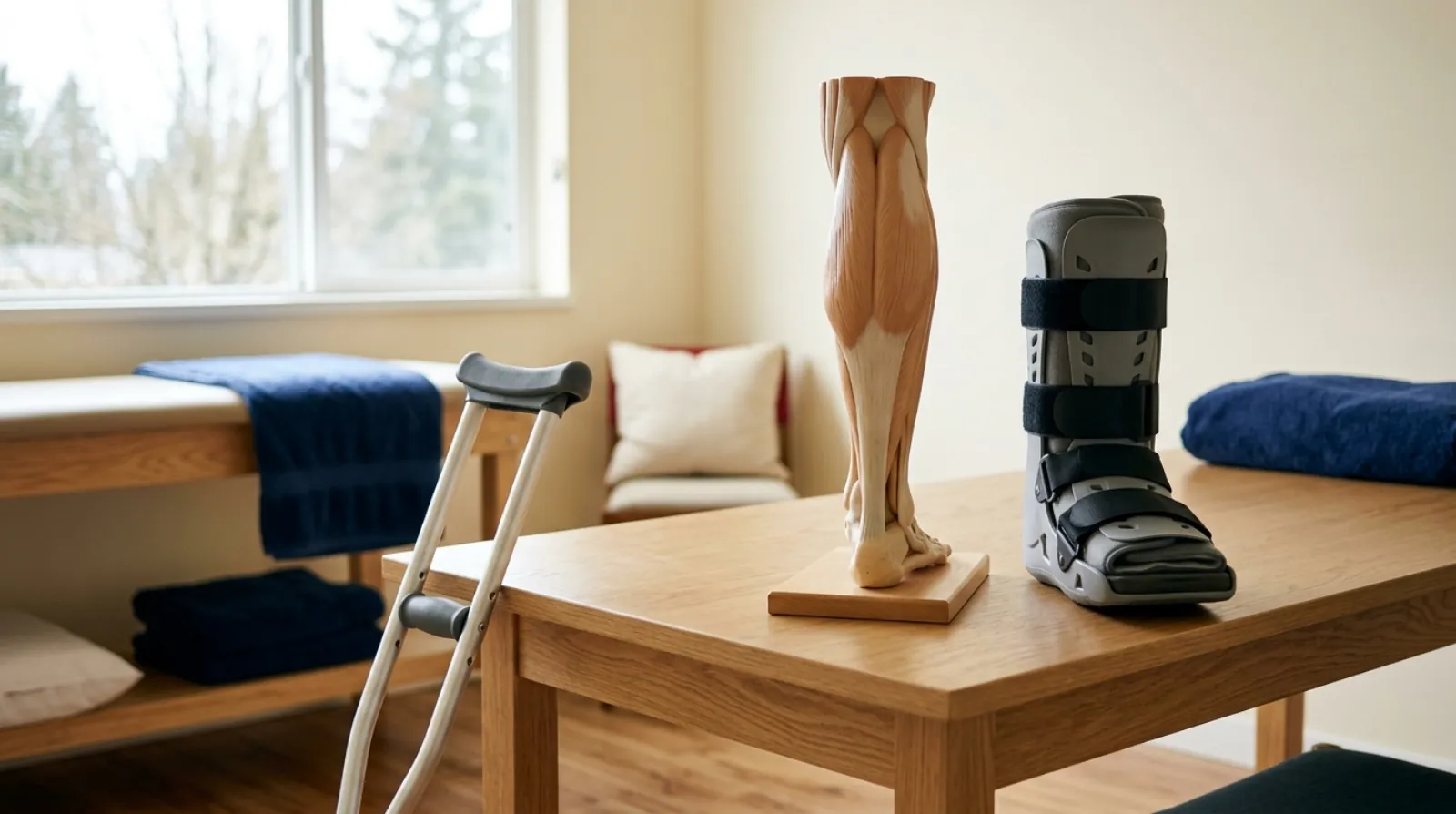
Both published protocols reviewed here protect the tendon for 8 weeks. NHS Lothian's non-surgical protocol places the person in a walking boot with full weight allowed. Wedges under the heel hold the foot pointed down at the start. In one version the wedge is 4 cm for weeks 0 to 4, 2 cm for weeks 4 to 6, and removed for weeks 6 to 8. The boot stays on day and night, including in bed.
UKSTAR tested this approach. It compared a plaster cast with a walking brace that allowed weight at once, both worn for 8 weeks. Recovery scores at 9 months were the same. The tendon tore again in 17 of 266 people (6%) in the cast group and 13 of 274 (5%) in the brace group.
After surgery, NHS Lothian's surgical repair statement describes a plaster splint for the first 2 weeks with no weight on the foot. Then a boot with heel wedges and full weight, with one wedge removed each week until the heel is flat at week 8. The Ohio State guideline is similar. It allows no weight for 2 weeks or as the surgeon directs, then weight as tolerated in a boot from week 2, no crutches by week 4, and no boot or heel lifts by week 8. Surgeons set their own weight rules, so follow yours.
Physiotherapy in this phase is light. Ohio State's goals include controlling swelling and learning the warning signs of a blood clot. In the NHS Lothian non-surgical protocol, supervised physiotherapy begins at 8 weeks, when the boot comes off.
Weeks 8 to 24 rebuild walking and calf strength
When the boot comes off, the ankle is stiff and the calf is smaller. Both protocols restore movement first and add load second. In the NHS Lothian protocol, weeks 8 to 10 cover gentle ankle movement and balance. Weeks 10 to 12 add elastic-band calf work and heel raises, which means rising onto the toes. From 12 weeks, standing calf stretches begin, and so does slow lowering of the heel under loads that exceed the lifting load. The Ohio State guideline starts standing heel raises at week 8. They progress from two feet, to up with two feet and down with one, to one foot.
The NHS Lothian authors state that no evidence sets the best timing or intensity of these exercises after the boot. Their recommendations rest on expert protocols and opinion. That is why a physiotherapist uses tests, such as how many single-leg heel raises you can do and how high the heel rises, to decide each step.
A study of people after open repair of the right Achilles tendon tested how fast they could press a brake pedal. Brake speed reached a passing level at 6 to 7 weeks after surgery. At 6 weeks, 5 patients (8.5%) still failed. The 3 who tested again, between 6.7 and 8 weeks, all passed. The study did not include non-surgical care or the left leg, so ask your surgeon about your own case.
Running and sport start after strength tests
Published time ranges differ, and the tests matter more than the dates. The Ohio State guideline says progress depends on meeting functional criteria and not on the time since surgery. It allows running and jumping to start between 12 and 16 weeks, and only when five conditions are met. Ankle movement is within 5% of the other side. The calf is within 5% of the other calf in size. Walking and jogging movement looks normal. You can do 25 single-leg heel raises. The heel rises to within 20% of the height on the other side.
NHS Lothian is more cautious. Its protocol starts running, jumping drills such as skipping, and sport or work training from 24 weeks, once calf strength reaches at least 80% of the other side. It holds maximal machine strength testing until 24 weeks, and it tells physiotherapists to expect a strength deficit of 15% at that test.
For a return to sport, the Ohio State guideline sets a longer list. Push-down strength measured with a handheld device is within 10% at one ankle angle and within 25% at another. A balance test, where you reach with the other foot, scores 90% of the other leg. Single-leg hop tests score 90% of the other leg. The physician then clears you. The guideline expects this between 6 and 9 months and says in its background that sport may take 9 to 12 months, depending on the injury and the sport.
Other sources describe a longer recovery. OrthoInfo says complete recovery can take 12 months, and that regaining strength can take up to 18 to 24 months. A review of 108 studies covering 6,506 patients found that 80% returned to play, with lower rates in studies that used a clear way to measure it. A narrative review from Copenhagen reports that the recovery score reaches 82 out of 100 at one year and does not appear to improve noticeably afterwards. It says loss of muscle, strength and function can be permanent in some cases.
The post on criteria-based return to sport explains why tests give a better answer than a calendar. A sore, stiff tendon without a tear is a different problem, covered in Achilles tendinopathy and loading.
Some symptoms need urgent care
A blood clot in a deep leg vein is called deep vein thrombosis. OrthoInfo lists blood clots among the complications of Achilles surgery, and the Ohio State guideline lists teaching about clots as a goal of the first phase. The guideline sends these signs directly to an emergency department: tenderness along the deep veins, swelling of the whole leg, a calf that is more than 3 cm larger than the other calf, and swelling that leaves a dent when pressed.
HealthLink BC lists swelling, redness, warmth and pain or tenderness as signs of a clot in the leg. A clot that reaches the lung can cause sudden shortness of breath, sharp chest pain, coughing up blood, fainting or a rapid pulse. Call 911 for any breathing or chest symptoms. For calf swelling, pain or warmth without those symptoms, go to the Lions Gate Hospital emergency department the same day.
A new sudden pop or sharp pain at the back of the heel, or a sudden loss of push-off strength, can mean the tendon has torn again. That needs same-day examination by your surgeon or an emergency department.
Physiotherapy follows your surgeon's protocol
Medstar Sport Physio is at 1325 Marine Drive, North Vancouver. In British Columbia you can book physiotherapy without a referral. Bring your surgeon's notes. A physiotherapist registered with the College of Health and Care Professionals of BC can then follow that plan and measure the items above at each stage. You can check any physiotherapist in the College's public registry.
Rehabilitation after surgery is covered on the post-surgical rehabilitation page, and general care is on the physiotherapy page. To book, use medstar.janeapp.com, call (604) 988-5411, or contact the clinic. Ask for your test results at each visit, because they decide the next step.
This article is general information, not personal medical advice, and it is not a substitute for assessment by a regulated practitioner. The protocols described are published examples. Your surgeon or physician decides your treatment and your limits. A regulated practitioner can confirm whether the patterns described apply to you.
Sources
- OrthoInfo (American Academy of Orthopaedic Surgeons): Achilles Tendon Rupture (Tear)
- Ochen et al., BMJ 2019: Operative versus nonoperative treatment of Achilles tendon ruptures, systematic review and meta-analysis (PMID 30617123)
- Myhrvold et al., New England Journal of Medicine 2022: Nonoperative or surgical treatment of acute Achilles tendon rupture (PMID 35417636)
- Willits et al., Journal of Bone and Joint Surgery 2010: Operative versus nonoperative treatment using accelerated functional rehabilitation (PMID 21037028)
- Costa et al., Lancet 2020: Plaster cast versus functional brace, the UKSTAR trial (PMID 32035553)
- Zellers et al., British Journal of Sports Medicine 2016: Return to play after Achilles tendon rupture (PMID 27259751)
- Hoeffner et al., 2022: Persistent deficits after an Achilles tendon rupture, a narrative review (PMID 38655161)
- Reb et al., Foot and Ankle Specialist 2020: Brake response time recovery after Achilles tendon repair (PMID 31014108)
- Ohio State University Wexner Medical Center: Achilles Tendon Repair Clinical Practice Guideline (2022 update file)
- NHS Lothian: Achilles Tendon Rupture, Conservative Management, Accelerated Rehabilitation 8-week protocol (December 2020)
- NHS Lothian: Achilles Tendon Rupture, Surgical Repair Rehabilitation Best Practice Statement (September 2023)
- HealthLink BC: Deep Vein Thrombosis
- College of Health and Care Professionals of BC: public registry
Common questions
Frequently asked questions.
Can I walk on a ruptured Achilles tendon?
Only when your surgeon or physician allows it. In the UKSTAR trial of 540 adults treated without surgery, one group put weight on the leg at once in a walking brace. Their recovery after 9 months matched the group in a plaster cast. After surgery, many protocols allow no weight for the first 2 weeks. Follow the instructions you were given.
Is surgery or a boot better for a ruptured Achilles tendon?+
Neither is better for every person. A 2019 review of 29 studies found the tendon tore again in 2.3% of people after surgery and 3.9% without it, while surgery had more other complications (4.9% against 1.6%). A 2022 trial of 554 adults found similar recovery scores at 12 months. Your surgeon weighs your age, sport, job and health.
How long do I wear the boot after an Achilles tendon rupture?+
Both protocols reviewed here use 8 weeks, with heel wedges removed in steps until the foot sits flat. OrthoInfo, from the American Academy of Orthopaedic Surgeons, says to plan on at least 6 weeks and notes that different doctors recommend different times. Your surgeon sets your exact length of time, so follow that plan.
When can I drive after an Achilles tendon rupture?+
It depends on the leg, the car and your recovery. In a study of people after surgery on the right Achilles tendon, most passed a brake-pedal speed test at 6 weeks, and the 3 who retested by 8 weeks all passed. The study did not test non-surgical care or the left leg. Ask your surgeon before you drive.
When can I start running after an Achilles tendon rupture?+
Running starts when strength tests are passed. The Ohio State guideline allows a start between 12 and 16 weeks after surgery if you can do 25 single-leg heel raises with heel height within 20% of the other side. NHS Lothian waits until 24 weeks and calf strength of at least 80% of the other side.
When can I return to sport after an Achilles tendon rupture?+
The Ohio State guideline expects 6 to 9 months and says 9 to 12 months is possible, depending on the injury and the sport. OrthoInfo says full recovery can take 12 months, and strength up to 18 to 24 months. A review of 108 studies found 80% of patients returned to play. Tests, not the calendar, decide your date.
Will my calf be as strong as before?+
Some people have a lasting strength loss. NHS Lothian's protocol tells physiotherapists to expect a 15% strength deficit on machine testing after 24 weeks. A review from Copenhagen found recovery scores of 82 out of 100 one year after injury, with no noticeable improvement afterwards. OrthoInfo says most patients return to their previous level of activity with focused strengthening.
Do I need a referral to see a physiotherapist in BC?+
No. You can book physiotherapy in British Columbia without a referral. After an Achilles tendon rupture, bring your surgeon's notes with the weight-bearing rules, boot length and any limits on movement. The physiotherapist follows the surgeon's protocol, so those notes tell the physiotherapist what is safe at each stage and when to progress.
What are the signs of a blood clot after an Achilles tendon rupture?+
Calf swelling, tenderness, redness or warmth can signal a clot in a deep leg vein. Sudden shortness of breath, sharp chest pain, coughing up blood or fainting can signal a clot in the lung. Call 911 for breathing or chest symptoms. For leg symptoms alone, go to the Lions Gate Hospital emergency department the same day.
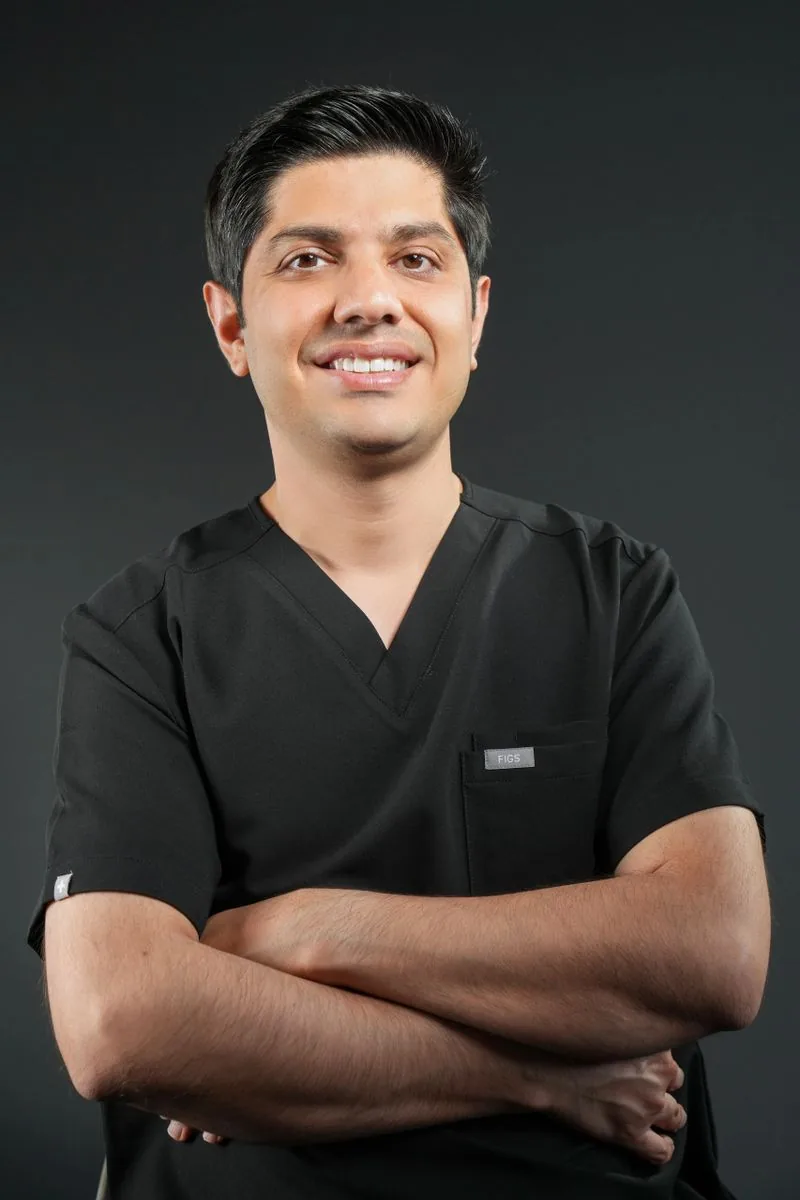
Written by
Ali Shafiei, RPTAli Shafiei is a Registered Physiotherapist with 10+ years of clinical experience in musculoskeletal, neurological and sports rehabilitation. North Vancouver.
This article is for general information only and does not constitute medical advice, diagnosis, or treatment. Individual presentations vary, and assessment findings and treatment plans differ from person to person. If you are experiencing severe symptoms, neurological changes (numbness, weakness, bowel or bladder changes), or a significant trauma, contact your physician or emergency services. Care at Medstar Sport Physio & Health is provided by practitioners registered with their respective British Columbia regulatory colleges.
Filed under
- achilles-tendon-rupture
- return-to-sport
- post-surgical-rehab
- walking-boot
- north-vancouver