Ankle Ligament Reconstruction: What Rehab Looks Like After Surgery
Surgery repairs the ligament. It does not rebuild the balance and control the ankle needs to trust it again. That work happens in a structured rehab program after the cast comes off.
BY AMIR AHMADI, PHD
Surgery repairs a stretched ligament. It does not rebuild the balance and quick protective reactions the ankle needs to trust that repair on a trail or a basketball court. That work happens afterward, in a structured rehab program.
After lateral ankle ligament reconstruction, most published protocols keep the ankle protected in partial weight-bearing for about the first 3 weeks, then progress weight-bearing, strengthening, and proprioception training from around week 4, with return to sport generally not before 8 weeks. At Medstar Sport Physio in North Vancouver, we follow the surgeon's specific protocol and add the balance and control training the ankle needs, since the surgery restores ligament tension but not the joint's sense of position on its own.
Why this surgery gets considered at all
Most ankle sprains and even most cases of chronic ankle instability, the pattern where an ankle keeps giving way long after the original injury, improve with a structured balance and strengthening program rather than surgery. Our post on ankle sprain rehab and balance retraining covers why that non-surgical approach works for most people: the ligament is usually intact but the control system around it, proprioception and quick muscle reactions, has not fully recovered.
Surgery enters the conversation for a smaller group: people whose ligaments show genuine mechanical looseness on examination, and whose instability has not resolved despite a properly run, sustained rehabilitation program. Lateral ankle ligament reconstruction, most often a modified Brostrom procedure, tightens and reattaches those stretched ligaments directly.
What the surgery actually does
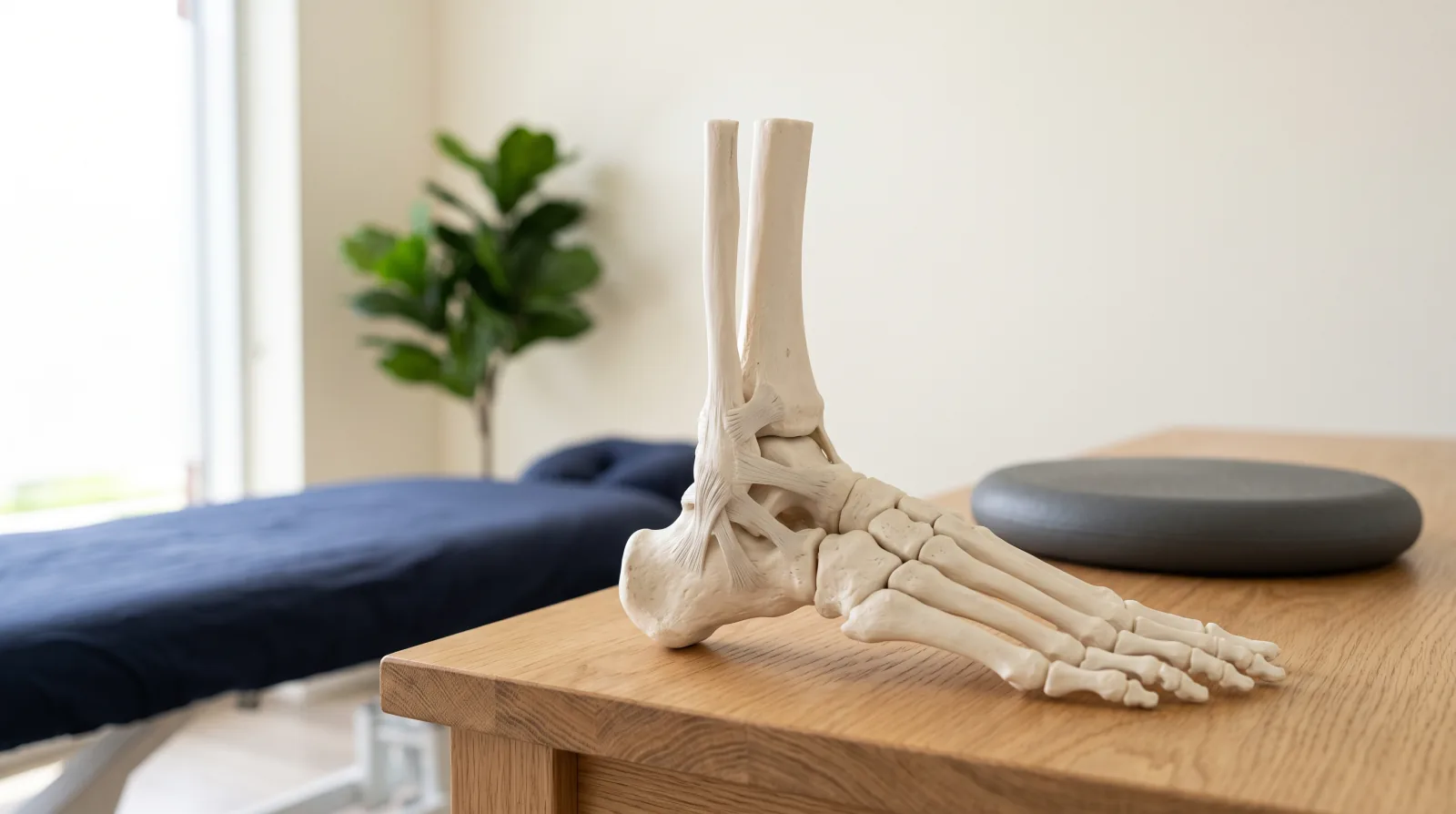
A modified Brostrom repair reattaches the two main ligaments on the outside of the ankle, the anterior talofibular and calcaneofibular ligaments, back to their original bone attachment points. Many current approaches add a suture-tape augmentation, a strong synthetic tape that reinforces the repair while the biological tissue heals, giving the joint extra protection during the early recovery period.
The procedure addresses the mechanical problem directly: a ligament that has stretched out over years of repeated sprains gets shortened and re-tensioned. What the procedure does not directly address is the second half of chronic instability, the loss of proprioception and the slowed protective reflexes that developed alongside the loose ligament. That part is rehab's job.
The phase most people underestimate: protected weight-bearing
A published rehabilitation protocol for the modified Brostrom procedure with suture-tape augmentation describes a short-leg splint with partial weight-bearing on crutches maintained for about 3 weeks after surgery. This early phase feels frustratingly slow to people eager to get moving, but it exists for a specific reason: the reattached ligament and any augmentation need protected time to integrate with bone before they are asked to resist real load.
Pushing weight-bearing ahead of what the surgeon's protocol allows risks stressing the repair before it has healed enough to tolerate it. This is one part of recovery where following the specific timeline set by your surgical team matters more than how the ankle happens to feel on a given day, since pain and structural readiness do not always track together this early after surgery.
When strengthening and balance work start
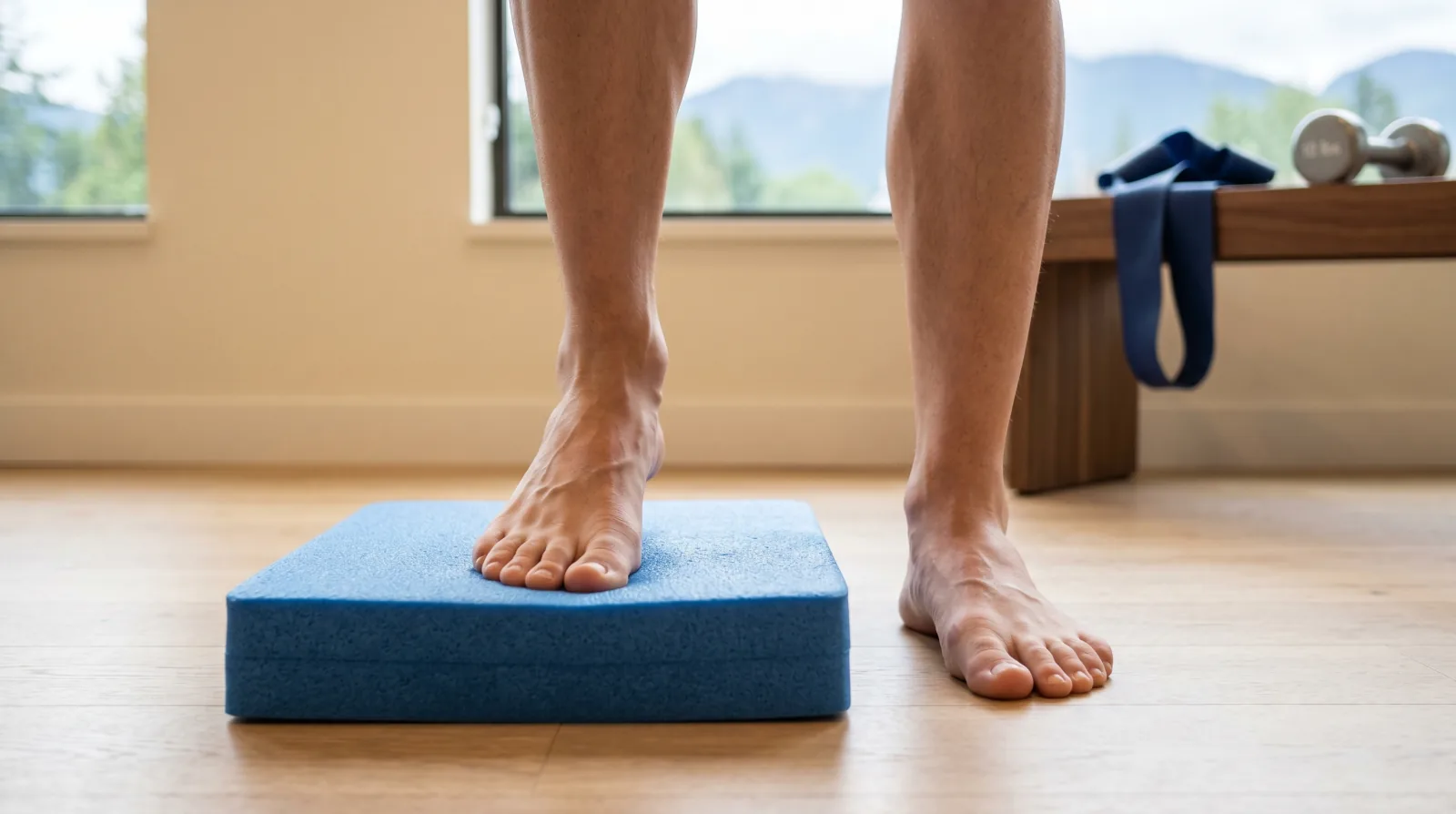
In the same published protocol, full weight-bearing, peroneal muscle strengthening, and proprioception training begin around 4 weeks after surgery. This is the phase where physiotherapy does the work surgery cannot do on its own. Peroneal strengthening rebuilds the muscles on the outside of the lower leg that actively resist the ankle rolling inward. Proprioceptive training, starting with basic single-leg standing and progressing to unstable surfaces and reactive balance challenges, retrains the nervous system's sense of where the ankle is and how fast it can respond when the joint starts to move unexpectedly.
This sequencing matters. Introducing this training only once it is tissue-safe, rather than skipping it altogether once the ligament is structurally repaired, is what closes the gap between "the surgery healed" and "the ankle feels reliable again."
Why return to sport is not a fixed date
The same protocol restricts return to sports activities until a minimum of 8 weeks after surgery, and in practice many people take longer depending on their sport's demands. That minimum exists because tissue healing, strength, and control all need to reach a working baseline before the ankle is asked to handle cutting, jumping, or uneven terrain.
Rather than counting to a specific week and resuming full activity, a criteria-based approach checks specific things: full and comfortable weight-bearing, strength in the peroneal muscles that compares reasonably to the other side, and confidence on single-leg balance and controlled hopping tasks. An ankle that hits the calendar date but has not met those functional markers is not actually ready, regardless of what the calendar says.
What the outcome data shows
Longer-term outcome studies on ligament reconstruction with suture-tape augmentation report meaningful improvement in patient-reported function scores and in objective measures of joint stability, such as reduced talar tilt on stress testing, at several years of follow-up. The same studies report a small percentage of cases with recurrent instability significant enough to need further treatment.
That gap between the typical good outcome and the smaller group who do not fully improve is not fully explained by the surgery alone. How consistently the post-operative rehab program, particularly the strengthening and proprioceptive phases, gets followed plays a real role in which outcome a given patient lands in.
What we watch for during this rehab
When someone comes to physiotherapy after this surgery, the first job is confirming exactly which protocol the surgeon has prescribed, since timelines vary with the specific technique used, whether other structures were repaired at the same time, and individual healing factors like age and tissue quality. From there, the plan follows the prescribed weight-bearing and immobilization schedule precisely in the early weeks, then layers in strengthening and proprioceptive work as soon as it is cleared.
Later stages rebuild toward the specific demands of the person's activity, whether that means cutting and pivoting for a field sport or managing uneven singletrack for a North Shore trail runner, so the ankle is tested against something close to what it will actually face before full return is cleared.
Getting the rehab right, not just the timeline
A well-done surgery and a skipped rehab program is a common way for someone to end up with a technically successful repair and an ankle that still does not feel trustworthy. The ligament work and the control work are two separate jobs, and both need to be done for the result to hold up outside the clinic.
If you are scheduled for or recovering from lateral ankle ligament reconstruction, book an assessment and we will coordinate with your surgeon's protocol and build the strengthening and balance program that gives the repair its best chance of holding under real activity.
This article is general information about ankle ligament reconstruction surgery and its rehabilitation. It is not personal medical advice. Follow your surgeon's specific post-operative protocol, and a regulated practitioner can confirm whether the patterns described apply to you.
Sources
- The Modified Broström Procedure with Suture-Tape Augmentation for Chronic Lateral Ankle Instability, PMC (2025)
- Ankle Sprain, StatPearls / NCBI Bookshelf, covering recurrent sprains and chronic ankle instability
- College of Physical Therapists of BC (CHCPBC): Verify physiotherapist registration
Common questions
Frequently asked questions.
What is lateral ankle ligament reconstruction?
It is a surgical procedure, most commonly a modified Brostrom repair, that tightens and reattaches the stretched-out ligaments on the outside of the ankle. It is considered for chronic ankle instability when a properly run rehabilitation program has not been enough to stop the ankle from giving way, and when testing shows the ligaments themselves are mechanically loose rather than just poorly controlled.
How long is the recovery after ankle ligament reconstruction?+
A published protocol for a modified Brostrom repair with suture-tape augmentation describes partial weight-bearing in a splint for about 3 weeks, followed by progressive weight-bearing, peroneal strengthening, and proprioception training from around week 4, with return to sport permitted no earlier than 8 weeks. Recovery timelines vary with the exact procedure, the surgeon's protocol, and individual healing, so your surgeon's specific instructions take priority over general figures.
When can I start walking normally after ankle surgery?+
This depends on the specific protocol your surgeon uses, since immobilization periods vary by technique and by factors like tissue quality, additional procedures performed at the same time, and age. Weight-bearing that starts too early or too aggressively can compromise how well the repaired ligament heals, so the timeline is followed as written rather than pushed ahead because the ankle feels ready sooner.
Why does balance training start so soon after ankle surgery?+
Because surgery repairs the ligament's length and tension, but it does not restore proprioception, the ankle's sense of its own position, which is usually also impaired after years of instability. Introducing balance and proprioceptive work as soon as weight-bearing and tissue healing allow gives the nervous system time to relearn that control before the ankle returns to unpredictable surfaces or sport.
Will my ankle be as strong as before after reconstruction surgery?+
Outcome studies following ligament reconstruction with suture-tape augmentation report meaningful improvements in patient-reported function and measured joint stability at several years of follow-up, though a small percentage of cases experience recurrent instability requiring further treatment. Individual outcomes depend on how much damage existed before surgery, how the rehab program is followed, and how demanding the return-to-sport goals are.
What happens if I skip physiotherapy after ankle ligament surgery?+
The surgery restores the ligament's mechanical tension, but the balance, strength, and quick protective reactions the ankle needs to trust that repair under real-world load have to be rebuilt separately through structured rehabilitation. Skipping that stage is one of the more common reasons a technically successful surgery still leaves someone with an ankle that does not feel fully reliable on uneven ground.
How is rehab after ligament reconstruction different from rehab after a regular ankle sprain?+
A sprain rehab program starts from a ligament that is intact but overstretched and irritable. Post-surgical rehab starts from a repaired ligament that needs protected time to heal before it can tolerate stress, so the early phases are more conservative and criteria-based, with weight-bearing and range of motion introduced on a stricter schedule set by the surgeon rather than by symptoms alone.
When can I return to running or sport after ankle ligament reconstruction?+
Return to sport is generally not permitted before 8 weeks in published protocols, and often later, and it depends on meeting specific functional criteria such as full weight-bearing tolerance, restored strength, and confidence on single-leg balance and hopping tasks, not simply reaching a calendar date. Your surgeon and physiotherapist set the exact criteria based on your procedure and your sport's demands.
Share this post
Copies a ready-to-publish LinkedIn post to your clipboard and opens the LinkedIn share dialog. Paste the text into the composer and publish.
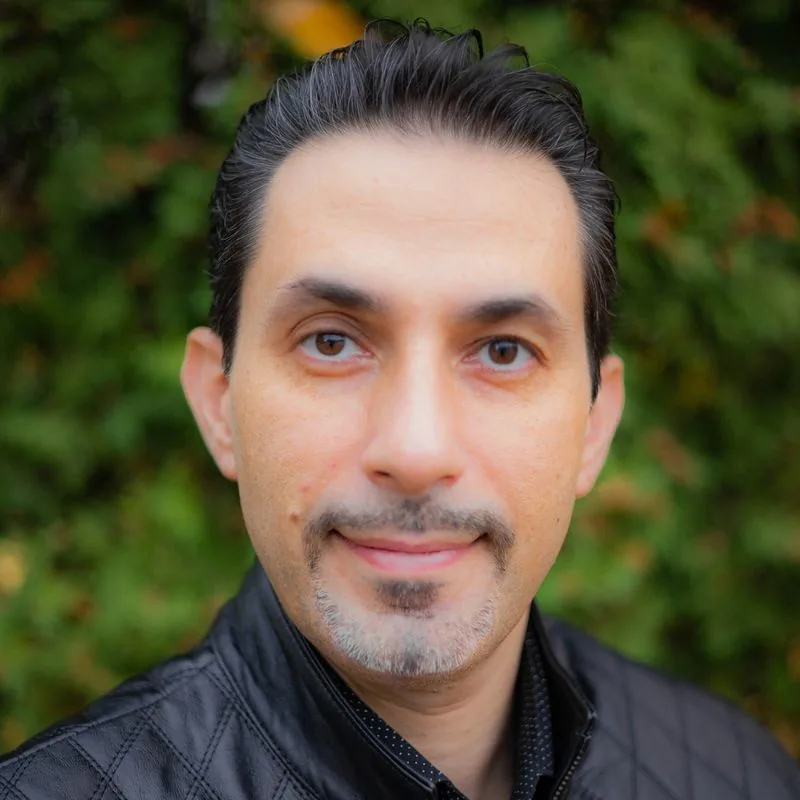
Written by
Amir Ahmadi, PhDDr. Amir Ahmadi is a Registered Physiotherapist, Certified IMS Therapist and former Associate Professor. 20+ years of clinical practice in North Vancouver.
This article is for general information only and does not constitute medical advice, diagnosis, or treatment. Individual presentations vary, and assessment findings and treatment plans differ from person to person. If you are experiencing severe symptoms, neurological changes (numbness, weakness, bowel or bladder changes), or a significant trauma, contact your physician or emergency services. Care at Medstar Sport Physio & Health is provided by practitioners registered with their respective British Columbia regulatory colleges.
Filed under
- ankle-ligament-reconstruction
- brostrom-procedure
- chronic-ankle-instability
- post-surgical-rehab
- ankle-surgery
- north-vancouver