
Tarsal Tunnel Syndrome: Why the Bottom of Your Foot Goes Numb
Heel pain gets blamed on plantar fasciitis by default. When the sole burns, tingles, or goes numb instead, the source is often a squeezed nerve at the ankle, not the fascia.
BY ALI SHAFIEI, RPT
Heel pain gets blamed on plantar fasciitis by default, and often that is the right call. When the complaint is burning, tingling, or numbness spreading across the sole of the foot instead of a sharp point under the heel, the source is often a squeezed nerve at the ankle.
Tarsal tunnel syndrome is compression of the posterior tibial nerve as it passes through a narrow space on the inside of the ankle, and it causes burning, tingling, or numbness across the sole of the foot rather than the sharp, localized heel ache typical of plantar fasciitis. At Medstar Sport Physio in North Vancouver, we test the nerve directly and check the mechanical factors that narrow the tunnel before building a plan, since the two conditions can also occur together.
What the tarsal tunnel actually is
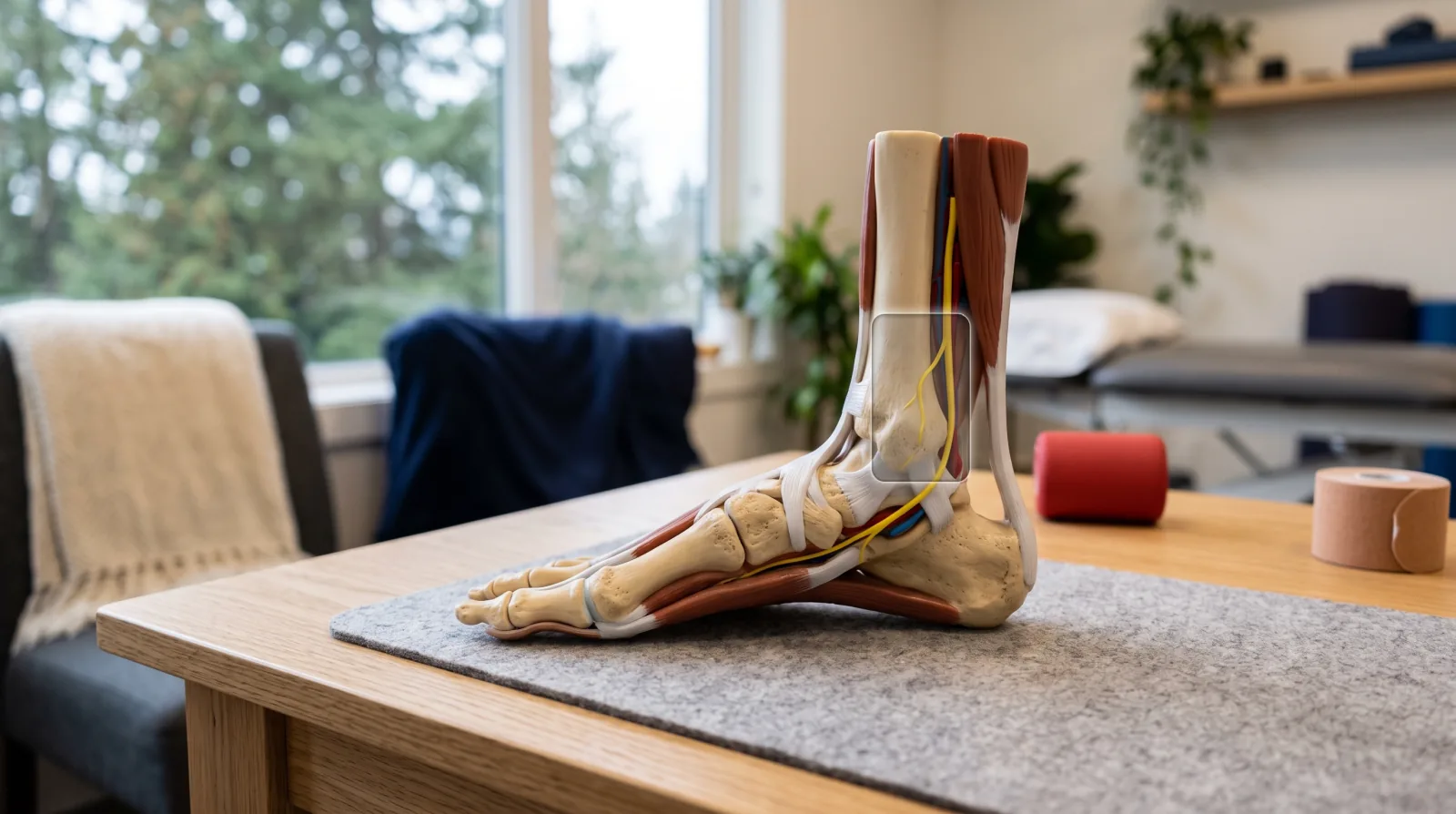
The tarsal tunnel is a narrow, firm passage on the inside of the ankle, formed by the ankle bones on one side and a band of connective tissue called the flexor retinaculum on the other. Through that tunnel runs the posterior tibial nerve, along with the posterior tibial artery and several tendons that move the foot and toes.
Inside or just past the tunnel, the posterior tibial nerve splits into medial and lateral plantar nerve branches. Those branches supply sensation to most of the sole, arch, and toes. When something narrows the tunnel or puts pressure on the nerve, the symptoms show up where those branches travel, which is why tarsal tunnel syndrome causes foot symptoms rather than ankle pain on its own, according to a comprehensive review of tarsal tunnel syndrome.
Why it gets mistaken for plantar fasciitis
Both conditions cause pain on the bottom of the foot that gets worse with time on your feet, so the two are easy to mix up from a symptom description alone. The pattern, once you know what to listen for, usually separates them.
Plantar fasciitis produces a sharp, localized ache directly under the heel, classically worst with the first few steps after getting up or after sitting for a while, then easing as the foot warms up. Tarsal tunnel syndrome behaves differently: burning, tingling, or numbness that can spread through the arch and into the toes, often worse at night or after prolonged standing, without the distinct first-steps spike that marks plantar fasciitis. StatPearls' overview of tarsal tunnel syndrome lists plantar fasciitis explicitly among the conditions that can mimic or coexist with tarsal tunnel syndrome, which is one reason a careful history and a hands-on assessment matter more than a self-diagnosis from an internet search.
What can narrow the tunnel
A range of things can compress the nerve or crowd the space it runs through. Swelling left over from an old ankle sprain is a common local cause, since scar tissue and lingering swelling can encroach on the tunnel. A flat or overpronated foot shape can put the nerve on stretch with every step. Space-occupying causes, such as a ganglion cyst, varicose veins near the ankle, or an accessory muscle, are also documented triggers.
The comprehensive review notes that a mechanical or structural cause can be identified in the large majority of cases, which is encouraging. It means the assessment is usually looking for something specific, rather than guessing at an unexplained nerve irritation.
How we test for it
The clinical tests for tarsal tunnel syndrome are straightforward but need to be done correctly. Tapping over the nerve at the inside of the ankle, a Tinel's sign, is considered positive when it reproduces tingling or shooting sensations into the sole of the foot rather than just local discomfort at the tapping site. StatPearls reports Tinel's sign sensitivity for tarsal tunnel syndrome ranging from 25 to 75 percent, with specificity between 70 and 90 percent, meaning it is a useful supporting sign but not something we rely on alone.
A second test, holding the ankle in a stretched, turned-in position for a period of time (the dorsiflexion-eversion test), has been reported as positive in around 82 percent of confirmed cases in the same review, giving it stronger diagnostic value than Tinel's sign by itself. When findings are unclear or surgery is being weighed, a physician may order nerve conduction studies, which measure how quickly and how strongly the nerve is transmitting a signal along its length.
Setting the plan around the actual cause
Once tarsal tunnel syndrome is confirmed and a likely contributing cause identified, the plan targets that cause rather than treating the foot generically. If an overpronated foot shape is stretching the nerve with every step, footwear changes or orthotics that support the arch can reduce that repetitive stretch. If swelling from an old sprain is crowding the tunnel, soft tissue work and a graded loading plan for the ankle are part of the picture.
Conservative management, including activity modification, footwear adjustment, and physiotherapy, is a reasonable first approach for most presentations. It will not resolve a case caused by a space-occupying lesion such as a cyst, which is one reason imaging gets considered when conservative care is not moving the needle after a fair trial.
When conservative care is not enough
Most people who respond to conservative treatment notice a difference within a period of weeks to a few months, though the exact timeline depends on the cause, how long symptoms have been present, and how consistently the loading changes are applied. If symptoms are not improving despite following through on the plan, or if there is a clear identifiable structural cause on imaging, surgical release of the flexor retinaculum becomes part of the conversation with a physician.
StatPearls reports surgical success rates for tarsal tunnel release ranging from 44 to 96 percent, with better outcomes tied to a clear positive Tinel's sign, a shorter duration of symptoms before surgery, and an identifiable underlying cause. That range is wide enough that surgery is not treated as an automatic next step; it is one option weighed against how the case has actually behaved.
Symptoms that need same-day medical attention
Most foot numbness and tingling traces back to a local nerve or mechanical issue that responds to assessment and a structured plan. Some patterns point somewhere more serious and need prompt medical care rather than a physiotherapy booking.
See a doctor the same day if numbness comes on suddenly, spreads up the leg, affects both feet at the same time, or is accompanied by weakness, a foot that looks pale or feels cold, or any change in bladder or bowel control. Those signs can point to a circulation problem or a nerve issue further up, at the spine, and they need to be ruled out before treating the ankle as the source.
Getting an accurate diagnosis first
Foot symptoms that spread, burn, or tingle are worth a proper assessment rather than a guess based on where plantar fasciitis usually shows up. Sorting out whether the posterior tibial nerve, the plantar fascia, or both are involved changes what actually helps.
If you have foot symptoms that do not fit the classic first-steps heel pain pattern, book an assessment and we will test the nerve directly, check for a mechanical cause, and build a plan around what we find rather than a generic heel protocol.
This article is general information about tarsal tunnel syndrome and is not personal medical advice. A regulated practitioner can confirm whether the patterns described apply to you.
Related reading
- Os trigonum syndrome: the extra ankle bone behind posterior ankle pain
- Plantar fasciitis: morning heel pain explained
Sources
- Tarsal Tunnel Syndrome: A Comprehensive Review, PMC (2025)
- Tarsal Tunnel Syndrome, StatPearls, NCBI Bookshelf
- College of Physical Therapists of BC (CHCPBC): Verify physiotherapist registration
Common questions
Frequently asked questions.
What is tarsal tunnel syndrome?
It is compression of the posterior tibial nerve as it passes through a narrow space on the inside of the ankle, called the tarsal tunnel, formed by a band of tissue called the flexor retinaculum. The nerve splits into branches that supply feeling to the sole of the foot and toes, so pressure on it can cause burning, tingling, or numbness across the bottom of the foot rather than pain limited to one spot.
How is tarsal tunnel syndrome different from plantar fasciitis?+
Plantar fasciitis causes a sharp, localized ache under the heel that is worst with the first steps in the morning. Tarsal tunnel syndrome causes burning, tingling, or numbness that can spread through the arch and toes, often worse at night or after standing, and it does not usually improve with the first-steps pattern that marks plantar fasciitis. The two can also occur together, which is why an assessment matters.
What does tarsal tunnel syndrome feel like?+
Most people describe burning, tingling, pins-and-needles, or numbness on the sole of the foot, sometimes spreading into the toes. Some notice the symptoms are worse at night or after long periods standing or walking. A few describe a sensation that the foot does not feel entirely normal, distinct from the sharp, localized ache typical of a tendon or fascia problem.
What causes tarsal tunnel syndrome?+
A number of things can narrow the tunnel or irritate the nerve inside it: swelling from an old ankle sprain, a flat or overpronated foot shape that stretches the nerve, a ganglion cyst, varicose veins near the ankle, or inflammatory conditions. In many cases the cause can be identified on assessment, though a smaller number of cases have no clear identifiable trigger.
How is tarsal tunnel syndrome diagnosed?+
Diagnosis starts with a clinical assessment: tapping over the nerve at the inside of the ankle to check for a Tinel's sign, and testing whether holding the ankle in a stretched, turned-in position reproduces symptoms. When the picture is unclear or surgery is being considered, a physician may order a nerve conduction study to measure how well the nerve is transmitting signals, and imaging to look for a structural cause like a cyst.
Can physiotherapy help tarsal tunnel syndrome?+
Physiotherapy is a reasonable first step for many presentations. It typically involves addressing the mechanical factors narrowing the tunnel, such as footwear and foot position, soft tissue work around the ankle, and a graded loading plan. If symptoms persist despite a fair trial of conservative care, or if there is a clear structural cause like a cyst, the physiotherapist coordinates with a physician about further options.
Does tarsal tunnel syndrome need surgery?+
Not always. Many cases respond to conservative management including activity changes, footwear and orthotic adjustments, and physiotherapy. Surgery to release the flexor retinaculum is considered when conservative treatment has not helped after a fair trial, or when there is a clear structural compression such as a cyst. The decision depends on the cause, how long symptoms have lasted, and response to non-surgical care.
When should numbness in the foot be checked urgently?+
See a doctor the same day if numbness comes on suddenly, spreads up the leg, affects both feet at once, or comes with weakness, a cold or pale foot, or loss of bladder or bowel control. Those patterns can point to a circulation problem or a nerve issue higher up the spine rather than a local nerve entrapment at the ankle, and they need medical assessment before physiotherapy.
Share this post
Copies a ready-to-publish LinkedIn post to your clipboard and opens the LinkedIn share dialog. Paste the text into the composer and publish.

Written by
Ali Shafiei, RPTAli Shafiei is a Registered Physiotherapist with 10+ years of clinical experience in musculoskeletal, neurological and sports rehabilitation. North Vancouver.
This article is for general information only and does not constitute medical advice, diagnosis, or treatment. Individual presentations vary, and assessment findings and treatment plans differ from person to person. If you are experiencing severe symptoms, neurological changes (numbness, weakness, bowel or bladder changes), or a significant trauma, contact your physician or emergency services. Care at Medstar Sport Physio & Health is provided by practitioners registered with their respective British Columbia regulatory colleges.
Filed under
- tarsal-tunnel-syndrome
- foot-numbness
- posterior-tibial-nerve
- plantar-fasciitis
- nerve-compression
- north-vancouver