Morning Heel Pain: What Plantar Fasciitis Is and What Actually Helps
That stabbing heel pain in your first steps of the day is the signature of plantar fasciitis. The fixes that actually work are not the ones most people try first.
BY SANAZ DAVARIAN, PHD
Almost everyone with plantar fasciitis describes the same thing: a stabbing pain in the heel with the first few steps out of bed in the morning. It is one of the most recognizable patterns in all of musculoskeletal care. Understanding why it behaves this way points toward what actually helps, and it is usually not the first thing people reach for.
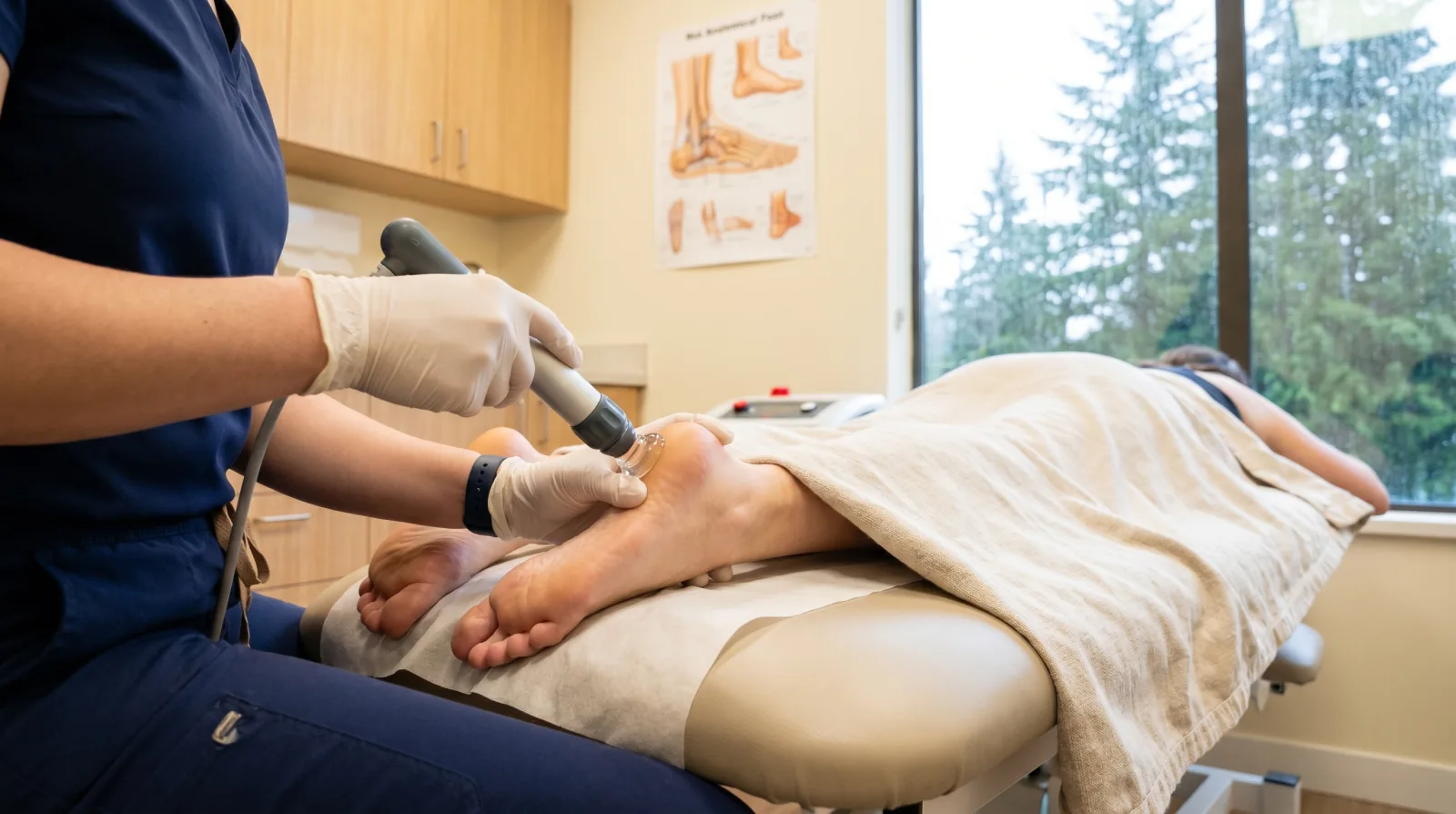
Morning heel pain, the sharp stabbing sensation with the first steps out of bed, is the hallmark of plantar fasciitis, and the most effective treatments are calf and plantar fascia loading exercises rather than rest or orthotics alone. Overnight, the plantar fascia tightens, so the first steps stretch and stress it, causing the familiar stab. Stretching helps with symptoms but often disappoints on its own because it does not build the tissue's tolerance. At Medstar Sport Physio in North Vancouver, the plan combines load management, progressive foot and calf loading, and supportive footwear to rebuild capacity over time. Most cases improve over months rather than weeks. What works best depends on how long symptoms have been present and how much load the foot is absorbing each day.
Why the morning is the worst
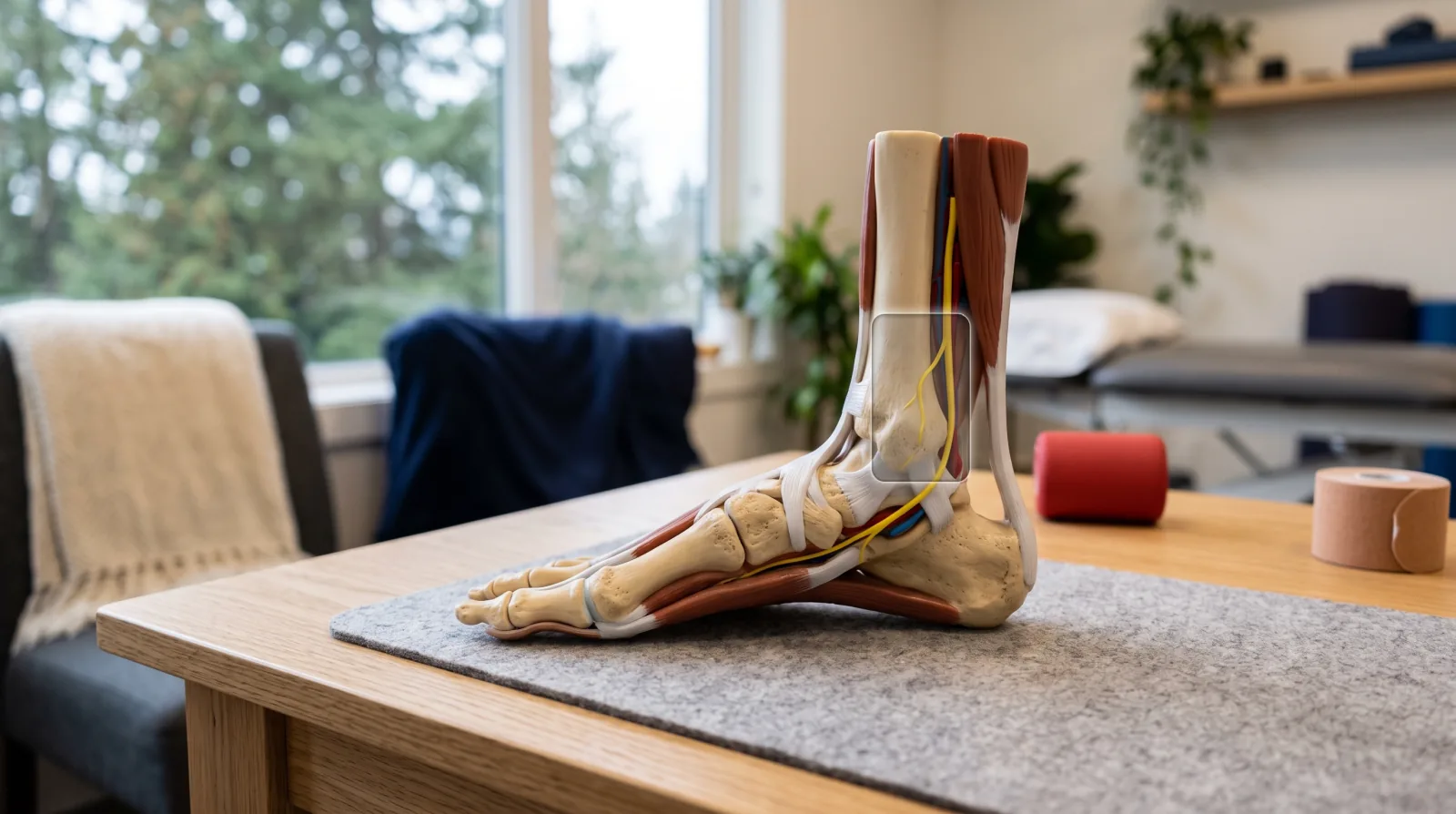
The plantar fascia is a thick band of tissue that runs along the sole of the foot, from the heel to the toes, supporting the arch. In plantar fasciitis, this tissue becomes irritated where it attaches to the heel, usually because it has been loaded faster than it could tolerate.
The morning pattern is the giveaway. Overnight, while you are off your feet, the plantar fascia tightens. The first loading steps of the day stretch and stress it, producing the sharp, stabbing pain. As you walk and the tissue warms up, the pain typically eases, then it can return after periods of sitting or at the end of a long day on your feet. This stop-start pattern is so characteristic that it is often the main thing we listen for, and it places plantar fasciitis firmly in the family of plantar fasciitis and heel problems we treat regularly.
Why stretching alone disappoints
The instinct is to stretch, and stretching the calf and the plantar fascia does help with symptoms for many people. But on its own, stretching often disappoints, because it does not build the tissue's tolerance to load. The fascia is irritated and under-conditioned for the demands being placed on it, and stretching does not address that.
The more effective approach combines stretching with progressive loading of the foot and calf, which builds the tissue's capacity, alongside footwear support and load management. Stretching earns a place in the plan, but as one element rather than the whole strategy. This mirrors what we see across tendon and soft-tissue problems, where loading, not stretching, is the active ingredient, as in our guide to Achilles tendinopathy and loading, since the calf and the plantar fascia share the same chain.
What actually works
A reliable plan for plantar fasciitis pulls together several elements:
Load management. Like most overuse problems, plantar fasciitis often follows a spike in load, more walking, more running, a job change that puts you on your feet, or a switch to less supportive footwear. Reducing the loads that overloaded the foot, while keeping you as active as comfort allows, is foundational.
Supportive footwear and, sometimes, added support. Supportive shoes, and in some cases orthotics or heel cushioning, can reduce the load on the plantar fascia and improve comfort. This helps many people, and it connects to how we think about custom orthotics versus off-the-shelf inserts. It is a useful part of the plan, not a stand-alone cure.
Progressive foot and calf loading. Building the tolerance of the foot and calf through graded loading is what rebuilds capacity, so the fascia can handle the demands of standing and walking without flaring.
Patience. This is genuinely a slow condition, and managing expectations is part of the treatment.
Beware the quick fix
Because plantar fasciitis is slow and stubborn, it attracts a long list of gadgets and treatments promising fast relief. The slow timeline is exactly what makes those promises tempting and exactly why they disappoint. There is no instant fix, and the most reliable path is the unglamorous combination above, applied consistently over time.
Consistency with the program matters more than any single treatment. People who chase a series of quick fixes often do worse than those who commit to steady load management, footwear support, and loading exercises, because the constant switching never gives the tissue the consistent, gradual loading it needs to adapt.
A realistic timeline
Plantar fasciitis is often slow to settle, improving over several months with consistent management rather than in a few weeks. Cases that have been present for a long time before treatment starts can take longer still. We pace the loading to how the foot responds, progress when each step is tolerated, and reassess against function, your morning pain, your tolerance to standing and walking, rather than expecting it to vanish overnight.
That slow course frustrates people, which is why we are upfront about it. Knowing the timeline ahead of time makes it far easier to stick with the plan rather than abandoning it for the next gadget.
When to get it assessed
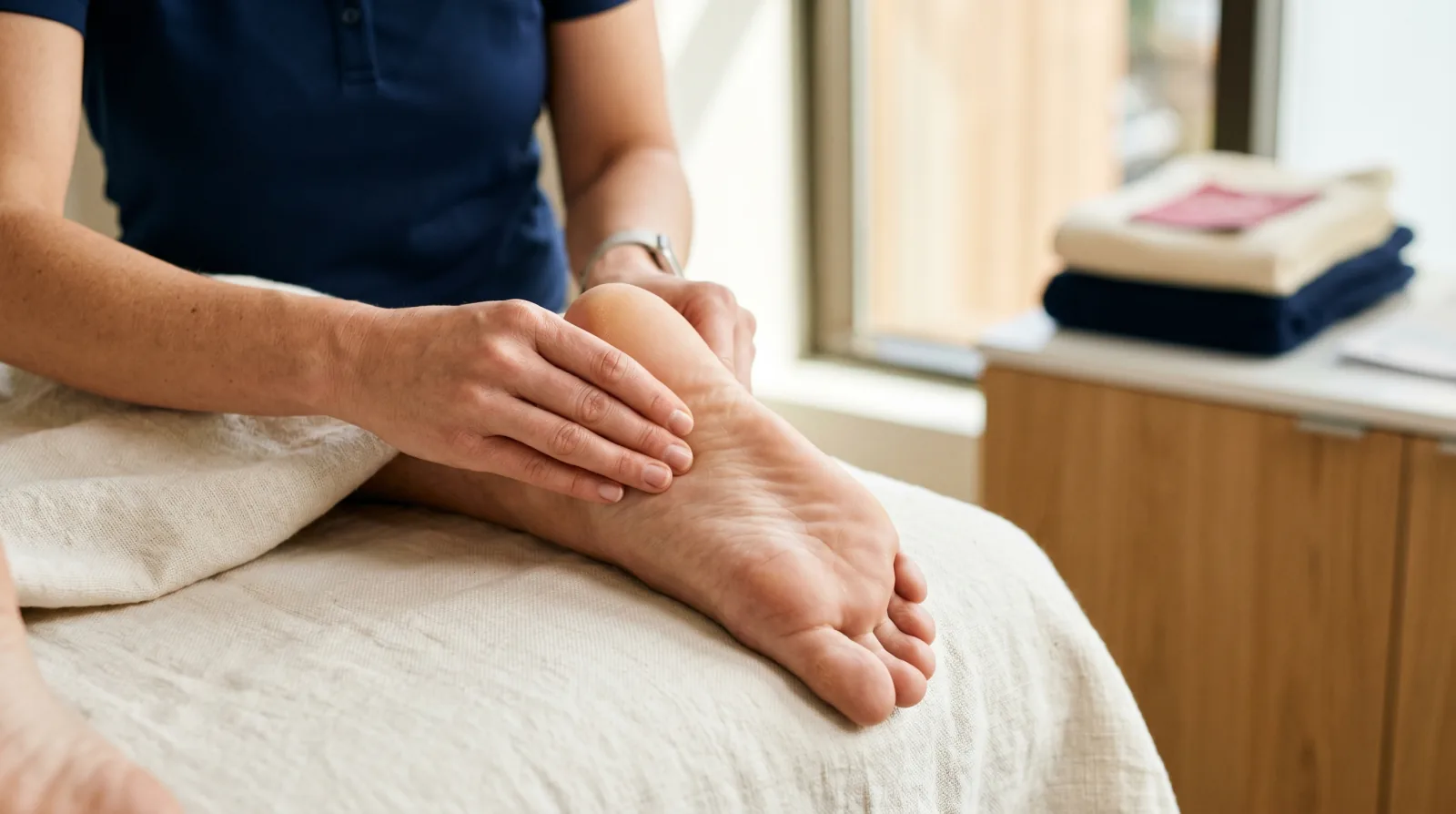
If your first steps each morning are sharp and painful in the heel, an assessment confirms plantar fasciitis, rules out other causes of heel pain, and builds the combined plan that actually settles it. Heel pain that is not improving, that comes with numbness or tingling, or that does not fit the typical morning pattern is worth assessing to be sure of the diagnosis.
Book a 30-minute appointment and we will assess your foot, review your footwear and activity, and build a load-management and loading plan to get you through your mornings without the stab in the heel.
This article is general information about plantar fasciitis. It is not personal medical advice. A regulated practitioner can confirm whether the patterns described apply to you.
Related reading
- Os trigonum syndrome: the extra ankle bone behind posterior ankle pain
- Tarsal tunnel syndrome: why the bottom of your foot goes numb
Sources
- Rathleff et al., High-load strength training improves outcome in patients with plantar fasciitis: A randomized controlled trial, Scandinavian Journal of Medicine & Science in Sports (2015)
- Martin et al., Heel Pain—Plantar Fasciitis: Revision 2014, Journal of Orthopaedic & Sports Physical Therapy (2014)
- College of Physical Therapists of BC (CPTBC)
Common questions
Frequently asked questions.
Why does my heel hurt most in the morning?
The classic feature of plantar fasciitis is sharp heel pain in the first few steps after getting out of bed or after sitting for a while. Overnight, the plantar fascia tightens, and the first loading steps stretch and stress it, producing the stabbing pain. It typically eases as you walk and warm up, then can return after rest or at the end of a long day.
Does stretching cure plantar fasciitis?+
Stretching the calf and the plantar fascia can help with symptoms, but on its own it often disappoints. The more effective approach combines stretching with progressive loading of the foot and calf, which builds the tissue's tolerance, alongside footwear support and load management. Stretching is part of the plan, not the whole of it.
What is the fastest way to fix plantar fasciitis?+
There is no instant fix, and beware of anything promising one. The most reliable approach is a combination of load management, supportive footwear, calf and foot loading exercises, and patience, as the condition is often slow to settle. Most cases improve over months rather than weeks. Consistency with the program matters more than any single treatment.
Do I need orthotics for plantar fasciitis?+
Supportive footwear and sometimes orthotics or heel cushioning can reduce the load on the plantar fascia and improve comfort, which helps many people. They are a useful part of the plan rather than a stand-alone cure. We assess your feet and footwear and advise whether added support is likely to help in your case, alongside loading and load management.
How long does plantar fasciitis take to heal?+
It is often slow, improving over several months with consistent management rather than in a few weeks. Cases that have been present for a long time can take longer. The slow timeline frustrates people and tempts them toward quick fixes that disappoint. Steady load management, loading exercises, and footwear support give the best chance of settling it.
How is plantar fasciitis different from other causes of heel pain?+
Plantar fasciitis has a specific pattern: sharp pain in the first steps of the morning that eases with walking and returns after rest. Other heel pain causes, such as a stress fracture of the heel bone, nerve irritation, or fat pad problems under the heel, tend to feel different, for example pain that worsens with activity rather than easing, or pain that is constant rather than tied to the first-steps pattern. An assessment sorts out which one fits.
What happens at a physiotherapy assessment for heel pain?+
The physiotherapist asks about the pattern of your pain, when it is worst, and what your footwear and daily activity look like, then examines the foot and calf, checks where exactly the pain sits, and rules out other causes of heel pain. From there, the plan is built around load management, footwear, and a progressive loading program matched to how irritable your foot currently is.
When does heel pain need more than the standard plantar fasciitis approach?+
See a physiotherapist sooner if the pain does not fit the typical morning pattern, if there is numbness or tingling in the foot, if the pain came on suddenly after a specific incident rather than building gradually, or if it is not improving despite consistent load management and loading exercises over a reasonable stretch of time. Those features can point to a different cause of heel pain that needs a different plan.
Share this post
Copies a ready-to-publish LinkedIn post to your clipboard and opens the LinkedIn share dialog. Paste the text into the composer and publish.

Written by
Sanaz Davarian, PhDDr. Sanaz Davarian is a Registered Physiotherapist with a PhD and 20+ years of experience. Certified IMS Therapist, former Assistant Professor of Physiotherapy. North Vancouver.
This article is for general information only and does not constitute medical advice, diagnosis, or treatment. Individual presentations vary, and assessment findings and treatment plans differ from person to person. If you are experiencing severe symptoms, neurological changes (numbness, weakness, bowel or bladder changes), or a significant trauma, contact your physician or emergency services. Care at Medstar Sport Physio & Health is provided by practitioners registered with their respective British Columbia regulatory colleges.
Filed under
- plantar-fasciitis
- heel-pain
- foot
- loading
- north-vancouver