Hip Labral Tears: What They Are, When Conservative Care Works, and What Gets Confused With Them
A torn hip labrum sounds like it must be fixed with surgery. For many people it is not. Here is what the labrum does, when conservative care works, and what gets confused with it.
BY MEDSTAR SPORT PHYSIO TEAM
A scan that reads "labral tear" sounds like it must mean surgery. For many people it does not. The labrum can tear and still let you return to full activity once the hip is strong and controlled enough to tolerate load. This post is about what the labrum does, when conservative care is worth a fair trial, and what other problems get mistaken for a torn labrum.
A hip labral tear is damage to the rim of cartilage around the edge of the hip socket, and it usually causes deep pain in the groin or front of the hip, sometimes with catching or clicking. Many tears are linked to the shape of the hip bones, a condition called femoroacetabular impingement. A torn labrum does not usually knit back together on its own, but that does not mean surgery is required. At Medstar Sport Physio in North Vancouver, many people become pain-free by building strength and control around the hip so the joint tolerates load well, even with a tear present. The goal is a hip that works, not a scan that looks perfect.
What the labrum is and what it does
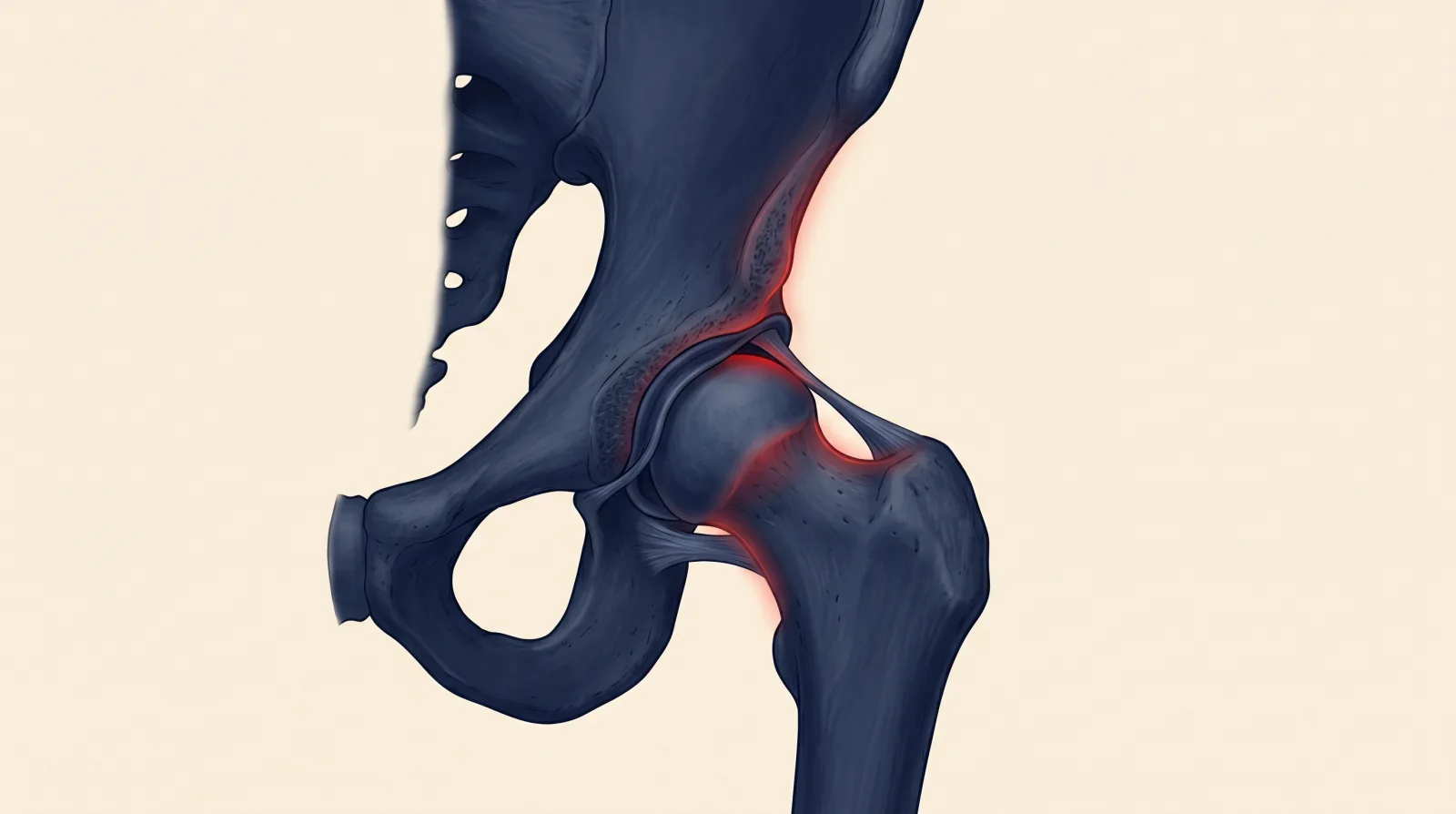
The hip is a ball-and-socket joint. The labrum is a rim of cartilage that runs around the outer edge of the socket. Its job is to deepen the socket a little, help seal the joint so it stays lubricated, and add to the hip's stability. It is a passive structure, meaning it does not contract like a muscle. It just sits there and helps the joint work smoothly.
When the labrum tears, the seal and the stability it provides are reduced. That is why a labral tear can produce deep pain in the groin or front of the hip, and sometimes a sense that the hip catches, clicks, or feels unreliable in certain positions. The pain tends to show up with deep hip bending: deep squats, long periods of sitting, getting in and out of a car, and pivoting on a loaded leg.
One important fact shapes the whole conversation. The labrum has a limited blood supply, especially in its inner part, so a tear does not usually heal back together the way a muscle strain does. People hear that and jump to surgery. But a hip can work well and feel fine even with a tear present, which is why the tissue not healing is not the same thing as needing an operation.
Why the labrum and hip bone shape go together
Labral tears rarely happen in isolation. They are often tied to the shape of the hip bones, a condition called femoroacetabular impingement, or FAI. In FAI, extra bone on the ball or the socket, or both, causes the two surfaces to pinch together in deep hip positions. Over time that repeated pinching can irritate the labrum and contribute to a tear.
This is why a labral tear and FAI are usually discussed together. The bone shape sets up the mechanical problem, and the labrum is the tissue that takes the damage. If you want the wider picture of the bone-shape side of this, including the conservative-versus-surgery decision for the impingement itself, our post on hip impingement (FAI) and when to consider surgery covers that ground. This post stays focused on the labrum and the tear itself.
When conservative care works
The idea that a torn labrum must be repaired surgically is common, but the evidence supports trying good rehabilitation first for many people. In the UK FASHIoN trial, published in the Lancet in 2018, 348 people with this kind of hip pain were split between arthroscopic surgery and a physiotherapist-led program. Both groups improved their hip-related quality of life. Surgery had an edge on the main outcome measure, but many people in the conservative group did well without an operation.
Conservative care works by changing what the hip can tolerate rather than by fixing the tear. The plan builds strength in the muscles around the hip and pelvis, improves how you control the hip and trunk during movement, and reshapes load away from the deep positions that provoke the pinching and the pain. As the hip gets stronger and better controlled, it handles load without irritating the labrum, and the pain settles.
That is why a fair trial of rehabilitation is a reasonable starting point for many people with a labral tear, especially when the hip is not badly damaged and the symptoms are manageable. Surgery stays on the table if a well-run program does not give enough relief over a sensible period.
What a rehabilitation plan looks like
A good plan is not a generic sheet of hip exercises. It starts by working out how irritable the hip is and which positions flare it. From there it usually builds along a few lines.
Strength around the hip and pelvis. The muscles that control the hip, especially the glutes and deep hip stabilisers, are built up so the joint has more active support and relies less on the passive labrum.
Movement control. How you squat, hinge, and load the leg gets attention, because small changes in control can take a lot of stress off the front of the hip.
Load management. The positions and volumes that provoke the pinching are reduced in the early weeks and reintroduced gradually as tolerance improves, rather than avoided forever.
Return to your specific demands. For a hockey player, a dancer, or someone who squats heavy, the later stages rebuild the exact positions and loads they need, so the hip is ready for the real thing.
What gets mistaken for a labral tear
Deep hip and groin pain gets blamed on the labrum a lot, partly because scans so often show labral changes. But not every hip pain is a labral problem, and getting this wrong sends the plan in the wrong direction.
The most common mix-up is with pain on the outer side of the hip. A labral tear usually causes deep pain in the groin or front of the hip, and people often cup the side of the hip with a C-shaped hand to show where it hurts, a pattern clinicians call the C-sign. Pain that sits over the bony point on the outer side of the hip, that is worse lying on that side at night or after long walks, is more likely coming from the gluteal tendons, not the labrum. Our post on gluteal tendinopathy and hip bursitis covers that outer-hip pattern in detail.
Hip osteoarthritis and referred pain from the lower back can also produce groin or hip symptoms. This is exactly why a scan finding on its own is not enough. The finding has to match the pattern of symptoms and the physical assessment before it drives a decision as big as surgery.
Why scans can mislead
Imaging is part of the picture for labral tears, but it needs careful reading. Labral changes and tears show up on scans of hips in people with no pain at all, which means a tear seen on an MRI does not automatically explain your symptoms. Treating the scan instead of the person is how people end up with surgery for a finding that was never the real source of their pain.
The useful order is symptoms and examination first, imaging to confirm or clarify when it will change the plan. A tear that matches your pain pattern and is limiting a hip that has not responded to good rehabilitation is a different situation from an incidental tear found while looking for something else.
When to get it assessed
If you have deep groin or front-of-hip pain that flares with deep squatting, long sits, or pivoting, and especially if the hip catches, clicks, or feels unstable, an assessment sorts out whether the labrum is the likely source and whether conservative care is worth a fair trial for you. It is worth being seen sooner if the hip locks or gives way, if the pain followed a specific injury, or if it is steadily getting worse despite sensible activity changes.
Book a 30-minute appointment and we will assess your hip, work out what is actually driving the pain, and build a strengthening and control plan that gives the joint the best chance to tolerate load, whether or not a scan shows a tear.
This article is general information about hip pain. It is not personal medical advice. A regulated practitioner can confirm whether the patterns described apply to you.
Sources
- UK FASHIoN trial: hip arthroscopy versus best conservative care for FAI (Lancet, 2018)
- Hip Pain in Adults: Evaluation and Differential Diagnosis (American Family Physician, 2021)
- Conservative treatment versus hip arthroscopy for FAI (Bone & Joint Open)
- College of Physical Therapists of BC (CPTBC)
Common questions
Frequently asked questions.
What is a hip labral tear?
The labrum is a rim of cartilage around the edge of the hip socket. It helps seal and stabilise the joint. A labral tear is damage to that rim, and it usually causes deep pain in the groin or front of the hip, sometimes with catching, clicking, or a feeling that the hip is not stable. Many tears are linked to the shape of the hip bones, a condition called femoroacetabular impingement (FAI).
Does a hip labral tear always need surgery?+
No. A torn labrum can often be managed without surgery. In the UK FASHIoN trial, published in the Lancet in 2018, both arthroscopic surgery and a physiotherapist-led program improved hip-related quality of life, and many guidelines support giving a quality conservative program a fair trial first. Surgery is considered when good rehabilitation does not provide enough relief, or when there is clear structural damage that needs it.
How is a hip labral tear different from gluteal tendinopathy?+
Location is the main clue. A labral tear usually causes deep pain in the groin or front of the hip, and people often cup the side of the hip with a C-shaped hand to show where it hurts. Gluteal tendinopathy causes pain on the outer side of the hip, over the bony point, and it is often worse lying on that side or after long walks. They are different problems, and an assessment sorts them out.
Can you heal a torn hip labrum without surgery?+
The labrum itself has a limited blood supply, so a tear does not usually knit back together on its own. But that does not mean you need surgery. Many people become pain-free and return to activity by building strength and control around the hip so the joint tolerates load well, even with a tear present. The goal is a hip that works, not a scan that looks perfect.
What activities make a hip labral tear worse?+
Deep hip bending tends to provoke it: deep squats, prolonged sitting, getting in and out of a car, and pivoting or twisting on a loaded leg. Sports with repeated deep hip movement, such as hockey, soccer, and dance, are common settings. A rehabilitation plan identifies which positions flare your hip and reshapes load around them while strength is built.
Share this post
Copies a ready-to-publish LinkedIn post to your clipboard and opens the LinkedIn share dialog. Paste the text into the composer and publish.
Written by
Medstar Sport Physio Team
Registered clinician at Medstar Sport Physio & Health, North Vancouver.
This article is for general information only and does not constitute medical advice, diagnosis, or treatment. Individual presentations vary, and assessment findings and treatment plans differ from person to person. If you are experiencing severe symptoms, neurological changes (numbness, weakness, bowel or bladder changes), or a significant trauma, contact your physician or emergency services. Care at Medstar Sport Physio & Health is provided by practitioners registered with their respective British Columbia regulatory colleges.
Filed under
- hip-labral-tear
- labrum
- hip-pain
- fai
- groin-pain
- north-vancouver