Burning Pain in the Ball of Your Foot: Morton's Neuroma or Something Else?
Pain in the ball of the foot has half a dozen possible causes that feel similar to stand in. The burning, electric one that shoots into the toes narrows it considerably.
BY MEDSTAR SPORT PHYSIO TEAM
Pain in the ball of the foot is a symptom, not a diagnosis, and the list of things that produce it is longer than most people expect.
At Medstar Sport Physio in North Vancouver, forefoot pain that burns, tingles, or sends electric sensations into the toes, often with numbness or the feeling of walking on a stone or marble, points toward Morton's neuroma, a compressive problem affecting the nerve running between the long bones of the forefoot. It occurs most commonly between the third and fourth metatarsal heads. General metatarsalgia, by contrast, tends to ache under the ball of the foot and build with time spent on your feet without the nerve symptoms. The distinction matters because it changes the plan: conservative management for a neuroma starts with wide, soft-soled, low-heeled footwear, metatarsal padding, activity modification, and physiotherapy.
Here is how the different causes of forefoot pain separate out, what a clinician checks for, and what conservative management actually involves.
What Morton's neuroma is
Despite the name, this is not a tumour. It is a compressive problem affecting the common plantar digital nerve as it passes between the metatarsal heads, the knuckle-like ends of the long bones in the forefoot.
The StatPearls clinical overview describes the most common site as between the third and fourth metatarsal heads, with symptoms of plantar forefoot pain aggravated by walking or tight footwear. The pain is characteristically burning, stabbing, or tingling, with electric sensations radiating into the toes, and some people report numbness or the sensation of walking on a stone or marble.
That last description is the one that comes up most in clinic, and it is a useful one, because it is quite specific to this problem.
Metatarsalgia is a description, not a diagnosis
Metatarsalgia simply means pain in the metatarsal region. It is a location, and it covers several different underlying problems.
Overload of the metatarsal heads themselves tends to produce an ache under the ball of the foot that builds with time on your feet and eases with rest, without the burning or electric quality. It often follows an increase in walking, running, or standing, or a change in footwear.
Plantar plate injury involves the structure supporting the joint at the base of the toe, and often comes with the toe sitting slightly differently than it used to. Stress fracture produces pain that is sharp, well localised over the bone, and typically worsening week over week rather than fluctuating. Arthritis at those joints has its own pattern, often with stiffness. Bursitis between the metatarsal heads can mimic a neuroma closely.
The StatPearls differential for a neuroma explicitly lists stress fractures, arthritis, ganglion cysts, plantar plate rupture, bursitis, fasciitis, tarsal tunnel syndrome, and peripheral neuropathy. That range is the argument for having persistent forefoot pain assessed rather than self-diagnosed from a search result.
The examination findings that point to a neuroma
Clinical examination includes palpating the affected web space to reproduce the symptoms, and web space tenderness is noted as the most sensitive clinical sign.
The Mulder click is the test most associated with this condition. The examiner compresses the forefoot from the sides while palpating the web space, and a clicking or crunching sensation may be produced. It is not present in everyone with a neuroma, and its absence does not rule the diagnosis out.
Imaging has a defined role rather than a routine one. Plain radiographs help exclude bony problems. Ultrasound and MRI can both confirm the diagnosis, typically showing a dumbbell-shaped soft-tissue lesion. Weight-bearing X-ray and high-resolution ultrasound are described as improving diagnostic accuracy by visualising nerve enlargement, fluid in the bursa between the metatarsals, and divergence of the toes.
Whether imaging changes anything depends on how clear the presentation is and whether a different result would lead to a different plan.
Footwear is not a minor detail
For a compressive nerve problem sitting between two bones, the width of the space those bones occupy matters enormously.
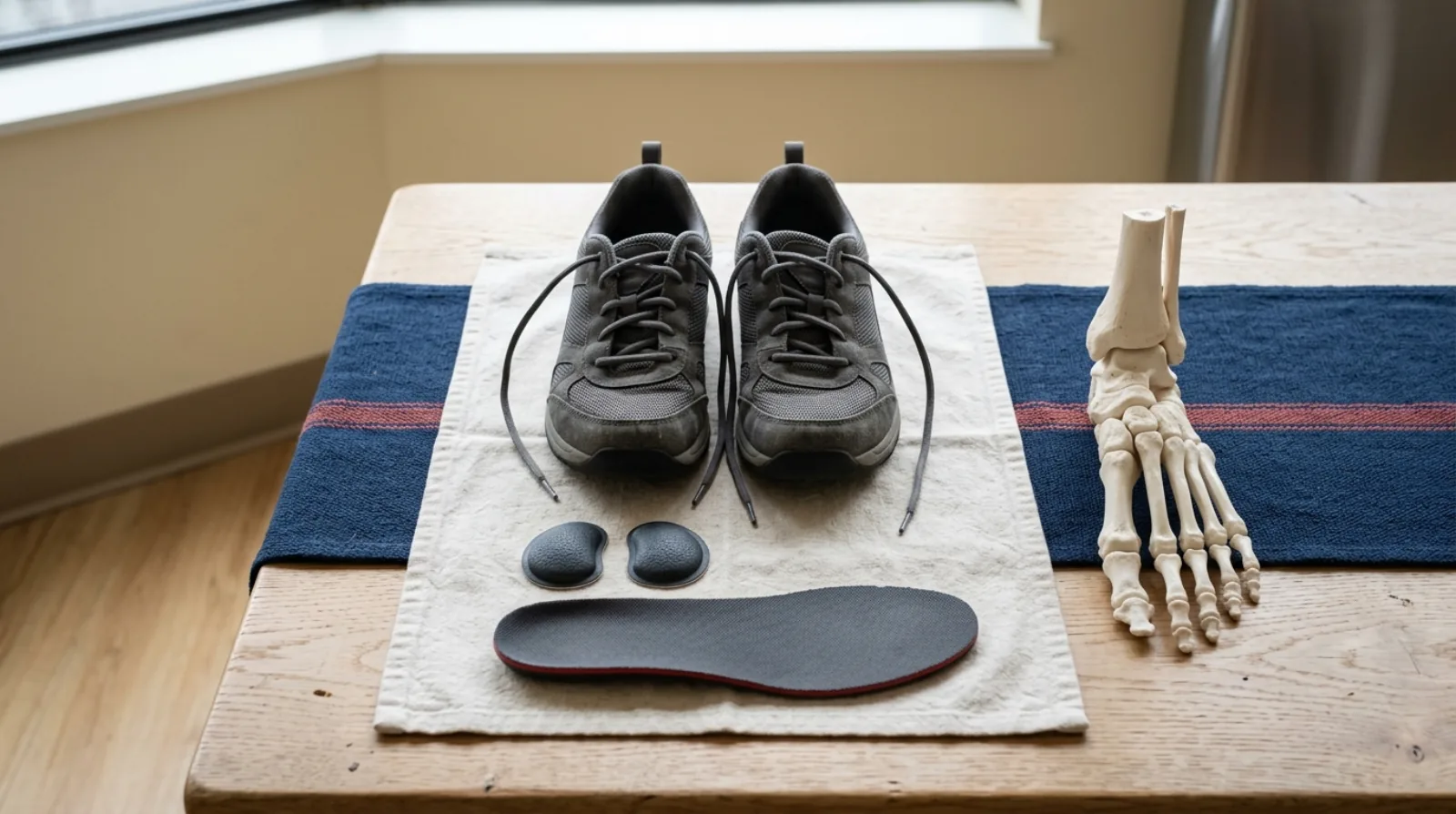
Conservative management as described in the clinical literature begins with wearing a wide, soft-soled, laced shoe with a low heel. Metatarsal padding or dome supports sit just behind the metatarsal heads and spread the load, changing the pressure passing through the affected space. Activity modification and anti-inflammatory medication may also feature, along with physiotherapy and stretching.
Plenty of people improve substantially on the footwear change alone, which is worth knowing before considering anything more invasive. A narrow toe box, a raised heel that pushes weight forward, and a stiff sole that forces the forefoot to do more work all stack the situation against you.
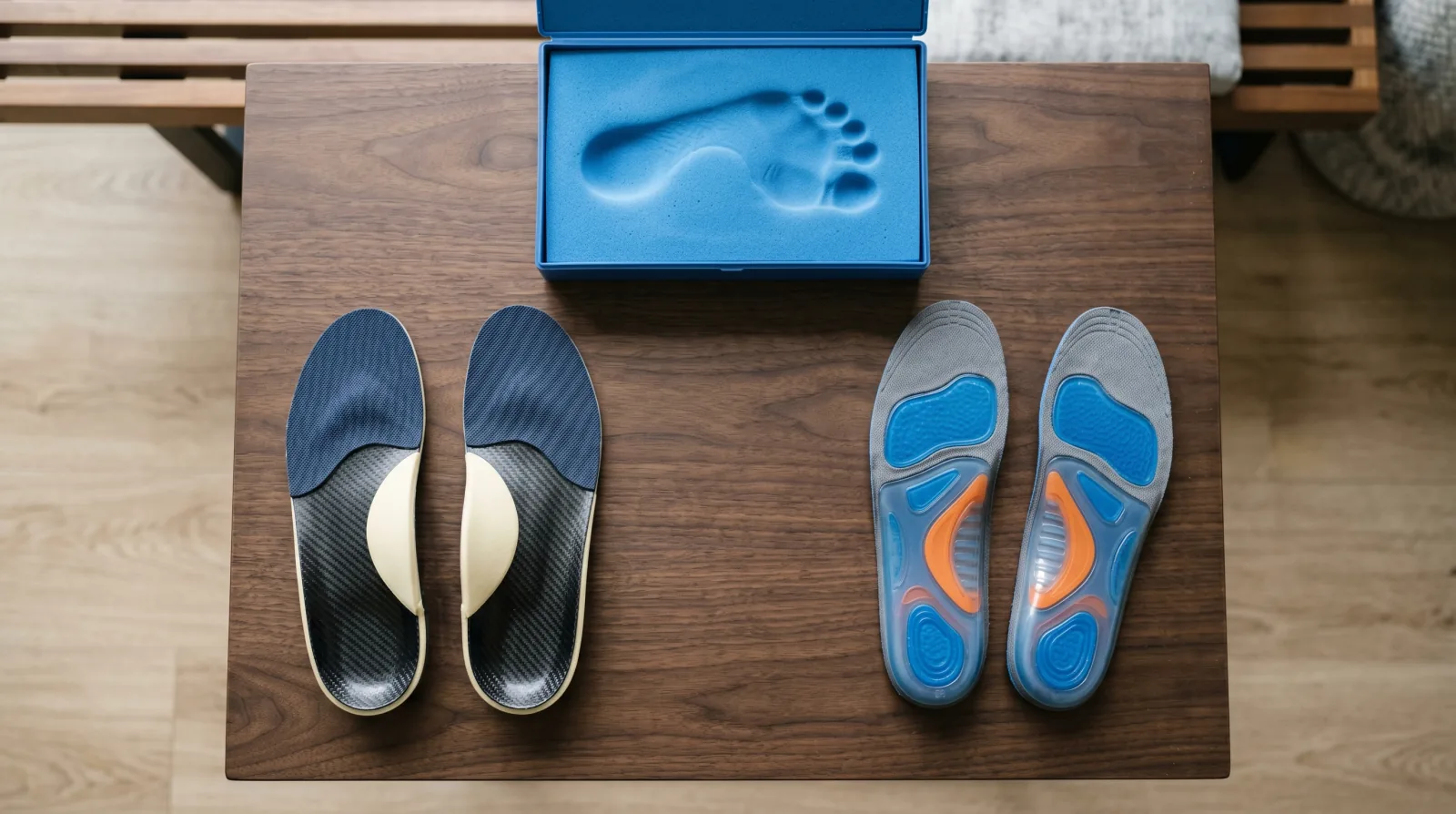
If you are weighing up insoles as part of this, our guide to custom orthotics versus off-the-shelf inserts covers when the extra cost is worth it.
Where the evidence gets thin, and why that matters
Reviews of non-surgical management for this condition repeatedly reach the same conclusion about the state of the research: there are not yet enough high-quality trials to establish a single best conservative treatment.
That is worth stating plainly rather than glossing over. The management approach is stepwise, starting with the least invasive options described above, but the evidence base does not currently support one definitive protocol that works best for everyone. In practice this means the plan is built around your specific presentation, your footwear, your activity demands, and how you respond to the first changes.
Injections and surgical options exist for cases that do not settle. Those are decisions to make with your physician, informed by how much the symptoms limit you and what conservative measures have already been tried properly.
What physiotherapy contributes
Assessment is the first contribution: separating a neuroma from the other causes on that differential list, and checking whether something further up the chain is loading the forefoot more than it should.
Beyond that, the work looks at how the foot moves and how load is distributed through it. Ankle mobility affects how much the forefoot has to absorb, which is the same relationship covered in our guide to stiff ankles and shallow squats. Calf flexibility, foot intrinsic strength, and walking or running mechanics all influence forefoot loading. Activity modification finds the level you can currently tolerate without provoking symptoms, and rebuilds from there.
In our clinic, forefoot complaints often turn up alongside a recent change: new shoes, a longer walking commute, a return to hiking after a quiet winter, or more hours standing at work. That history frequently points at the fix.
When to have it assessed
Forefoot pain that has persisted beyond a few weeks, numbness in the toes, or pain that changes how you walk are all reasonable reasons to have it looked at.
Some presentations need prompt medical assessment instead: pain following a specific injury with an inability to bear weight, sudden swelling with redness and warmth, a wound or ulcer on the foot particularly if you have diabetes, or numbness that is spreading rather than confined to two adjacent toes.
Book a 30-minute assessment and we will work out which structure is producing the symptoms, look at your footwear and your loading, and build the plan from there. You can see what we treat or reach the clinic here.
This article is general information, not personal medical advice. A regulated practitioner can confirm whether the patterns described apply to you.
Sources
- Morton Neuroma, StatPearls, NCBI Bookshelf
- Mechanical diagnosis and therapy and Morton's neuroma: a case-series, PMC
- College of Health and Care Professionals of BC public registry
Common questions
Frequently asked questions.
What does Morton's neuroma feel like?
The typical description is plantar forefoot pain that is burning, stabbing, or tingling, with electric sensations radiating into the toes. Many people report numbness or the sensation of walking on a stone or a marble. It is usually worse in tight footwear and eases when the shoe comes off.
Where in the foot does it usually occur?+
Morton's neuroma occurs most commonly between the third and fourth metatarsal heads, which are the knuckle-like ends of the long bones in the forefoot. It can also occur in the other spaces between those bones. The nerve affected is the common plantar digital nerve, which passes between the metatarsal heads and gets compressed there, so symptoms usually sit under the ball of the foot and travel into two adjacent toes.
What is the Mulder click?+
The Mulder click is a clinical test for Morton's neuroma. The examiner squeezes the forefoot from the sides while palpating the web space between the toes, and a clicking or crunching sensation may be produced. It is not present in everyone with a neuroma, and its absence does not rule the diagnosis out. Tenderness in the web space is described as the most sensitive clinical sign, so the examiner checks that as well.
Do I need a scan?+
Not always. Imaging for forefoot pain has a defined role rather than a routine one. Plain X-rays are useful mainly to rule out bone problems such as a stress fracture. Ultrasound and MRI can both confirm a Morton's neuroma when the picture is unclear, typically showing a dumbbell-shaped soft-tissue lesion. Whether a scan adds anything depends on how typical your presentation is and whether a different result would change the plan.
What can I try before considering an injection or surgery?+
Conservative management for Morton's neuroma usually starts with footwear: a wide, soft-soled, laced shoe with a low heel. Metatarsal padding or dome supports sit just behind the metatarsal heads and spread the load through the affected space. Activity modification and physiotherapy come next. Many people improve on the footwear change alone. Reviews note that high-quality trials establishing a single best conservative approach are still lacking, so the plan is built around your presentation.
What happens at a first physiotherapy visit for forefoot pain?+
The physiotherapist checks the location and quality of the pain, tests the web spaces between the metatarsal heads, and looks at your footwear and how you walk. This separates a likely neuroma from the other causes on the differential list, such as stress fracture or plantar plate injury, and shapes whether footwear changes, padding, or a loading plan comes first.
Can I keep hiking or running with Morton's neuroma?+
Often yes, with activity modification rather than a full stop. Switching to wider, softer-soled footwear, adjusting distance or terrain, and using metatarsal padding can let many people keep moving while the nerve settles. Persistent or worsening symptoms despite these changes are a reason to have the activity load reassessed.
When does forefoot pain need urgent medical attention rather than a physio assessment?+
Seek prompt medical care for pain following a specific injury with an inability to bear weight, sudden swelling with redness and warmth, a wound or ulcer on the foot, especially with diabetes, or numbness that is spreading rather than confined to two adjacent toes. These patterns fall outside a routine Morton's neuroma or metatarsalgia presentation.
Share this post
Copies a ready-to-publish LinkedIn post to your clipboard and opens the LinkedIn share dialog. Paste the text into the composer and publish.
Written by
Medstar Sport Physio Team
Registered clinician at Medstar Sport Physio & Health, North Vancouver.
This article is for general information only and does not constitute medical advice, diagnosis, or treatment. Individual presentations vary, and assessment findings and treatment plans differ from person to person. If you are experiencing severe symptoms, neurological changes (numbness, weakness, bowel or bladder changes), or a significant trauma, contact your physician or emergency services. Care at Medstar Sport Physio & Health is provided by practitioners registered with their respective British Columbia regulatory colleges.
Filed under
- mortons-neuroma
- metatarsalgia
- forefoot-pain
- footwear
- north-vancouver