Massage for Jaw Pain and Clenching: What the Trials Found
Sore jaw muscles, clicking, a tired face in the morning. Here is what the trials say massage does for jaw pain and clenching, and how it fits with dental and physiotherapy care.
BY KEVIN HERTER, RMT
Jaw pain can come from the muscles that move the jaw, from the joint itself, or from both. Sore cheeks in the morning, a tired jaw after meals, clicking, and headaches at the temples are typical signs. Here is what the trials say massage can do, and how it fits with care from a dentist or a physiotherapist.
At Medstar Sport Physio in North Vancouver, massage for jaw pain targets the chewing, temple and neck muscles, based on a 2015 review of 8 trials that found massage of the chewing muscles eased pain and improved mouth opening more than no treatment.
Where jaw pain comes from
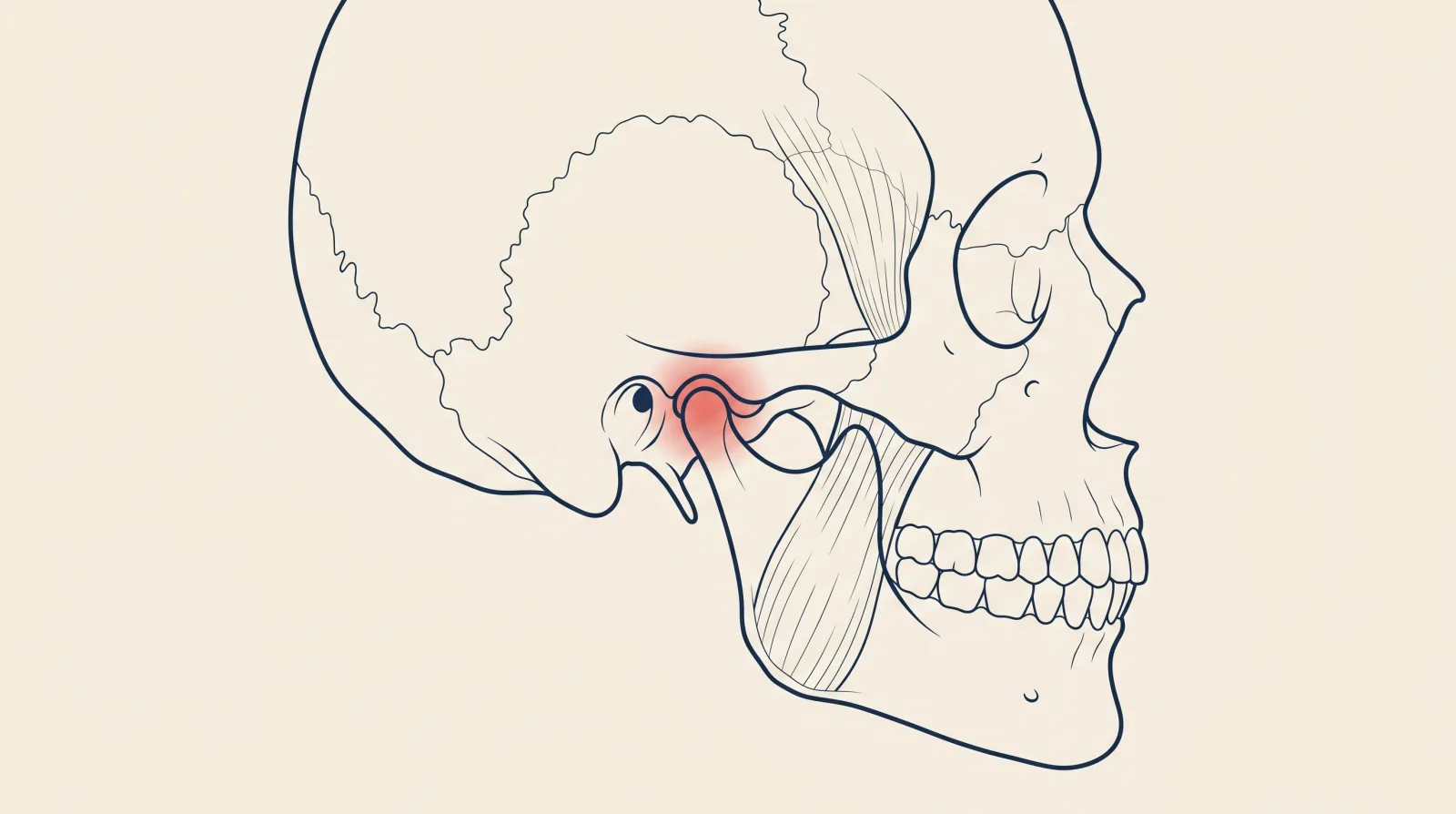
The jaw joint sits just in front of each ear. Problems with the joint and the muscles that move it are often called TMD, short for temporomandibular disorders, or simply TMJ. The pain can come from the joint, from the muscles, or from both.
The chewing muscles are strong, and they work every time you eat, talk or clench. Many people clench their teeth when they concentrate, feel stressed, or lift something heavy. Others grind their teeth at night. Either habit keeps the muscles working when they should rest, and the result can be sore cheeks, a tired jaw, pain at the temples, and headaches. Night grinders often notice the soreness first thing in the morning. Daytime clenchers often notice it at the end of a long workday or a stressful meeting.
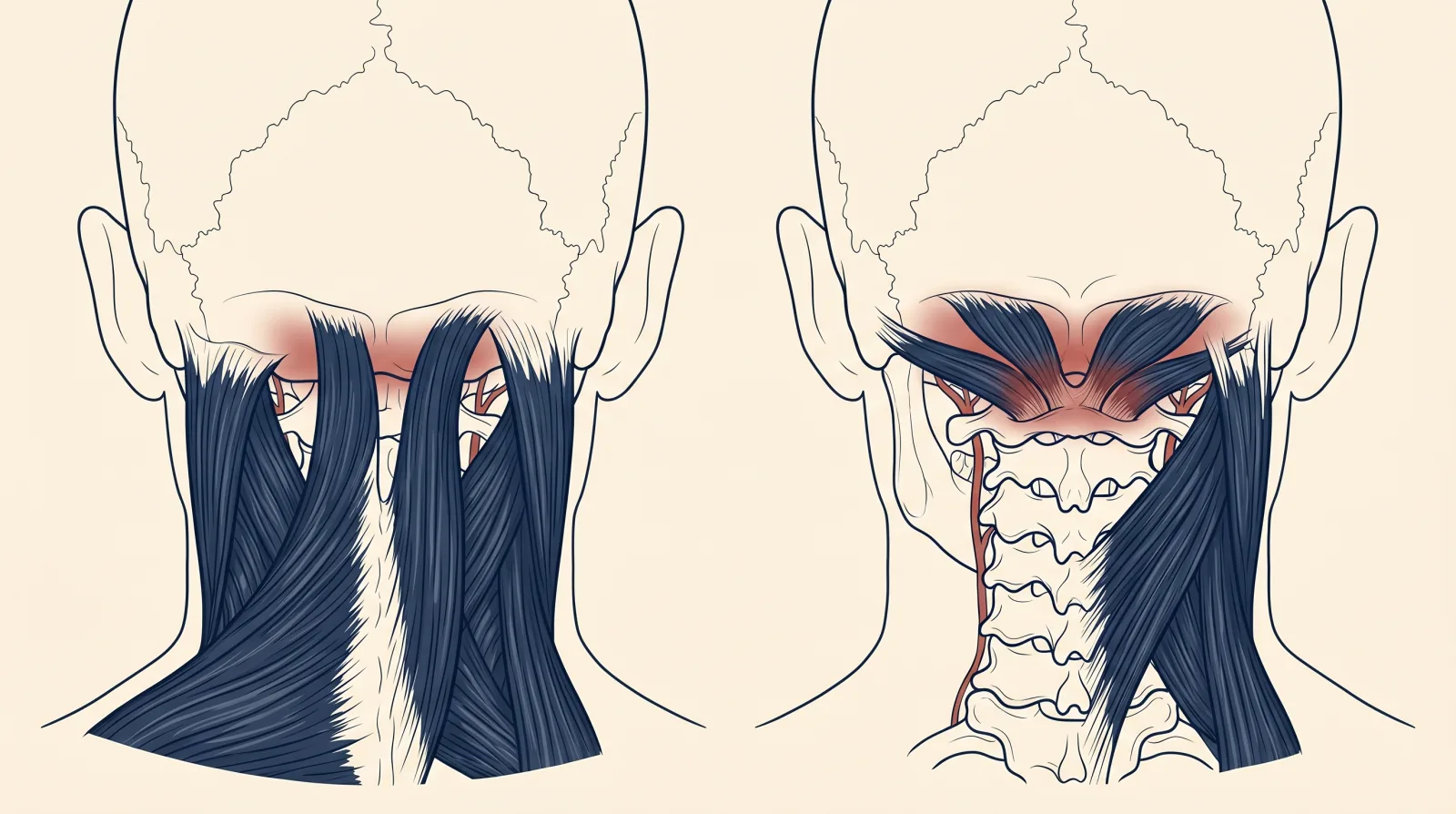
Neck and shoulder tension often comes along. When the head sits forward at a screen and the shoulders lift, the muscles under the jaw and at the base of the skull work harder too.
What the trials found
A 2015 review in the Journal of Oral Rehabilitation looked at hands-on treatment for jaw pain and limited mouth opening. It found 8 randomized trials, 7 of them of high quality. Massage and myofascial release on the chewing muscles worked better than no treatment for pain and mouth opening, with low to moderate quality evidence. In the trials that compared them, these methods worked about as well as botulinum toxin injections, with moderate quality evidence. The authors noted that the trials used different methods, which lowered how certain they could be.
A 2022 review in the European Journal of Dentistry looked more broadly at non-drug treatments for painful jaw problems, including massage, physiotherapy, laser and acupuncture, across 14 trials. It found these treatments eased pain to a moderate degree in the short term, with results that varied over the longer term.
For the headaches that often come with jaw and neck tension, a 2015 trial of 56 people found 12 sessions of neck and head massage made tender neck muscles less sensitive to pressure, and people reported more headache relief than with a fake treatment.
The plain summary: massage of the chewing and neck muscles can ease jaw pain in the short term, and it works best alongside changes to the habits that keep those muscles working.
What a jaw-focused massage covers
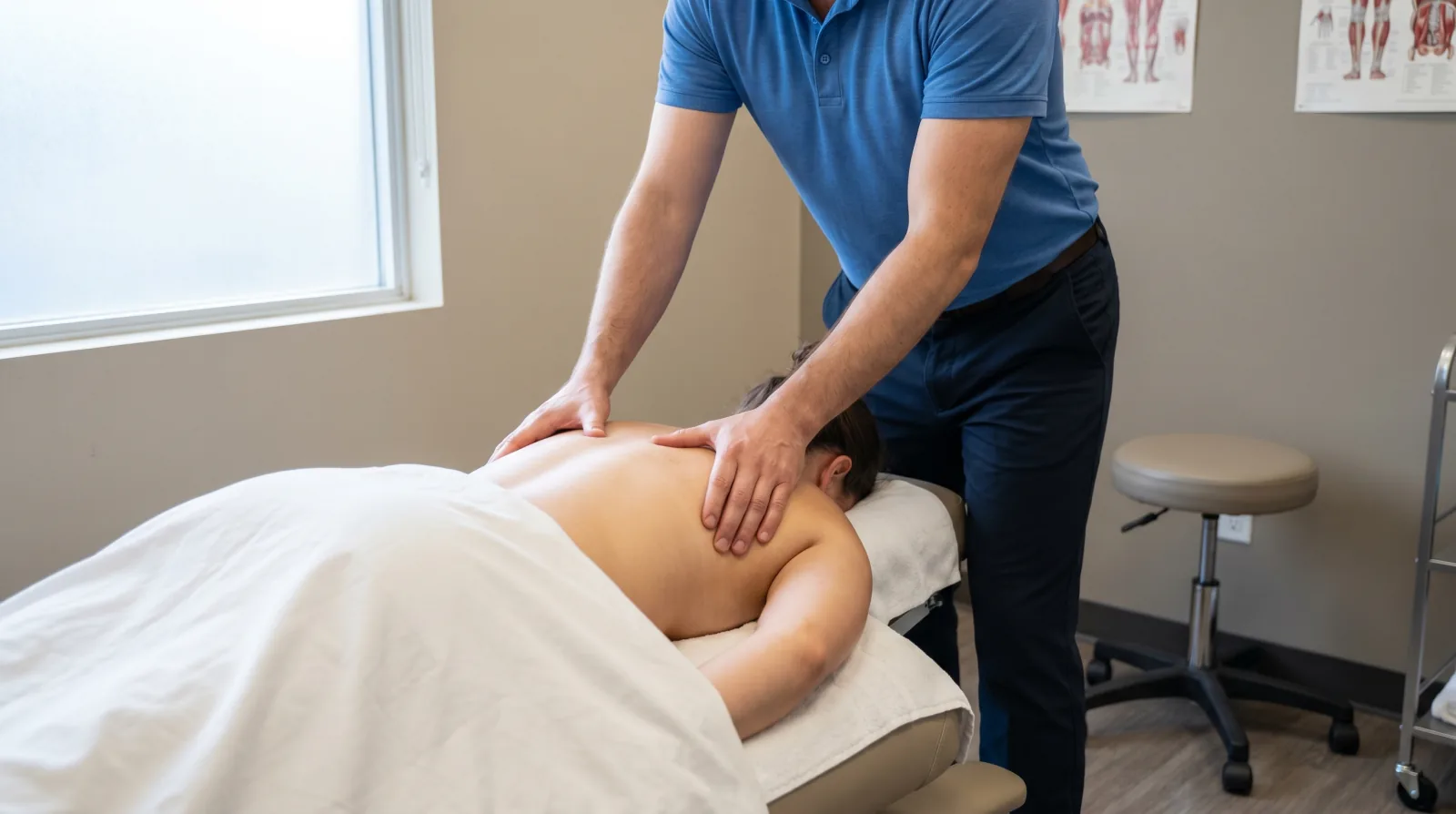
A session for jaw pain usually starts with questions about when the pain is worst, whether you clench or grind, whether your jaw clicks or locks, and whether you get headaches. The registered massage therapist may watch you open and close your mouth and check which muscles are tender.
The treatment usually covers:
- The large chewing muscle at the side of the jaw, worked from outside the mouth.
- The muscle over the temple.
- The muscles under the jaw and at the front of the neck, with light pressure.
- The neck, upper shoulders and the small muscles at the base of the skull.
Pressure on the face stays gentle to moderate, because these muscles can be tender. Face and jaw work is close and personal. The therapist will explain what they plan to do and ask before working on your face or the front of your neck. You can ask for lighter pressure, or for the therapist to skip an area, at any time. Our page on massage for headaches and neck tension covers the neck side of the session in more detail.
Habits that keep the jaw sore
Massage eases sore muscles. The habits that made them sore will bring the soreness back unless they change too:
- Daytime clenching. Notice when your teeth touch. At rest, the lips can be closed with a small gap between the teeth and the tongue resting on the roof of the mouth.
- Night grinding. A dentist can check for signs of grinding and may suggest a night guard.
- Chewing gum, biting nails or pens, and eating hard or chewy foods for long periods on a sore day.
- Holding the phone between ear and shoulder, or long hours with the head forward at a screen.
- Stress, which makes clenching more likely for many people.
Clenching in sport and training
Clenching also happens in sport and training. Many people clench hard when they lift heavy weights, push up a steep climb, or brace for contact. Hockey and rugby players wear mouthguards to protect their teeth and jaw, and some athletes notice their jaw is sore after a hard training day.
If your jaw pain is worse after training, pay attention to what your jaw does during your hardest sets or efforts. Breathing out through parted lips during the effort, instead of holding your breath with the teeth locked together, is one way to avoid clenching during the hardest part. A dentist can advise on a well-fitted mouthguard for contact sports.
How to tell if the plan is working
Before your first visit, write down a few things you can check again later:
- How sore your jaw feels when you wake up.
- How many days a week you get headaches at the temples or behind the eyes.
- Whether your jaw clicks, and whether the clicking hurts.
- How wide you can open your mouth without pain, for example how many of your own fingers fit between your front teeth.
Check them again after three or four visits. If they are improving, keep going and keep working on the habits. If they are not, a fuller assessment by a dentist or physiotherapist is the next step.
Self-massage between visits
You can ease the chewing muscles at home. With clean fingertips, find the large muscle at the side of your jaw by clenching gently and feeling it bulge, then relax your jaw and let your teeth rest apart. Press gently into the muscle and make slow small circles for a minute or two. Do the same over the temple. Gentle heat from a warm cloth before self-massage can make it more comfortable.
Stop if self-massage causes sharp pain, numbness, or a feeling that the jaw is about to lock. Your therapist can show you the right spots at your visit.
When to see a dentist or physiotherapist first
Massage suits sore, tight jaw muscles. Some signs point to a problem that needs another kind of care first:
- Tooth pain, a cracked tooth, or a bite that feels different. See a dentist.
- A jaw that locks, catches, or will not open fully. See a dentist or a physiotherapist who treats the jaw.
- Clicking with pain that is getting worse.
- Jaw pain after a blow to the face.
A physiotherapist can assess the jaw joint and the neck and give jaw exercises. Our TMJ and jaw pain page and the post on physiotherapy for jaw pain explain that side of care. Massage can run alongside, with notes shared with your consent.
Emergencies
Jaw pain can be a sign of a heart attack, especially when it comes with chest pain or pressure, shortness of breath, sweating or nausea. Call 911 or go to Lions Gate Hospital emergency right away. Also get urgent care for a jaw locked open or shut, facial swelling with fever, or jaw pain after an injury to the face.
Jaw pain after a car crash
A car crash can strain the jaw, either from a blow or from the sudden movement of the head and neck. In BC, ICBC pre-approves 12 registered massage therapy treatments in the first 12 weeks after a crash, with no referral. Our ICBC guide to the jaw and TMJ after a crash explains the assessment and treatment options.
A practical plan for a sore jaw
For jaw pain from tight muscles, a simple plan works for many people: a 60-minute first massage visit to assess the jaw, neck and shoulders, then a few weekly sessions while you work on clenching and screen habits and practise self-massage. If jaw pain, clicking or opening have not changed after three or four visits, see a dentist or a physiotherapist for a fuller look. Jaw care often involves more than one practitioner, and a good plan uses each one for the part they treat. The massage therapy guide explains booking, session lengths and direct billing.
This article is general information, not personal medical advice. A regulated practitioner can confirm whether the patterns described apply to you.
Sources
- Calixtre LB, et al. Manual therapy for the management of pain and limited range of motion in subjects with signs and symptoms of temporomandibular disorder. Journal of Oral Rehabilitation, 2015
- Argueta-Figueroa L, et al. Nonpharmacological interventions for pain in patients with temporomandibular joint disorders. European Journal of Dentistry, 2022
- Moraska AF, et al. Trigger point-focused head and neck massage for recurrent tension-type headache. Clinical Journal of Pain, 2015
- ICBC: Accessing treatment during your first 12 weeks of recovery
Common questions
Frequently asked questions.
Can massage help jaw pain?
It can help jaw pain that comes from tight, sore chewing muscles. A 2015 review of 8 trials found that massage and myofascial release on the chewing muscles worked better than no treatment for pain and mouth opening, with low to moderate quality evidence. The same review found these methods worked about as well as botulinum toxin injections in the trials that compared them.
Which muscles does a massage therapist work on for jaw pain?+
The main ones are the large chewing muscle at the side of the jaw, the muscle over the temple, and the muscles under the jaw. Many therapists also treat the neck, the upper shoulders and the small muscles at the base of the skull, because tension there often comes with jaw clenching and can send pain into the face and head.
Does massage help teeth clenching or grinding?+
Massage can ease the sore, tired muscles that clenching and grinding leave behind. It does not stop the habit. Night grinding is often managed by a dentist, for example with a night guard. Daytime clenching can be changed by noticing it and letting the teeth rest apart. Massage fits alongside both, by easing the muscle soreness.
How many massage sessions help jaw pain?+
The trials used different schedules, so there is no single number. A practical plan is weekly sessions for a few weeks while you work on clenching habits, then a review. If jaw pain, clicking or opening have not changed after three or four visits, see a dentist or a physiotherapist who treats the jaw for a fuller assessment.
Should I see a dentist, a physiotherapist or a massage therapist for TMJ?+
A dentist checks the teeth and bite and can make a night guard. A physiotherapist assesses the jaw joint and neck and gives exercises. A massage therapist treats tight chewing and neck muscles. If your jaw locks, your bite has changed, or you have tooth pain, start with a dentist. For sore, tight jaw muscles, massage is a reasonable first step.
Is jaw massage painful?+
The chewing muscles can be tender, so the first touch may feel sore. The pressure should stay at a level you can relax into. Sharp pain, numbness or a feeling that the jaw is locking are signs to stop and tell the therapist. You can ask for lighter pressure, or for the therapist to skip the face, at any point.
Can I massage my own jaw at home?+
Yes. With clean fingertips, press gently into the large muscle at the side of your jaw and the muscle over your temple, and make slow small circles for a minute or two on each side. Let your teeth rest apart while you do it. Stop if it causes sharp pain. Your therapist can show you the right spots at your visit.
When is jaw pain an emergency?+
Call 911 or go to Lions Gate Hospital emergency if jaw pain comes with chest pain or pressure, shortness of breath, sweating or nausea, because jaw pain can be a sign of a heart attack. Get urgent care for a jaw that is locked open or shut, swelling with fever, or jaw pain after a blow to the face. Do not book a massage for these.

Written by
Kevin Herter, RMTKevin Herter, RMT, is the Registered Massage Therapist at Medstar Sport Physio in North Vancouver. Sports, deep tissue and injury massage, with direct billing and ICBC.
This article is for general information only and does not constitute medical advice, diagnosis, or treatment. Individual presentations vary, and assessment findings and treatment plans differ from person to person. If you are experiencing severe symptoms, neurological changes (numbness, weakness, bowel or bladder changes), or a significant trauma, contact your physician or emergency services. Care at Medstar Sport Physio & Health is provided by practitioners registered with their respective British Columbia regulatory colleges.
Filed under
- massage-therapy
- tmj
- jaw-pain
- clenching
- headaches
- north-vancouver