
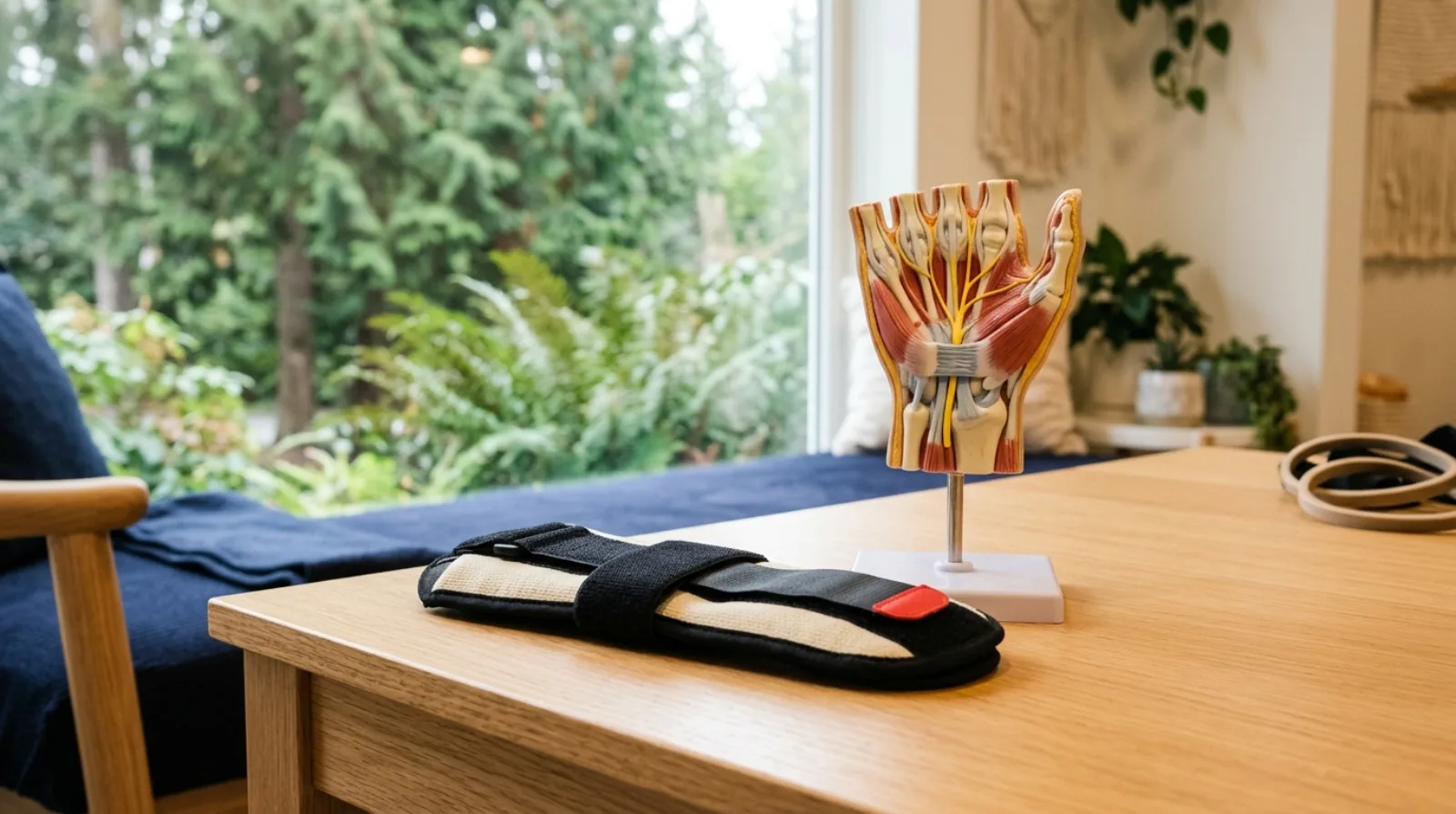
Carpal Tunnel Syndrome: What Helps Before You Think About Surgery
Waking with numb, tingling fingers is the classic sign of carpal tunnel syndrome. For many people the first steps are simple, and surgery is not the starting point.
BY MEDSTAR SPORT PHYSIO TEAM
Waking in the night with numb, tingling fingers, then shaking your hand out to make it stop, is the classic story of carpal tunnel syndrome. It is common, it is treatable, and for most people the first steps do not involve surgery. Knowing what to try, and when the warning signs mean you should not wait, makes the difference.
Carpal tunnel syndrome happens when the median nerve is compressed as it passes through the wrist, causing numbness, tingling, and sometimes pain in the thumb, index, middle, and half of the ring finger, often worse at night. For mild to moderate cases, first-line care is non-surgical: a neutral wrist splint worn at night, changing the activities and positions that provoke symptoms, and nerve gliding exercises, with a corticosteroid injection as another option. At Medstar Sport Physio in North Vancouver, we start here for most people. Surgery is considered when conservative care has not helped or when there are signs of more serious nerve involvement, such as constant numbness or wasting of the muscle at the base of the thumb.
What carpal tunnel syndrome actually is
The carpal tunnel is a narrow passage on the palm side of the wrist. The median nerve and several tendons pass through it. When the space tightens or the pressure inside rises, the median nerve gets squeezed, and that is carpal tunnel syndrome.
The median nerve supplies feeling to part of the hand, which is why the symptoms follow a specific map. It also controls some of the muscles at the base of the thumb, which is why long-standing cases can affect grip and thumb strength. Understanding that the problem is a compressed nerve, not a joint or a tendon, is what makes the treatment make sense. See our carpal tunnel syndrome condition guide for a full breakdown of causes, treatment, and what to expect.
The symptoms that point to it
The pattern is fairly recognisable. According to a clinical review of carpal tunnel syndrome, the symptoms follow the palm side of the thumb, index finger, middle finger, and the thumb-side half of the ring finger. The little finger is usually spared, which is a useful clue, because it is supplied by a different nerve.
Symptoms often flare at night. Many people wake with a numb, tingling, or aching hand and instinctively shake it out to get relief, a pattern so common it has a name, the flick sign. Daytime symptoms can come on with driving, holding a phone, or any task that keeps the wrist bent for a while. Some people notice weakness or clumsiness with small objects. If your wrist and thumb pain is tied to gripping and lifting rather than this numbness pattern, our note on thumb tendon pain in new parents covers a different mechanism worth ruling out.
Why the first steps are not surgery
For mild to moderate carpal tunnel syndrome, the sensible starting point is conservative care, and there is a good reason for that. Simple measures help a meaningful share of people, and they avoid the recovery and small risks that come with any operation.
The same review calls a neutral wrist splint the first-line treatment for mild to moderate carpal tunnel syndrome, because it is simple, low cost, and generally well tolerated. That is a strong argument for trying it before anything invasive. Surgery remains an option, and an important one, but it earns its place after conservative care has had a fair chance or when specific warning signs appear.
Splinting, and why night matters
A wrist splint is the most useful single tool for many people, and the timing matters. During sleep, most people curl the wrist into a bent position without realising it, which raises pressure on the median nerve and brings on the night symptoms. A splint worn overnight keeps the wrist straight and takes that pressure off.
The detail that matters is the position. A neutral splint, one that holds the wrist straight rather than bent back, tends to work better. Worn at night, it directly targets the time when symptoms are usually worst, which is why so many people notice fewer night wake-ups within the first weeks of using one.
Activity change and nerve gliding
Splinting works best alongside two other things.
Changing what provokes it. Long stretches with the wrist bent, heavy repetitive gripping, or sustained pressure on the base of the palm can all feed the symptoms. Adjusting how you set up at a desk, how you hold tools or a phone, and taking breaks from sustained wrist positions reduces the load on the nerve through the day. This is the same principle we apply to desk setup for neck and back pain, applied to the wrist.
Nerve gliding exercises. These are simple hand and finger movements meant to help the median nerve move smoothly through the wrist rather than getting stuck. They are easy to learn and can be done at home. The evidence for them on their own is mixed, so we use them as one part of a plan alongside splinting and activity change, not as a standalone cure. For some people they help function recover a little faster.
Where injections and surgery fit
If splinting and activity change are not enough, there are further options before and including surgery.
A corticosteroid injection into the carpal tunnel is a non-surgical option that can provide relief for a period and, in some cases, delay the need for surgery. It does not always give lasting results, but it can settle a stubborn case and buy time for other measures to work. Whether an injection suits you is a discussion with your doctor.
Surgery, called carpal tunnel release, opens the roof of the tunnel to take pressure off the nerve. It is generally considered when conservative care has not helped after a fair trial, often reported as no improvement after around six weeks to a few months, or when there are signs of more serious nerve involvement. It is an effective operation for the right person, and the decision sits with a hand surgeon.
The warning signs that change the plan
Most carpal tunnel syndrome is mild to moderate and responds to conservative care. Some signs, though, point to more serious nerve involvement and mean you should not sit on it.
Get assessed sooner rather than later if the numbness becomes constant rather than coming and going, if you are losing feeling in the fingers, or if you notice the muscle at the base of the thumb looking flatter or wasted. That thenar wasting is a sign the nerve has been compressed for a long time, and long-standing symptoms respond less well to conservative care. Weakness that is getting worse, or symptoms after a wrist injury or fracture, also deserve prompt assessment rather than a wait-and-see approach.
When to get it assessed
If your hand keeps waking you at night with numbness or tingling, or if daily tasks bring on the same symptoms, an assessment sorts out whether it is carpal tunnel syndrome and how far along it is, then sets up the right first steps. It is worth booking sooner if you have any of the warning signs above.
Book a 30-minute appointment and we will assess your hand and wrist, confirm whether the pattern fits carpal tunnel syndrome, fit and set up splinting and activity changes, and flag early if the findings point toward needing a surgical opinion.
This article is general information about carpal tunnel syndrome. It is not personal medical advice. A regulated practitioner can confirm whether the patterns described apply to you.
Sources
- Wipperman & Goerl - Carpal Tunnel Syndrome: Diagnosis and Management, American Family Physician (2016)
- Carpal Tunnel Syndrome - StatPearls, NCBI Bookshelf
- College of Physical Therapists of BC (CPTBC)
Common questions
Frequently asked questions.
What are the symptoms of carpal tunnel syndrome?
The classic symptoms are numbness, tingling, and sometimes pain in the thumb, index finger, middle finger, and the thumb side of the ring finger. Symptoms often wake people at night, and shaking the hand out can bring relief. Some people notice weakness or clumsiness gripping small objects. The little finger is usually spared, which is a useful clue that points toward the median nerve.
Can carpal tunnel syndrome be treated without surgery?+
Often yes, especially in mild to moderate cases. A neutral wrist splint worn at night is a first-line option and is simple and low cost. Changing the activities and positions that provoke symptoms helps, and nerve gliding exercises can be added. A corticosteroid injection is another non-surgical option that can give relief and delay the need for surgery. Many people improve with these steps.
Do wrist splints help carpal tunnel?+
A neutral wrist splint worn at night is considered a first-line treatment for mild to moderate carpal tunnel syndrome because it is simple, low cost, and generally well tolerated. It keeps the wrist straight overnight, which reduces pressure on the median nerve during sleep, when many people bend the wrist and bring on symptoms. A neutral splint tends to work better than one that holds the wrist bent back.
When does carpal tunnel need surgery?+
Surgery is usually considered when conservative care has not helped after a fair trial, or when there are signs of more serious nerve involvement such as constant numbness, loss of sensation, or wasting of the muscles at the base of the thumb. Long-standing symptoms and thenar muscle wasting are signs that conservative care is less likely to work. A surgeon decides this, and the operation releases pressure on the nerve.
Do nerve gliding exercises help carpal tunnel?+
Nerve gliding exercises are simple hand and finger movements meant to help the median nerve move normally through the wrist. They are easy to learn, can be done at home, and combine well with other treatments. The evidence for them on their own is mixed, so they are best used as one part of a plan alongside splinting and activity change rather than as a standalone fix.
Share this post
Copies a ready-to-publish LinkedIn post to your clipboard and opens the LinkedIn share dialog. Paste the text into the composer and publish.
Written by
Medstar Sport Physio Team
Registered clinician at Medstar Sport Physio & Health, North Vancouver.
This article is for general information only and does not constitute medical advice, diagnosis, or treatment. Individual presentations vary, and assessment findings and treatment plans differ from person to person. If you are experiencing severe symptoms, neurological changes (numbness, weakness, bowel or bladder changes), or a significant trauma, contact your physician or emergency services. Care at Medstar Sport Physio & Health is provided by practitioners registered with their respective British Columbia regulatory colleges.
Filed under
- carpal-tunnel
- median-nerve
- hand-numbness
- wrist-splint
- nerve-gliding
- north-vancouver


