
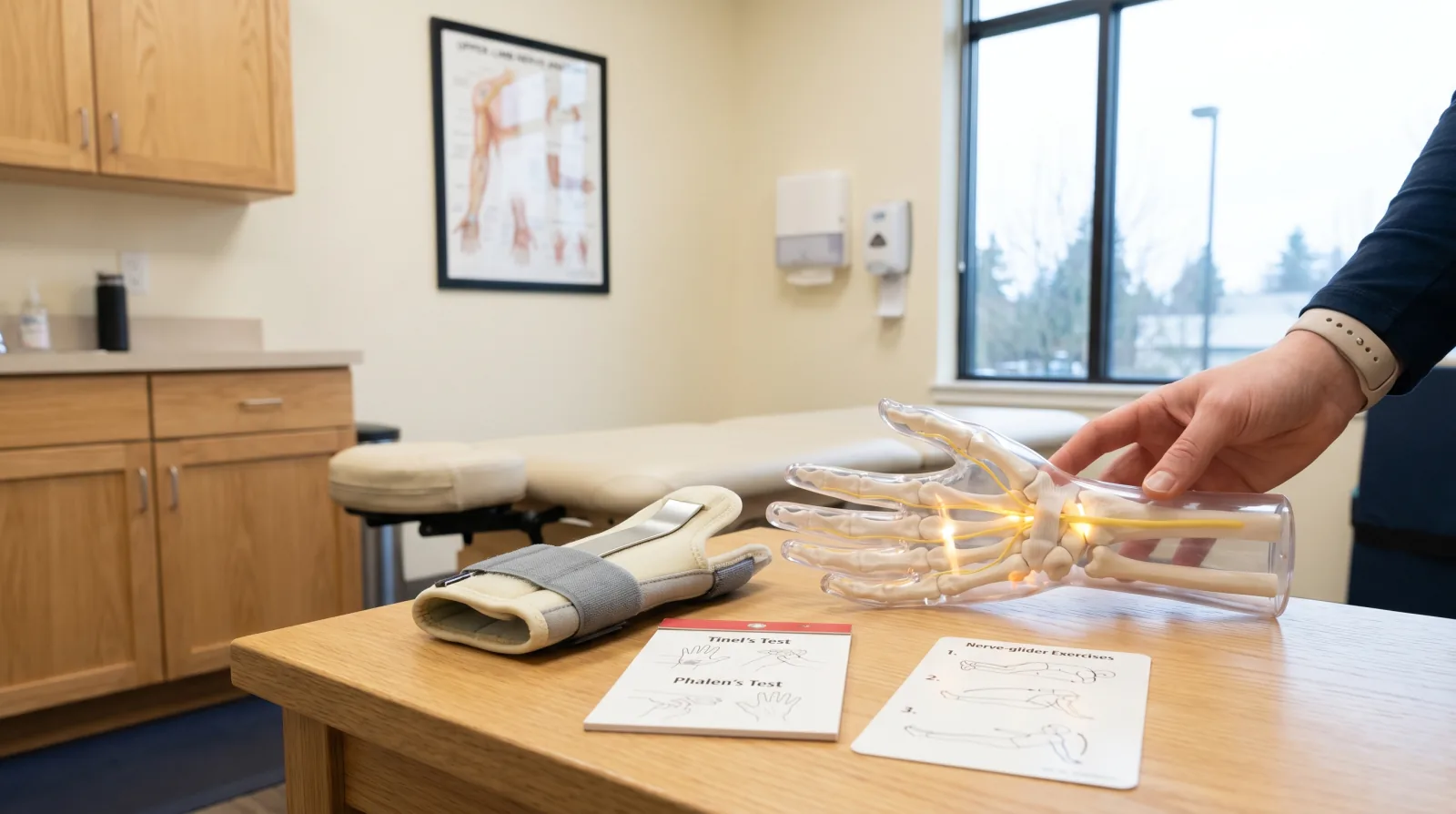
Median nerve
Carpal Tunnel Syndrome | North Vancouver
Numb thumb at 3 a.m., a wrist that won't grip a coffee cup, pins and needles into the first three fingers. We treat the carpal tunnel and the whole nerve path that feeds it.
What it is
Understanding your carpal tunnel syndrome.
Carpal tunnel syndrome is what happens when the median nerve gets compressed as it travels through a narrow space at the front of the wrist. The classic symptoms come from the nerve rather than the joint: numbness or tingling in the thumb, index, middle, and half of the ring finger, sometimes waking you in the middle of the night. Grip weakness, dropping objects, and a vague ache up the forearm are common companions. At Medstar Sport Physio in North Vancouver, we assess and treat this through a one-on-one physiotherapy appointment, confirming the pattern and building a plan from there. We see patients from across Vancouver and the North Shore, many of whom cross Lions Gate Bridge or take the SeaBus for treatment here.
It usually develops when the tunnel gets too tight for the nerve, through repetitive wrist movements, holding the wrist bent for long stretches, or tasks that press steadily on the wrist, plus swelling of the tendons that share the tunnel. It's worth knowing that carpal tunnel isn't always purely mechanical: a previous wrist injury, arthritis, pregnancy, general fluid retention, and conditions like diabetes or thyroid problems can all narrow the space or irritate the nerve. That matters because if a systemic factor is in play, the wrist work goes further when it's managed alongside your physician.
Two things are worth knowing early. First, the median nerve runs from the neck to the fingertips, and compression anywhere along that path can cause symptoms that look like carpal tunnel. A 'double-crush' pattern, meaning the neck plus the wrist, is common, and treating only the wrist when the neck is part of the problem is why some cases stall.
Second, conservative care works for a meaningful share of mild to moderate cases. Severe cases with significant thumb-muscle wasting or near-constant numbness are a different conversation and usually need a surgical consult sooner rather than later. The first assessment sorts out which category you're in.
What to expect
Mild and moderate cases often start easing within 4 to 8 weeks of a consistent program, especially when night splinting and nerve glides are layered together. Severe cases with sensory loss or thenar atrophy respond more slowly and may need surgical consult. Your physiotherapist will set the next milestone after the first assessment.
Get a plan
Not sure if we're the right fit?
Send us a quick note about what's going on. A physiotherapist will read it personally and reply with what they'd recommend. No commitment to book.
Common questions
About carpal tunnel syndrome.
Do I need nerve conduction testing before starting?
Not always. A careful clinical assessment can identify median nerve involvement and rule out the more common mimics. Nerve conduction studies are useful when symptoms are severe, when the diagnosis is uncertain, or when surgical consult is being considered. We'll tell you when the referral makes sense.
Will splinting alone fix it?+
Often not, but it's an important piece. Night splinting keeps the wrist neutral during sleep, which is when many people unconsciously bend their wrists and re-aggravate the median nerve. Combined with nerve glides, which are graded movements that get the nerve sliding through tight tissue again, plus ergonomic adjustments to keyboard angle, mouse position, and grip pattern, it's a strong first phase.
When is surgery the right call?+
Worsening sensory loss, visible wasting of the thumb-base muscles, near-constant numbness, or symptoms that haven't responded to a proper 6 to 12 week conservative trial are all reasonable reasons to ask for a surgical opinion. Severe cases with significant thumb-muscle wasting usually need a surgical consult sooner rather than later, while mild to moderate cases respond to conservative care for a meaningful share of patients. We refer when the picture warrants it.
Could this be coming from my neck?+
It can be. The median nerve runs from the neck to the fingertips, so a pinched nerve root in the lower cervical spine can produce arm and hand symptoms that overlap with carpal tunnel. This double-crush pattern, meaning the neck plus the wrist, is common, and treating only the wrist when the neck is part of the problem is why some cases stall. Part of the first assessment is mapping the whole nerve path so we treat the right level.
Do you direct-bill extended health?+
Yes. Direct billing for most major extended-health insurers, plus ICBC and WorkSafeBC, since carpal tunnel often develops from repetitive wrist movements and tasks that press steadily on the wrist, which can make it a WorkSafeBC matter for some patients. We handle the paperwork so you can focus on treatment instead of chasing claim forms.
What are the symptoms of carpal tunnel syndrome?+
Carpal tunnel syndrome typically causes numbness or tingling in the thumb, index, middle, and half of the ring finger, sometimes waking you in the middle of the night. Grip weakness, dropping objects, and a vague ache up the forearm are common companions. These symptoms come from the median nerve being compressed at the wrist, not from the joint itself, which is why the pattern of numbness rather than joint pain is the giveaway.
What does treatment for carpal tunnel syndrome involve?+
Treatment centres on median nerve glides, which are graded movements that get the nerve sliding through tight tissue rather than just stretching the wrist. That's paired with manual therapy at the wrist and forearm, a wrist splint typically worn at night, ergonomic adjustments to keyboard and mouse setup, and graded strengthening once symptoms settle. IMS and laser are added for persistent forearm tightness.
Can other health conditions cause carpal tunnel syndrome?+
Yes. Carpal tunnel isn't always purely mechanical: a previous wrist injury, arthritis, pregnancy, general fluid retention, and conditions like diabetes or thyroid problems can all narrow the tunnel or irritate the median nerve. If a systemic factor is in play, treating the wrist works better alongside your physician managing that underlying condition.

Reviewed by Amir Ahmadi, PhD, MSc PT, Registered Physiotherapist, Certified IMS Therapist, College of Physical Therapists of British Columbia (CPTBC). Last reviewed July 2026.
This page is for general information only and does not constitute medical advice, diagnosis, or treatment. Individual presentations vary, and assessment findings and treatment plans differ from person to person. If you are experiencing severe symptoms, neurological changes (numbness, weakness, bowel or bladder changes), or a significant trauma, contact your physician or emergency services. Physiotherapy at Medstar Sport Physio & Health is provided by physiotherapists registered with the College of Physical Therapists of British Columbia (CPTBC).
Related reading
- Wrist and hand injuries after a car crash: ICBC-covered rehab →
- IMS dry needling: our main approach for nerve and muscle pain in the forearm →
- Custom orthotics and splinting support for wrist and hand conditions →
- De Quervain's tenosynovitis: related wrist tendon condition →
- Trigger finger: similar finger tendon entrapment pattern →
- Carpal tunnel syndrome: what helps before you think about surgery →