
Telehealth Physiotherapy: What It Does Well, and Where In-Person Wins
Video physiotherapy matched in-person care on most measured outcomes in a review of 1,400 patients. One outcome came out differently, and it changes when to use it.
BY MEDSTAR SPORT PHYSIO TEAM
Video physiotherapy sits somewhere between a convenience and a compromise, depending on who you ask. The trials give a more specific answer than either.
At Medstar Sport Physio in North Vancouver, the useful question about telehealth physiotherapy is what a given appointment needs to achieve. A 2023 systematic review and meta-analysis in Age and Ageing pooled 11 trials and 1,400 older adults and found that video-delivered physiotherapy met a pre-set non-inferiority margin of plus or minus 0.20 against face-to-face care for quality of life, range of motion, muscle strength, walking distance, and timed mobility, with range of motion graded high certainty. Pain was the exception, which the authors attributed to the absence of touch and the in-person relationship. Video works well for follow-up sessions, exercise progression, and people who cannot easily travel. A first assessment and any hands-on treatment are better done in the room.
Here is what the trials measured, where the two formats came out level, and how to decide which one a particular appointment needs.
What the meta-analysis compared
Wicks, Dennett and Peiris published a systematic review and meta-analysis in Age and Ageing in 2023 looking at physiotherapist-led, exercise-based telerehabilitation for older adults.
It included 11 trials, 10 of them randomised, with 1,400 participants and a mean age between 65 and 74. The populations were people after total knee replacement, people after shoulder replacement, people with knee osteoarthritis, people with chronic obstructive pulmonary disease, and people with heart failure.
The design point that makes this review useful is that the authors set a non-inferiority margin in advance: plus or minus 0.20 standardised mean difference. That is a stated threshold for what would count as "as good as", set before looking at the results, rather than a conclusion reached afterwards from a non-significant P value.
Where the two formats came out level
Against face-to-face care, the pooled results were close on almost everything measured.
Quality of life came out at a standardised mean difference of 0.07, with a confidence interval from -0.17 to 0.32. Six-minute walk distance differed by 1.01 metres, with an interval from -33.83 to 35.85 metres. Timed Up and Go, a common mobility test, differed by -1.67 seconds, with an interval from -4.53 to 1.2 seconds. Knee flexion range of motion came out at 0.09, with an interval from -0.11 to 0.28, and this result was graded high certainty. Knee extensor strength came out at 0.20, with an interval from -0.09 to 0.49.
Telerehabilitation met the non-inferiority margin for quality of life, range of motion, strength, walking distance, and timed mobility. Healthcare costs favoured telerehabilitation, at -0.69 with an interval from -0.88 to -0.51.
The comparison against no intervention was clearer still. Quality of life improved with a standardised mean difference of 0.43, interval 0.12 to 0.75, and six-minute walk distance improved by 12.71 metres, interval 9.58 to 15.84 metres. Both of those intervals sit entirely above zero, which means a video-delivered programme beat receiving nothing.
The one outcome that came out differently
Pain was the exception. The pooled result was 0.09, with an interval from -0.22 to 0.41, and this outcome was also graded high certainty. The authors identified pain as the outcome where telerehabilitation did not meet their non-inferiority threshold, and they attributed that to three things missing from a video call: touch, peer support, and the therapist-patient relationship that develops in a shared room.
That is a specific and practically useful finding. It maps onto how physiotherapy visits actually differ from one another. A session spent progressing a strength programme and a session spent treating a painful, guarded joint are different appointments, and the evidence suggests the second one loses more when it moves to a screen.
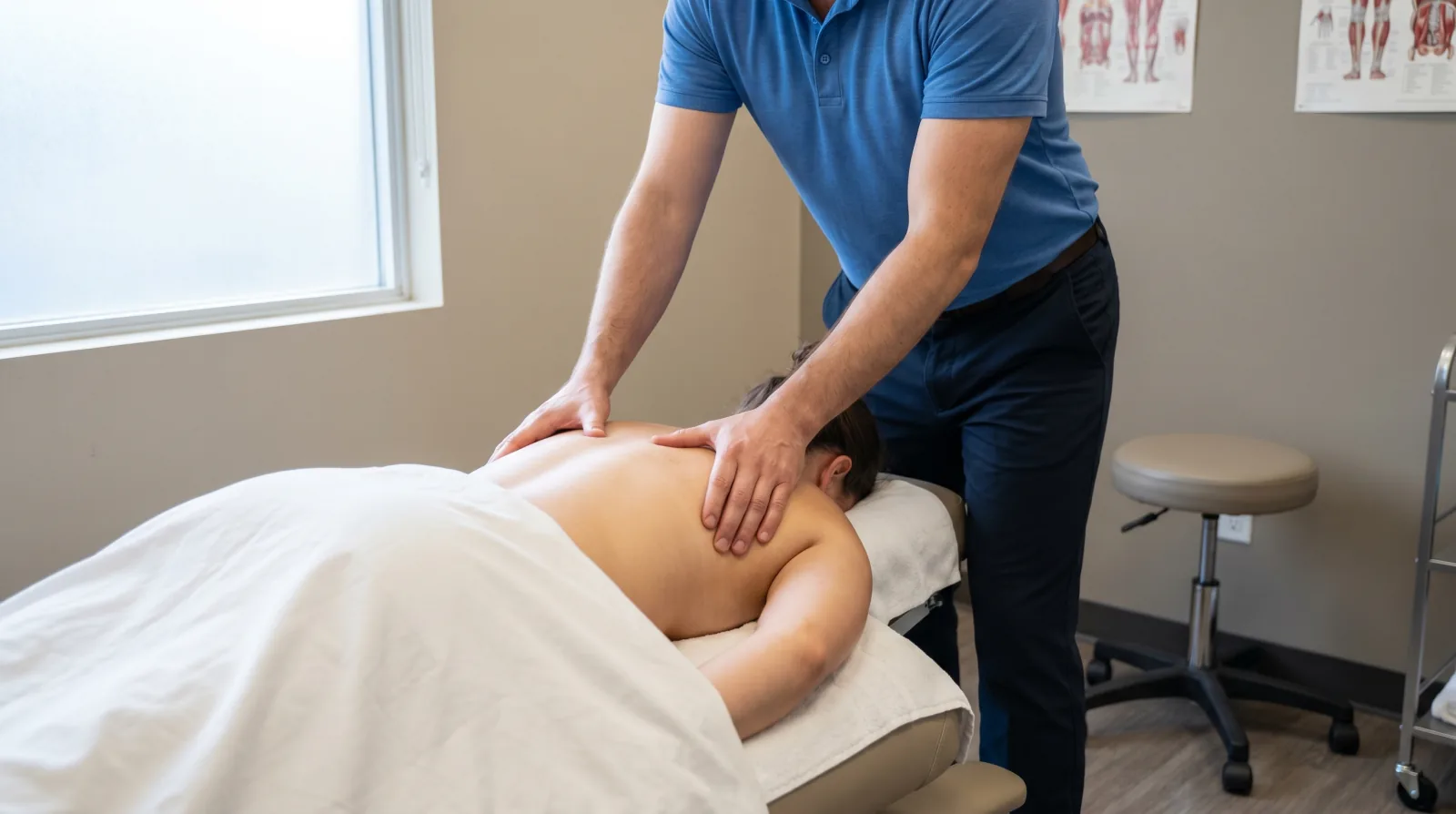
Some of what hands-on treatment does is short-term symptom relief that creates a window for movement. We cover what that treatment does and does not achieve in manual therapy and what it actually does. Whatever weight you place on it, it cannot be delivered through a camera.
Other findings worth knowing
A 2024 randomised controlled trial in The Lancet, known as the PEAK trial, tested this question in a different population. Bennell and colleagues randomised 394 Australian adults with chronic knee pain, 204 to in-person consultations and 190 to telerehabilitation, with physiotherapists drawn from 27 clinics.
At three months, 383 participants, or 97 percent, provided primary outcome data. Mean change in knee pain on a 0 to 10 scale was 2.98 with a standard deviation of 2.23 in the in-person group, and 3.14 with a standard deviation of 1.87 in the telerehabilitation group. Mean change in physical function on the WOMAC scale, scored 0 to 68, was 10.20 with a standard deviation of 11.63 in-person, and 10.75 with a standard deviation of 9.62 by video. Both groups improved by a similar amount.
Safety and adherence findings from the Age and Ageing review are also worth stating. Six trials found no differences in adverse events or falls between groups. One trial reported 24 technical difficulties, representing 12 percent of the interventions delivered. On attendance, three trials reported higher attendance in the telerehabilitation groups and two found no difference.
Higher attendance makes sense. Removing a drive, a parking search, and time away from work takes several obstacles out of the way. Attendance is a different thing from doing the exercises at home between sessions, which remains the harder problem in both formats, and the one that most affects the result.
What video sessions are genuinely good at
Progressing an exercise programme is the clearest case. Once a diagnosis is established and the plan is running, a lot of a follow-up appointment is watching movement, adjusting load or repetitions, answering questions, and setting the next block of work. A camera handles that reasonably well.
Access is the second case. Someone in a remote area, someone whose mobility makes a car trip difficult, someone recovering from surgery who should not be driving, or a person who travels for work can keep their rehabilitation running instead of pausing it. Given the review's finding that telerehabilitation clearly beat no intervention, a video session in those weeks is better than a gap.
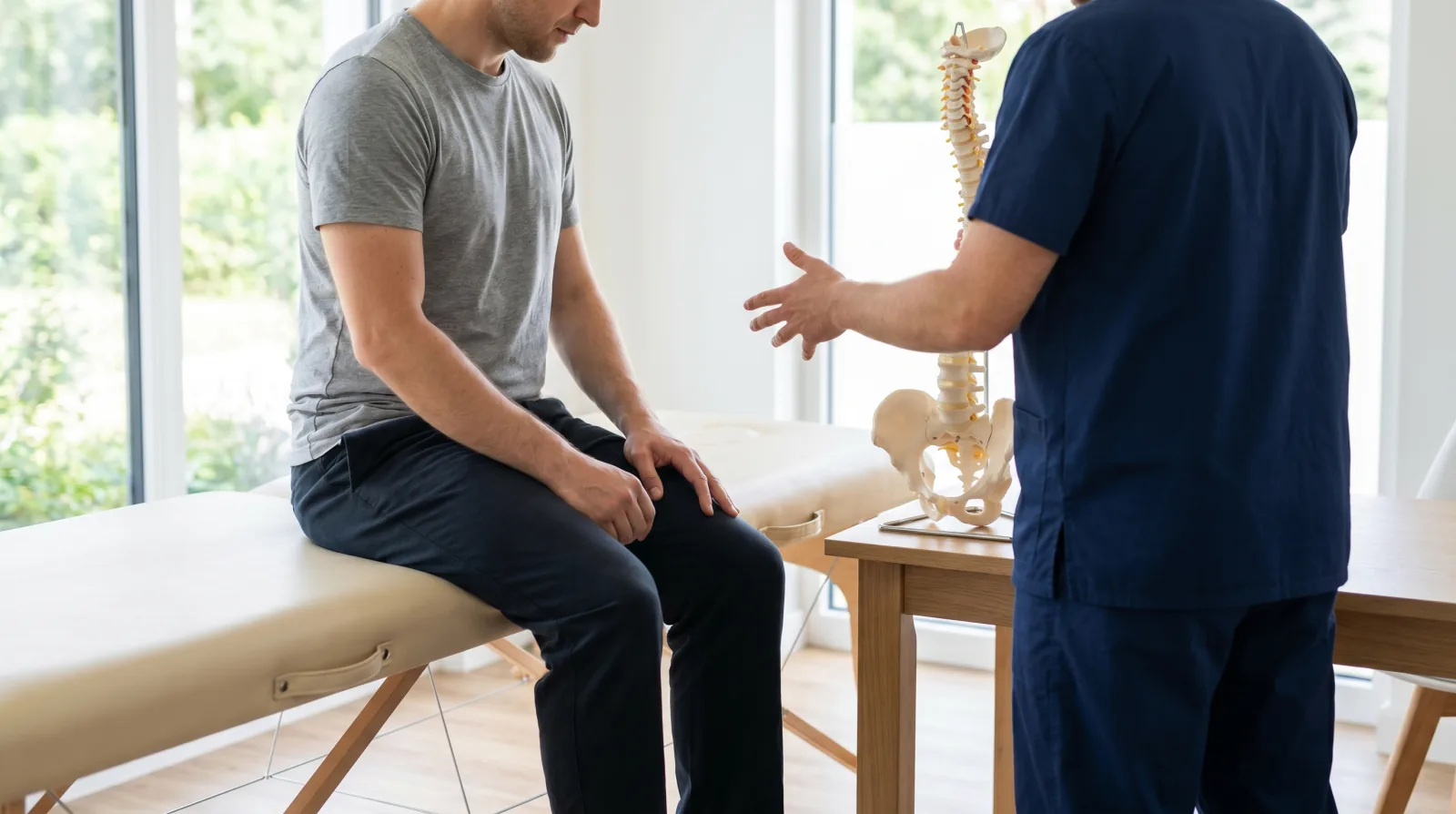
Education and reassurance also transfer well. Explaining what a diagnosis means, what to expect over the coming weeks, and which symptoms matter is a conversation, and it does not need a treatment table. Realistic expectations about the length of a course of care are part of that, which we cover in how long physiotherapy takes.
What in-person visits do that video cannot
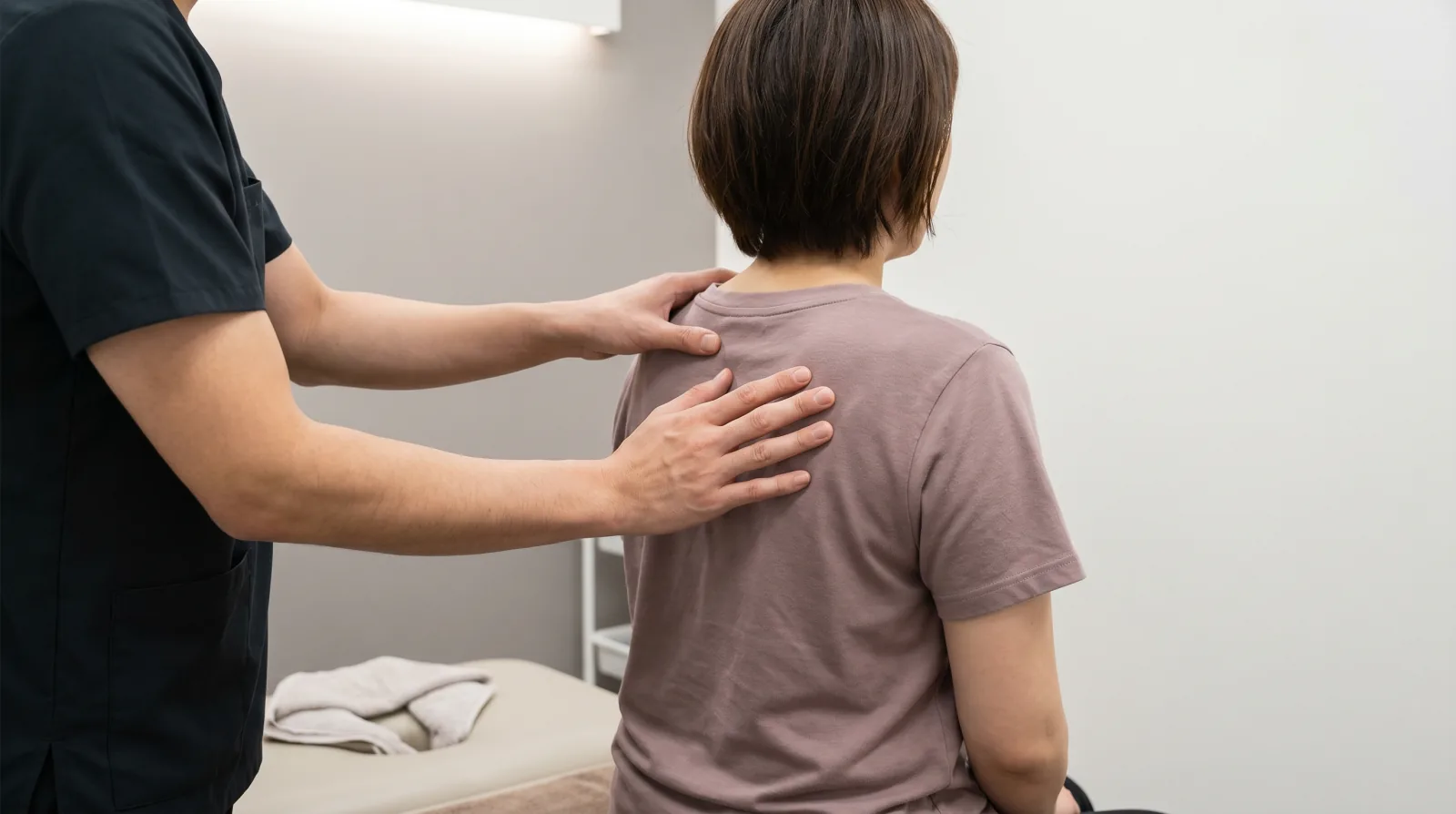
A first assessment is the strongest case for being in the room. It involves palpation, joint testing to feel how a joint moves at its end range, strength testing against resistance, neurological screening, and comparison of one side against the other. Those things are done by hand. A video call can produce a reasonable working hypothesis, and it cannot produce the same examination.
Hands-on treatment is the second. If a plan includes manual therapy, needling, or any equipment-based treatment, that appointment happens in a clinic.
The pain finding from the meta-analysis is the third. When the main purpose of a session is to reduce pain, the evidence gives in-person care an edge, and the authors' explanation for it is not something that improves with a better internet connection.
Fall risk is the fourth. Anyone whose balance means they should not exercise unsupervised needs someone in the room who can physically steady them.
We are an in-person clinic, so we have an interest in that answer. The evidence above is the same evidence either way, and the honest reading of it is that the format should follow what the appointment is for. If you are still deciding who to see in the first place, how to choose a physiotherapist in North Vancouver covers the questions worth asking.
Where the evidence runs out
The Age and Ageing review names its own limits. It was restricted to musculoskeletal and cardiopulmonary conditions, so it says nothing about neurological rehabilitation, vestibular problems, or pelvic health. Its participants had a mean age of 65 to 74, so it does not describe younger athletes.
The authors also flag possible selection bias toward technology-confident patients. People who volunteer for a trial involving video calls are likely more comfortable with the technology than average, which may make the results look better than they would be across a whole population.
When to get it looked at
New pain that you have not had assessed, pain that has not improved over several weeks of self-management, or symptoms that are changing in character are worth an in-person assessment rather than starting with a video call.
Some situations need prompt medical attention rather than any physiotherapy booking: chest pain, sudden severe headache, new weakness or numbness in a limb, loss of bladder or bowel control, or an inability to bear weight after an injury. Those are calls to your physician, or to Lions Gate Hospital if they are sudden and severe.
If you want a proper hands-on assessment to start with and a plan you can carry on with, book a 30-minute appointment. You can see what we treat or reach the clinic here.
This article is general information, not personal medical advice. A regulated practitioner can confirm whether the patterns described apply to you.
Sources
- Physiotherapist-led, exercise-based telerehabilitation for older adults improves patient and health service outcomes: a systematic review and meta-analysis (Age and Ageing, 2023)
- Telerehabilitation consultations with a physiotherapist for chronic knee pain versus in-person consultations in Australia: the PEAK non-inferiority randomised controlled trial (The Lancet, 2024)
- College of Health and Care Professionals of BC public registry
Common questions
Frequently asked questions.
Does telehealth physiotherapy actually work?
For several outcomes it performed as well as face-to-face care. A 2023 systematic review and meta-analysis in Age and Ageing pooled 11 trials and 1,400 older adults and found telerehabilitation met a pre-set non-inferiority margin of plus or minus 0.20 for quality of life, range of motion, muscle strength, walking distance, and timed mobility. Range of motion and pain findings were graded high certainty.
Which outcome did in-person care do better on?+
Pain. The 2023 Age and Ageing review found that pain was the exception to its non-inferiority findings, and the authors attributed this to the absence of touch, peer support, and the therapist-patient relationship that in-person visits provide. The reported effect for pain was 0.09 with a confidence interval from -0.22 to 0.41. If pain relief is the main goal of a visit, that is worth weighing.
Should my first appointment be in person?+
Usually yes. A first assessment involves hands-on testing, palpation, and joint and neurological examination that a camera cannot reproduce. Once a diagnosis is established and a plan is running, video sessions become a more reasonable option for progressing exercise and reviewing technique. That is a general position rather than a finding from the trials, which mostly studied ongoing care rather than initial assessment.
Is telehealth better than doing nothing?+
The evidence is clearer here than for the head-to-head comparison. The 2023 review reports that against no intervention, telerehabilitation improved quality of life with a standardised mean difference of 0.43, with a confidence interval from 0.12 to 0.75, and improved six-minute walk distance by 12.71 metres, with a confidence interval from 9.58 to 15.84 metres. Both intervals sit entirely above zero.
Is telehealth physiotherapy safe?+
The pooled trials did not show a safety difference. Six trials in the 2023 review reported no differences in adverse events or falls between telerehabilitation and comparison groups. One trial reported 24 technical difficulties, which represented 12 percent of the interventions delivered. Safety still depends on the individual, and someone at high risk of falling may need supervision that a video call cannot provide.
Do people stick with video sessions?+
The evidence points slightly in favour. Among the trials in the 2023 review, three reported higher attendance in the telerehabilitation groups and two found no difference between groups. Removing travel, parking and time off work is the likely reason. Attendance is not the same as doing the home exercise between sessions, which is a separate problem for both formats.
What conditions has this been tested in?+
The 2023 review included patients after total knee replacement and shoulder replacement, people with knee osteoarthritis, and people with chronic obstructive pulmonary disease or heart failure. Mean age across the trials was 65 to 74. A 2024 randomised trial in The Lancet, the PEAK trial, tested video consultations for chronic knee pain in 394 Australian adults across 27 clinics.
When is in-person clearly the better choice?+
When the visit needs hands-on assessment or treatment, when pain relief is the main goal of the session, when a first diagnosis has not been established, or when balance and fall risk mean someone should not be exercising unsupervised. Video works better for follow-up appointments, exercise progression, technique review, and for people whose travel, mobility, or location makes attending in person difficult.
Share this post
Copies a ready-to-publish LinkedIn post to your clipboard and opens the LinkedIn share dialog. Paste the text into the composer and publish.
Written by
Medstar Sport Physio Team
Registered clinician at Medstar Sport Physio & Health, North Vancouver.
This article is for general information only and does not constitute medical advice, diagnosis, or treatment. Individual presentations vary, and assessment findings and treatment plans differ from person to person. If you are experiencing severe symptoms, neurological changes (numbness, weakness, bowel or bladder changes), or a significant trauma, contact your physician or emergency services. Care at Medstar Sport Physio & Health is provided by practitioners registered with their respective British Columbia regulatory colleges.
Filed under
- telehealth
- telerehabilitation
- physiotherapy
- choosing-care
- north-vancouver