Massage After the Grouse Grind or a Long Trail Run: What Helps
Steep climbs and long descents leave legs sore for days. Here is what the research says massage can do for that soreness, how to time it, and the signs that point to an injury instead.
BY KEVIN HERTER, RMT
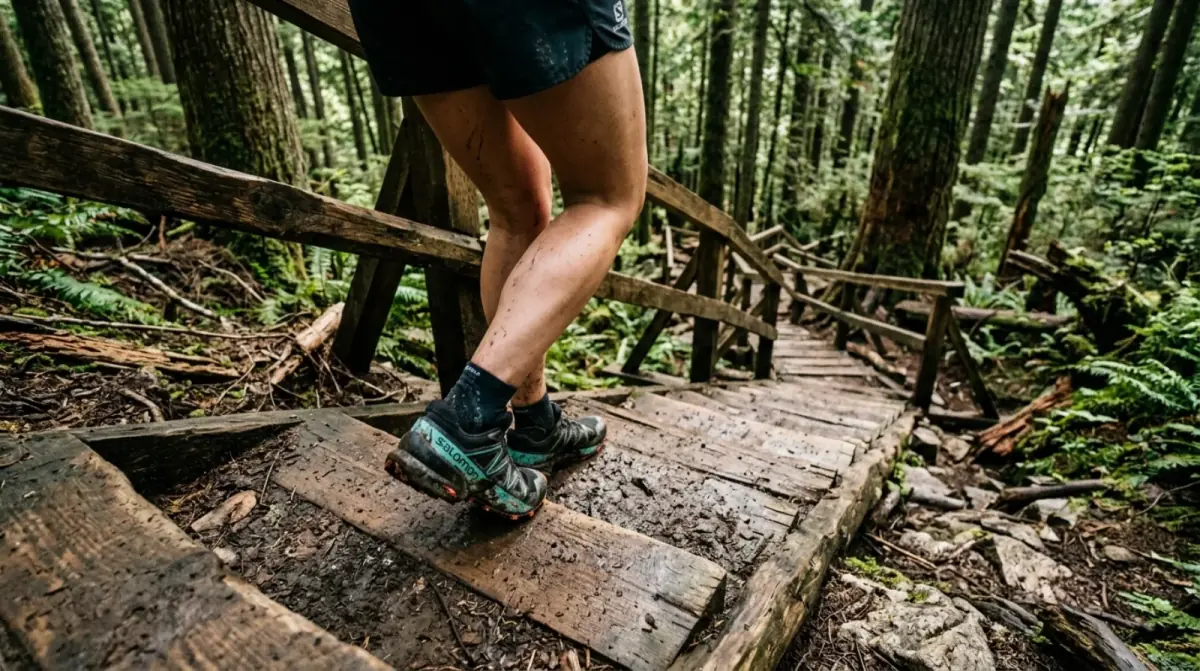
The Grouse Grind, the Baden-Powell and the long descents off Seymour are hard on legs. Many people feel fine at the bottom and then struggle with stairs for the next two days. Here is what massage can do about that soreness, how to time it, and how to tell normal soreness from an injury.
At Medstar Sport Physio on the North Shore, a recovery massage after a hard climb or trail run can lower muscle soreness at 24, 48 and 72 hours, based on a review of 11 studies, but it does not make you faster or stronger.
Why the soreness comes a day later
The soreness that peaks a day or two after a hard outing has a name: delayed onset muscle soreness. It comes from work the muscles are not used to. Long descents are a common cause, because the thigh and calf muscles have to work while they lengthen to control each step down.
That is why a hike that felt easy on the way up can leave your thighs sorer than the climb. It also explains why the first big hike of the season hurts more than the fifth. As your muscles get used to the work, the soreness after the same outing gets smaller.
This kind of soreness is normal. It affects both legs in a similar way, feels stiff and achy, and fades over a few days. It is a sign of hard work, and it does not need treatment. Sore muscles can also feel weaker for a few days, which is why a hard session two days after a big descent often feels flat. Massage is one way to feel better while it passes.
What the research says massage does
Three reviews give a clear picture.
A 2017 review in Frontiers in Physiology pooled 11 studies with 504 people. Muscle soreness was lower with massage than with no treatment at 24, 48 and 72 hours after hard exercise. Muscle force also recovered better with massage.
A 2020 review in BMJ Open Sport and Exercise Medicine pooled 29 studies with 1,012 people. It found small improvements in soreness and in flexibility. It found no improvement in strength, sprinting, jumping, endurance or fatigue.
A 2018 review, also in Frontiers in Physiology, compared many recovery methods after exercise, including massage, cold water, compression and stretching, for their effect on soreness, fatigue and markers of muscle damage. Across those methods, the authors found massage was the most effective for reducing soreness and the feeling of fatigue.
Put simply: massage can take some of the soreness out of the next two or three days. It will not change how fit you are for the next climb.
When to book it
The reviews measured soreness at 24, 48 and 72 hours, so a massage on the day of the outing, or in the two days after, fits the evidence. A few practical points:
- Wait until you have cooled down, eaten and had something to drink.
- If your legs are tender to touch, ask for moderate pressure. Firm work on muscles that are already sore can make the next day worse.
- If you have a race or another big outing coming, keep firm massage out of the last few days before it.
How long should the session be? A 2016 review in Sports Medicine of 22 trials found that massage of 5 to 12 minutes had larger effects on recovery than massage longer than 12 minutes. You do not need a 90-minute session for sore legs. A 30- or 45-minute visit focused on the calves, thighs and hips covers most hikers and runners. At Medstar, a first visit is 60 minutes because it includes your health history and an assessment.
What a recovery massage covers
For climbing and trail running, the session usually focuses on:
- The calves and the muscles at the front and side of the shin, which work hard on steep ground.
- The front of the thigh, which controls each step on the way down.
- The buttock and hip muscles, which push you up steps and keep you steady on uneven ground.
- The outside of the thigh and the back of the thigh.
The registered massage therapist uses long strokes to warm the muscles, steady pressure on tight or tender spots, and gentle stretching. Our page on sports massage explains the methods and timing for other sports too.
Soreness or injury?
Most next-day soreness is normal. Some signs point to an injury that needs a diagnosis before massage:
- Sharp pain in one spot, instead of a general ache.
- Swelling or bruising, especially around the ankle, knee or calf.
- A pop or a sudden pain during the outing.
- Limping, or pain that changes how you walk.
- Pain that is getting worse after three days, instead of better.
- Pain in only one leg after an outing that should have loaded both legs the same.
For any of these, book a physiotherapy assessment first. Our post on Grouse Grind injuries and recovery covers the injuries physiotherapists see most often after the climb. Common trail injuries include ankle sprains, calf strains and knee pain from long descents. Our pages on ankle pain and runner's knee cover two of the most common ones.
Some signs need urgent care. If one calf becomes swollen, hot, red and painful, or you become short of breath, call 911 or go to Lions Gate Hospital emergency. Do not book a massage for these. A swollen, painful calf can be a blood clot, and massage must never be done over one.
Other things that help
Massage is one tool. These also help sore legs recover:
- An easy walk, ride or swim the next day, to keep the legs moving without hard work.
- Enough food and fluid in the hours after a long outing.
- A good night of sleep.
- A lighter week of training after a big effort, before the next hard climb.
If you do the Grind or a long trail run every week, the soreness after each one should get smaller over the first few weeks as your muscles adapt. If it does not, or if one area always hurts more than the rest, that is worth a check with a physiotherapist.
Self-care between visits
You do not need a massage after every outing. Between visits, a few simple habits help.
A foam roller or a massage gun can ease tight muscles for a short time. The research on both is smaller than the marketing suggests, and our posts on foam rolling and massage guns explain what the studies measured. Use moderate pressure, keep each area to a few minutes, and avoid any spot that is bruised, swollen or sharply painful.
Gentle stretching after the outing can make the next day feel easier for some people. Hold each stretch without bouncing, and stop if it causes sharp pain. Short walks during a long day of sitting also help, because stiff, sore legs often feel worse after hours in a chair or a car.
If you hike with poles, use them on the descents. They let your arms take some of the work your thighs would otherwise do on each step down.
When the same spot hurts every time
Soreness that spreads across the big leg muscles and fades in a few days is normal. Pain that shows up in the same small spot after every climb is different. It often points to a problem that massage alone will not fix.
Three patterns come up often in hikers and trail runners. Pain at the front of the knee on long descents can be runner's knee. Pain at the back of the heel or above it can involve the Achilles tendon. Pain under the heel on the first steps in the morning can be plantar heel pain. Each of these responds best to a plan that changes how much load the area takes, with strength work set by a physiotherapist.
Massage can still help with the tight muscles around these problems. It works best as one part of a plan, after a physiotherapy assessment has found the cause.
Paying for a recovery massage
A recovery massage with a registered massage therapist is a normal massage therapy visit, so work health plans that cover registered massage therapy pay for it up to your plan's limits. Medstar bills most major plans directly. Our coverage page explains the details, including what ICBC and WorkSafeBC pay for.
A practical plan for the season
If you climb or run on the North Shore through the year, a simple plan works well. Keep your hard outings to one or two a week while your legs adapt. Book a 30- or 45-minute massage after your hardest week of the month, or after a long race. Use the days after to move gently. And if one spot keeps hurting, get it checked early, while the fix is still small and you can keep doing most of your outings. Our massage therapy guide explains what a first visit looks like, how long sessions run, and how billing works, so you can plan your recovery around the season you want.
This article is general information, not personal medical advice. A regulated practitioner can confirm whether the patterns described apply to you.
Sources
- Guo J, et al. Massage alleviates delayed onset muscle soreness after strenuous exercise. Frontiers in Physiology, 2017
- Davis HL, et al. Effect of sports massage on performance and recovery. BMJ Open Sport and Exercise Medicine, 2020
- Dupuy O, et al. An evidence-based approach for choosing post-exercise recovery techniques. Frontiers in Physiology, 2018
- Poppendieck W, et al. Massage and performance recovery: a meta-analytical review. Sports Medicine, 2016
Common questions
Frequently asked questions.
Does massage help sore legs after the Grouse Grind?
It can lower the soreness that peaks a day or two after a hard climb or descent. A 2017 review of 11 studies and 504 people found muscle soreness was lower with massage than with no treatment at 24, 48 and 72 hours after hard exercise. A 2020 review of 29 studies also found a small drop in soreness and a small gain in flexibility.
When should I get a massage after a long trail run?+
Book it for the day of the run after you have cooled down, eaten and had a drink, or for the next day or two. The reviews that found less soreness measured it at 24, 48 and 72 hours, so a session in that window fits the evidence. Keep the pressure moderate if your legs are already tender, and avoid firm work on any area that feels injured.
Why are my legs more sore after going downhill than uphill?+
Going downhill makes your thigh and calf muscles work while they lengthen to control your body, and this kind of work is a common cause of the soreness that appears a day or two later. On the North Shore, the long descents on trails such as the Baden-Powell or the walk down after a hike often leave thighs sorer than the climb did.
Will massage make me faster on my next climb?+
No. A 2020 review of 29 studies and 1,012 people found no evidence that massage improves strength, sprinting, jumping or endurance. It found small improvements in flexibility and muscle soreness. Massage helps you feel less sore between hard sessions. Fitness for steep climbing comes from training, strength work and rest.
How long should a recovery massage be?+
Shorter can be enough. A 2016 review of 22 trials found that massage of 5 to 12 minutes had larger effects on recovery than massage longer than 12 minutes. At Medstar, a 30- or 45-minute follow-up focused on calves, thighs and hips suits most hikers and runners. A first visit is 60 minutes because it includes a health history and an assessment.
Is it soreness or an injury?+
Normal soreness affects both legs in a similar way, feels stiff and achy, peaks in one to three days and then fades. An injury is more likely if pain is sharp and in one spot, if there is swelling or bruising, if you felt a pop, if you limp, or if pain is getting worse after three days. Those need a physiotherapy assessment before massage.
What else helps sore legs besides massage?+
Gentle movement such as an easy walk or ride, enough food and fluid, and a good night of sleep all help. A 2018 review in Frontiers in Physiology compared many recovery methods and found massage was the most effective for soreness and the feeling of fatigue. A light week of training after a big outing also gives the muscles time to recover before the next hard climb.
Does extended health or ICBC cover sports massage?+
Work health plans pay for visits with a registered massage therapist, and a recovery massage is a normal RMT visit. Medstar bills most major plans directly. ICBC pays for massage only for injuries from a car crash. If a trail injury happened on the job, such as a guiding or park work injury, WorkSafeBC rules apply once the claim is accepted.
Written by
Kevin Herter, RMTKevin Herter, RMT, is the Registered Massage Therapist at Medstar Sport Physio in North Vancouver. Sports, deep tissue and injury massage, with direct billing and ICBC.
This article is for general information only and does not constitute medical advice, diagnosis, or treatment. Individual presentations vary, and assessment findings and treatment plans differ from person to person. If you are experiencing severe symptoms, neurological changes (numbness, weakness, bowel or bladder changes), or a significant trauma, contact your physician or emergency services. Care at Medstar Sport Physio & Health is provided by practitioners registered with their respective British Columbia regulatory colleges.
Filed under
- sports-massage
- trail-running
- grouse-grind
- doms
- recovery
- north-vancouver