Deadlifts and Your Back: Why Load Matters More Than a Perfectly Straight Spine
The fear that a slightly rounded back while deadlifting will wreck your spine is deeper than the evidence supports. The bigger factor is how you manage load.
BY MEDSTAR SPORT PHYSIO TEAM
The deadlift has a reputation as the lift most likely to hurt your back, and a whole industry of warnings tells you a rounded spine will ruin you. The fear runs deeper than the evidence supports, and it keeps a lot of people from an exercise that could make their back stronger. The real story is about how you manage load, not about hitting a perfectly straight spine on every rep.
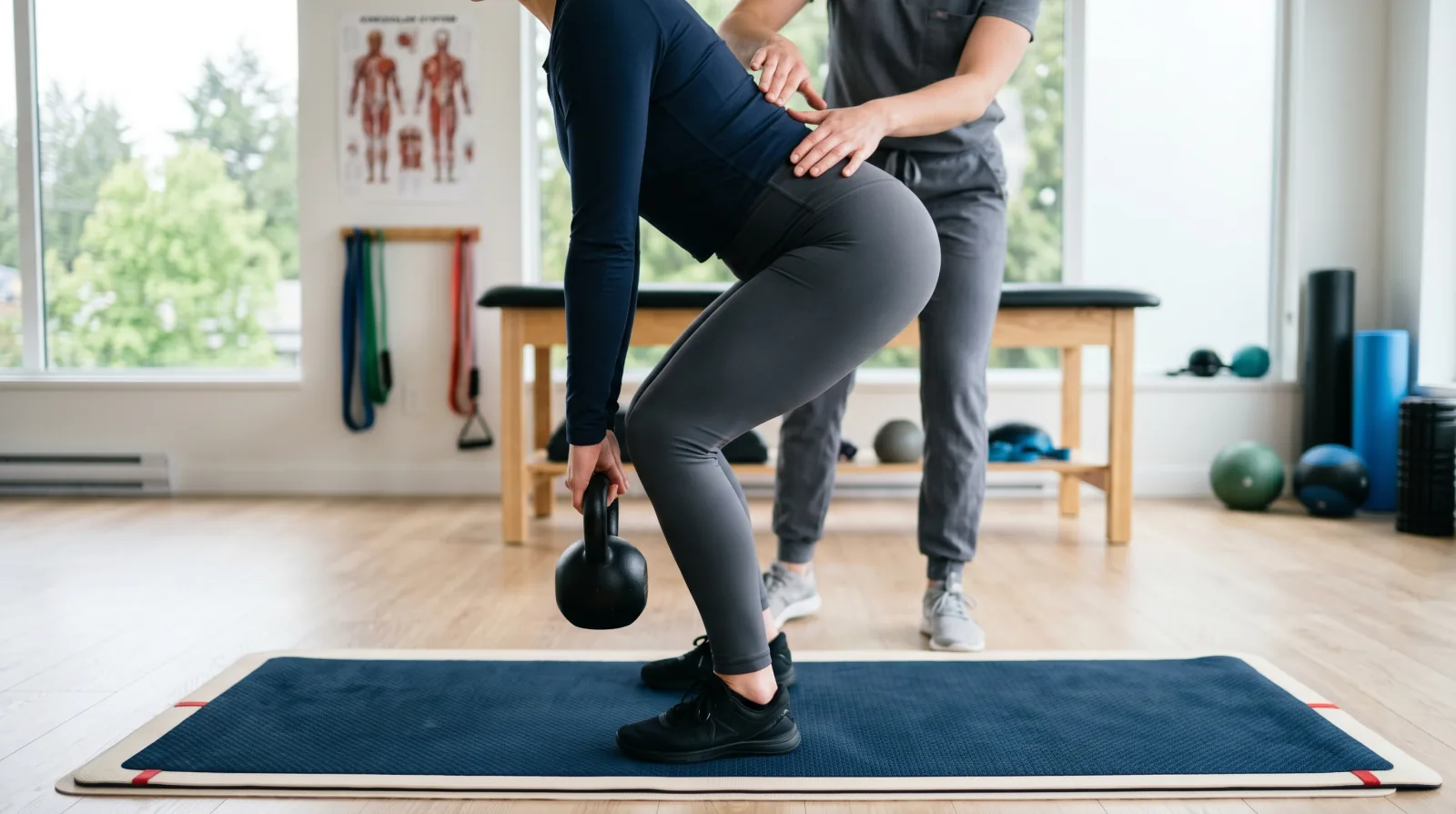
The common fear that a slightly rounded back while deadlifting will injure your spine is not well supported, because a systematic review found lumbar spine flexion during lifting was not shown to be a risk factor for low back pain, and even skilled lifters bend a little under heavy load. The spine is a strong, load-bearing structure built to move and carry weight. At Medstar Sport Physio in North Vancouver, we coach control and gradual loading rather than a rigid perfect posture, because most deadlift back flares come from doing too much too soon, not from how straight the spine looked.
The straight-back rule and where it came from
For decades the advice was simple and stern: lift with a straight back, never bend the spine, keep it neutral or you will hurt yourself. It became one of the most repeated pieces of body advice there is, and it feels obviously true. A rounded back under a heavy bar looks risky.
The problem is that the evidence did not keep up with the fear. The straight-back rule was built on assumptions about how the spine tolerates load, and when researchers actually tested whether lifting posture predicts back pain, the picture turned out to be far more forgiving than the rule suggested. That does not mean form is irrelevant. It means the specific fear, that any bend equals damage, is an oversimplification.
What the research actually found
The clearest look at this is a systematic review and meta-analysis asking whether lumbar spine flexion during lifting is linked to low back pain. The finding was striking. There was no good evidence that greater spinal flexion during lifting is a risk factor for back pain onset or persistence, and most of the studies found no difference in lifting posture between people with back pain and people without it.
In plain terms: the people with back pain were not lifting with more rounded spines than the people without back pain. If a rounded back were the main cause, you would expect it to show up, and it did not. Other work has found that even experienced, healthy lifters show measurable spinal bend during heavy deadlifts, particularly as the load gets heavier. Some flexion under load is normal, not a fault to be eliminated.
Why "load, not posture" is the better story
If posture is not the main driver, what is? In practice, it is load management, meaning how quickly you add weight, volume, and frequency compared with what your back is currently prepared for.
Most deadlift back flares come from a spike. A sudden jump in weight, a big increase in how much you are doing, or coming back after a break and starting where you left off. The back did not flare because it bent. It flared because it was hit with more load than it was ready for that day. A back that is loaded gradually and consistently adapts and gets stronger, the same way any tissue does. This is the exact same principle behind returning to lifting after back pain, where the path back is built on starting below your previous level and progressing steadily rather than avoiding lifting forever.
The spine is stronger than you have been told
The mental model matters here. Many people picture the spine as a fragile stack of discs that slips or crumbles under load. That picture is wrong and it is harmful. The spine is a strong, load-bearing structure built to bend and to carry weight through a wide range of positions. It is not delicate.
Believing your spine is fragile has a cost. Fear leads to guarding, avoiding movement, and bracing rigidly, and all of those tend to make back pain worse and last longer rather than protecting you. Understanding that the spine is strong is part of lifting well, not a throwaway reassurance. This is the same reason strength training under load is used to help people with conditions like osteoporosis, where safe progressive loading builds bone and strength rather than being something to fear.
Coaching cues that actually help
Dropping the rigid straight-back obsession does not mean form does not exist. It means the useful cues are simpler and more about control and consistency than about a textbook-perfect line. A few that hold up:
Brace before you pull. Take a breath and tighten your midsection to create stiffness through the trunk before the bar leaves the floor. This gives you a stable, controlled position to lift from.
Set a position you can repeat. Find a starting position that feels controlled and strong for you, and aim to hit roughly the same one each rep. Consistency matters more than matching someone else's ideal.
Keep the bar close. Letting the bar drift away from your body increases the effort and makes the lift harder to control. Dragging it up close to your shins and thighs keeps it efficient.
Build the weight up gradually. This is the one that prevents most problems. Add load in small steps, give your back time to adapt, and back off when you are fatigued or returning from a break. Progression beats perfection.
When some bend is fine and when to be more careful
For most healthy people, a bit of spinal bend under load is normal and not something to panic about. The aim is a controlled, repeatable lift you can progress, not a rigid neutral spine held under threat of injury.
There are situations where more care and guidance make sense. If you are returning from a recent back injury or a flare, if you have a diagnosed spinal condition, if lifting reliably brings on leg symptoms like numbness or weakness, or if you are brand new to lifting and unsure how to load safely, it is worth getting the starting point and progression set up properly. That is about matching the plan to you, not about the spine being fragile.
When to get it assessed
If deadlifting or other lifting keeps flaring your back, if you are returning from a back injury and unsure how to load, or if you have stopped lifting out of fear and want to get back to it safely, an assessment can set the right starting weight, build a sensible progression, and check your technique for control rather than chasing a perfect posture. It is worth being seen sooner if lifting brings on pain, numbness, tingling, or weakness down a leg.
Book a 30-minute appointment and we will assess your back, look at how you lift, and build a loading plan that gets you deadlifting with confidence, based on gradual progression and control rather than the fear that a slightly rounded back will hurt you.
This article is general information about lifting and back health. It is not personal medical advice. A regulated practitioner can confirm whether the patterns described apply to you.
Sources
- Saraceni et al. - To Flex or Not to Flex? Lumbar Spine Flexion During Lifting and Low Back Pain: A Systematic Review With Meta-analysis - JOSPT (2020)
- Beyond the Neutral Spine: A Narrative Review and Modern Framework for Low Back Injury Prevention in Deadlifting - Sports (MDPI, 2026)
- HealthLinkBC - Low Back Pain
- College of Physical Therapists of BC (CPTBC)
Common questions
Frequently asked questions.
Will a rounded back while deadlifting hurt my spine?
Not the way most people fear. A systematic review found that greater lumbar spine flexion during lifting was not shown to be a risk factor for low back pain, and most studies found no difference in lifting posture between people with and without back pain. Some spinal bend under load is normal, and even experienced lifters show it during heavy pulls. The bigger factor is loading the movement in a way your body is ready for, not achieving a perfectly straight spine.
Do I have to keep a perfectly neutral spine when I deadlift?+
A reasonably controlled position is sensible and most people naturally prefer it under heavy load, but the idea that any deviation from a perfectly straight spine is dangerous is an oversimplification. What matters more is control, consistency, and building up the load gradually. Chasing a rigid, textbook-perfect neutral spine on every rep is not supported by the evidence and can make lifting feel fragile and stressful.
What actually causes back pain from deadlifting?+
Most deadlift-related back pain comes from doing too much too soon: a sudden jump in weight, volume, or frequency that outpaces what your back is currently prepared for. It is a load-management problem more than a posture problem. A back that is loaded gradually and consistently adapts and gets stronger. A back hit with a big spike in load is more likely to flare, regardless of how straight it looked.
Can deadlifting be good for back pain?+
Yes, for many people. Progressive strength training, including deadlift-style lifting, is used to help persistent low back pain and to build a back that tolerates daily loads better. The spine is designed to bend and to carry load. Avoiding all lifting tends to leave the back weaker and more sensitive over time. The key is starting at an appropriate weight and progressing gradually, ideally with guidance if you are returning from pain.
Is my spine really strong enough to deadlift?+
For most healthy people, yes. The spine is a strong, load-bearing structure built to move and to carry weight, not a fragile stack that fails at the first sign of a bend. Treating it as fragile tends to increase fear and guarding, which makes back pain worse. That said, if you have a specific back condition or are returning from an injury, an assessment can set the right starting point and progression for you.
Share this post
Copies a ready-to-publish LinkedIn post to your clipboard and opens the LinkedIn share dialog. Paste the text into the composer and publish.
Written by
Medstar Sport Physio Team
Registered clinician at Medstar Sport Physio & Health, North Vancouver.
This article is for general information only and does not constitute medical advice, diagnosis, or treatment. Individual presentations vary, and assessment findings and treatment plans differ from person to person. If you are experiencing severe symptoms, neurological changes (numbness, weakness, bowel or bladder changes), or a significant trauma, contact your physician or emergency services. Care at Medstar Sport Physio & Health is provided by practitioners registered with their respective British Columbia regulatory colleges.
Filed under
- deadlift
- lifting-technique
- low-back-pain
- strength-training
- spine-health
- north-vancouver