Calf Massage for Heel Pain: What Two Trials Found
Morning heel pain often comes with tight calves. Two trials tested massage of the calf and foot for heel pain. Here is what they found, and how massage fits with stretching and strength work.
BY KEVIN HERTER, RMT
Heel pain on the first steps out of bed often comes with tight, tender calves. Two trials tested massage of the calf and foot for this kind of heel pain. Here is what they found, and how massage fits with the stretching and strength work that make up the rest of the plan.
At Medstar Sport Physio in North Vancouver, massage for plantar heel pain focuses on the calf and foot, based on two 2014 trials where deep calf massage and myofascial release eased heel pain and improved function more than ultrasound or a fake treatment.
Why the calf matters for heel pain
Pain under the heel, often called plantar fasciitis or plantar heel pain, usually feels worst on the first steps in the morning or after sitting. It often eases as you warm up and then returns after a long day on your feet.
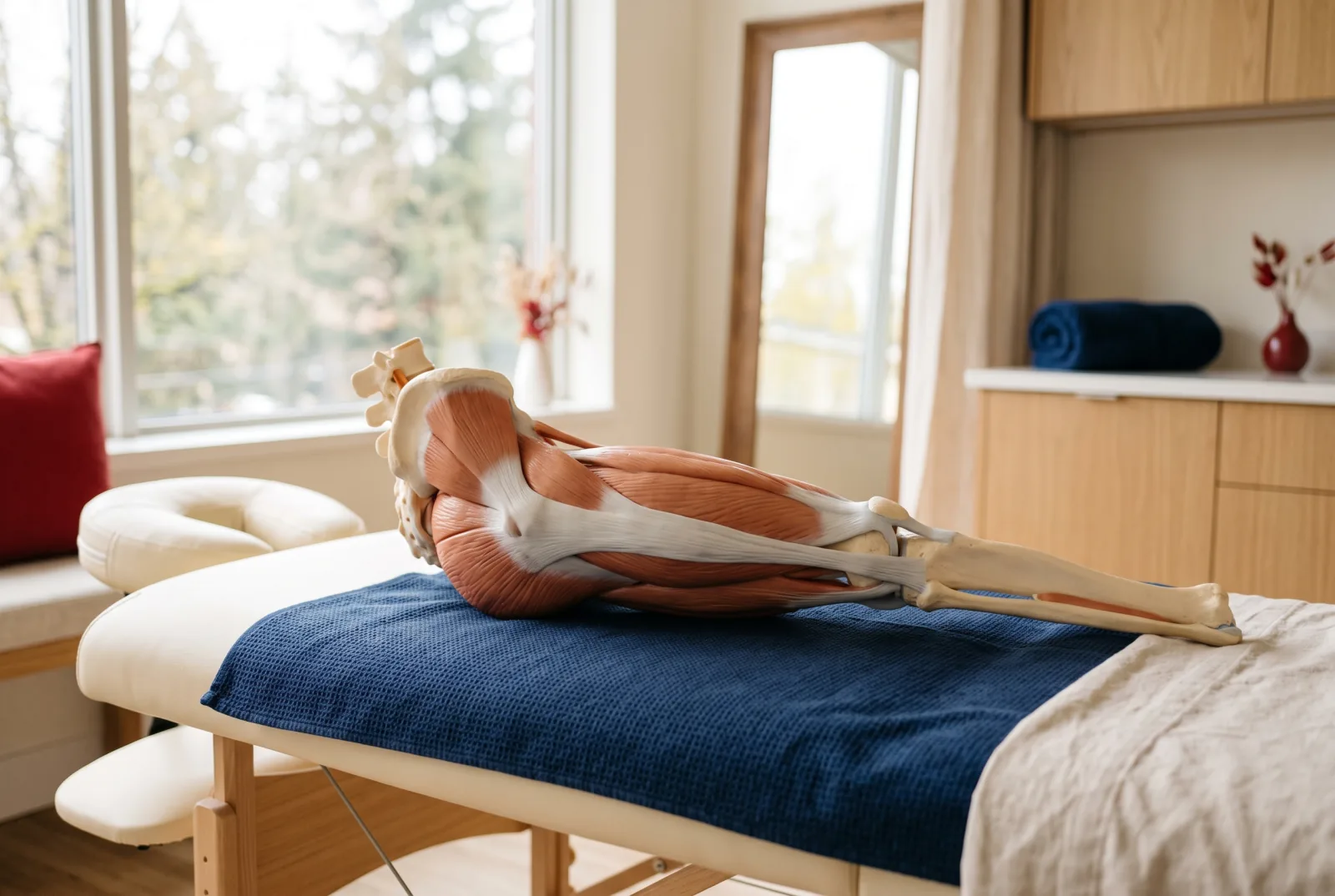
The calf muscles join the Achilles tendon, which attaches to the back of the heel bone. The thick band of tissue under the foot runs forward from the heel to the toes. When the calf is tight, the ankle bends less, and the heel and foot may take more strain with each step.
The authors of one trial noticed that their patients' heel pain often appeared when they rose onto their toes or did a small squat on the sore leg, both of which load the calf muscles. That led them to test deep massage of the calf instead of treating only the heel.
What the first trial found
A 2014 trial in Manual Therapy included 69 people with plantar heel pain, with an average age of 53. They were assigned at random to one of two programs, each with 8 treatments over four to six weeks:
- Deep massage of the calf muscles, plus exercises to keep the nerves of the leg moving freely, plus a self-stretching program.
- Ultrasound to the painful heel, plus the same self-stretching program.
Both groups improved. The massage group improved more on a foot and ankle function test, by 15 points on average compared with 6 points in the ultrasound group. The authors called the trial a pilot, meaning a first test that larger trials need to confirm.
What the second trial found
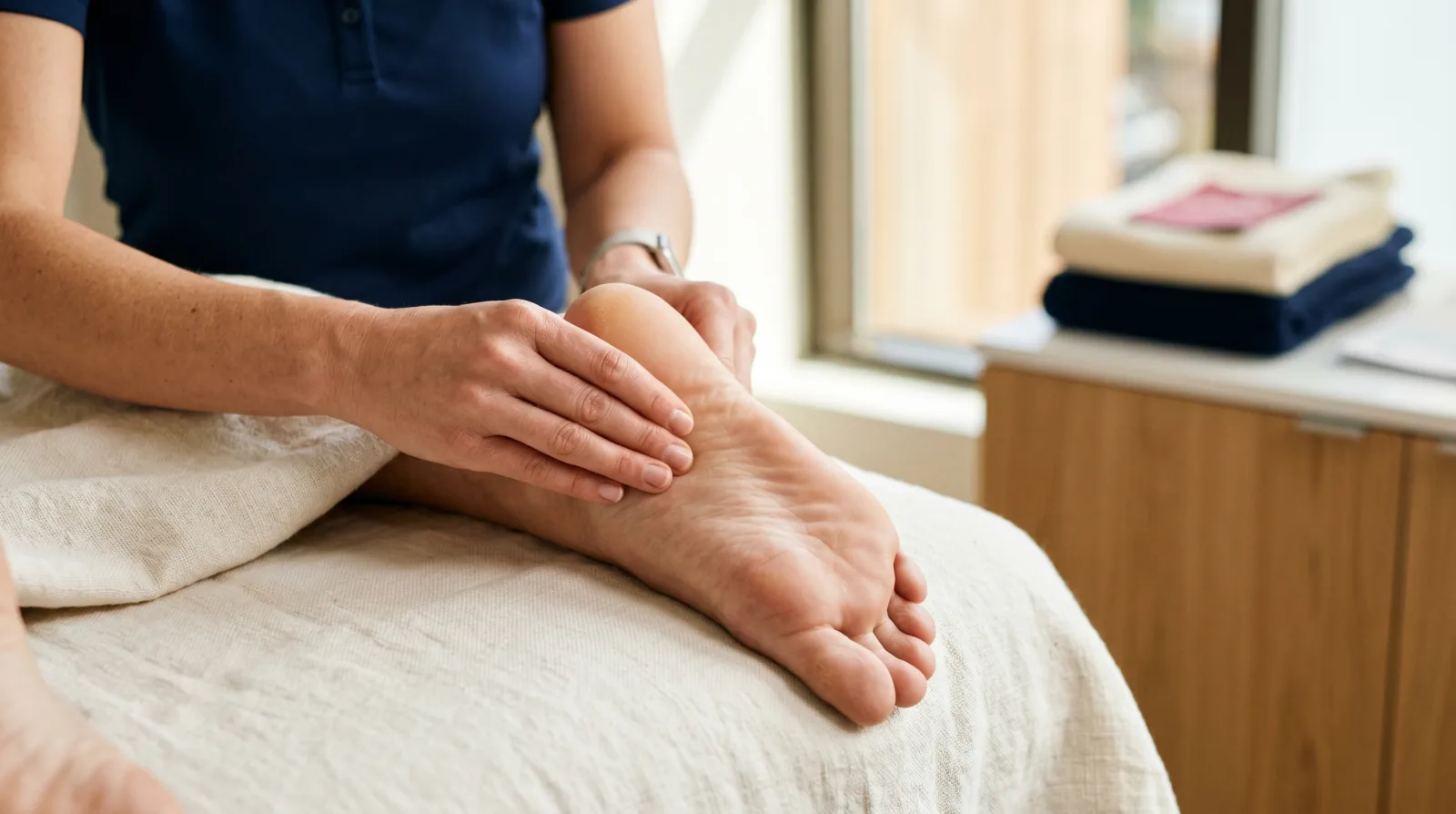
A second 2014 trial in The Foot included 66 people with plantar heel pain. One group had myofascial release, a slow, sustained form of hands-on work on the tissue around the muscles of the calf and foot. The other group had a fake ultrasound treatment. Each person had 12 sessions over four weeks.
By week 4, the myofascial release group reported a 72.4% reduction in pain and disability on a foot questionnaire, compared with 7.4% in the fake treatment group. At week 12, the myofascial release group still reported a 60.6% reduction from where they started.
What the wider research says
A 2018 review in the Journal of Manual and Manipulative Therapy pooled 7 trials of hands-on treatment for plantar heel pain. Adding manual therapy improved function more than stretching, strengthening or machine-based treatments alone in 6 of the 7 studies. Pain results were less consistent, favouring manual therapy in only 2 of 6 studies.
The plain summary: hands-on work on the calf and foot looks helpful for plantar heel pain, especially for function, and it works best as one part of a plan that also includes stretching and strength work.
What the trials do not tell us
These results are encouraging, and they have limits worth knowing. Both trials were small, with 69 and 66 people. The first was a pilot study. The second was run at one clinic in India, and it followed people for 12 weeks, so it cannot tell us how they were doing after six months or a year. The two trials also used different methods, which makes it hard to say which kind of hands-on work matters most.
The 2018 review found the same pattern across its 7 trials: manual therapy helped function more often than it helped pain. That is useful to know before you start. Expect massage to help you move and walk more easily first. Morning pain may take longer to settle, and it settles fastest when stretching, strength work and sensible changes to load are part of the plan.
Who tends to get heel pain
Heel pain can start after long hours standing at work, for example in nursing, retail or the trades. It can also start in runners and hikers after a jump in distance, more hills, or a switch to new shoes. On the North Shore, steep trails and long descents add load to the calf and foot, so it is worth building up hill work gradually after a break. Tell your therapist what changed in the weeks before the pain started, because that often points to what needs to change now.
If you stand at work, small changes help: supportive shoes, a cushioned mat where you stand most, and short breaks to sit or stretch your calves. If your heel pain started at work, and you have an accepted WorkSafeBC claim, massage therapy can be covered once your doctor refers you.
How to tell if it is working
The first steps of the day are the easiest test. Each morning, rate the pain of your first few steps from 0 to 10, and note how long it takes to ease. Also note how far you can walk or run before the heel complains. Check these numbers each week. If they are falling, keep going. If they are flat after three or four sessions, the plan needs a review.
What a heel pain massage session covers
A session for heel pain usually covers:
- The calf muscles, from behind the knee down to the Achilles tendon, with deep, slow work.
- The muscles at the front and side of the shin.
- The sole of the foot, with moderate pressure away from the most painful point.
- Gentle stretching of the calf and the toes.
Your registered massage therapist will ask how your heel feels on the first steps of the day, and will keep firm work away from the most tender spot under the heel. Our page on deep tissue massage explains how firm pressure should feel.
What else belongs in the plan
Massage is one part of treating heel pain. The rest usually includes:
- Daily calf and foot stretches, especially before the first steps of the day.
- Strength work for the calf and foot, set by a physiotherapist.
- Changes to training load for runners and hikers, such as fewer hills or shorter runs for a few weeks.
- Footwear with good support, and in some cases custom orthotics.
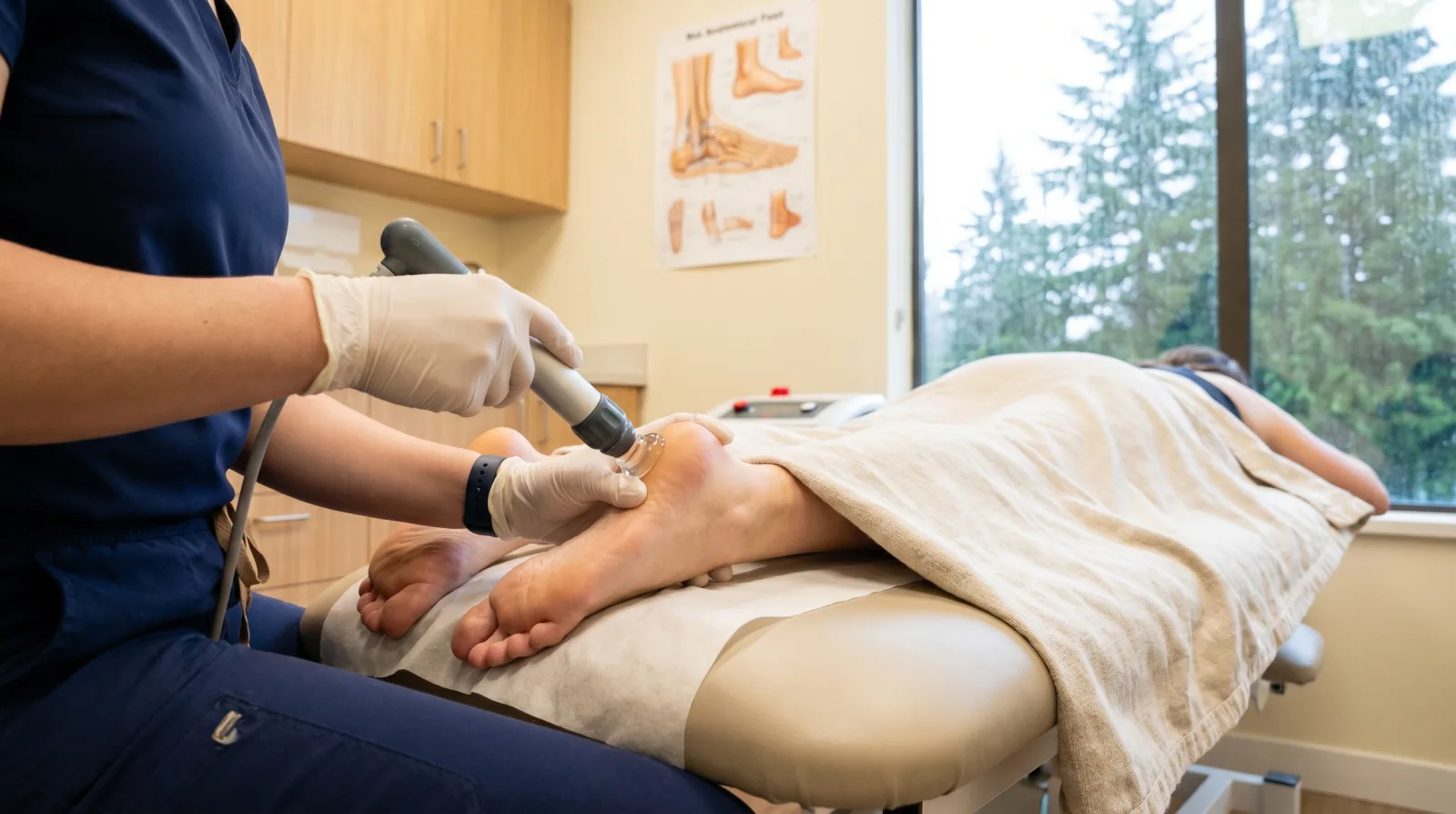
Our post on morning heel pain explains these steps in more detail. For heel pain that has lasted months despite this work, some people use shockwave therapy or laser therapy alongside exercise.
Self-massage at home
Between visits, you can work on the calf and foot yourself:
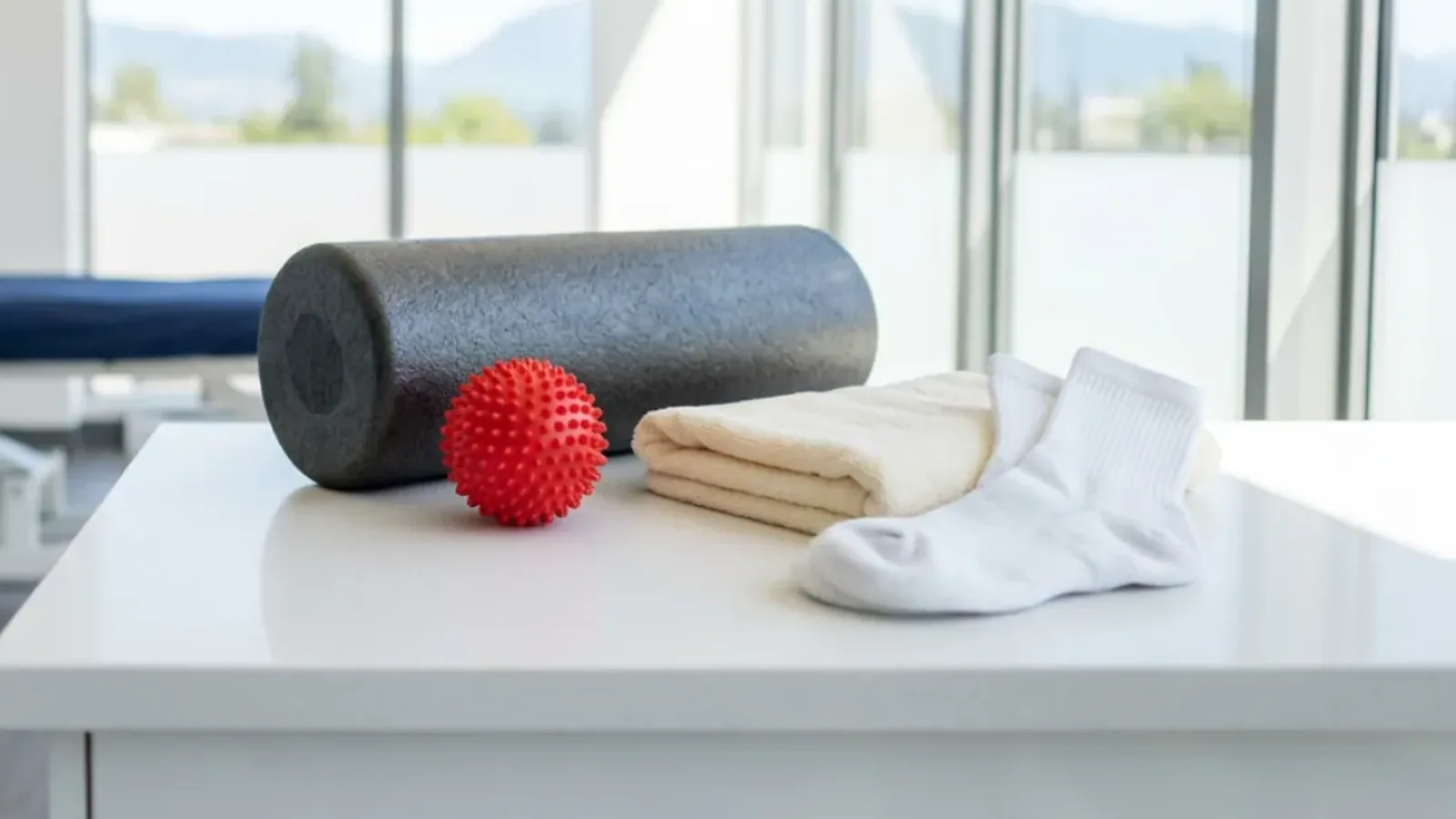
- Sit with your leg supported and use your hands or a foam roller on the calf for a few minutes, with moderate pressure.
- Roll the sole of your foot gently over a ball, avoiding hard pressure on the most painful point.
- Do your calf stretches after self-massage, while the muscles feel looser.
Stop if self-massage makes the heel pain sharper or leaves it worse the next morning, and tell your therapist. Our post on foam rolling explains what the research says about rollers.
When heel pain needs a different plan
Not all heel pain is plantar heel pain. A physiotherapy assessment is a good first step if:
- The pain is at the back of the heel, which can involve the Achilles tendon.
- The heel bone itself is tender and pain gets worse with every step, which can be a stress fracture.
- You have burning, numbness or tingling in the foot, which can come from a nerve.
- The pain started after a fall or a jump.
Heel pain with swelling, redness and fever needs a doctor the same day. A calf that becomes swollen, hot, red and painful needs urgent care: call 911 or go to Lions Gate Hospital emergency, and do not have it massaged, because it can be a blood clot. Our page on plantar fasciitis covers the physiotherapy assessment.
A practical plan for heel pain
For plantar heel pain with tight calves, a plan that matches the trials is a course of weekly massage on the calf and foot for four to six weeks, with daily stretching and strength work at home. Track how your first steps feel each morning. If they are not getting easier after three or four sessions, see a physiotherapist to review the whole plan. The massage therapy guide explains booking, session lengths and direct billing at the clinic.
This article is general information, not personal medical advice. A regulated practitioner can confirm whether the patterns described apply to you.
Sources
- Saban B, et al. Deep massage to posterior calf muscles in combination with neural mobilization exercises as a treatment for heel pain: a pilot randomized clinical trial. Manual Therapy, 2014
- Ajimsha MS, et al. Effectiveness of myofascial release in the management of plantar heel pain: a randomized controlled trial. The Foot, 2014
- Fraser JJ, et al. Does manual therapy improve pain and function in patients with plantar fasciitis? A systematic review. Journal of Manual and Manipulative Therapy, 2018
Common questions
Frequently asked questions.
Does calf massage help plantar heel pain?
Two trials suggest it can. In a 2014 trial of 69 people with heel pain, deep massage of the calf muscles plus nerve mobility exercises and self-stretching improved foot function more than ultrasound to the heel with the same stretches. A second 2014 trial of 66 people found myofascial release of the calf and foot eased pain and disability more than a fake ultrasound treatment.
Why massage the calf for pain under the heel?+
The calf muscles join the Achilles tendon, which attaches to the heel bone, and the tissue under the foot works closely with that system. People with heel pain often have tight, tender calves, and pain often appears when they rise onto their toes or squat on the sore leg. That is why the 2014 trial focused deep massage on the calf instead of only the heel.
How many massage sessions help heel pain?+
The trials used 8 treatments over four to six weeks in one study and 12 sessions over four weeks in the other. That points to a course of regular sessions, alongside daily stretching and strength work. If heel pain has not changed after three or four sessions, see a physiotherapist to review the whole plan.
Is massage better than stretching for plantar fasciitis?+
In the trials, massage was added to treatment or compared with ultrasound, and both trials included or allowed stretching. A 2018 review of 7 trials found that adding manual therapy improved function more than stretching, strengthening or machines alone in 6 of the 7 studies. Pain results were less consistent. Massage works best alongside stretching and strength work.
Can I massage my own calf and foot at home?+
Yes. Sit with your leg supported and use your hands or a foam roller on the calf for a few minutes, with moderate pressure. For the sole, roll your foot gently over a ball. Avoid pressing hard on the most painful point of the heel. Stop if pain gets sharper or stays worse the next morning, and tell your therapist.
Should I see a massage therapist or a physiotherapist for heel pain?+
Start with a physiotherapist if heel pain is new and you are unsure of the cause, if it came on after a fall or a jump, or if you have numbness or tingling in the foot. A physiotherapist can confirm the diagnosis and set stretching and strength work. Massage then helps with the tight calf and foot muscles. Many people use both at Medstar.
When is heel pain not plantar fasciitis?+
Pain at the back of the heel can come from the Achilles tendon. Pain that is worse with every step and tender on the heel bone itself can be a stress fracture. Burning, numbness or tingling can come from a nerve. Heel pain with swelling, redness and fever needs a doctor. A physiotherapy assessment helps sort these out before treatment.
Is massage for heel pain covered by extended health?+
Many work health plans pay for visits with a registered massage therapist up to a yearly limit. Some ask for a doctor's note first, so check your plan booklet. Medstar bills most major plans directly, so you pay only the part your plan does not cover. If your heel pain started at work, WorkSafeBC rules apply once your claim is accepted.

Written by
Kevin Herter, RMTKevin Herter, RMT, is the Registered Massage Therapist at Medstar Sport Physio in North Vancouver. Sports, deep tissue and injury massage, with direct billing and ICBC.
This article is for general information only and does not constitute medical advice, diagnosis, or treatment. Individual presentations vary, and assessment findings and treatment plans differ from person to person. If you are experiencing severe symptoms, neurological changes (numbness, weakness, bowel or bladder changes), or a significant trauma, contact your physician or emergency services. Care at Medstar Sport Physio & Health is provided by practitioners registered with their respective British Columbia regulatory colleges.
Filed under
- massage-therapy
- plantar-fasciitis
- heel-pain
- calf
- running
- north-vancouver