Exercise Tolerance Testing After Concussion: How We Measure Readiness
Whether an athlete is ready to push their heart rate after a concussion should be measured, not guessed. A graded exercise tolerance test finds the number that tells us.
BY AMIR AHMADI, PHD
An athlete says they feel fine three days after a concussion and wants to know if they can get on a bike. "Feeling fine" is not a number, and it is not always accurate. Exercise tolerance testing gives us one.
At Medstar Sport Physio in North Vancouver, exercise tolerance testing after a concussion means putting an athlete through a graded treadmill or bike protocol while tracking heart rate and symptoms, to find the exact heart rate at which symptoms start to increase. That number, not how the athlete says they feel, sets the ceiling for aerobic activity in the days that follow. The test does not replace the six-step return-to-play protocol or the physician's clearance for full contact. It gives the early steps of that protocol a measured target instead of a guess.
Why "how do you feel" is not enough
Concussion symptom checklists ask an athlete to rate headache, dizziness, and fogginess on a scale. That self-report matters, but it has a well-known limitation: motivated athletes under-report, anxious athletes over-report, and symptoms can lag behind or run ahead of what is actually happening physiologically. Deciding how hard someone can exercise based only on how they say they feel leaves real room for error in both directions.
A concussion disrupts more than subjective symptoms. It commonly affects the body's regulation of heart rate and blood flow during exertion, sometimes described as an exercise-provoked autonomic pattern. That disruption can be measured directly with a graded exercise test, which is why testing has become a standard part of concussion assessment rather than a niche add-on.
What the Buffalo Concussion Treadmill Test actually measures
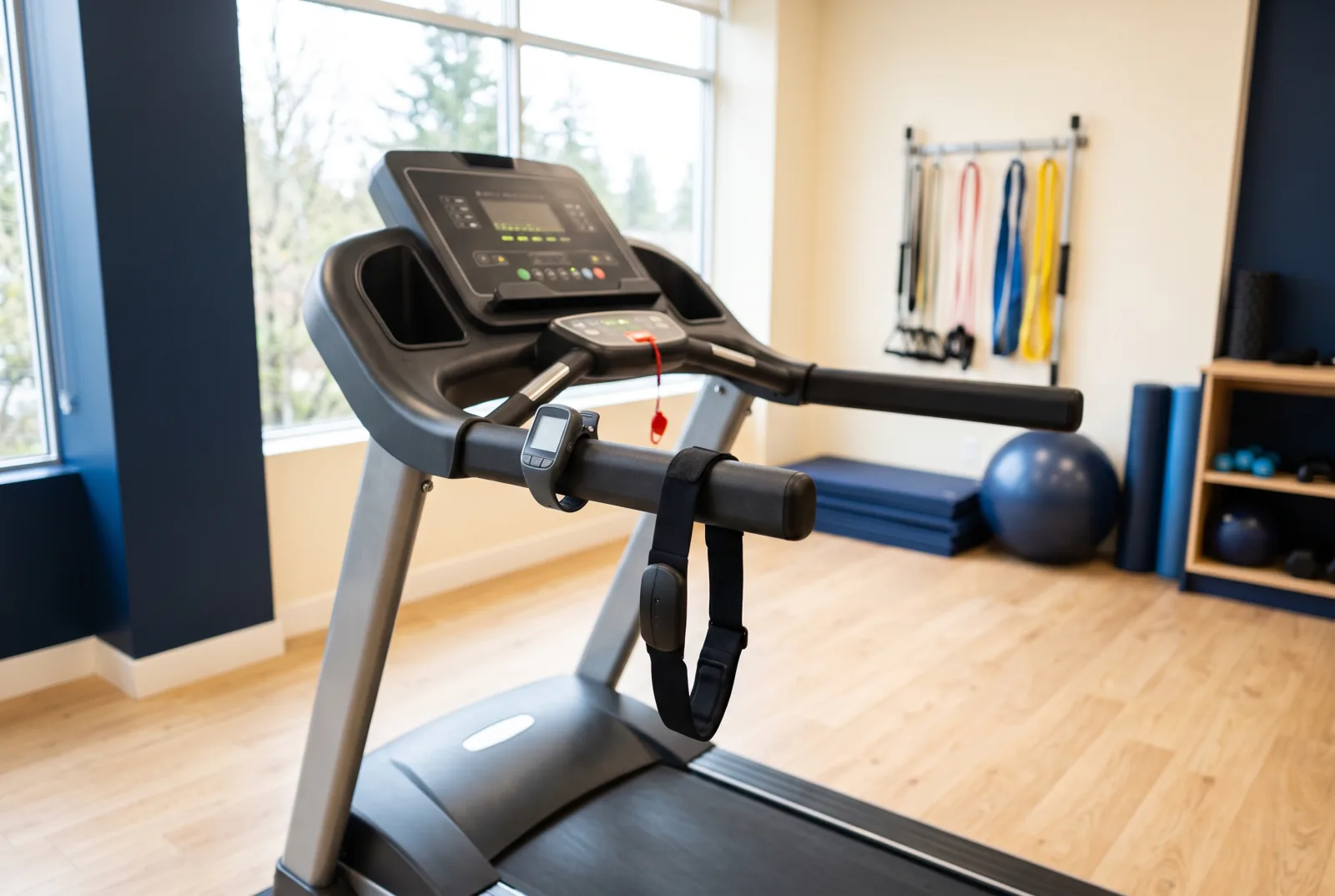
The most widely used protocol is the Buffalo Concussion Treadmill Test, a graded treadmill test built on an established cardiac exercise protocol. The athlete walks at a fixed speed while the incline increases every minute, and heart rate and symptoms are tracked continuously.
The test identifies the heart rate at which concussion-specific symptoms are reproducibly triggered, called the heart rate threshold. Reaching that point is not a failure. It is the entire purpose of the test: to find, in a controlled setting, the exact point where the athlete's tolerance currently sits.
Research in adolescent athletes has found that this threshold carries real prognostic weight. A study following adolescents tested within 10 days of a sport-related concussion found that a smaller gap between resting heart rate and the symptom-provoking heart rate was associated with delayed recovery, with one dataset showing that a heart rate difference of 50 beats per minute or less was 73 percent sensitive and 78 percent specific for identifying athletes who went on to have a delayed recovery. An earlier study in the same research group had linked an absolute threshold under 135 beats per minute with recovery beyond 21 days. Neither number is destiny for any one athlete, but both show the test is measuring something that matters for planning, not just a number for its own sake.
How the threshold becomes a treatment dose
Once the heart rate threshold is known, it sets a target for early aerobic activity: exercise at an intensity that stays below the symptom-provoking heart rate, often called sub-symptom-threshold aerobic exercise. This is where testing stops being diagnostic and starts being part of treatment.
The evidence for this approach is stronger than a plausible idea. A randomized clinical trial in adolescent athletes assigned to either a program of aerobic exercise dosed below the symptom threshold, or a placebo stretching program, found that the exercise group reached symptom resolution at a median of 13 days, compared with 17 days in the stretching group. That is a meaningful gap for a condition where the goal is getting a student-athlete back to class and to their team as soon as it is safe. The current international guidance reflects this shift: the 6th International Conference on Concussion in Sport, held in Amsterdam, supports introducing carefully dosed aerobic activity in the first one to two weeks for most athletes rather than defaulting to prolonged rest, a change we describe in more general terms in our six-step return-to-play protocol.
Where this fits inside the six-step protocol
Exercise tolerance testing is not a separate pathway from the standard return-to-play framework. It is a tool that makes the early steps of that framework more precise.
Step 1 of the standard protocol is symptom-limited activity in the first day or two. Step 2 introduces light aerobic exercise below symptom threshold. A measured heart rate ceiling from testing gives step 2 an actual target rather than a vague instruction to "keep it light." As the athlete tolerates more load, the test can be repeated to see whether the threshold has risen, which is itself a sign of recovery and a cue to progress the aerobic dose.
The test does not decide when an athlete returns to full contact. That decision, as we describe in our return-to-play protocol piece, sits with a physician, and it draws on the full clinical picture: symptom resolution, exertion testing, cervical and vestibular findings, and the athlete's history. Exercise tolerance testing is one input into that picture, focused specifically on how the body handles a rising heart rate.
What a testing session looks like in our clinic
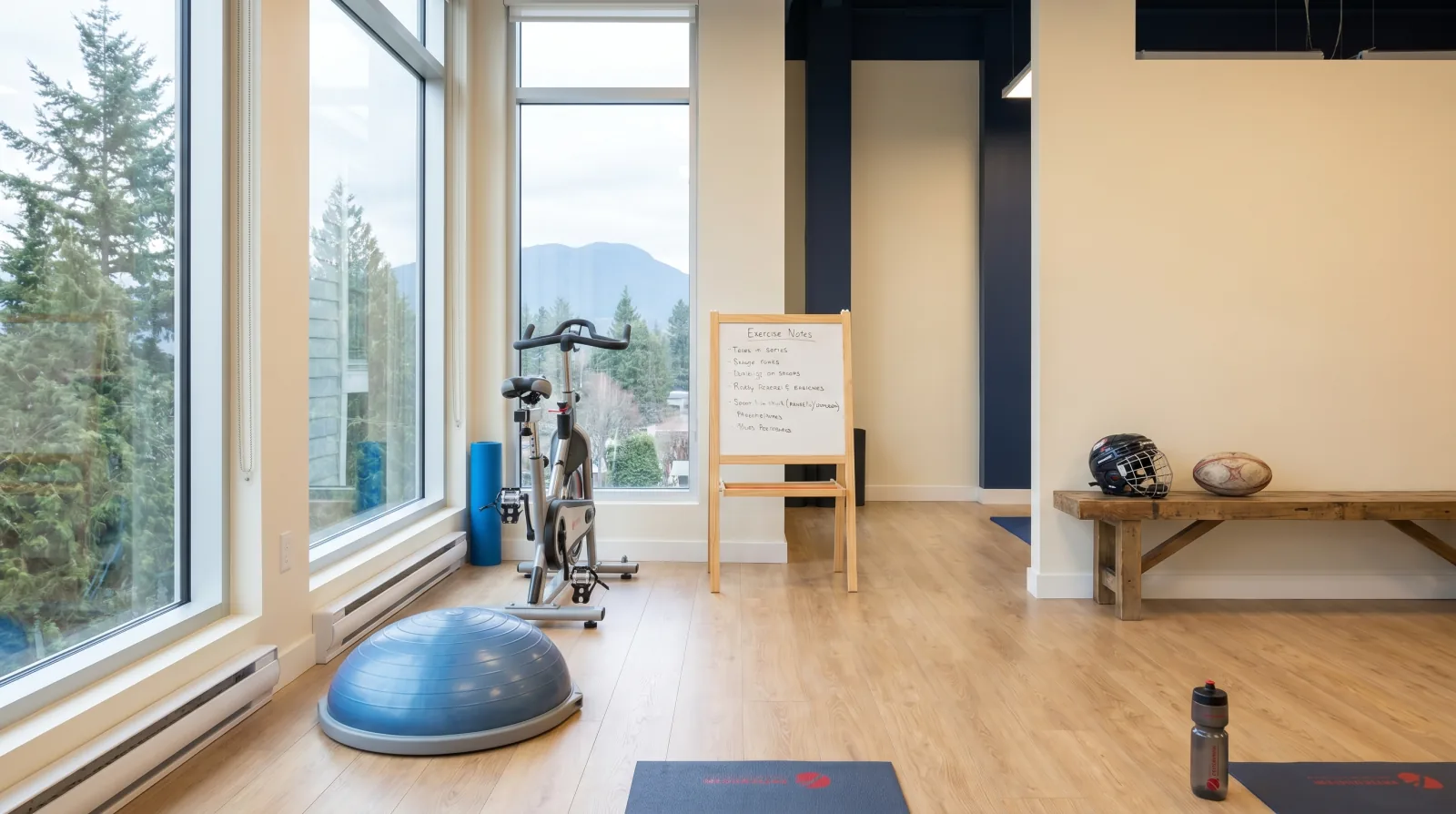
A typical session starts with a resting heart rate and a symptom check. The athlete then walks on a treadmill at a fixed, comfortable pace while the incline increases in small steps roughly every minute. Heart rate is tracked continuously, and the athlete reports symptoms at each stage. The test stops as soon as symptoms increase beyond a mild baseline level, and that heart rate is recorded as the threshold for that day.
This is different from testing a healthy athlete's cardiovascular fitness, where the goal is often to push toward a maximum effort. Here the goal is the opposite: find the point where the nervous system's tolerance runs out, then stop. Because the test is looking for a specific symptom response rather than exhaustion, sessions are usually short and are supervised throughout by a clinician trained in concussion management.
Who this applies to, and who needs a different approach first
Exercise tolerance testing is most useful once an athlete is past the first 24 to 48 hours after injury and red flags have been ruled out. It is not the first step immediately after a hit to the head, and it is not a substitute for the initial clinical assessment that screens for the signs that need urgent medical attention.
Athletes with ongoing dizziness or balance problems, or with neck-related symptoms from the same impact, often need cervical and vestibular assessment alongside exercise testing, since those systems can independently limit tolerance and respond to their own specific treatment. Our youth concussion guide for parents covers the earlier, first-two-weeks decisions in more detail, including the red flags that mean a same-day trip to the emergency department rather than a physiotherapy booking.
A practical observation from testing hundreds of athletes
The athletes who benefit most from exercise tolerance testing are often the ones whose self-reported symptoms and actual physiological tolerance disagree. Some report feeling recovered well before their heart rate threshold has come back up, and pushing them on self-report alone would risk a setback. Others hold themselves back out of caution longer than the test result would support, and a measured threshold gives them, and their coach, a more confident basis to progress. Either way, replacing a guess with a number tends to produce a steadier recovery than relying on symptom checklists alone.
This article is general information about concussion exercise tolerance testing. It is not personal medical advice. Concussion management requires a physician's involvement, and clearance for full-contact return to sport must come from a physician.
Sources
- Haider et al., The Predictive Capacity of the Buffalo Concussion Treadmill Test After Sport-Related Concussion in Adolescents, Frontiers in Neurology (2019)
- Leddy et al., Early Subthreshold Aerobic Exercise for Sport-Related Concussion: A Randomized Clinical Trial, JAMA Pediatrics (2019)
- Consensus Statement on Concussion in Sport, 6th International Conference (Amsterdam, 2022), BJSM
- College of Physical Therapists of BC (CPTBC)
Common questions
Frequently asked questions.
What is exercise tolerance testing after a concussion?
It is a graded test, most often performed on a treadmill or stationary bike, that gradually raises heart rate and workload while a clinician tracks symptoms. The goal is to find the heart rate at which concussion symptoms are reproducibly triggered. That number becomes the ceiling for early aerobic exercise, replacing a guess about how much activity is safe with a measured value.
How is exercise tolerance testing different from the six-step return-to-play protocol?+
The six-step protocol is the overall framework an athlete progresses through after a concussion, moving from light activity to full-contact practice. Exercise tolerance testing is one tool used inside that framework, specifically to find the heart rate ceiling that keeps early aerobic activity below the level that triggers symptoms. It informs how the early steps of the protocol are dosed rather than replacing the protocol itself.
What is the Buffalo Concussion Treadmill Test?+
It is a standardized graded treadmill protocol, based on an established cardiac exercise test, that gradually increases incline while heart rate and symptoms are monitored. It identifies the heart rate at which concussion-specific symptoms increase, sometimes called the heart rate threshold. That threshold guides how hard an athlete can safely exercise in the days that follow, rather than leaving activity level to guesswork.
Is exercise testing safe soon after a concussion?+
When performed by a trained clinician who stops the test at the first sign of symptom increase, graded exercise tolerance testing is considered a safe way to assess recovery, and current concussion guidance supports introducing sub-symptom-threshold aerobic activity within the first one to two weeks for most athletes. The test itself is designed to find the safe ceiling, not to push an athlete past it.
Does a low heart rate threshold mean recovery will take longer?+
It can be one signal among several. Research in adolescent athletes has linked a low tolerance for increased heart rate during testing with a longer recovery course. A single test result is not a guarantee of how long recovery will take, but it gives useful information for planning the pace of return and for deciding when to reassess.
Can exercise actually help concussion recovery, or should athletes just rest?+
Current guidance favours early, carefully dosed exercise over prolonged rest for most concussions. A randomized trial in adolescent athletes found that a supervised program of exercise below the symptom-provoking heart rate led to faster symptom resolution than a stretching-only control group. Prolonged strict rest is no longer the standard recommendation for typical concussion recovery.
What happens if symptoms increase during the test?+
The test is stopped at that point, and the heart rate at which it happened becomes the measured threshold for that day. This is not a failed test. It is the information the test is designed to produce. The threshold is used to set a safe starting point for aerobic activity, and the test is often repeated later to track whether tolerance is improving.
Who can perform exercise tolerance testing for concussion in North Vancouver?+
A physiotherapist trained in concussion management can administer a graded exercise tolerance test and use the result to guide aerobic activity dosing. The medical clearance to progress to full-contact practice still sits with a physician, so the physiotherapist's testing feeds into a plan that is coordinated with the athlete's family doctor or a sport medicine physician.
Share this post
Copies a ready-to-publish LinkedIn post to your clipboard and opens the LinkedIn share dialog. Paste the text into the composer and publish.
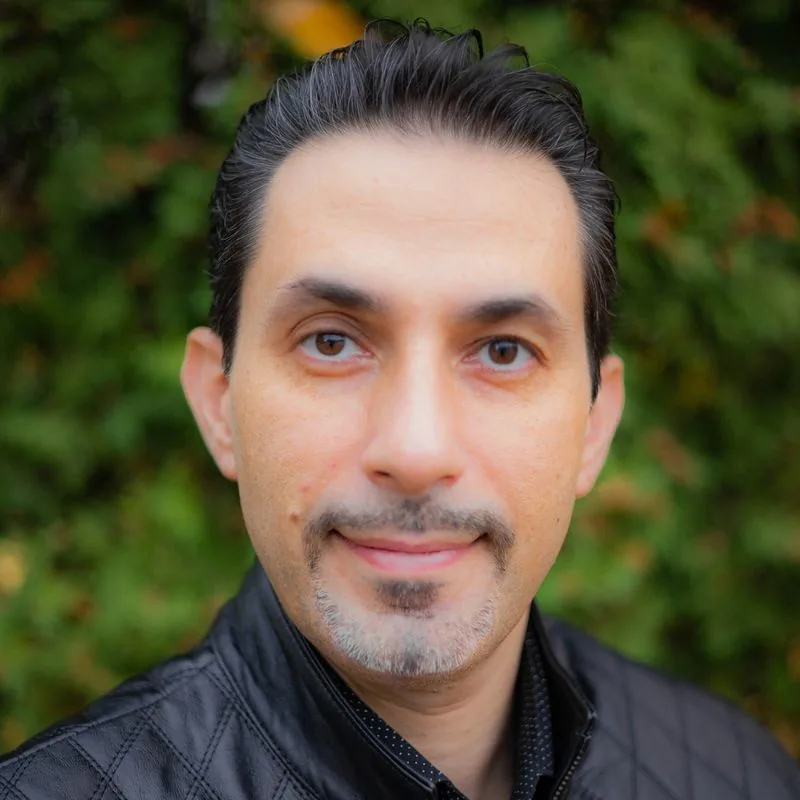
Written by
Amir Ahmadi, PhDDr. Amir Ahmadi is a Registered Physiotherapist, Certified IMS Therapist and former Associate Professor. 20+ years of clinical practice in North Vancouver.
This article is for general information only and does not constitute medical advice, diagnosis, or treatment. Individual presentations vary, and assessment findings and treatment plans differ from person to person. If you are experiencing severe symptoms, neurological changes (numbness, weakness, bowel or bladder changes), or a significant trauma, contact your physician or emergency services. Care at Medstar Sport Physio & Health is provided by practitioners registered with their respective British Columbia regulatory colleges.
Filed under
- concussion
- exercise-tolerance-testing
- buffalo-concussion-treadmill-test
- return-to-play
- north-vancouver