
Degenerative Meniscus Change or a Traumatic Tear? Why the Type Decides the Plan
Two knees, two different meniscus problems. One is gradual wear that responds to exercise. The other is a sudden injury that sometimes needs surgery. The type decides the plan.
BY MEDSTAR SPORT PHYSIO TEAM
Two people can get the same three words on a knee MRI report, "meniscus tear," and need completely different plans. One has gradual age-related wear that does well with exercise. The other has a fresh injury that may need a surgical conversation. The type of meniscus problem, not the word "tear," is what decides the plan.
A degenerative meniscus change is gradual age-related wear, common from middle age and often with no clear injury, and exercise-based physiotherapy is the preferred first-line treatment for it. A traumatic tear comes from a specific twisting injury, is more common in younger active people, and is where surgery is discussed more often, especially when the knee truly locks or a torn fragment blocks movement. At Medstar Sport Physio in North Vancouver, we work out which type you have from your history, symptoms, and whether the knee actually locks, because that decides whether the plan starts with a gym program or a surgical conversation.
Two different problems with the same name
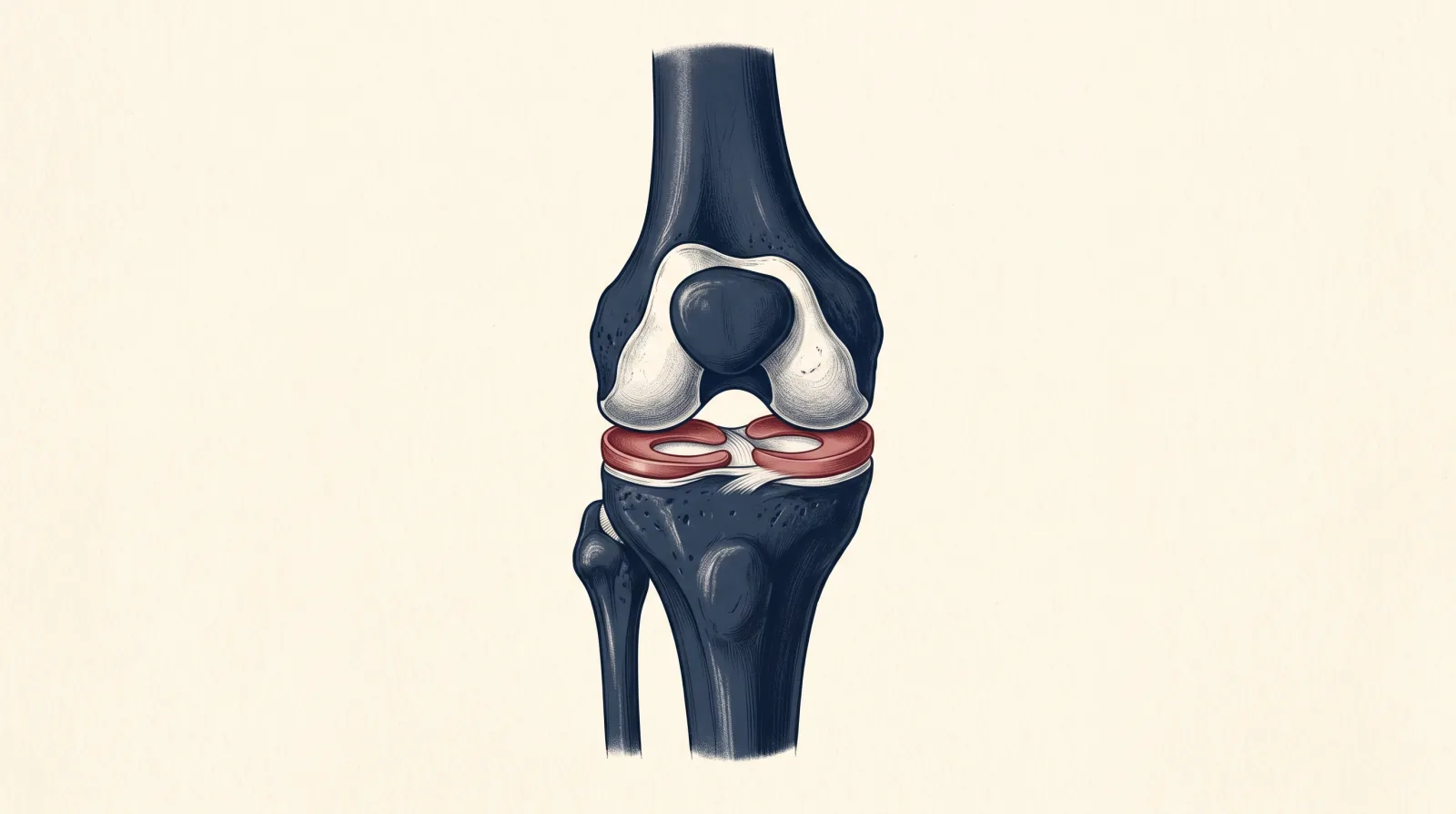
Each knee has two menisci, crescent-shaped cushions of cartilage between the thigh bone and the shin bone. They spread load and help the joint stay stable. When people hear "meniscus tear," they picture a single injury with a single fix. In reality there are two broad situations that behave very differently.
A degenerative meniscus change develops gradually as part of the normal age-related wear in the knee, is common from middle age onward, and often has no specific injury behind it. A traumatic tear happens from a specific injury, typically a twisting force on a planted leg, and is more common in younger, active people. They tend to have different tear patterns and appear in different knees, and, more to the point, the sensible plan for each is different.
The degenerative type: exercise comes first
For the degenerative type, the evidence for starting with exercise is strong. The ESCAPE trial compared exercise-based physiotherapy with keyhole surgery (arthroscopic partial meniscectomy) in people aged 45 to 70 with degenerative meniscal tears. At five years, knee function after physiotherapy was no worse than after surgery, and the authors concluded that exercise-based physiotherapy should be the preferred first-line treatment for degenerative meniscal tears.
There is a good reason this works. Degenerative meniscus changes are part of the same gradual wear that affects the whole joint, and they show up on MRI very often in people over 40, including in plenty of knees with little or no pain. So the tear seen on a scan may not even be the main source of the symptoms. Rebuilding the strength and control of the muscles around the knee and hip, and settling the irritated joint, often resolves the pain whether or not the tear is still there. We make the same argument in more depth in why rehab often beats the scope for meniscus tears after 40.
The traumatic type: when surgery enters the conversation
A traumatic tear in a younger, active knee is a different situation. Here surgery is discussed more often, for a few reasons. The tear pattern from a fresh injury can be one that is repairable, and preserving meniscus tissue in a young knee has value. Some of these tears also cause mechanical problems that a gym program cannot fix directly.
That said, surgery is still not automatic even for a traumatic tear. Emerging research has looked at exercise therapy versus keyhole surgery for traumatic meniscal tears in younger people, and rehab remains a reasonable path for many. The point is that the balance shifts. With a traumatic tear, surgery is a genuine part of the discussion earlier, whereas with a degenerative change it sits in reserve for those who do not improve.
The deciding question: does the knee truly lock
The single most useful thing that pushes toward a surgical conversation is true mechanical locking. This is when the knee physically gets stuck and cannot fully straighten or bend, often with a feeling that something is caught, and it does not simply ease off after a moment. A torn fragment can wedge into the joint and block movement, and a physical block like that is something exercise cannot move.
True locking is different from a knee that is stiff, sore, or clicks without blocking, which is common and usually not a surgical sign. For degenerative tears, keyhole surgery has not been shown to reliably relieve catching or locking-type symptoms, whereas true mechanical locking, a repairable traumatic tear, or persistent symptoms despite proper rehab are the situations where surgery is more clearly considered. The useful question is not whether the knee catches, but whether there is a real physical block, and what type of tear is behind it.
Why the scan alone will not decide it
It is tempting to think an MRI settles the plan. It does not, on its own. Degenerative meniscus changes are so common on scans in people over 40, including in pain-free knees, that a reported tear does not prove it is the cause of your symptoms or that removing it will help.
The decision comes from the whole picture: how the problem started, whether there was a clear twisting injury, your age and activity level, whether the knee truly locks, and how it responds to a proper rehab program. The scan is one input among several, not the verdict. This is the same reasoning we apply across the knee, including in knee osteoarthritis, where exercise comes first, because scan findings and symptoms often do not line up as neatly as people expect.
What rehab looks like either way
Whether the tear is degenerative or traumatic, and whether or not surgery is on the table, rehabilitation does similar work. It starts by settling the irritable, swollen knee so it calms down. Then it rebuilds the strength and control of the muscles around the knee and hip, because those muscles do a lot to support and protect the joint. Finally it restores the movement and loading your knee needs for daily life and your sport.
For a degenerative change, this is often the whole treatment. For a traumatic tear headed for surgery, the same rehab before and after the operation improves the result, so it is rarely wasted effort. Either way, a knee that is strong, controlled, and moving well is the goal, and rehab is how you get there.
When to get it assessed
If you have knee pain with a meniscus tear on a scan, or knee symptoms after a twist, an assessment sorts out which type of problem you have and what the sensible next step is. That matters, because the plan for a degenerative change and a traumatic tear are not the same, and starting down the wrong path wastes time.
Get it looked at sooner if your knee is truly locking or getting stuck, if it gave way and swelled quickly after an injury, or if you cannot put weight through it. Those features change the urgency and the plan.
Book a 30-minute appointment and we will assess your knee, work out whether it fits the degenerative or the traumatic pattern, and build a plan that starts with exercise where that is right and flags a surgical conversation where it is genuinely needed. You can reach the clinic here or read about what we treat.
This article is general information about meniscus problems. It is not personal medical advice. A regulated practitioner can confirm whether the patterns described apply to you.
Sources
- Effect of Physical Therapy vs Arthroscopic Partial Meniscectomy in Degenerative Meniscal Tears: 5-Year ESCAPE Trial - PMC
- Arthroscopic partial meniscectomy versus physical therapy for traumatic meniscal tears in a young population - BJSM
- Mechanical Symptoms and Arthroscopic Partial Meniscectomy in Degenerative Meniscus Tear - Annals of Internal Medicine
- College of Physical Therapists of BC (CPTBC)
Common questions
Frequently asked questions.
What is the difference between a degenerative meniscus tear and a traumatic tear?
A degenerative meniscus change develops gradually as part of age-related wear in the knee, is common from middle age, and often has no clear injury behind it. A traumatic tear happens from a specific injury, usually a twisting force on a planted leg, and is more common in younger, active people. They look different on imaging and, more importantly, they are managed differently, which is why sorting out the type matters more than the word tear on a scan.
Do I need surgery for a degenerative meniscus tear?+
Usually not as a first step. For degenerative meniscal tears in people roughly aged 45 to 70, high-quality research supports exercise-based physiotherapy as the preferred first-line treatment, with knee function after physiotherapy being no worse than after keyhole surgery over five years. Surgery is reserved for cases that do not improve with a proper rehab program. So a degenerative tear on a scan is not an automatic ticket to the operating room.
When is surgery discussed for a meniscus tear?+
Surgery is more often discussed for traumatic tears in younger, active people, and for knees with true mechanical locking, where a torn fragment physically blocks the knee from fully straightening or bending and does not resolve. A repairable traumatic tear in a young knee is another situation where surgery is considered earlier. For the common degenerative tear with pain but no locking, exercise comes first.
What does true knee locking mean?+
True locking is when the knee gets physically stuck and cannot fully straighten or bend, often with a sensation that something is caught, and it does not simply ease off with a moment of rest. This is different from a knee that is stiff, sore, or clicks without blocking. Real mechanical locking from a displaced meniscus fragment is one of the clearer reasons surgery is considered, because a physical block is something exercise cannot move.
Can a scan tell me whether I need surgery?+
Not on its own. Degenerative meniscus changes show up very often on MRI in people over 40, including in many knees with little or no pain, so a tear on a scan does not prove it is causing your symptoms or that removing it will help. The decision comes from your history, your symptoms, whether the knee truly locks, your age and activity, and how you respond to rehab, not from the image alone.
Share this post
Copies a ready-to-publish LinkedIn post to your clipboard and opens the LinkedIn share dialog. Paste the text into the composer and publish.
Written by
Medstar Sport Physio Team
Registered clinician at Medstar Sport Physio & Health, North Vancouver.
This article is for general information only and does not constitute medical advice, diagnosis, or treatment. Individual presentations vary, and assessment findings and treatment plans differ from person to person. If you are experiencing severe symptoms, neurological changes (numbness, weakness, bowel or bladder changes), or a significant trauma, contact your physician or emergency services. Care at Medstar Sport Physio & Health is provided by practitioners registered with their respective British Columbia regulatory colleges.
Filed under
- meniscus-tear
- degenerative-meniscus
- traumatic-tear
- knee
- exercise-first
- north-vancouver