Meniscus Tears After 40: Why Rehab Often Beats the Scope
A meniscus tear on an MRI sounds like a surgical problem. For the common age-related tear in midlife, structured rehab often works just as well as the scope.
BY AMIR AHMADI, PHD
A meniscus tear on an MRI report reads like a surgical problem. The word tear suggests something broken that needs fixing. But for the most common meniscus tears in middle age and beyond, the evidence tells a different and more reassuring story: structured rehabilitation often works just as well as surgery, and sometimes the scan finding was not even the source of the pain.
For most meniscus tears in people over 40, structured physiotherapy produces outcomes comparable to arthroscopic surgery, and high-quality studies support this. Degenerative tears are very common on MRI in middle age, including in people with little or no pain, so the tear on a scan may not be the source of symptoms. Rebuilding strength and control around the knee often resolves pain even when the tear remains. Surgery has a clearer role when the knee is truly locking from a displaced fragment, or for certain tears in younger, active people. At Medstar Sport Physio in North Vancouver, we recommend a structured rehabilitation program first, with surgical referral reserved for cases where specific mechanical problems persist. The right approach depends on tear type, age, and daily knee function.
What the meniscus is and how it tears
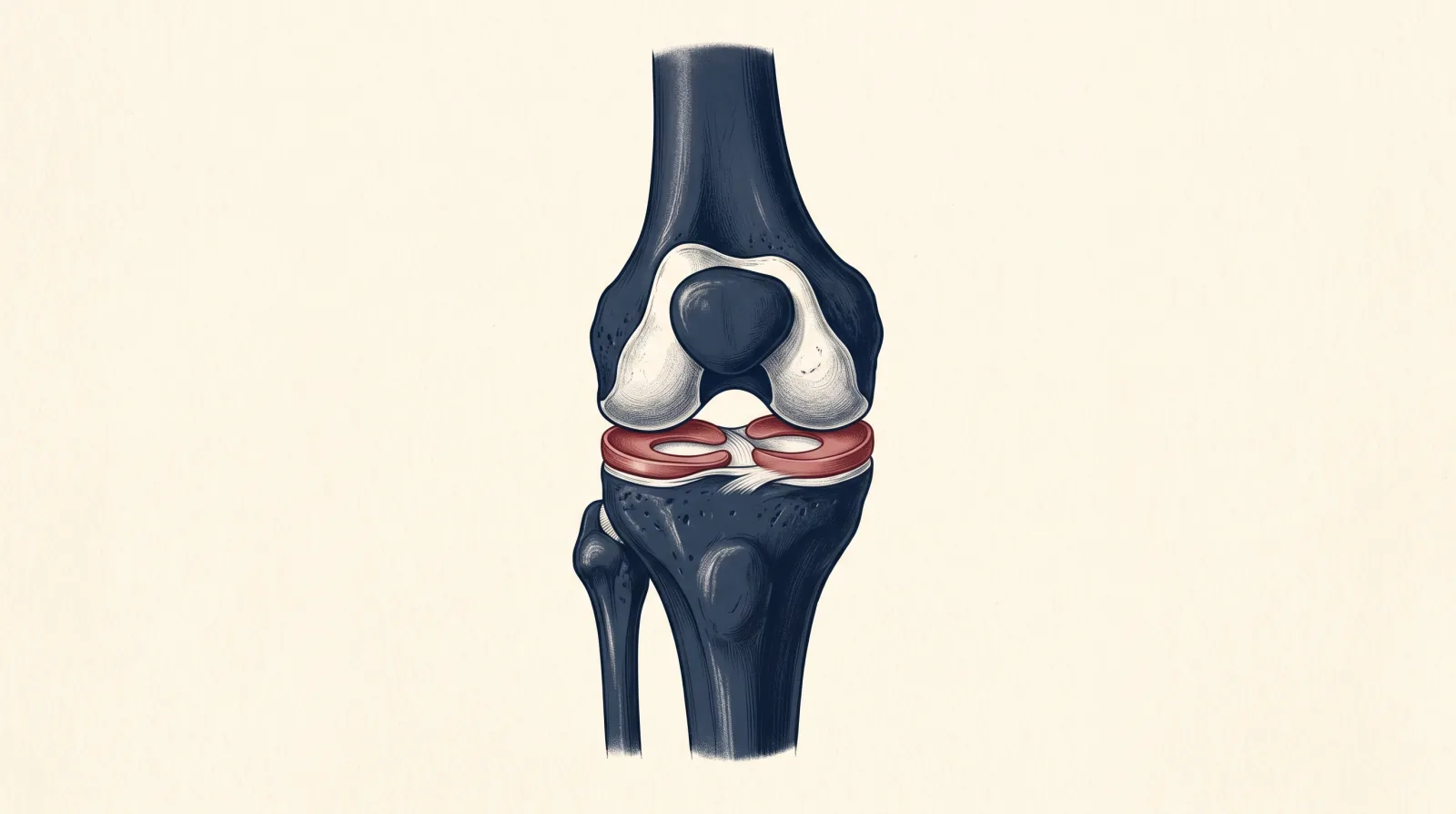
Each knee has two menisci, crescent-shaped pads of cartilage that sit between the thigh bone and the shin bone, cushioning and stabilizing the joint. Meniscus tears come in two broad types, and the distinction matters a great deal for treatment.
A traumatic tear results from a specific injury, often a twisting force on a planted leg, and is more common in younger, active people. A degenerative tear develops gradually as part of the normal age-related changes in the knee, frequently without any clear injury, and is very common from middle age onward. It overlaps with the broader picture of knee meniscal injuries and age-related osteoarthritis of the knee.
Why a tear on a scan is not the whole story
Here is a fact that reshapes the conversation: degenerative meniscus tears are extremely common on MRI in people over 40, including in many people with little or no knee pain at all. The tear is often part of the same gradual changes that affect the whole joint, and it can sit there quietly without being the source of symptoms.
This is why a meniscus tear seen on a scan does not automatically mean it is the cause of your pain, or that removing it will help. We make a similar point about the spine in our piece on when MRI is actually needed for low back pain: scans frequently show findings that are common in pain-free people, so decisions have to be based on symptoms and function, not the image alone.
What the research found
High-quality studies have compared arthroscopic surgery for degenerative meniscus tears against structured physiotherapy, and the results have been striking. For these tears, rehabilitation frequently produces outcomes as good as surgery, with many people who start with rehab never needing an operation. This is part of why arthroscopic surgery for degenerative meniscus tears, once extremely common, is now used more selectively.
The explanation makes sense once you understand the role of muscle. The muscles around the knee and hip do an enormous amount to support and control the joint. Rebuilding that strength and control, while settling the irritation, addresses the pain and function even when the tear itself remains. The tear does not have to be removed for the knee to feel and work better.
When surgery is genuinely needed
None of this means surgery has no place. It is more clearly indicated in specific situations:
- True mechanical locking or catching, where a displaced meniscus fragment physically blocks the knee from moving fully. This is a genuine mechanical problem that rehab cannot resolve, and it warrants a surgical opinion.
- Certain tears in younger, active people, particularly traumatic tears that are repairable, where preserving meniscus tissue matters for the long-term health of the knee.
For the common degenerative tear with pain but no mechanical locking, rehab is a reasonable first choice, with surgery reserved for those who do not improve with a good effort at conservative care. The key is matching the treatment to the type of tear and the symptoms, not reacting to the word on the report.
What rehab involves
Meniscus tear rehabilitation follows a familiar, effective path. We first settle the irritable knee and restore comfortable movement, then rebuild the strength and control of the muscles around the knee and hip, and progressively load the knee back toward the demands of your activities. The aim is a knee that is strong, controlled, and functional.
For many degenerative tears, this is enough to resolve the symptoms without surgery. The same principles of progressive loading that run through our approach to knee osteoarthritis and exercise apply here, because the underlying logic is identical: a well-supported, strong knee tolerates the changes inside it far better than a weak, deconditioned one.
When to get it assessed
If you have knee pain and a meniscus tear has been found or suspected, an assessment sorts out what type of tear it is, whether it is truly the source of your symptoms, and whether rehab or a surgical opinion is the right path. A knee that is truly locking and cannot straighten warrants prompt assessment. For the common painful-but-not-locking knee, rehab first is usually the better-evidenced starting point.
Book a 30-minute appointment and we will assess your knee, advise honestly on whether surgery is warranted, and build a rehabilitation plan that gives the knee its best chance of recovering without the scope.
This article is general information about meniscus tears. It is not personal medical advice. Surgical decisions belong with an orthopaedic surgeon. A regulated practitioner can confirm whether the patterns described apply to you.
Sources
- Katz et al., Surgery versus Physical Therapy for a Meniscal Tear and Osteoarthritis (METEOR trial), New England Journal of Medicine (2013)
- Beaufils et al., Surgical management of degenerative meniscus lesions: the 2016 ESSKA meniscus consensus, Knee Surgery, Sports Traumatology, Arthroscopy (2017)
- College of Physical Therapists of BC (CPTBC)
Common questions
Frequently asked questions.
Do I need surgery for a meniscus tear?
Often not, especially for the degenerative tears common in middle age and beyond. High-quality research shows that for these tears, structured physiotherapy frequently produces results as good as arthroscopic surgery. Surgery has a clearer role for certain tears, particularly true locking from a displaced fragment or some traumatic tears in younger people, but it is not automatic for a tear seen on a scan.
What is the difference between a degenerative and a traumatic meniscus tear?+
A traumatic tear results from a specific injury, often a twisting force, and is more common in younger, active people. A degenerative tear develops gradually as part of age-related changes in the knee, often without a clear injury, and is very common in middle age. The two are managed differently, and degenerative tears in particular often respond well to rehab.
Why does an MRI show a meniscus tear but surgery may not help?+
Degenerative meniscus tears are extremely common on MRI in people over 40, including many with little or no pain, so a tear on a scan does not necessarily mean it is the source of your symptoms or that removing it will help. This is why decisions are based on your symptoms and function, not the scan alone, and why rehab is often tried first.
When is meniscus surgery genuinely needed?+
Surgery is more clearly indicated when the knee is truly locking or catching from a displaced meniscus fragment that physically blocks movement, and for certain tears in younger, active people, especially repairable tears. For the common degenerative tear with pain but no mechanical locking, rehab is a reasonable first choice, with surgery reserved for those who do not improve.
What does meniscus tear rehab involve?+
Rehab settles the irritable knee, then rebuilds the strength and control of the muscles around the knee and hip, and restores movement and function. It progresses from basic loading to the demands of your activities. The aim is a knee that is strong, controlled, and functional, which for many degenerative tears resolves the symptoms without surgery.
What happens at a first physiotherapy visit for a suspected meniscus tear?+
The physiotherapist checks whether the knee is truly locking or catching, assesses how it moves and how strong the surrounding muscles are, and asks about your symptoms and function. This sorts out whether you are looking at a traumatic or degenerative tear and whether the pattern fits a mechanical block or an ordinary painful, non-locking knee, which shapes whether rehab or a surgical opinion comes first.
How does meniscus tear rehab differ from knee osteoarthritis rehab?+
The two overlap a lot, since a degenerative meniscus tear often develops alongside age-related changes in the knee described in our post on [knee osteoarthritis and exercise](/journal/knee-osteoarthritis-exercise-first). Both rely on progressive strengthening around the knee and hip. Meniscus tear rehab pays closer attention to any mechanical catching or locking, which osteoarthritis alone does not typically cause.
Can I still kneel or squat with a meniscus tear?+
Many people can, once the knee is settled and the surrounding muscles are strong enough to control the joint through that range. Kneeling and deep squatting load the meniscus more directly, so these movements are usually reintroduced gradually as part of rehab rather than avoided indefinitely or pushed through before the knee is ready.
Share this post
Copies a ready-to-publish LinkedIn post to your clipboard and opens the LinkedIn share dialog. Paste the text into the composer and publish.

Written by
Amir Ahmadi, PhDDr. Amir Ahmadi is a Registered Physiotherapist, Certified IMS Therapist and former Associate Professor. 20+ years of clinical practice in North Vancouver.
This article is for general information only and does not constitute medical advice, diagnosis, or treatment. Individual presentations vary, and assessment findings and treatment plans differ from person to person. If you are experiencing severe symptoms, neurological changes (numbness, weakness, bowel or bladder changes), or a significant trauma, contact your physician or emergency services. Care at Medstar Sport Physio & Health is provided by practitioners registered with their respective British Columbia regulatory colleges.
Filed under
- meniscus-tear
- knee
- rehab
- surgery
- north-vancouver