Use Your Massage Benefits Before Your Plan Resets: A BC Guide
Many work health plans pay for registered massage therapy up to a yearly limit. Here is how to find what you have left, when it resets, and how to plan visits that help your body.
BY KEVIN HERTER, RMT
Many work health plans pay for registered massage therapy up to a yearly amount. If you have money left near the end of your plan year, here is how to find it, use it well, and get more from it than one rushed session in late December.
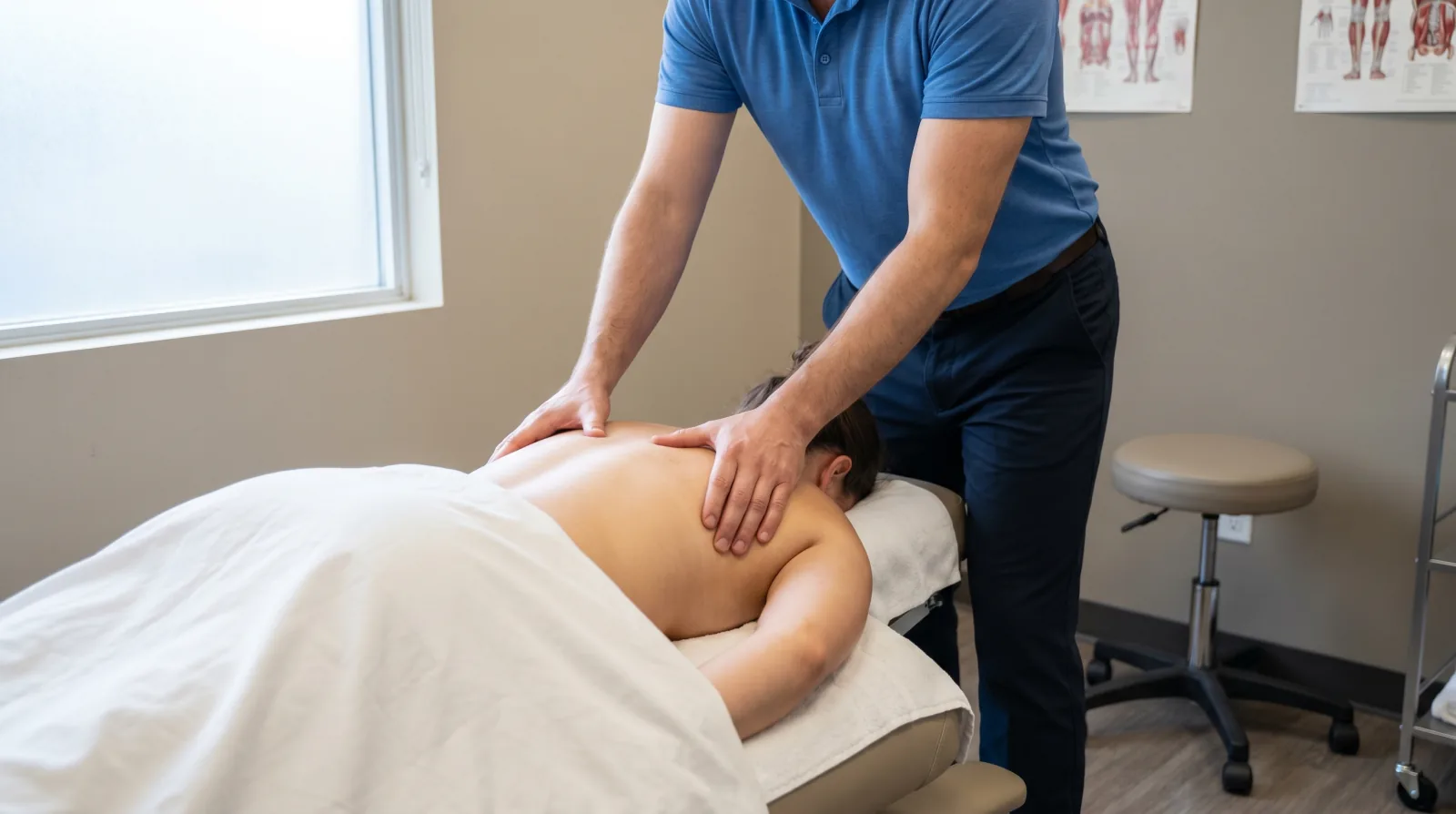
At Medstar Sport Physio in North Vancouver, you can use your remaining massage coverage by checking your plan year and balance, booking regular visits with a Registered Massage Therapist before the reset date, and letting the clinic bill your plan directly.
First, find out what you have
Your plan booklet or your insurer's online account holds three numbers you need: the yearly amount for massage therapy, how much you have used, and the date your plan year ends. Some plans also set a maximum the plan will pay per visit, or a share of each visit you pay yourself. Look for massage therapy under the section for paramedical services.
While you are there, check two more details. First, whether the plan asks for a doctor's note before it pays for massage. Second, whether unused money carries over into the next year. Plans differ on both. If you cannot find the answer, the phone number on your benefits card will get it in a few minutes.
If you are one of the people who qualify for MSP supplementary benefits, the rules are different. The Government of BC's MSP supplementary benefits page explains that MSP gives partial payment for massage therapy to eligible groups, such as people who qualify by income and people receiving the Guaranteed Income Supplement. The limit is 10 visits each calendar year, shared across massage therapy, physiotherapy, chiropractic, acupuncture, naturopathy and non-surgical podiatry.
Know when your plan resets
Each plan picks its own date. Some reset on January 1. Others follow the employer's policy year, which can start in any month. MSP supplementary benefits count visits by calendar year.
The reset date matters because of carry-over. If your plan does not carry unused money into the next year, any amount left on the last day of the plan year is simply gone. Booking before that date uses money you have already paid for through your job.
Booking early also leaves room for a second or third visit if the first one helps, instead of fitting everything into the last week.
Plan visits that help, not just visits that spend
It is tempting to book one long session to use up a balance. If you have a problem you want to change, such as a stiff neck or a sore low back, regular visits usually do more.
The 2024 Cochrane review of massage for neck pain pooled 33 studies with 1,994 people. Overall, massage did little better than a fake treatment for pain. When the authors grouped trials by dose, people who had at least 8 sessions over four weeks, each 30 minutes or longer, showed a difference large enough to matter to patients. Regular, well-spaced visits seem to count for more than one long one.
For low back pain, the 2015 Cochrane review of 25 trials and 3,096 people found that massage eased pain and improved function in the short term, and that the gains faded later. That tells you two things. Massage can help, and the benefit lasts longer when you use the better weeks to move more and build strength.
So a sensible plan for a remaining balance might look like this: one 60-minute first visit to assess the problem, then two or three shorter follow-ups spaced a week or two apart, each paired with a stretch or movement to keep doing at home.
Choose the right session length
At Medstar, a first massage visit is 60 minutes and includes a health history and a check of the sore area. Follow-ups can be 30, 45, 60 or 90 minutes. Here is how to choose:
- 30 minutes suits one small area that has already been assessed, such as one shoulder or a calf.
- 45 minutes suits one main problem and the muscles around it, such as the neck and upper back.
- 60 minutes suits two connected areas, such as the low back and hips.
- 90 minutes suits several problem areas at once.
If your plan sets a maximum per visit, a long session may leave you paying more of the cost yourself. If your plan sets only a yearly limit, the length matters less than spreading visits out. Our guide to choosing a massage length and how often to book goes into more detail.
Pick the problem worth treating
If you have a few visits left, spend them on the problem that limits you most. Massage has the clearest research support for a handful of common complaints.
For sore muscles after hard exercise, a 2020 review in BMJ Open Sport and Exercise Medicine of 29 studies and 1,012 people found small improvements in muscle soreness and flexibility. If you ski, run or play hockey through the winter, a session after your hardest week is a reasonable use of a balance.
For shoulder pain and knee osteoarthritis, a 2015 review in the Journal of Physiotherapy of 26 trials found massage reduced pain in the short term compared with no treatment. The same review found short-term gains in function for low back pain, knee arthritis and shoulder pain.
For tension headaches, a 2015 trial of 56 people found that 12 neck massage sessions over six weeks made tender neck muscles less sensitive, and people reported more relief than with a fake treatment. Our page on massage for headaches and neck tension covers what a session for that problem looks like.
Let the clinic bill your plan
Medstar bills most major work health plans directly for registered massage therapy. At the end of the visit the clinic sends the claim, the plan replies, and you pay only what the plan did not cover. Bring your plan details to your first visit. If your insurer does not accept direct billing, you pay and the clinic gives you a receipt to submit.
If you are covered by two plans, for example your own and a partner's, the second plan may pay part of what the first one does not. Insurers call this coordination of benefits. Bring both sets of details.
Plans pay for visits with a registered massage therapist. In BC, massage therapists are regulated by the College of Complementary Health Professionals of BC, which keeps a public register you can search. At Medstar, massage therapy is provided by Kevin Herter, RMT.
Coverage outside your work plan
Two other payers have their own rules and do not reset with your work plan.
After a car crash in BC, ICBC pre-approves 12 registered massage therapy treatments in the first 12 weeks, whoever caused the crash. You need your claim number and Personal Health Number, and no referral. Each treatment must include at least 45 minutes of one-on-one time. At Medstar these visits are free for the patient. Read more about massage under ICBC.
For a work injury, WorkSafeBC pays for massage once your claim is accepted and you have a doctor's referral. The therapist can give an assessment and up to six treatments in the first eight weeks from the date of injury without asking first.
If your injury came from a crash or from work, use those payers for it, and keep your own plan for other needs.
Make the visits count
A few habits help the benefit last after the visit:
- Tell the therapist your main goal at the start, such as turning your head to check your blind spot, or sleeping through the night.
- Ask for one stretch or movement to do at home, and do it on the days between visits.
- Take a short walk after the session instead of sitting for hours.
- Keep a note of your pain and stiffness before and after each visit, so you can see whether the plan is working.
If three or four visits change nothing, that is useful information. It may be time to see a physiotherapist for an assessment, or your doctor.
When massage should wait
Most people can book a massage without concern. Some health problems mean waiting or seeing a doctor first: a known or possible blood clot, a fever or infection, a fracture that has not healed, a wound that has not closed, or recent surgery your surgeon has not cleared. If one calf becomes swollen, hot, red and painful, or you have chest pain or sudden shortness of breath, call 911 or go to Lions Gate Hospital emergency. Our page on when massage is safe lists every case.
A practical way to finish the year
Check your balance and reset date this week. If you have money left and a problem you want to change, book a 60-minute first visit now and plan two or three follow-ups before the reset. If you only want to ease general tension, one or two well-timed visits may be enough. Either way, the massage therapy guide explains what to expect at the clinic.
This article is general information, not personal medical advice. A regulated practitioner can confirm whether the patterns described apply to you.
Sources
- Government of BC: MSP supplementary benefits
- ICBC: Accessing treatment during your first 12 weeks of recovery
- WorkSafeBC: Massage therapists, key guidelines
- Gross AR, et al. Massage for neck pain. Cochrane Database of Systematic Reviews, 2024
- Furlan AD, et al. Massage for low-back pain. Cochrane Database of Systematic Reviews, 2015
- Davis HL, et al. Effect of sports massage on performance and recovery. BMJ Open Sport and Exercise Medicine, 2020
- Bervoets DC, et al. Massage therapy has short-term benefits for people with common musculoskeletal disorders. Journal of Physiotherapy, 2015
- Moraska AF, et al. Trigger point-focused head and neck massage for recurrent tension-type headache. Clinical Journal of Pain, 2015
- College of Complementary Health Professionals of BC: public practitioner search
Common questions
Frequently asked questions.
Do massage benefits carry over to the next year?
It depends on your plan. Many work health plans give a yearly amount for registered massage therapy, and the plan booklet says whether unused money carries over. Check your booklet or your insurer's online account. If it does not carry over, any amount left at the end of the plan year is gone, so booking before the reset date lets you use it.
When does my massage coverage reset?+
Each plan sets its own date. Some reset on January 1 and others on a date tied to your employer's policy year. Your insurer's app or website usually shows the plan year and how much you have used. MSP supplementary benefits, for people who qualify, count visits by calendar year, so they reset on January 1.
How do I find out how much massage coverage I have left?+
Log in to your insurer's website or app and look for paramedical or massage therapy under your benefits. It shows the yearly limit, what you have used, and sometimes a per-visit maximum. You can also call the number on your benefits card. When Medstar bills your plan directly, the response shows what the plan paid for that visit.
Does Medstar direct bill extended health plans for massage?+
Yes. Medstar bills most major work health plans directly for registered massage therapy, so you pay only the part your plan does not cover at the end of the visit. Bring your plan details to your first visit. If your insurer does not accept direct billing, you pay and the clinic gives you a receipt to submit yourself.
Is it better to book one long massage or several short ones?+
For a problem you want to change, several regular visits usually help more than one long one. In the 2024 Cochrane review of massage for neck pain, people who had at least 8 sessions over four weeks, each 30 minutes or longer, showed a difference that mattered to patients. If your plan caps each visit, shorter sessions may also cost you less out of pocket.
Do I need a doctor's note to use my massage benefits?+
Some plans ask for a doctor's note before they pay for massage, and some do not. Check your plan booklet before you book, because a missing note can lead to a refused claim. ICBC does not need a referral for its 12 pre-approved massage treatments after a crash. WorkSafeBC does need a doctor's referral before it pays for massage.
Can I use two health plans for massage?+
Often, yes. If you are covered under your own plan and a partner's plan, the second plan may pay part of what the first one does not. Insurers call this coordination of benefits. Bring both sets of plan details to the clinic. The order in which plans pay depends on your insurers, so check with them if you are not sure.
What should I book if I only have one or two visits left?+
Book the visit around the problem that bothers you most, and say so when you arrive. A 45- or 60-minute session gives time to treat one main area and the muscles around it. Ask your massage therapist for a stretch or a movement to keep doing at home, so the benefit lasts into the new year after your coverage resets.

Written by
Kevin Herter, RMTKevin Herter, RMT, is the Registered Massage Therapist at Medstar Sport Physio in North Vancouver. Sports, deep tissue and injury massage, with direct billing and ICBC.
This article is for general information only and does not constitute medical advice, diagnosis, or treatment. Individual presentations vary, and assessment findings and treatment plans differ from person to person. If you are experiencing severe symptoms, neurological changes (numbness, weakness, bowel or bladder changes), or a significant trauma, contact your physician or emergency services. Care at Medstar Sport Physio & Health is provided by practitioners registered with their respective British Columbia regulatory colleges.
Filed under
- massage-therapy
- rmt
- extended-health
- direct-billing
- north-vancouver