Tension-Type Headache or Migraine? How to Tell Them Apart
A pressing band around the head and a pounding one-sided headache with nausea are usually two different problems. Knowing which you have changes what actually helps.
BY MEDSTAR SPORT PHYSIO TEAM
People often use "migraine" for any bad headache, but tension-type headache and migraine are different problems that behave differently and respond to different treatment. Telling them apart is worth doing, because it changes what actually helps and it flags the smaller group of headaches that need a doctor rather than self-management.
A tension-type headache is usually a pressing or tightening feeling on both sides of the head, mild to moderate, and it is not made worse by routine activity. A migraine is usually more intense, often one-sided and pulsating, gets worse with routine physical activity, and usually comes with nausea or strong sensitivity to light and sound. At Medstar Sport Physio in North Vancouver, a physiotherapist helps most when the neck is contributing to the headache, and part of the assessment is recognising the warning signs that mean a headache should be checked by a doctor rather than treated on a table.
The two headaches feel different
The clearest way to separate these is by how they feel and behave, and the international criteria used by clinicians line up well with what patients describe.
A tension-type headache is typically felt on both sides of the head, has a pressing or tightening quality rather than a throb, sits at a mild to moderate intensity, and is not made worse by routine physical activity like walking up stairs. It usually does not come with nausea, and at most one of light sensitivity or sound sensitivity. People often describe it as a band or a weight around the head.
A migraine without aura is different. Attacks last from about 4 to 72 hours, and the headache tends to have at least two of these features: one-sided location, a pulsating or throbbing quality, moderate to severe intensity, and worsening with routine physical activity. It usually comes with nausea, vomiting, or strong sensitivity to light and sound. Some people also get an aura beforehand, such as visual changes, which is a distinct warning phase.
Why people confuse them
If the two are so different, why the constant mix-up? Part of it is that "migraine" has become a general word for a severe headache, so a bad tension-type headache gets called a migraine. And part of it is genuine overlap. The same person can get both types on different days, and the two are diagnosed separately for exactly that reason.
There is also a middle ground where a headache has some migraine-like features but not enough to be a clear migraine, and where stress, poor sleep, and long hours in one posture blur the picture. This is why chasing a perfect label from symptoms alone can be frustrating, and why the pattern over time, how often, how long, and what comes with it, tells you more than any single episode. A simple headache diary often reveals the pattern faster than anything else.
Triggers tend to differ too
The things that set each headache off often differ, and noticing your own triggers is useful information.
Tension-type headaches are frequently linked to stress, poor sleep, eye strain, and long stretches held in one position, such as a full day at a desk. That posture-and-stress link is part of why they can respond to changes in daily habits and to neck and shoulder treatment when tension there is feeding in.
Migraine triggers are more varied and personal. Common ones include changes in sleep, missed meals, dehydration, hormonal shifts, certain foods for some people, and stress, including the drop after a stressful period ends. Because triggers differ so much between people, a diary that notes what happened before an attack is often the most practical tool for spotting patterns.
Where the neck comes in
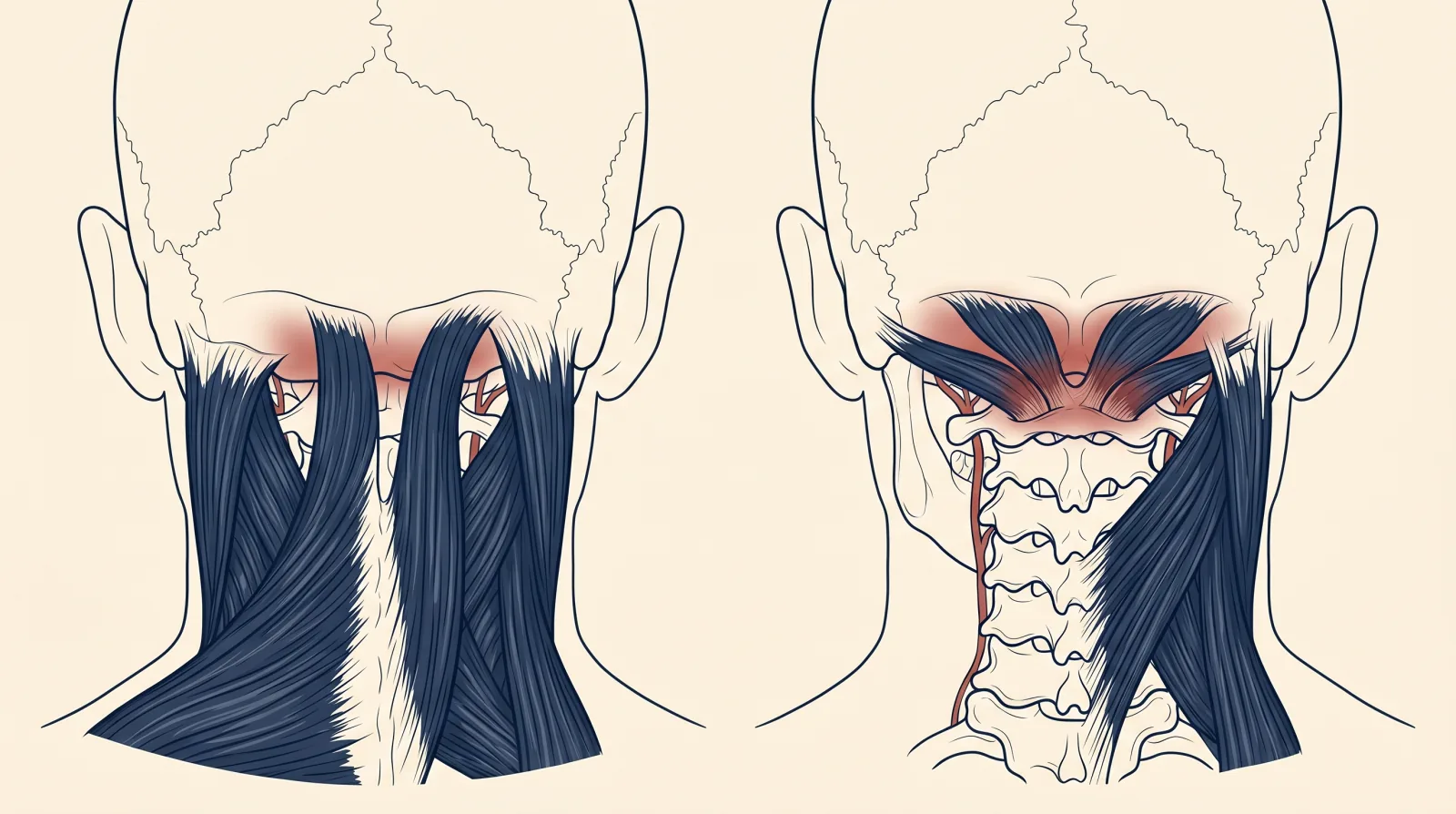
There is a third headache worth knowing about, because it is the one a physiotherapist treats most directly. A cervicogenic headache is driven by the joints and muscles of the neck. It usually starts at the back of the head or neck and spreads forward, is often one-sided and steady rather than pounding, and can be brought on or eased by neck movements and sustained postures.
This matters because a neck-driven headache can be mistaken for either a tension-type headache or a one-sided migraine. The distinction is practical: a cervicogenic headache responds well to treatment aimed at the neck, and an assessment can test whether moving or loading your neck reproduces your usual headache. We go deeper into that specific overlap in tension-type versus cervicogenic headache, and into the desk-and-posture version in cervicogenic headache from desk work and the neck.
Where a physiotherapist actually helps
Being honest about scope matters here. A physiotherapist is not the right first stop for every headache, and pretending otherwise does not help anyone.
Physiotherapy helps most when the neck is contributing. For a clear cervicogenic headache, manual therapy and targeted neck exercise are a recognised first-line approach. For tension-type headaches where neck and shoulder tension and posture are feeding in, physiotherapy and habit changes can reduce how often they happen. For migraine, which is a neurological condition managed medically, physiotherapy does not treat the migraine itself, though treating a contributing neck problem can sometimes reduce how often attacks are triggered in people who have both.
The useful role of an assessment is to sort out which of these applies to you, so effort goes where it will actually help rather than spreading it thinly across everything at once.
Managing the day-to-day
Whatever the label, a few practical habits help many people with recurrent headaches, and they are worth doing while you work out the diagnosis. Regular sleep and meals, steady hydration, and breaking up long periods in one posture reduce two of the most common contributors, and they cost nothing to try.
For headaches with a posture or neck component, the same principles we use for desk-related neck problems apply: change position often rather than holding one "perfect" posture, bring screens up toward eye level, and keep generally active. For migraine, tracking and managing personal triggers, alongside whatever medical plan your doctor sets, tends to do more than any single fix. None of this replaces a proper diagnosis, but it stops a treatable headache from being made worse by the everyday things that feed it.
When to see a doctor
Most tension-type headaches and migraines are not dangerous, but some headache patterns need urgent medical assessment rather than self-management or physiotherapy. Clinicians use warning signs often summarised as red flags for headache.
See a doctor promptly for a headache that comes on suddenly and reaches full intensity within a minute or so, a new headache after age 50, a headache with fever and a stiff neck, any new weakness, numbness, or vision changes, a headache after a head injury, a headache that keeps getting worse over days or weeks, one that is clearly worse when you cough, strain, or change position, or a new headache in pregnancy. Those features can point to something beyond a primary headache and deserve medical review.
When to book with us
If you have recurrent headaches and suspect your neck is involved, or you are not sure whether you are dealing with tension-type headache, migraine, or a neck-driven headache, an assessment helps sort it out and tests whether your neck reproduces your usual headache.
Book a 30-minute appointment and we will assess your neck, work out whether it is contributing to your headaches, and build a treatment and habit plan for the part we can help with, while pointing you to the right medical care for the part we cannot. You can contact the clinic here or see what we treat.
This article is general information about headaches. It is not personal medical advice. A regulated practitioner can confirm whether the patterns described apply to you, and headache red flags should be assessed by a doctor.
Sources
- Tension-type headache diagnostic criteria - ICHD-3
- Migraine without aura diagnostic criteria - ICHD-3
- Red Flags in Headache - American Headache Society
- College of Physical Therapists of BC (CPTBC)
Common questions
Frequently asked questions.
What is the difference between a tension-type headache and a migraine?
A tension-type headache is usually a pressing or tightening feeling on both sides of the head, mild to moderate, and it is not made worse by normal activity like walking up stairs. A migraine is usually more intense, often one-sided and pulsating, gets worse with routine physical activity, and usually comes with nausea or strong sensitivity to light and sound. The two can also happen in the same person at different times, which is why they are diagnosed separately.
Can a physiotherapist help with headaches?+
A physiotherapist can help most when the neck is contributing to the headache. Neck-driven headaches, called cervicogenic headaches, respond to manual therapy and exercise for the neck. Physiotherapy can also help some tension-type headaches where neck and shoulder tension is a factor. Migraine itself is a neurological condition managed medically, though neck treatment can sometimes reduce how often attacks are triggered. An assessment sorts out whether your neck is part of the picture.
How do I know if my headache is coming from my neck?+
Neck-driven headaches usually start at the back of the head or neck and spread forward, are often one-sided and steady rather than pounding, and can be brought on or eased by neck movements or sustained postures. They differ from migraine, which is more about pulsating pain with nausea and light sensitivity, and from tension-type headache, which is a more even pressing feeling on both sides. An assessment can test whether your neck reproduces your usual headache.
When should I see a doctor about headaches?+
See a doctor promptly for a headache that comes on suddenly and severely, a new headache after age 50, a headache with fever and a stiff neck, any new weakness, numbness, or vision changes, a headache after a head injury, a headache that keeps getting worse over days or weeks, or one that is much worse when you cough, strain, or change position. Those patterns need medical assessment rather than self-management.
What triggers tension-type headaches versus migraines?+
Tension-type headaches are often linked to stress, poor sleep, long periods in one posture, and eye strain. Migraine triggers vary a lot between people and can include certain foods, hormonal changes, missed meals, dehydration, sleep changes, and stress, including the let-down after stress. Keeping a simple diary of when headaches happen often reveals patterns that help both you and your clinician manage them.
Share this post
Copies a ready-to-publish LinkedIn post to your clipboard and opens the LinkedIn share dialog. Paste the text into the composer and publish.
Written by
Medstar Sport Physio Team
Registered clinician at Medstar Sport Physio & Health, North Vancouver.
This article is for general information only and does not constitute medical advice, diagnosis, or treatment. Individual presentations vary, and assessment findings and treatment plans differ from person to person. If you are experiencing severe symptoms, neurological changes (numbness, weakness, bowel or bladder changes), or a significant trauma, contact your physician or emergency services. Care at Medstar Sport Physio & Health is provided by practitioners registered with their respective British Columbia regulatory colleges.
Filed under
- tension-headache
- migraine
- headache
- cervicogenic
- headache-triggers
- north-vancouver