Massage for Stress and Anxiety: What the Trials Show
Many people book a massage because they feel stressed. Here is what trials found about massage for anxiety and low mood, and where its limits are.
BY KEVIN HERTER, RMT
Many people book a massage because they feel stressed. Their shoulders are tight, their sleep is poor, and they want an hour where nobody needs anything from them. Here is what trials found about massage for anxiety and low mood, and where its limits are.
At Medstar Sport Physio in North Vancouver, massage is offered as one part of stress care: a 2016 trial found twice-weekly Swedish massage eased anxiety more than light touch, but massage does not replace treatment from a doctor or counsellor.
Stress shows up in the body
Stress is a mental experience, but most people also feel it in their body. Shoulders lift, the jaw clenches, breathing gets shallow, and the neck and upper back feel tight by the end of the day. Some people get tension headaches. Others sleep badly and wake up stiff. Over weeks, the body can start to feel tense even on calm days, and some people only notice how tight they were when the tension finally lets go on a massage table or after a long walk.
Massage works on the body side of this. It eases tight muscles, and many people find a quiet hour on the table helps them slow down. The question is whether the effect goes further than a pleasant hour. A few trials have tested that.
The anxiety trial
The clearest trial is a 2016 study in the Journal of Clinical Psychiatry from the Mood and Anxiety Disorders Program at Emory University. It enrolled 47 people with generalized anxiety disorder who were not taking any treatment for it. They were assigned at random to one of two groups for six weeks:
- Swedish massage, twice a week.
- A light-touch session, twice a week, as a comparison.
Anxiety was measured with a standard rating scale used in psychiatry. At six weeks, anxiety scores had fallen in both groups, by 11.67 points with massage and 8.41 points with light touch. The difference of 3.26 points favoured massage, and it was clear from the end of week three.
Two lessons stand out. First, both groups improved, which shows how much a calm, caring hour and the expectation of help matter. Second, massage did better than light touch, so the benefit was more than attention alone. The trial was small, and the authors called it a proof-of-concept study, meaning a first test that larger trials need to confirm.
Massage and low mood
A 2010 review in the Journal of Clinical Psychiatry pooled 17 trials with 786 people and looked at massage for depression. All the trials found a positive effect, and the pooled result linked massage with fewer depressive symptoms. The trials were of moderate quality, and they used different massage methods and different ways to measure depression, so the authors asked for more consistent studies.
Pregnancy offers another view. A 2021 review of 12 trials of relaxation massage in pregnancy found it reduced stress, anxiety and depression, along with back and leg pain, in women with healthy pregnancies.
Taken together, these studies suggest massage can ease anxiety and low mood for some people. They do not show that massage can treat an anxiety disorder or depression on its own.
What massage cannot do
Massage is a support. It does not replace:
- A doctor's assessment, when anxiety or low mood is new, severe, or getting worse.
- Counselling or psychological therapy, which helps with the causes of stress and gives you tools you can use every day.
- Medicine, when a doctor recommends it.
Some signs mean stress needs more than massage. Talk to your doctor or a counsellor if worry or low mood is there most days and does not lift over several weeks, if you have panic attacks, if you have stopped enjoying things you used to enjoy, if you are using alcohol or other drugs to cope, or if stress is affecting your work or relationships.
If you are using massage alongside other care for anxiety or depression, tell your doctor or counsellor, so the plan fits together. Medstar has a registered counsellor on the team, and you can book a counselling visit at the same clinic.
If you are thinking about suicide or are worried about your safety, call or text 9-8-8, the Suicide Crisis Helpline, at any time. If you are in danger now, call 911 or go to Lions Gate Hospital emergency.
Stress, tight muscles and headaches
Stress and tension headaches often travel together. People under pressure tend to hold their shoulders up and clench their jaw, and tender spots in the neck and shoulder muscles can send pain into the head.
A 2015 trial gave 56 people with tension-type headaches 12 neck and head massage sessions over six weeks. Massage made tender neck muscles less sensitive to pressure, and people reported more relief from their headaches than with a fake treatment. Headache frequency fell in both groups, which again shows how much expectation and care matter. If stress headaches are part of your week, our page on massage for headaches and neck tension explains how a session for that problem is planned.
Stress after an injury or a car crash
Pain and stress feed each other. After an injury, worry about work, money and recovery can make sleep worse, and poor sleep can make pain feel worse.
In BC, ICBC pre-approves treatment in the first 12 weeks after a crash, with no referral. That includes 12 registered massage therapy treatments and 12 counselling treatments, along with physiotherapy and other care. Using both can help with the physical and the emotional side of recovery. Our ICBC guide to counselling after a crash explains how the counselling side works, and massage under ICBC covers the massage side.
What a stress-focused massage looks like
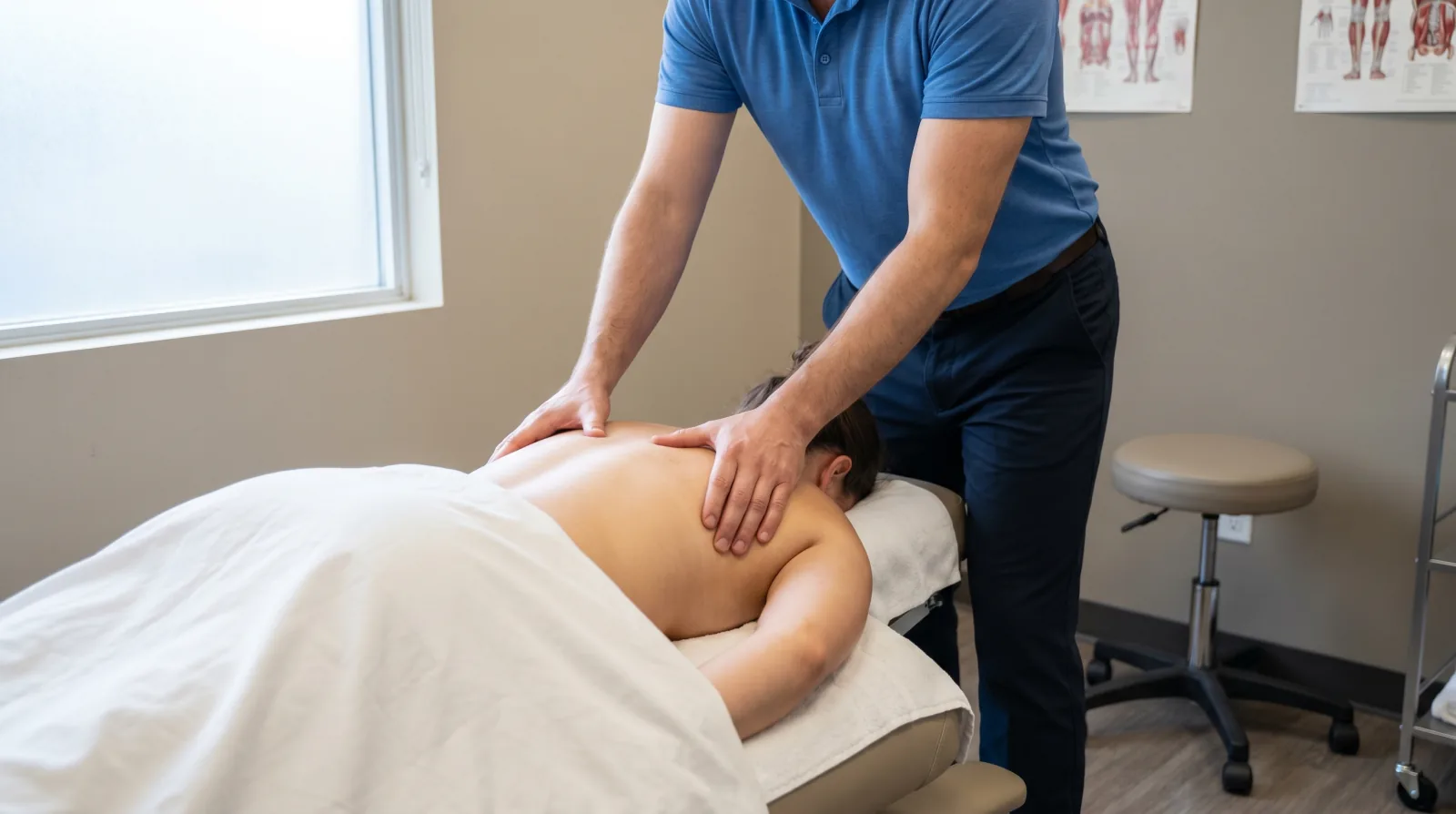
The anxiety trial used Swedish massage: long, flowing strokes at moderate pressure. That style suits stress, because the goal is to help you relax. Firm work that hurts can make it harder to let go.
Tell your therapist at the start that stress is your main reason for booking. A session might cover the back, neck, shoulders, scalp, hands and feet, with steady pressure and a slow pace. You can ask for quiet, or you can talk. Your registered massage therapist will check in on comfort from time to time.
For some people, lying still or being touched brings up anxiety rather than easing it. If that happens, say so. The therapist can change the pressure, keep you more covered, skip an area, tell you what is coming next, or stop. You stay in control of the session. Our page on your first massage visit explains consent and draping in more detail.
How often to book
The anxiety trial used two sessions a week for six weeks, which is a lot for most people. For everyday stress, a session every two to four weeks is a common plan. A simple way to choose is to notice how long you feel the benefit. If your shoulders and sleep feel better for ten days and then slip back, book every two weeks.
At Medstar, a first visit is 60 minutes and includes a health history. Follow-ups can be 30, 45, 60 or 90 minutes. For stress, a 60-minute session allows time to settle before the work begins. Our page on choosing a session length has more detail.
Small habits that help between visits
A massage gives you an hour of rest. These habits help carry the effect into the rest of the week:
- Notice when your shoulders lift or your jaw clenches, and let them drop.
- Take a few slow breaths, with a longer breath out than in, when you feel tension rising.
- Get outside for a walk on the Spirit Trail or along the waterfront at lunch.
- Keep regular sleep and wake times where you can.
- Stretch your neck and shoulders gently at the end of the workday.
None of these needs special equipment, and each takes a few minutes. They also help you notice how stress shows up in your body, which is useful to share with your therapist.
Paying for it
Many work health plans pay for visits with a registered massage therapist up to a yearly limit, whatever the reason for the visit. Some ask for a doctor's note, so check your plan booklet. Medstar bills most major plans directly. Our coverage page has more detail.
A balanced way to use massage for stress
Massage can be a useful part of looking after yourself when life is stressful. The trials suggest it eases anxiety and low mood for some people, more than light touch alone. Use it as one part of a plan that also includes sleep, movement, people you trust, and professional help when stress starts to affect your work, your relationships or your safety. The massage therapy guide explains how booking and billing work at the clinic.
This article is general information, not personal medical advice. A regulated practitioner can confirm whether the patterns described apply to you.
Sources
- Rapaport MH, et al. Acute Swedish massage monotherapy successfully remediates symptoms of generalized anxiety disorder: a proof-of-concept, randomized controlled study. Journal of Clinical Psychiatry, 2016
- Hou WH, et al. Treatment effects of massage therapy in depressed people: a meta-analysis. Journal of Clinical Psychiatry, 2010
- Mueller SM, Grunwald M. Effects, side effects and contraindications of relaxation massage during pregnancy. Journal of Clinical Medicine, 2021
- Moraska AF, et al. Trigger point-focused head and neck massage for recurrent tension-type headache. Clinical Journal of Pain, 2015
- ICBC: Accessing treatment during your first 12 weeks of recovery
- 9-8-8 Suicide Crisis Helpline
Common questions
Frequently asked questions.
Does massage help with anxiety?
It can help some people. A 2016 trial at Emory University gave 47 people with untreated generalized anxiety disorder either Swedish massage or a light-touch session twice a week for six weeks. Anxiety scores fell in both groups, and they fell 3.26 points more on a standard anxiety scale with massage. The difference showed by the end of week three.
Can massage help with low mood or depression?+
A 2010 review of 17 trials and 786 people found massage was linked with fewer symptoms of depression, and the trials were of moderate quality. That makes massage a reasonable addition to care for low mood. It does not replace treatment from a doctor, psychologist or counsellor, especially for depression that is moderate, severe or getting worse.
How often should I get a massage for stress?+
The anxiety trial used two sessions a week for six weeks. That is more than most people need for everyday stress. For ongoing stress, many people book every two to four weeks. If you are using massage to help with an anxiety disorder, discuss the plan with your doctor or counsellor so it fits with your other care.
What kind of massage is best for stress?+
The anxiety trial used Swedish massage, with long, flowing strokes at moderate pressure. That style suits stress well, because the goal is to relax, and firm work that hurts can make it harder to relax. Tell your therapist that stress is your main reason for booking, so the session is planned around it.
Is massage for stress covered by extended health?+
Many work health plans pay for visits with a registered massage therapist up to a yearly limit, whatever the reason for the visit. Some ask for a doctor's note, so check your plan booklet first. Medstar bills most major plans directly, so you pay only the part your plan does not cover at the end of the visit.
Should I see a massage therapist or a counsellor for stress?+
They help in different ways. A counsellor helps you understand what is causing the stress and gives you tools to manage it. A massage therapist helps your body relax and eases the muscle tension that often comes with stress. Many people use both. Medstar has a registered counsellor on the team, and you can book either one.
Can massage make anxiety worse?+
For some people, lying still, being touched, or having attention on the body can bring up anxiety. If that happens, say so. The therapist can change the pressure, leave an area alone, keep you more covered, talk you through what comes next, or stop. You stay in control of the session from start to finish.
What if I am in crisis?+
In a crisis, get help right away. If you are thinking about suicide or worried about your safety, call or text 9-8-8, the Suicide Crisis Helpline, at any time. If you are in danger now, call 911 or go to Lions Gate Hospital emergency. For ongoing support, talk to your doctor or a counsellor.

Written by
Kevin Herter, RMTKevin Herter, RMT, is the Registered Massage Therapist at Medstar Sport Physio in North Vancouver. Sports, deep tissue and injury massage, with direct billing and ICBC.
This article is for general information only and does not constitute medical advice, diagnosis, or treatment. Individual presentations vary, and assessment findings and treatment plans differ from person to person. If you are experiencing severe symptoms, neurological changes (numbness, weakness, bowel or bladder changes), or a significant trauma, contact your physician or emergency services. Care at Medstar Sport Physio & Health is provided by practitioners registered with their respective British Columbia regulatory colleges.
Filed under
- massage-therapy
- stress
- anxiety
- self-care
- north-vancouver