
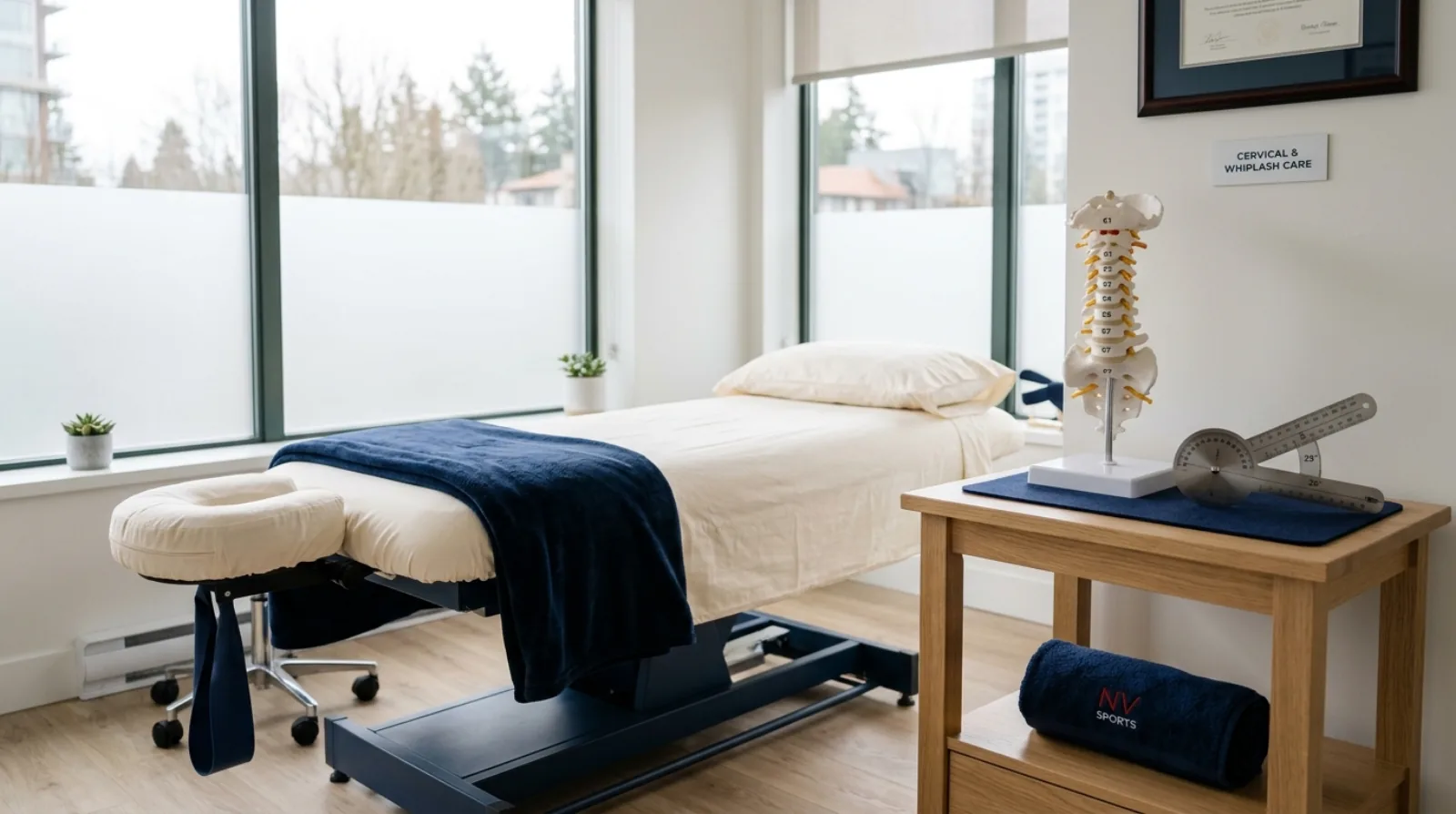
Headaches After a Car Crash: Why Your Neck Might Be the Cause
A headache that starts after a car crash often comes from the neck, not the head. Here is why whiplash causes it, and why moving early tends to help more than resting.
BY MEDSTAR SPORT PHYSIO TEAM
A headache that starts in the days after a car crash worries people, and it should be taken seriously. But in many cases the pain is not coming from the head at all. It is coming from the neck, which took the force of the collision and is now referring pain upward. Knowing that changes what you do about it.
A headache after a car crash is often a cervicogenic headache, which means the pain starts in the upper neck and is felt in the head. The crash strains the joints, muscles, and nerves of the neck, and that irritation refers pain up into the skull. It is a common part of whiplash, and for most people it settles as the neck recovers. At Medstar Sport Physio in North Vancouver, the plan centres on gentle early movement and a graded neck program rather than rest, which matches ICBC's own emphasis on active recovery. Severe, worsening, or unusual headaches need medical assessment first.
Why a crash gives you a headache
In a collision, the head gets thrown backward and forward quickly. This sudden movement can strain the small facet joints, muscles, ligaments, and nerves in the upper part of the neck. That area is closely connected to the nerves that supply the back and side of the head, so when the upper neck is irritated, the brain often feels the pain in the head instead.
This kind of headache is called a cervicogenic headache. The name simply means the headache comes from the neck. It is one of the most common headache patterns after whiplash. A review of neck pain, whiplash, and cervicogenic headache describes cervicogenic headache as pain that originates in the structures of the upper cervical spine, its soft tissues, or the nerves that exit there. The headache is real, but its source is the neck, and that is why treating the neck is what helps.
What a neck-related headache feels like
A cervicogenic headache after a crash usually has a recognisable pattern. It often starts at the base of the skull or the back of the head and spreads forward over one side toward the temple, forehead, or behind the eye. It tends to sit more on one side than the other, though not always.
The headache often comes with neck stiffness and reduced neck movement. Holding the neck in one position for a long time, or moving it in certain directions, can bring the pain on or make it worse. Because the neck and head symptoms are linked, people sometimes describe it as a headache and a stiff, sore neck that seem to feed each other. If you are also dealing with jaw or upper-neck tension patterns, our note on headaches linked to the desk and neck covers the same mechanism in a non-crash setting.
How common it is, and whether it lasts
Headaches after whiplash are common in the early weeks. The more reassuring part is what happens over time. In a study of whiplash patients with headache, new-onset cervicogenic headache was present in about 8% at six weeks and about 3% at one year. In plain terms, many people have neck-related headaches soon after a crash, and for most the problem becomes less common as the months pass.
That does not mean every headache will vanish on its own, and it does not mean you should wait a year to see if it settles. It means the natural direction is toward recovery, and that early, active care supports that direction. There is no single timeline that fits everyone, because recovery depends on how the neck was affected, your age, your general health, and how soon you start moving and rehab.
Why rest is not the answer
The old image of whiplash treatment was a stiff collar and weeks of taking it easy. That is not the current advice for most people. Keeping the neck still for long periods tends to stiffen it and can make recovery slower, not faster.
Current guidance, including ICBC's own emphasis on active recovery, points toward active treatment. ICBC states that active treatments tend to be more effective at restoring physical function than treatments aimed only at pain. In practice this means gentle, regular neck movement within comfort, started early, rather than protecting the neck from all movement. This is the same principle we describe for whiplash recovery and early movement in BC. Early movement does not mean pushing into sharp pain. It means moving the neck often, in a controlled way, guided by an assessment.
What physiotherapy does for a whiplash headache
Because the headache comes from the neck, treatment focuses on the neck. An initial assessment first rules out the warning signs that need a doctor, then looks at how your neck moves, which movements bring on the headache, and how irritable the neck is.
From there, a plan usually includes a few parts.
Gentle movement and range work. Restoring the neck's movement early, within comfort, is the foundation. This often eases the headache directly, because a stiff, guarded neck feeds the pain.
A graded strengthening program. As the neck settles, we build the deep neck muscles and the muscles around the shoulder blades so the neck tolerates daily load again. This is the part that tends to hold the improvement over time.
Hands-on treatment as a support. Manual therapy to the upper neck can help settle symptoms in the short term, but it works best alongside movement and exercise rather than on its own.
The aim is to calm the headache and rebuild the neck's capacity so the pain does not keep returning.
How ICBC coverage works after a crash
If your headache follows a crash in British Columbia, the cost of physiotherapy is usually covered. Under ICBC Enhanced Care, you are automatically pre-approved for treatment in the first 12 weeks after a crash, regardless of who was at fault. You do not need a doctor referral or separate ICBC approval to start. You need your Personal Health Number and your ICBC claim number.
ICBC pre-approves up to 25 physiotherapy sessions in that first 12-week window, along with a set number of massage therapy, acupuncture, and other treatment sessions. Many clinics, including ours, bill ICBC directly so you are not paying up front. If you still need care after the 12 weeks, your practitioner can submit a treatment plan to request more. We cover the mechanics of this in detail in our guide to ICBC pre-approved physiotherapy in the first 12 weeks.
When to get it assessed
Most neck-related headaches after a crash respond well to early, active care, and starting sooner tends to make recovery smoother. Book an assessment if you had a crash and have headaches, neck pain, or stiffness that are not settling on their own.
Some headache features need medical assessment before physiotherapy, not after. Seek urgent medical care, or call 911, if a headache after a crash is sudden and severe, is the worst headache of your life, keeps getting worse, or comes with confusion, repeated vomiting, weakness or numbness in the arms or legs, slurred speech, vision loss, or loss of consciousness. Those are not typical whiplash headaches and need to be checked right away.
Book a 30-minute appointment and we will assess your neck, screen for the warning signs, explain your ICBC coverage, and build a movement-based plan aimed at settling the headache and rebuilding your neck.
This article is general information about headaches after a car crash. It is not personal medical advice. A regulated practitioner can confirm whether the patterns described apply to you.
Sources
- Neck Pain: Whiplash and Cervicogenic Headache - Springer (2022)
- Drottning, Staff, Sjaastad - Cervicogenic headache after whiplash injury, Cephalalgia (2002) - PubMed
- ICBC - Accessing treatment during your first 12 weeks of recovery
- College of Physical Therapists of BC (CPTBC)
Common questions
Frequently asked questions.
Why do I have headaches after my car accident?
After a crash, the sudden back-and-forth movement of the head can strain the joints, muscles, and nerves of the upper neck. When a headache comes from those neck structures, it is called a cervicogenic headache, which means the pain starts in the neck and is felt in the head. This is a common part of whiplash. The pain is real, but in most cases it settles as the neck recovers, especially when you keep the neck moving rather than resting it for long periods.
What does a whiplash headache feel like?+
A neck-related headache after a crash is often felt at the back of the head or base of the skull, and it can spread up over one side toward the forehead or behind the eye. It usually sits on one side more than the other and can get worse when you hold your neck still for a long time or move it into certain positions. Neck stiffness and reduced neck movement often go along with it.
How long do headaches last after whiplash?+
There is no single timeline, and it depends on how the neck was affected, your age, and how early you start moving and rehab. Many people improve over weeks. In one study of whiplash patients, new neck-related headache was present in about 8% at six weeks and about 3% at one year, so for most people it becomes less common over time. If your headache is severe, getting worse, or not settling, it should be assessed.
Does ICBC cover physiotherapy for headaches after a crash?+
Yes. Under ICBC Enhanced Care, you are automatically pre-approved for treatment in the first 12 weeks after a crash, including physiotherapy, without a doctor referral or ICBC approval. You need your Personal Health Number and your ICBC claim number. ICBC pre-approves up to 25 physiotherapy sessions in that first 12-week window. Many clinics, including ours, bill ICBC directly.
Should I rest my neck after a car accident?+
Long periods of rest and a stiff collar are no longer the advice for most whiplash. ICBC and current guidelines favour active treatment and gentle early movement, because keeping the neck moving within comfort tends to restore function better than resting it. That does not mean pushing into sharp pain. It means gentle, regular movement guided by an assessment, which also helps neck-related headaches settle.
Share this post
Copies a ready-to-publish LinkedIn post to your clipboard and opens the LinkedIn share dialog. Paste the text into the composer and publish.
Written by
Medstar Sport Physio Team
Registered clinician at Medstar Sport Physio & Health, North Vancouver.
This article is for general information only and does not constitute medical advice, diagnosis, or treatment. Individual presentations vary, and assessment findings and treatment plans differ from person to person. If you are experiencing severe symptoms, neurological changes (numbness, weakness, bowel or bladder changes), or a significant trauma, contact your physician or emergency services. Care at Medstar Sport Physio & Health is provided by practitioners registered with their respective British Columbia regulatory colleges.
Filed under
- whiplash
- cervicogenic-headache
- car-accident
- icbc
- neck-pain
- north-vancouver