Massage for Desk Workers: Neck and Shoulder Tension That Keeps Coming Back
Shoulders that rise toward your ears by mid-afternoon, a neck that aches by Thursday. Here is what massage can do for desk tension, and what makes the relief last longer.
BY KEVIN HERTER, RMT
Many people who work at a desk know the pattern. The shoulders rise toward the ears by mid-afternoon, the neck aches by Thursday, and a headache starts at the back of the head. Here is what massage can do for that tension, what the research found, and what helps the relief last.
At Medstar Sport Physio in North Vancouver, massage for desk-related neck and shoulder tension works best as regular sessions paired with changes at your desk, because the 2024 Cochrane review found better results with at least 8 sessions over four weeks.
Why desk work leaves the neck and shoulders tight
Sitting at a screen asks a few muscles to work for hours without a break. The upper shoulder muscles hold the arms up to the keyboard. The muscles at the back of the neck hold the head forward to read the screen. The small muscles at the base of the skull keep the eyes level. None of this is heavy work, but it goes on all day.
Muscles that work without rest for hours tend to feel tight, tired and tender. Stress adds to it, because many people lift their shoulders or clench their jaw when they are focused or under pressure. By the end of the week, these muscles can feel sore to touch, and some tender spots can send pain up into the head.
This kind of tension is common and usually not dangerous. It does make work and sleep less comfortable, and it tends to build over the week if nothing in the workday changes.
What massage does in a session
A Registered Massage Therapist starts with a few questions about where it hurts, when it is worse, and what your workday looks like. A short check of how your neck and shoulders move follows. Then the treatment covers:
- The upper shoulders and the muscles up the side and back of the neck.
- The small muscles at the base of the skull.
- The chest muscles, which pull the shoulders forward when they are tight.
- The muscles between the shoulder blades.
- The jaw and temple muscles, if you clench your teeth at the screen.
The therapist uses slow strokes to warm the area, steady pressure on tender spots, and gentle stretching. Neck work is done lying down, with your head supported. Our page on massage for headaches and neck tension explains the session in more detail.
What the research found
The best summary comes from the 2024 Cochrane review of massage for neck pain. It pooled 33 studies with 1,994 people, most with neck pain lasting weeks to months. Against a fake treatment, massage made little to no difference to pain up to 12 weeks, and the evidence was low certainty. When the authors grouped trials by dose, people who had at least 8 sessions over four weeks, each 30 minutes or longer, showed a difference large enough to matter to patients.
An earlier 2012 Cochrane review of 15 trials reached a similar view: the studies were too weak to make firm recommendations. It also noted that only 4 of the 15 trials described the massage method well.
For the shoulder, a 2015 review in the Journal of Physiotherapy of 26 trials found that massage reduced pain in the short term compared with no treatment in people with shoulder pain, and improved function.
For headaches that come with neck tension, a 2015 trial gave 56 people with tension-type headaches 12 sessions of neck and head massage over six weeks. Massage made tender neck muscles less sensitive to pressure, and people reported more relief than with a fake treatment. Headache frequency fell in both groups, which shows how much expectation matters in pain studies.
The honest reading: massage helps many desk workers feel better for a while. Regular sessions do more than one-off visits, and the relief lasts longer when your workday changes too.
How often to book
For a flare of neck and shoulder pain, weekly visits for a few weeks fit what the research found. The better results in the 2024 Cochrane review came with at least 8 sessions over four weeks.
For ongoing tension, many people book every two to four weeks. A simple way to choose: notice how long the relief lasts. If you feel better for ten days and then the tension returns, book every two weeks. If relief lasts a month, monthly is enough.
At Medstar, a first visit is 60 minutes. For desk tension, follow-ups of 30 or 45 minutes on the neck, shoulders and upper back often cover what is needed. Our page on choosing a session length goes into more detail.
Changes at your desk that help the relief last
Massage loosens tight muscles for a while. If the workday that made them tight stays the same, the tension comes back. Small changes help:
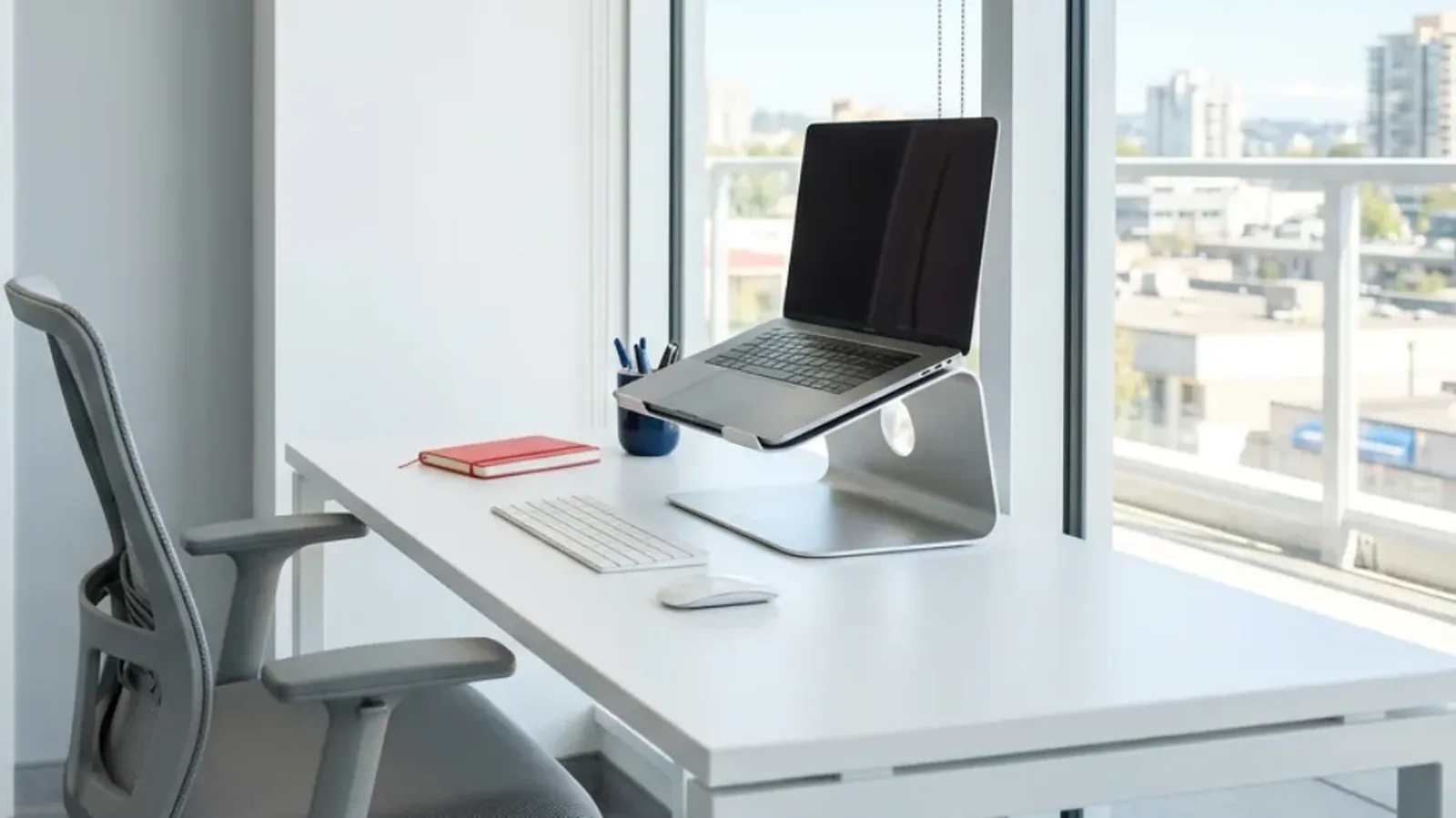
- Raise your screen so the top sits near eye level. If you use a laptop for hours, a stand and a separate keyboard make this possible.
- Keep the keyboard and mouse close, so your elbows stay near your sides.
- Rest your forearms on the desk or on armrests, so your shoulders do not hold your arms up.
- Stand up, walk and roll your shoulders often during the day. In our experience, changing position often helps more than hunting for one perfect posture.
- Notice when your shoulders lift or your jaw clenches, and let them drop.
Our page on postural problems covers what a physiotherapist can do when posture is part of the problem.
Simple moves between visits
Your massage therapist may show you a few moves to do at your desk. These are common choices, done slowly and without pain:
- Chin tucks: sit tall and gently draw your chin straight back, as if making a double chin, then relax.
- Shoulder blade squeezes: draw your shoulder blades back and down, hold for a breath, then let go.
- A doorway chest stretch: rest your forearms on either side of a door frame and lean forward until you feel a gentle stretch across the chest.
- Slow neck turns: look over one shoulder, then the other, keeping the movement easy.
Do a few of each a couple of times during the workday, for example when you refill your water. Stop any move that causes sharp pain, numbness or tingling, and tell your therapist or physiotherapist about it. These moves will not undo a long day on their own, but they break up the hours of holding one position.
Working from home
Home offices often make desk tension worse. A laptop on the kitchen table puts the screen low and the keyboard high, so the neck bends forward and the shoulders lift. Working from the couch is harder still.
If you work from home part of the week, set up one place with the screen raised and the keyboard close, even if it is a stack of books under the laptop and a cheap separate keyboard. Use the trip to the kettle or the door as a reason to stand and move. Pay attention to whether your neck feels different on home days and office days. If it does, tell your therapist, because it points to what needs to change.
When to see a physiotherapist first
Massage suits tight, achy muscles. Some signs point to a problem with the neck joints or nerves that needs an assessment first:
- Pain, numbness or tingling that spreads into an arm or hand.
- Weakness in an arm or grip.
- A neck that will not turn far enough to check your blind spot.
- Pain that keeps getting worse over weeks.
For these, book a physiotherapy assessment for neck pain. A physiotherapist can check the joints and nerves and give exercises that build strength and movement. Massage can then run alongside, with notes shared between the two with your consent.
Some signs need urgent care. Call 911 or go to Lions Gate Hospital emergency for neck pain with a sudden severe headache, trouble speaking, vision loss, weakness on one side of the body, or after a serious fall or crash.
Paying for it
Many work health plans pay for visits with a registered massage therapist up to a yearly limit. Some ask for a doctor's note first, so check your plan booklet. Medstar bills most major plans directly. If your neck pain started after a car crash, ICBC pre-approves 12 massage treatments in the first 12 weeks. Our coverage page has the details.
A plan that fits a working week
For most desk workers, a simple plan works: a 60-minute first visit to assess the problem, weekly 45-minute sessions for three or four weeks while you change your desk setup, then a visit every few weeks to keep tension down. Track how your neck feels on Friday afternoons. If it is not improving after a month, add a physiotherapy assessment to look for a cause that massage cannot reach. The massage therapy guide explains what to expect at your first visit.
This article is general information, not personal medical advice. A regulated practitioner can confirm whether the patterns described apply to you.
Sources
- Gross AR, et al. Massage for neck pain. Cochrane Database of Systematic Reviews, 2024
- Patel KC, et al. Massage for mechanical neck disorders. Cochrane Database of Systematic Reviews, 2012
- Bervoets DC, et al. Massage therapy has short-term benefits for people with common musculoskeletal disorders. Journal of Physiotherapy, 2015
- Moraska AF, et al. Trigger point-focused head and neck massage for recurrent tension-type headache. Clinical Journal of Pain, 2015
- ICBC: Accessing treatment during your first 12 weeks of recovery
Common questions
Frequently asked questions.
Does massage help neck and shoulder tension from desk work?
Massage helps many people feel looser and less sore for a while. The research is mixed. The 2024 Cochrane review of massage for neck pain, with 33 studies and 1,994 people, found little difference against a fake treatment overall, with a worthwhile effect in people who had at least 8 sessions over four weeks. Changes at your desk help the relief last.
How often should a desk worker get a massage?+
For a flare of neck and shoulder pain, weekly visits for a few weeks fit what the research found: the better results in the 2024 Cochrane review came with at least 8 sessions over four weeks, each 30 minutes or longer. For ongoing tension, many people book every two to four weeks. Book again just before the tension usually returns.
Which muscles does a massage therapist treat for desk tension?+
The usual targets are the upper shoulders, the muscles up the side and back of the neck, the small muscles under the base of the skull, the chest muscles, and the muscles between the shoulder blades. For people who clench their jaw at the screen, the jaw and temple muscles too. The therapist checks which spots are tight or tender and focuses there.
Can massage help headaches from sitting at a computer?+
It can help tension-type headaches that come with tight neck muscles. In a 2015 trial of 56 people, 12 neck massage sessions over six weeks made tender neck muscles less sensitive to pressure, and people reported more relief than with a fake treatment. Headache frequency fell in both groups. New, sudden or severe headaches need a doctor first.
Is massage or physiotherapy better for desk neck pain?+
They do different jobs. A physiotherapist assesses the neck joints and nerves and gives exercises that build strength and movement. A massage therapist treats tight, tender muscles. If your neck pain spreads into an arm, causes numbness or tingling, or limits turning your head, start with physiotherapy. For tight, achy muscles without those signs, massage is a good first stop.
What desk changes help neck and shoulder tension?+
Raise your screen so the top is near eye level, keep the keyboard and mouse close so your elbows stay by your sides, and support your forearms. Take short breaks to stand, walk and move your neck and shoulders. If you use a laptop for hours, a separate keyboard and a stand help. A comfortable position that you change often is a good goal.
Does extended health cover massage for neck pain?+
Many work health plans pay for visits with a registered massage therapist up to the yearly limit in your plan. Some ask for a doctor's note first, so check your booklet. Medstar bills most major plans directly, so you pay only the part your plan does not cover. If your neck pain started after a car crash, ICBC pre-approves 12 massage treatments.
When is neck pain a reason to see a doctor?+
See a doctor soon for neck pain with fever, unexplained weight loss, a history of cancer, or numbness, tingling or weakness in an arm. Call 911 or go to Lions Gate Hospital emergency for neck pain with a sudden severe headache, trouble speaking, vision loss, weakness on one side, or after a serious fall or crash. Do not book a massage for these.

Written by
Kevin Herter, RMTKevin Herter, RMT, is the Registered Massage Therapist at Medstar Sport Physio in North Vancouver. Sports, deep tissue and injury massage, with direct billing and ICBC.
This article is for general information only and does not constitute medical advice, diagnosis, or treatment. Individual presentations vary, and assessment findings and treatment plans differ from person to person. If you are experiencing severe symptoms, neurological changes (numbness, weakness, bowel or bladder changes), or a significant trauma, contact your physician or emergency services. Care at Medstar Sport Physio & Health is provided by practitioners registered with their respective British Columbia regulatory colleges.
Filed under
- massage-therapy
- neck-pain
- shoulder-pain
- desk-work
- headaches
- north-vancouver