Hiking Injuries on the North Shore: A Trail-by-Trail Recovery Guide
Every North Shore trail makes specific demands on specific tissues. Understanding which injury comes from which trail pattern helps you recover faster and prevent the next one.
BY ALI SHAFIEI, RPT
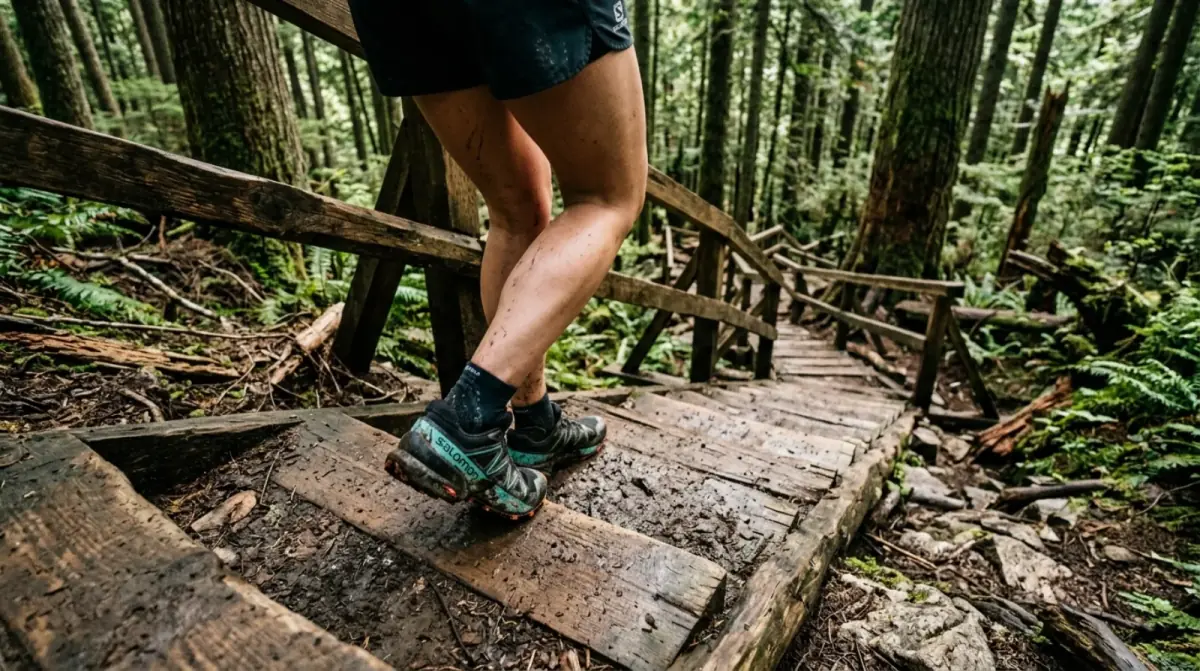
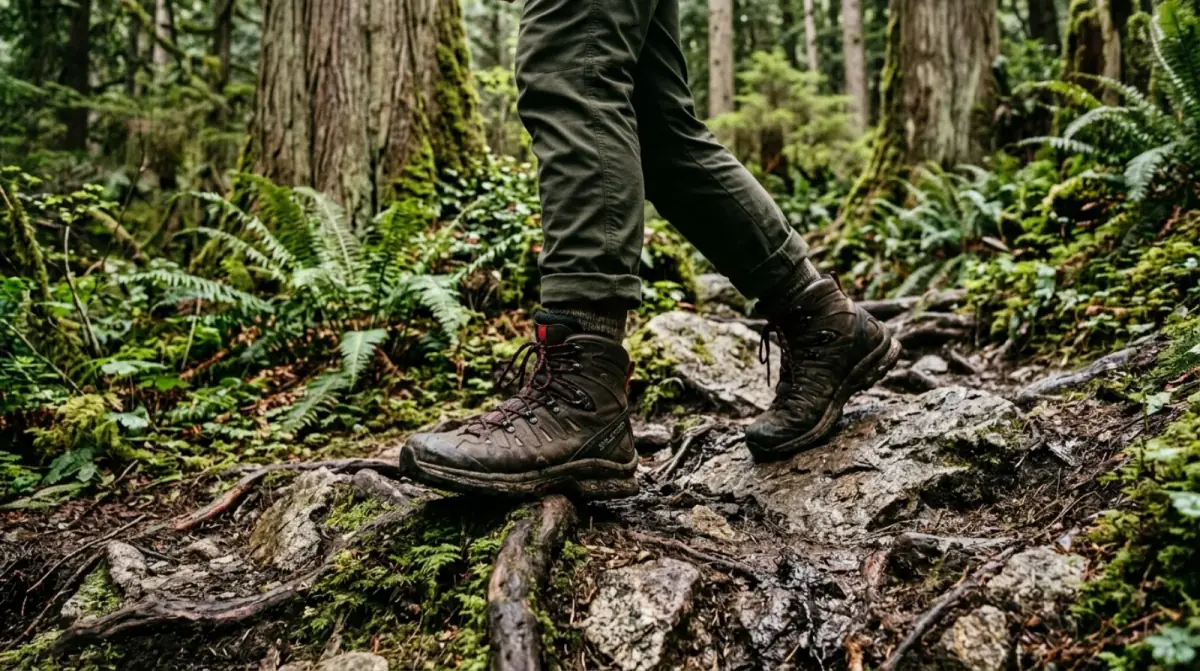
The North Shore has some of the most demanding trail hiking in the Metro Vancouver area. Routes like the Baden Powell Trail, Lynn Headwaters Regional Park, and the Quarry Rock trail in Deep Cove attract thousands of hikers each season, ranging from families on their first trail walk to experienced backcountry athletes logging high mileage weeks. Each of these routes makes different demands on different tissues, and the injuries we see at Medstar Sport Physio in North Vancouver reflect those demands in a predictable pattern.
At Medstar Sport Physio in North Vancouver, the most common hiking injuries we see from North Shore trails are ankle sprains on rocky technical sections, IT band syndrome and patellofemoral knee pain from sustained descents, and Achilles or calf complaints after steep climbing. Each responds best to early graduated loading and a targeted strengthening program rather than rest alone.
Quarry Rock: ankle sprains and the technical footing problem
The trail to Quarry Rock in Deep Cove is roughly 3.4 km return with moderate elevation. It is popular at dusk and with people in casual footwear, which partly explains the ankle sprain pattern we see from it. The final approach to the viewpoint is exposed root and rock, and it catches people out, especially when they are tired and paying less attention to their footing.
Most ankle sprains on Quarry Rock are lateral inversion injuries. The foot rolls inward, straining the anterior talofibular ligament (ATFL) and sometimes the calcaneofibular ligament (CFL). Grade I and II sprains involve partial ligament damage; Grade III involves complete rupture.
The Ottawa Ankle Rules provide a validated clinical guide to whether imaging is needed: bone tenderness at the tip of the medial or lateral malleolus, or inability to take four weight-bearing steps immediately after the injury, are criteria for an X-ray. If those criteria are absent, imaging is not typically needed and rehabilitation can begin.
Early rehabilitation for an ankle sprain focuses on controlled weight-bearing, range of motion recovery, and progressive balance and proprioception work once irritability allows. The balance training is not optional; chronic ankle instability in people who have had prior sprains without adequate rehabilitation is common, and it is driven by the sensory deficits that follow a ligament injury as much as by the structural damage. Our ankle pain and Achilles injury page covers the full assessment and rehab pathway.
Lynn Headwaters: sustained ascent and Achilles loading
Lynn Headwaters Regional Park, at the top of Lynn Valley, offers a range of routes, from the relatively flat Lynn Loop to longer ascents toward the Twin Bridges and Lynn Peak. The longer routes involve sustained uphill sections that place high demand on the calf-Achilles complex over an extended period.
Achilles tendinopathy after a long Lynn Headwaters hike typically presents as morning stiffness that improves with movement, a dull ache at the Achilles insertion or mid-portion during or after activity, and sometimes a palpable thickening at the tendon. Calf strains (actual muscle tears) occur more acutely, often with a sudden onset during a specific step and a feeling of something "going" in the lower leg.
The distinction matters clinically. Achilles tendinopathy responds to progressive tendon loading, using heavy slow resistance exercises (heel raises with load, progressing to single-leg) that stress the tendon through its range in a controlled, graduated way. This approach is supported by a substantial evidence base; the heavy slow resistance protocol from Beyer et al. (2015) in JOSPT is among the most cited for mid-portion Achilles tendinopathy. A calf strain, by contrast, needs a short period of relative rest before progressive loading begins, with the timeline determined by the grade of tear.
Baden Powell Trail: IT band and the long descent
The Baden Powell Trail runs 48 km along the North Shore from Horseshoe Bay to Deep Cove. Day hike sections involving significant elevation change and long descents, particularly sections around Hollyburn and Fromme, create ideal conditions for IT band syndrome and patellofemoral pain.
IT band syndrome presents as lateral (outside) knee pain that worsens with downhill walking and the repetitive knee bend-and-straighten of each step. The IT band itself is not a structure you can stretch meaningfully; it is the loading pattern at the hip that changes the tension. Hip abductor and external rotator weakness is the most consistently identified risk factor, and strengthening those muscles is the primary evidence-based treatment.
Patellofemoral pain, an ache behind or around the kneecap that typically worsens on descents or stairs, follows a similar pattern. The femur tends to rotate inward under load when the hip stabilisers are inadequate, altering the tracking of the kneecap in its groove. Treatment targets the hip, not just the knee.
For both conditions, a graduated return-to-hiking plan involves modifying elevation and distance while building hip and quad capacity, rather than complete rest. Most people can continue some trail activity during rehab at a modified intensity.
Lower back pain on long hikes: pack weight and posture
Lower back pain is common on longer day hikes, particularly when carrying a pack. Sustained flexed posture on technical terrain, repetitive trunk rotation when scrambling, and the compressive load of a pack combine to stress the lumbar spine. People with pre-existing disc sensitivity or poor hip mobility are more likely to experience this.
Management depends on the specific pain behaviour. Pain that worsens with bending and eases with extension suggests a disc irritation pattern; pain that eases with sitting and worsens with sustained standing or uphill walking may reflect a facet or SI joint contribution. These are clinically distinguishable patterns that guide different interventions at assessment.
In general, building core stability and hip mobility before longer hikes, and managing pack weight carefully, are the most relevant preventive strategies. If lower back pain with a hiking history involves leg symptoms such as pain, numbness, or weakness radiating below the knee, a physiotherapy assessment becomes more pressing.
Returning to trails: what the evidence says about load progression
Most people expect "no pain" to be the threshold for returning to trails. In practice the threshold is a tolerable level of load. For tendon and soft tissue injuries especially, progressive load is part of the healing process, and the capacity for trail hiking has to be rebuilt deliberately.
A return-to-hiking plan from our clinic starts with flat terrain and distances well below what felt easy before the injury. Frequency and duration build first; elevation gain comes later. The strengthening work runs alongside the return to activity. The guide we use is symptom response: some morning stiffness is acceptable, and sharp pain that persists into the next day means the load was too much.
How long this takes depends on the tissue, how bad the initial injury was, and how well the person responds to early loading. There is no useful internet timeline for that. A clinical assessment gives you an actual answer.
When to book a physiotherapy assessment
Normal post-hike soreness in the first day or two does not need physiotherapy.
Book an assessment if: pain does not settle within a week or two of modified activity, it gets worse hike to hike rather than better, there was a specific incident (ankle roll, knee twist, sudden calf pain) that significantly affected your function, you have any numbness or weakness below the knee, or you cannot bear weight. If you are not sure whether it warrants a visit, book anyway. The physiotherapist will tell you if it does not.
You can book online at medstar.janeapp.com or call us at (604) 988-5411. We are at 1325 Marine Drive, North Vancouver, a short drive from the trailheads at Lynn Headwaters, Mount Seymour, and the Upper Levels exits.
This article is general information about trail hiking injuries and their management. It is not personal medical advice. A regulated practitioner can confirm whether the patterns described apply to you.
Sources
- Ottawa Ankle Rules, Choosing Wisely Canada
- Beyer et al. Heavy Slow Resistance Versus Eccentric Training as Treatment for Achilles Tendinopathy, Journal of Orthopaedic & Sports Physical Therapy (2015)
- District of North Vancouver. Baden Powell Trail
- College of Physical Therapists of BC (CPTBC)
Common questions
Frequently asked questions.
What are the most common hiking injuries on the North Shore?
Ankle sprains from uneven footing, IT band syndrome and patellofemoral pain from sustained descents, Achilles and calf complaints from steep climbing, and lower back pain from carrying a pack or sustained flexed posture on technical sections. The specific injury often reflects the terrain. Knee pain is more common after long descents like Baden Powell; ankle sprains cluster around rocky sections like Lynn Headwaters.
Should I rest completely after a hiking injury?+
Complete rest is rarely the best approach. Most hiking injuries (ankle sprains, tendinopathies, IT band syndrome) respond better to early graduated loading than to complete rest, which can allow stiffness and muscle weakness to accumulate. The question is how much load to apply at each point in recovery. A physiotherapy assessment will help answer that.
How do I know if my hiking ankle injury needs an X-ray?+
The Ottawa Ankle Rules guide that decision clinically. Bone tenderness at the tip of either ankle bone (malleolus) or inability to walk four steps immediately after the injury are criteria for imaging. Your physiotherapist or emergency physician can apply these rules at assessment. If there is significant swelling and you cannot bear weight, an urgent assessment is the right call.
Why does my knee hurt on descents but not the climb?+
The descent loads the quad muscles eccentrically, so they lengthen under load to control each downward step. This places higher force through the patellofemoral joint and IT band than the concentric demand of going up. Fatigue from the climb amplifies this, and hip abductor weakness is often the underlying driver.
Can I prevent hiking injuries with stretching?+
Stretching alone has limited evidence for injury prevention. The factors that reduce hiking injury risk are hip abductor and external rotator strength, eccentric quad capacity for descents, ankle stability and proprioception, and appropriate load progression when returning to trails. Warming up by starting with easier terrain before pushing pace is more useful than a static stretch routine.
How long should I wait before hiking again after a knee injury?+
That depends entirely on what is causing the knee pain and its irritability level. Some presentations, mild patellofemoral pain for example, can return to modified hiking within days. Others need weeks of structured rehab first. A physiotherapy assessment after a week of non-improvement gives you a specific timeline rather than a generic guess.
Share this post
Copies a ready-to-publish LinkedIn post to your clipboard and opens the LinkedIn share dialog. Paste the text into the composer and publish.

Written by
Ali Shafiei, RPTAli Shafiei is a Registered Physiotherapist with 10+ years of clinical experience in musculoskeletal, neurological and sports rehabilitation. North Vancouver.
This article is for general information only and does not constitute medical advice, diagnosis, or treatment. Individual presentations vary, and assessment findings and treatment plans differ from person to person. If you are experiencing severe symptoms, neurological changes (numbness, weakness, bowel or bladder changes), or a significant trauma, contact your physician or emergency services. Care at Medstar Sport Physio & Health is provided by practitioners registered with their respective British Columbia regulatory colleges.
Filed under
- hiking
- trail-injuries
- knee-pain
- ankle-sprain
- north-shore
- lynn-headwaters
- quarry-rock
- north-vancouver